Réfraction
2026 | Chapelle des Pénitents, Pézenas
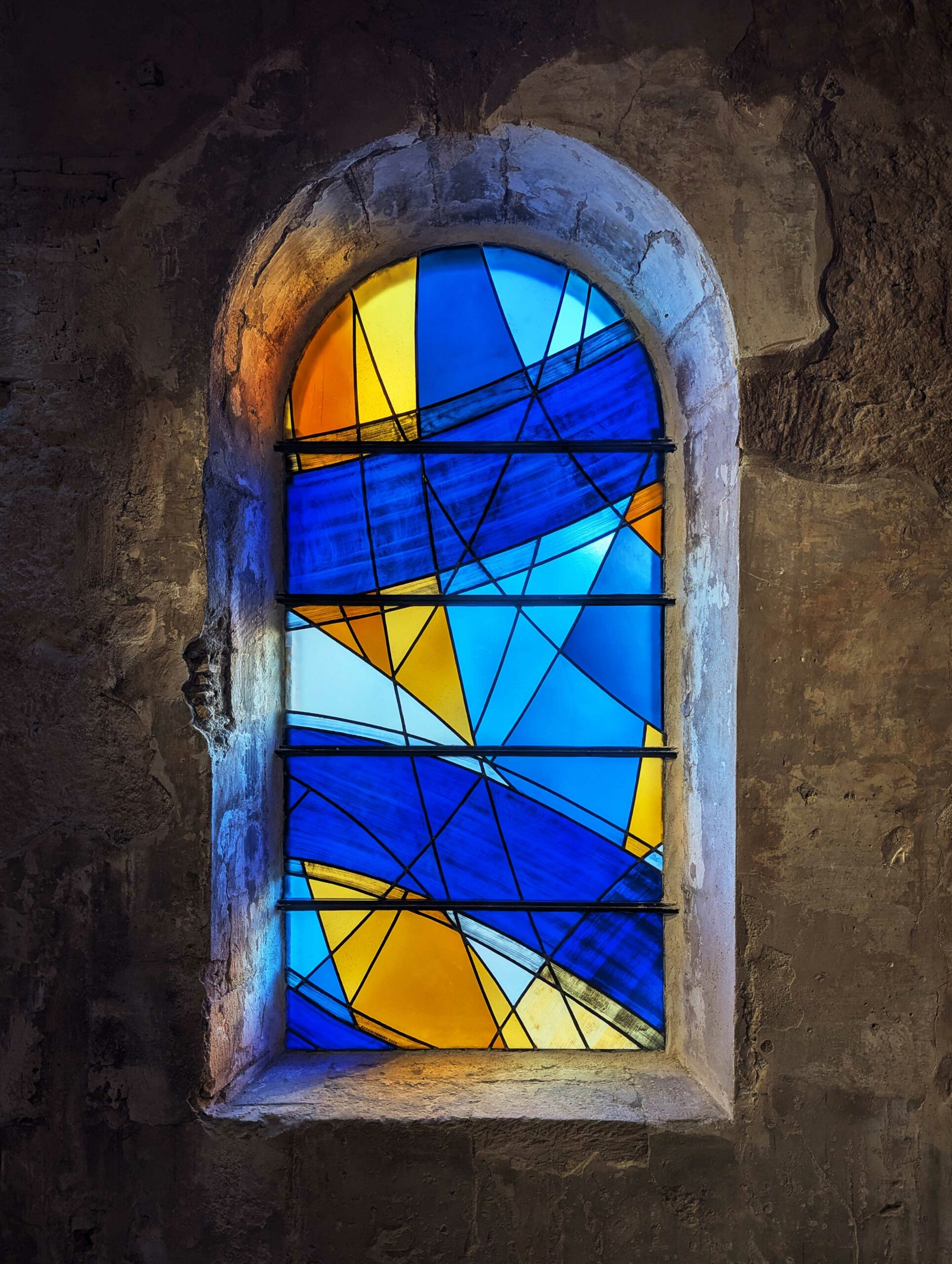
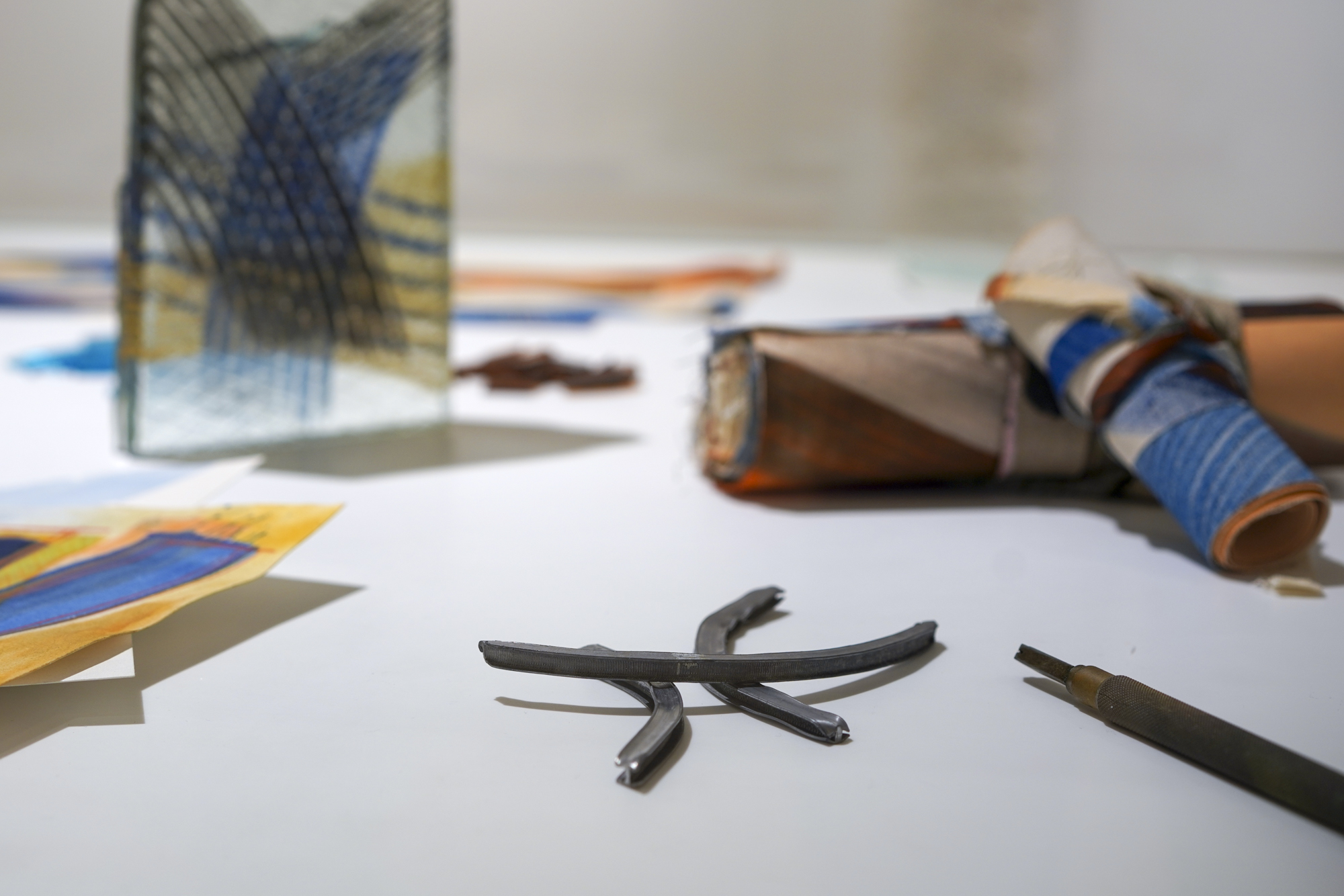
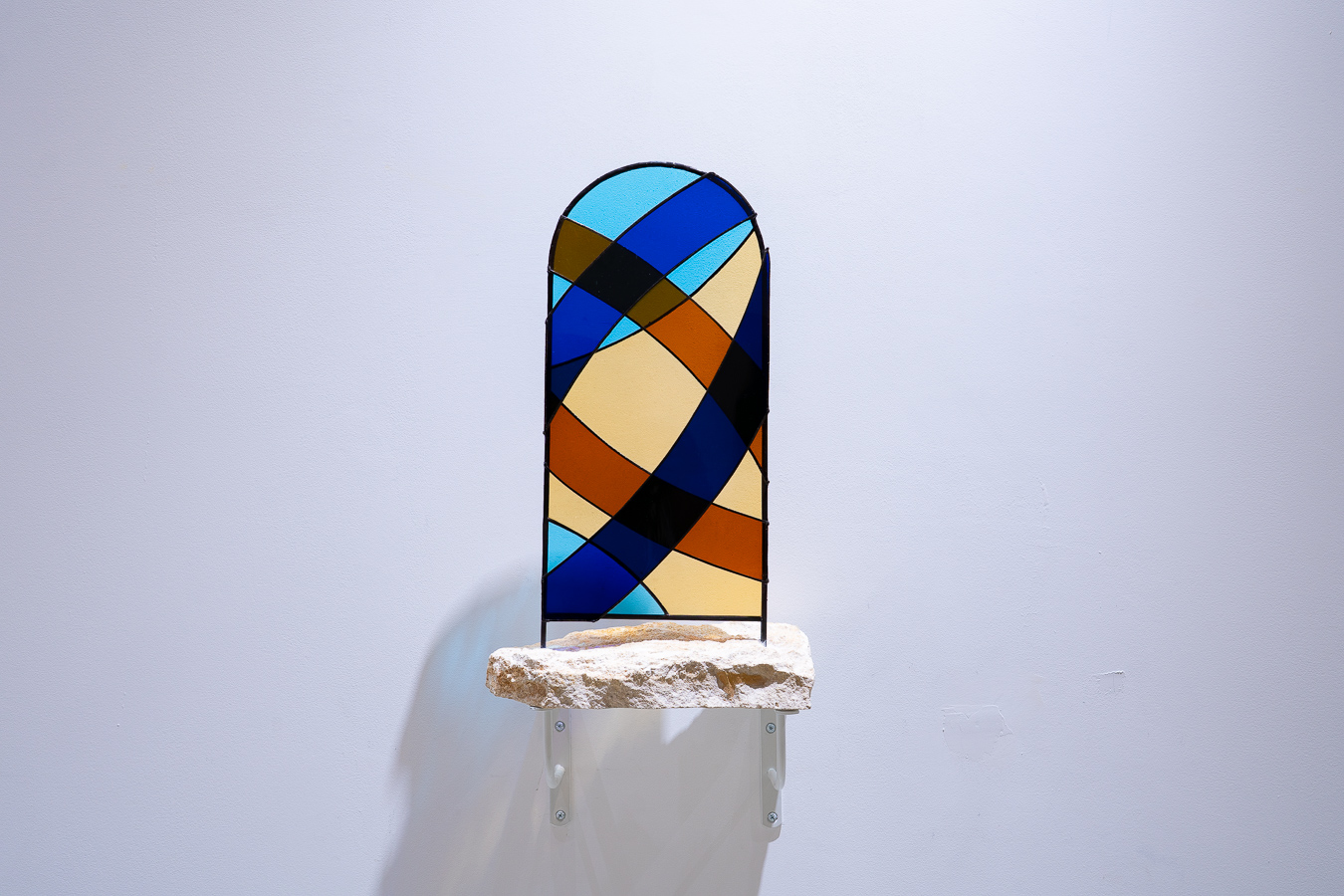
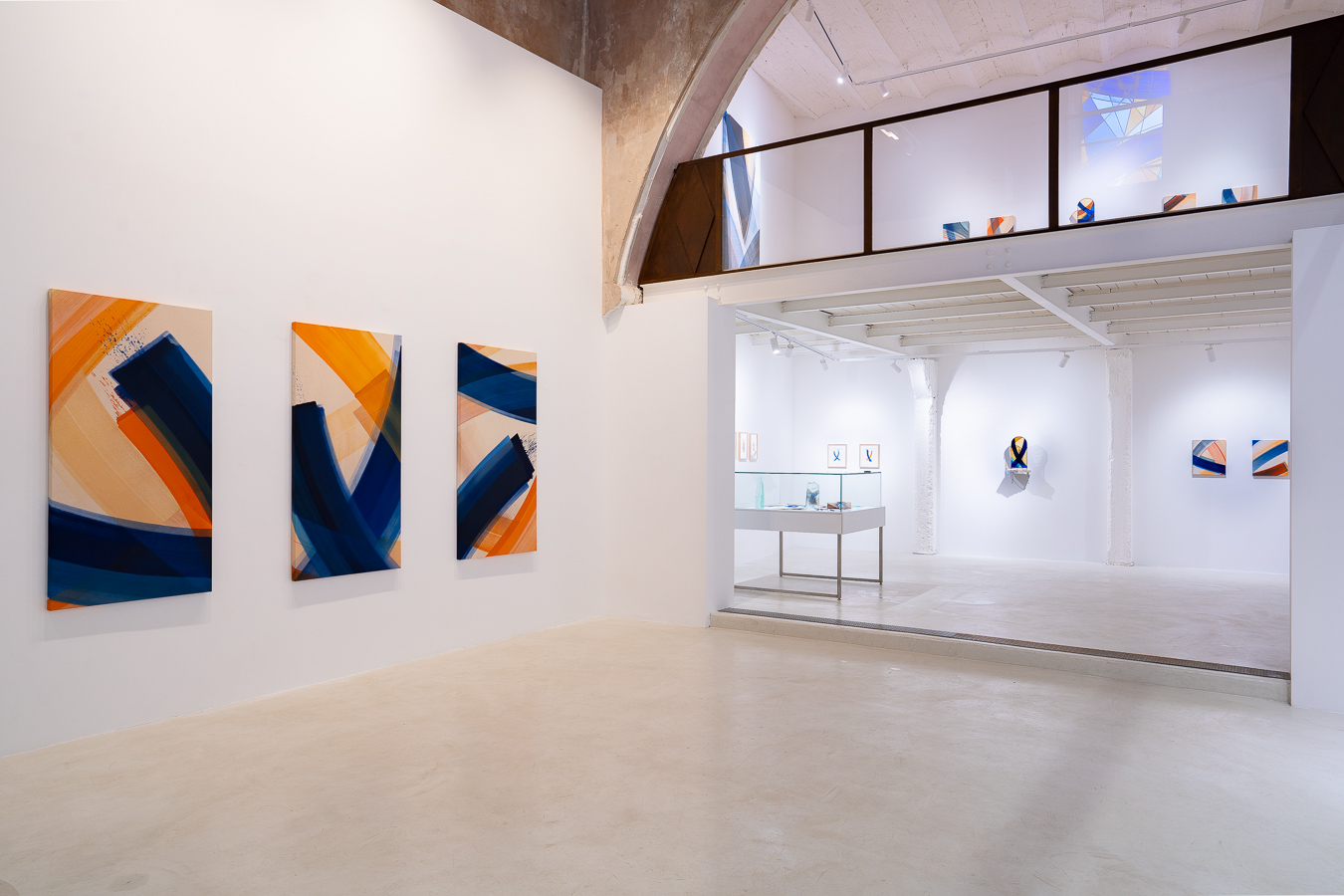
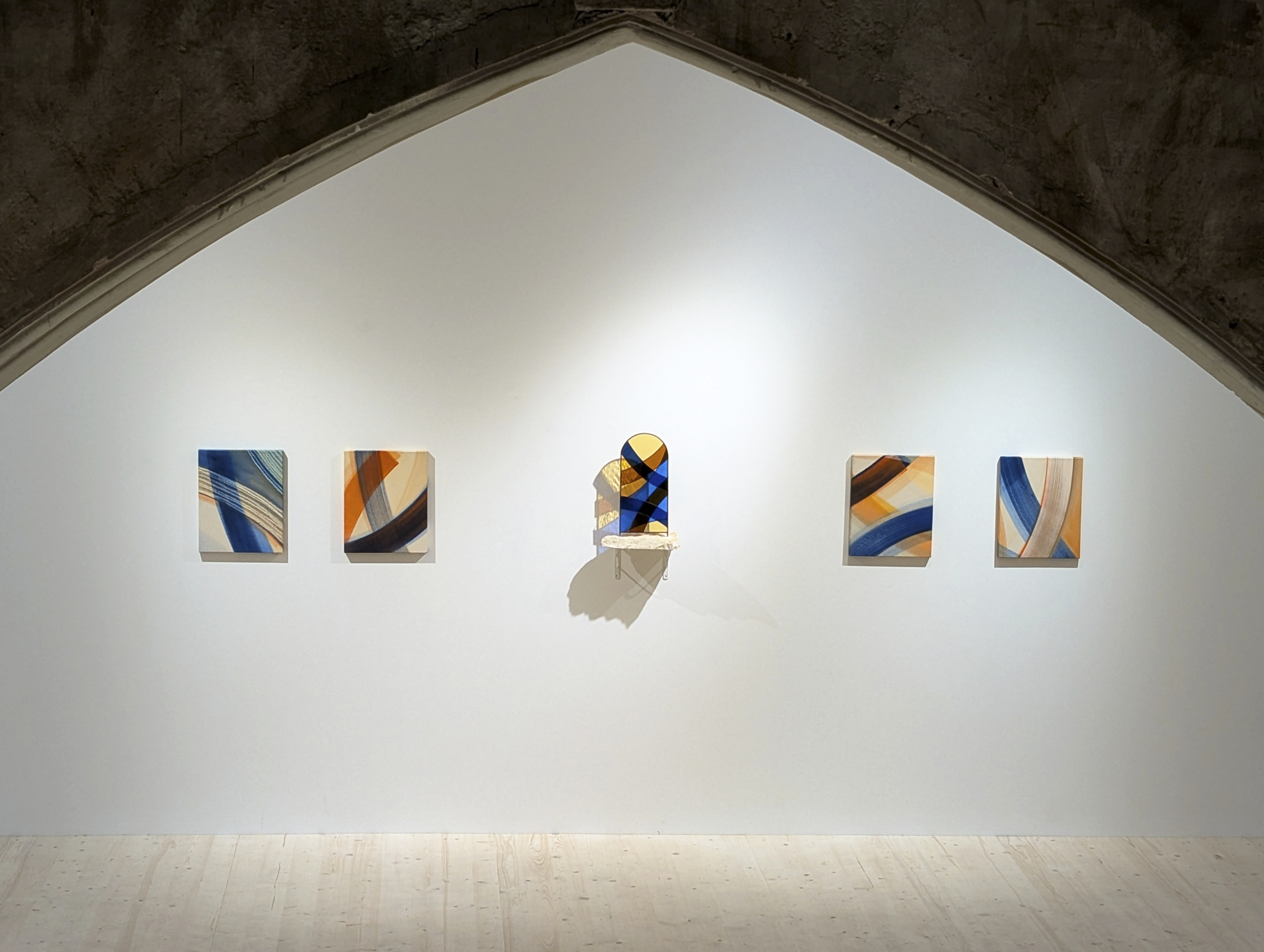
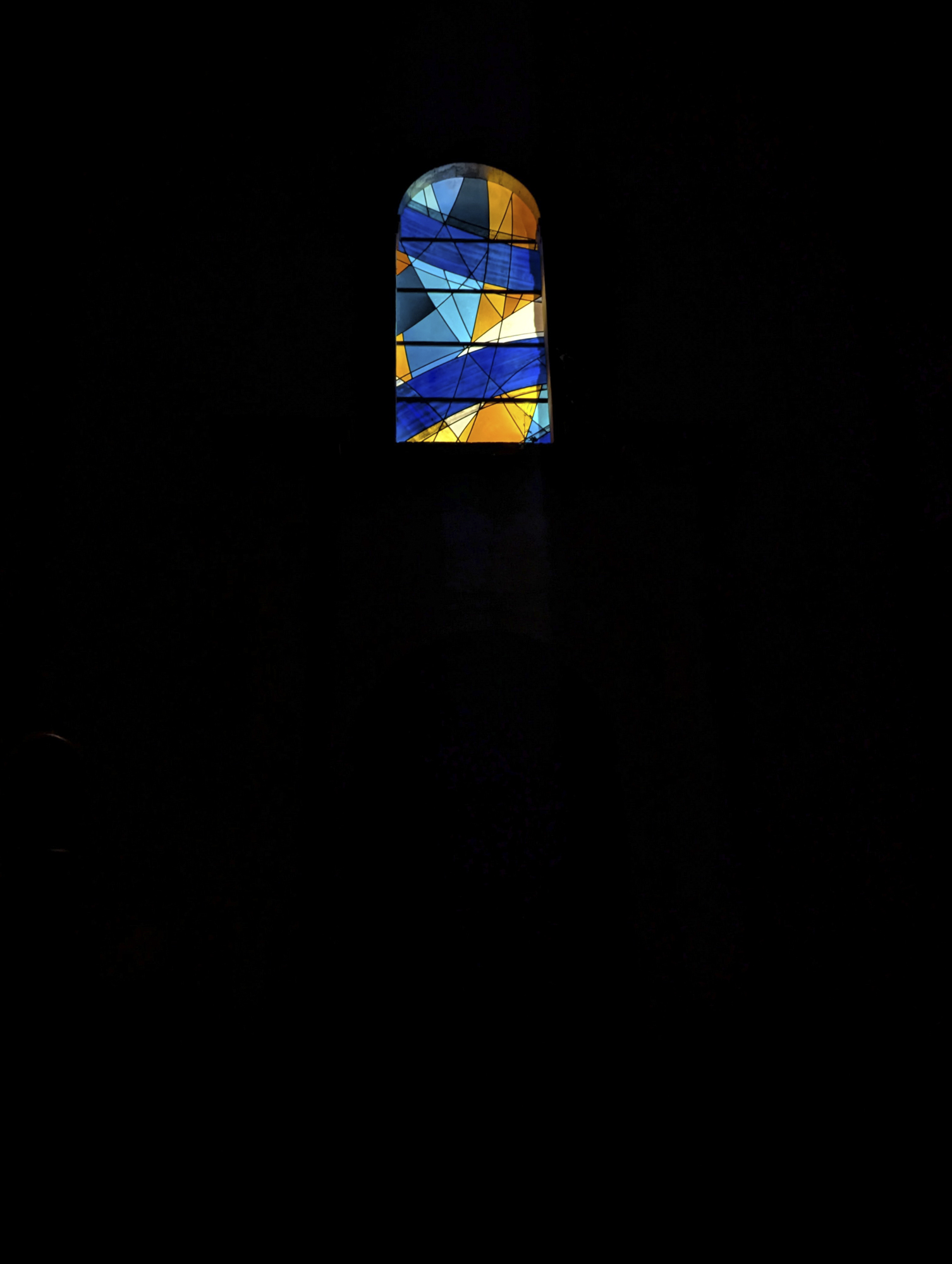
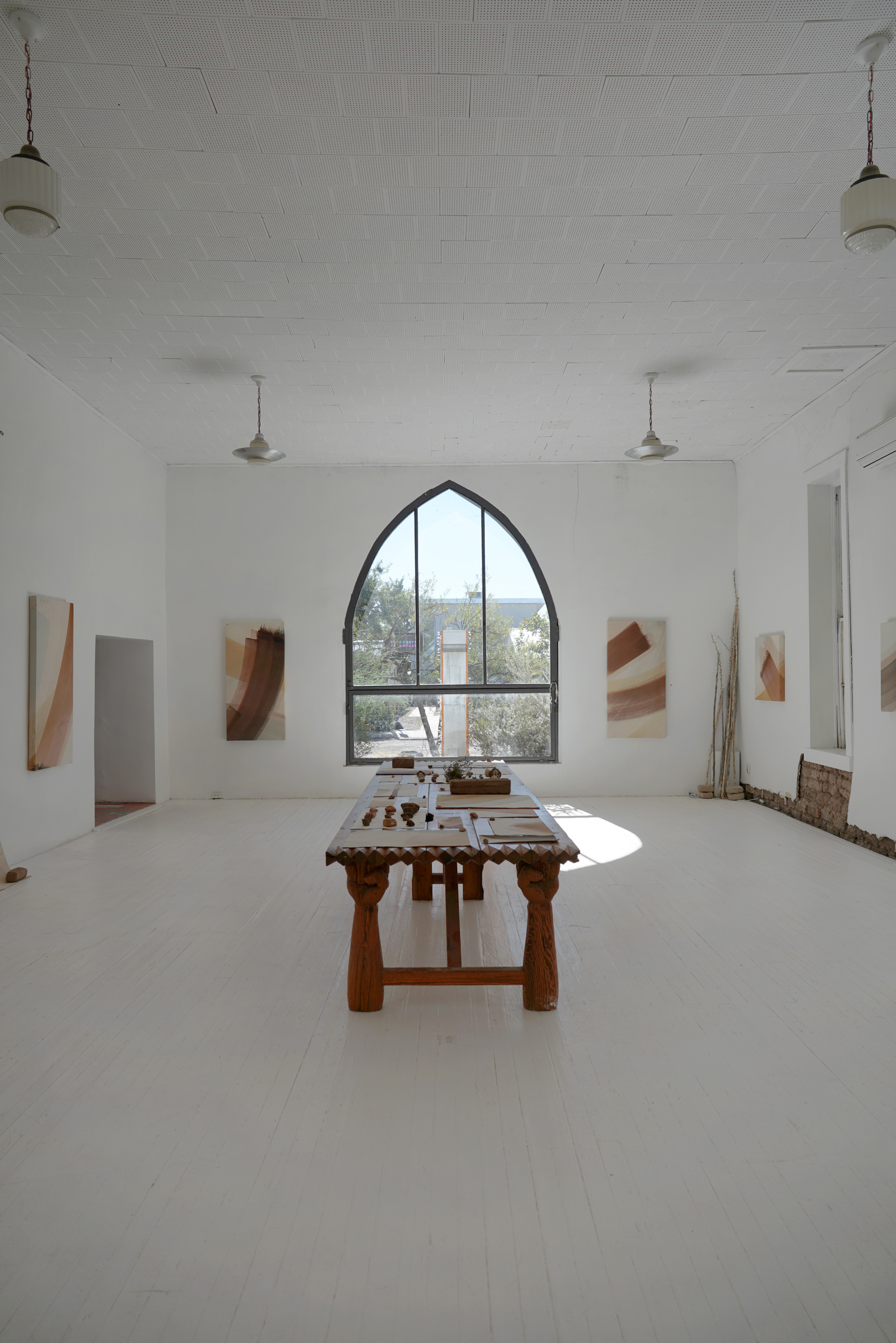
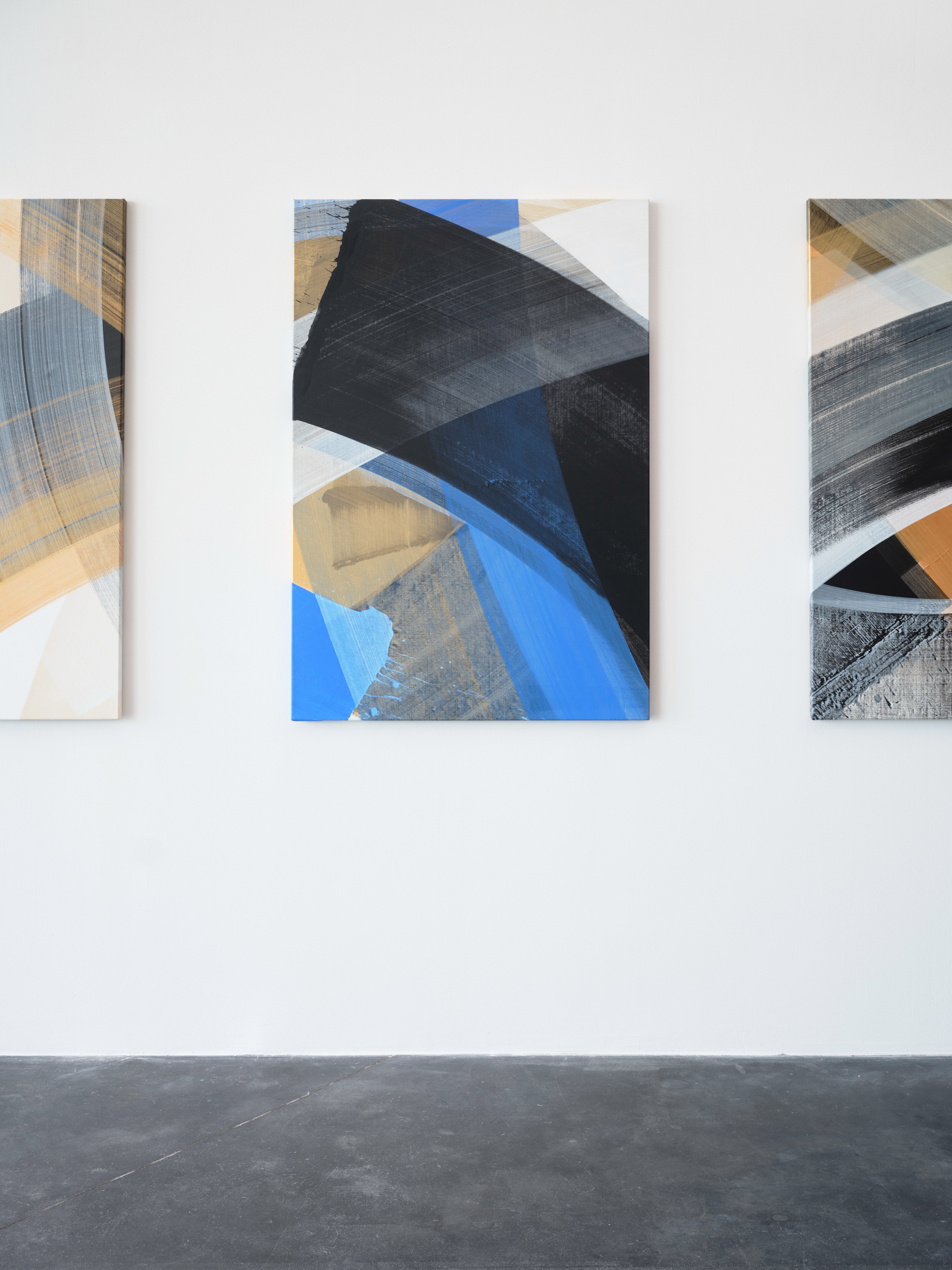
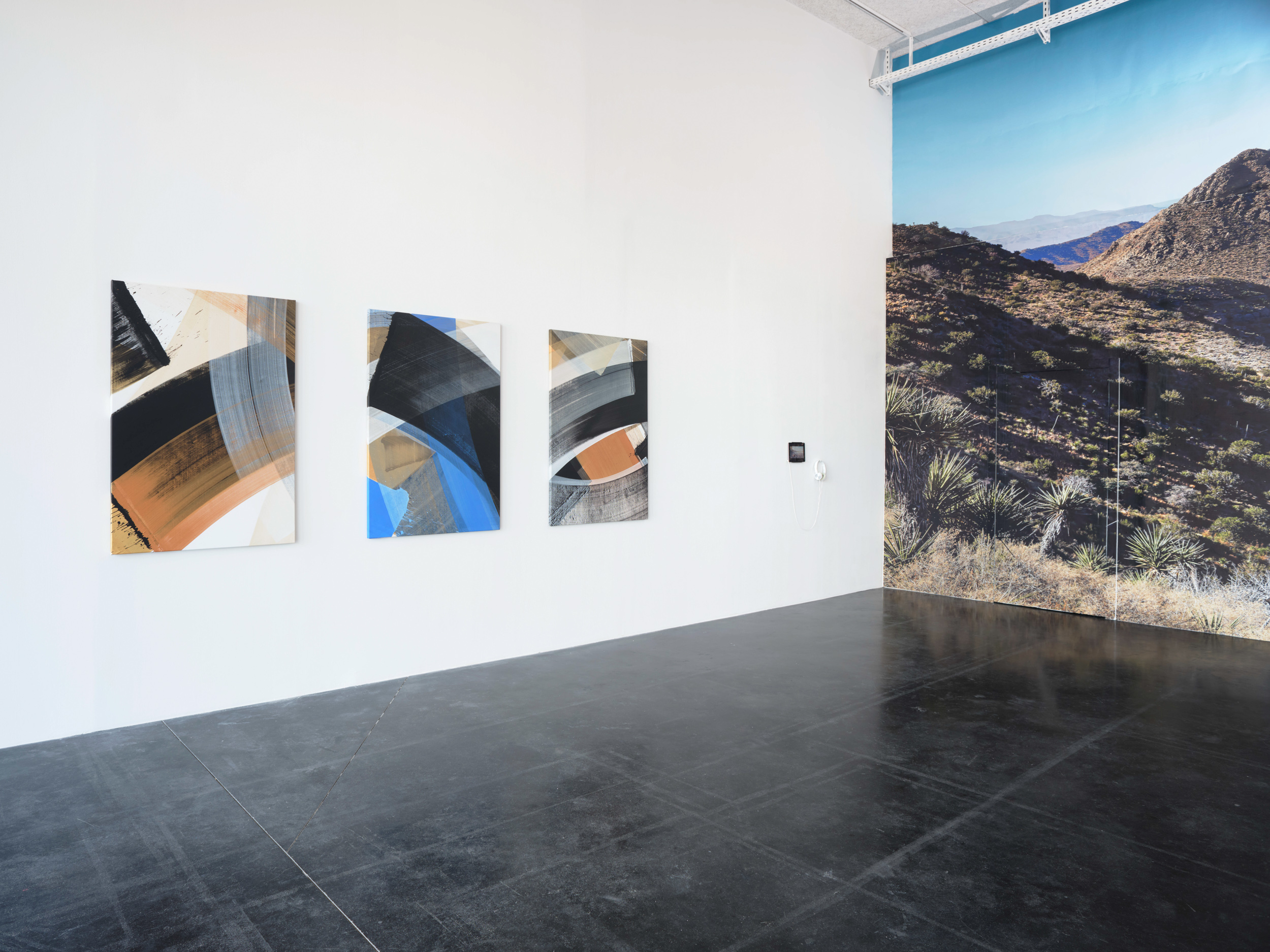
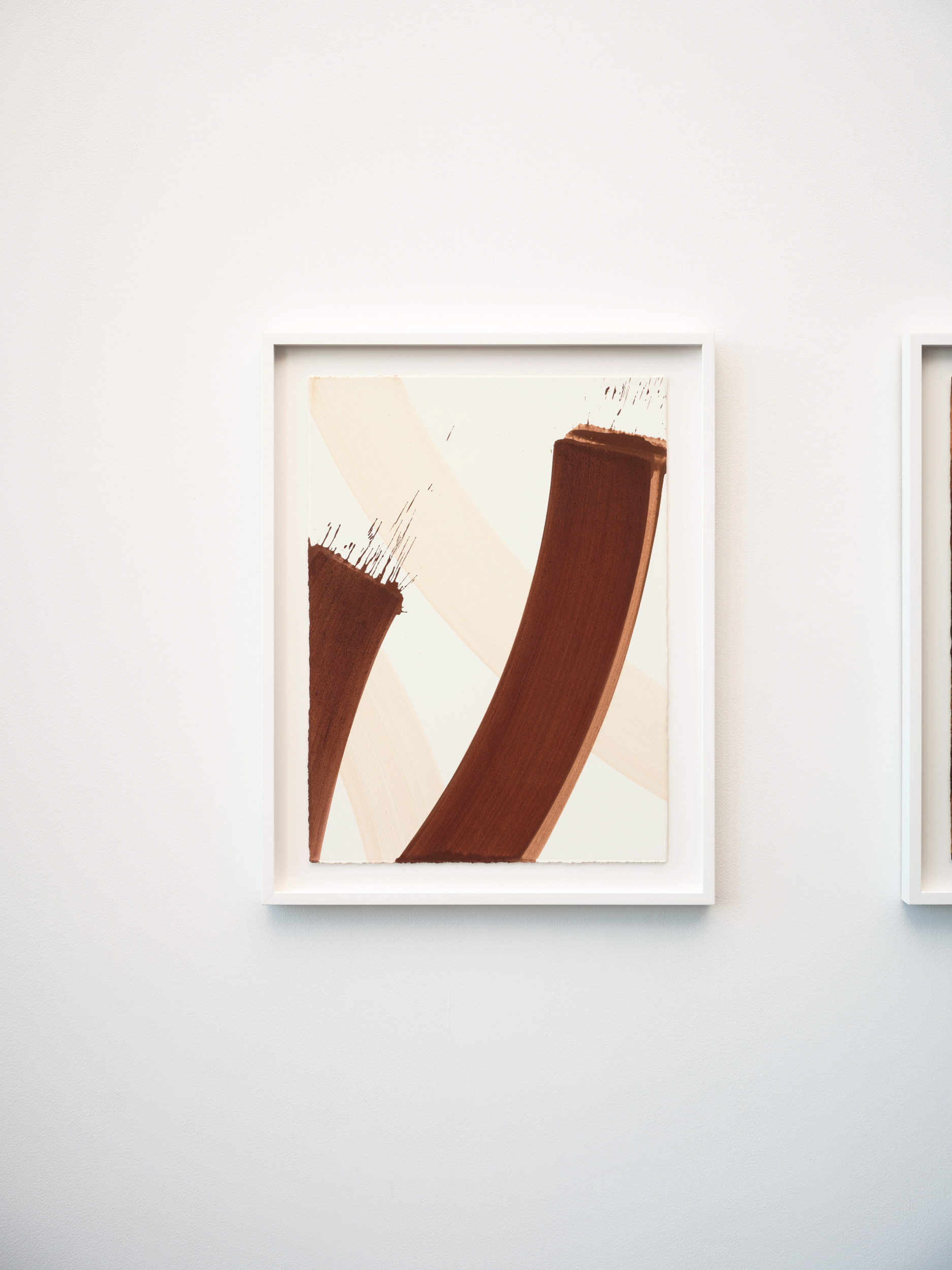
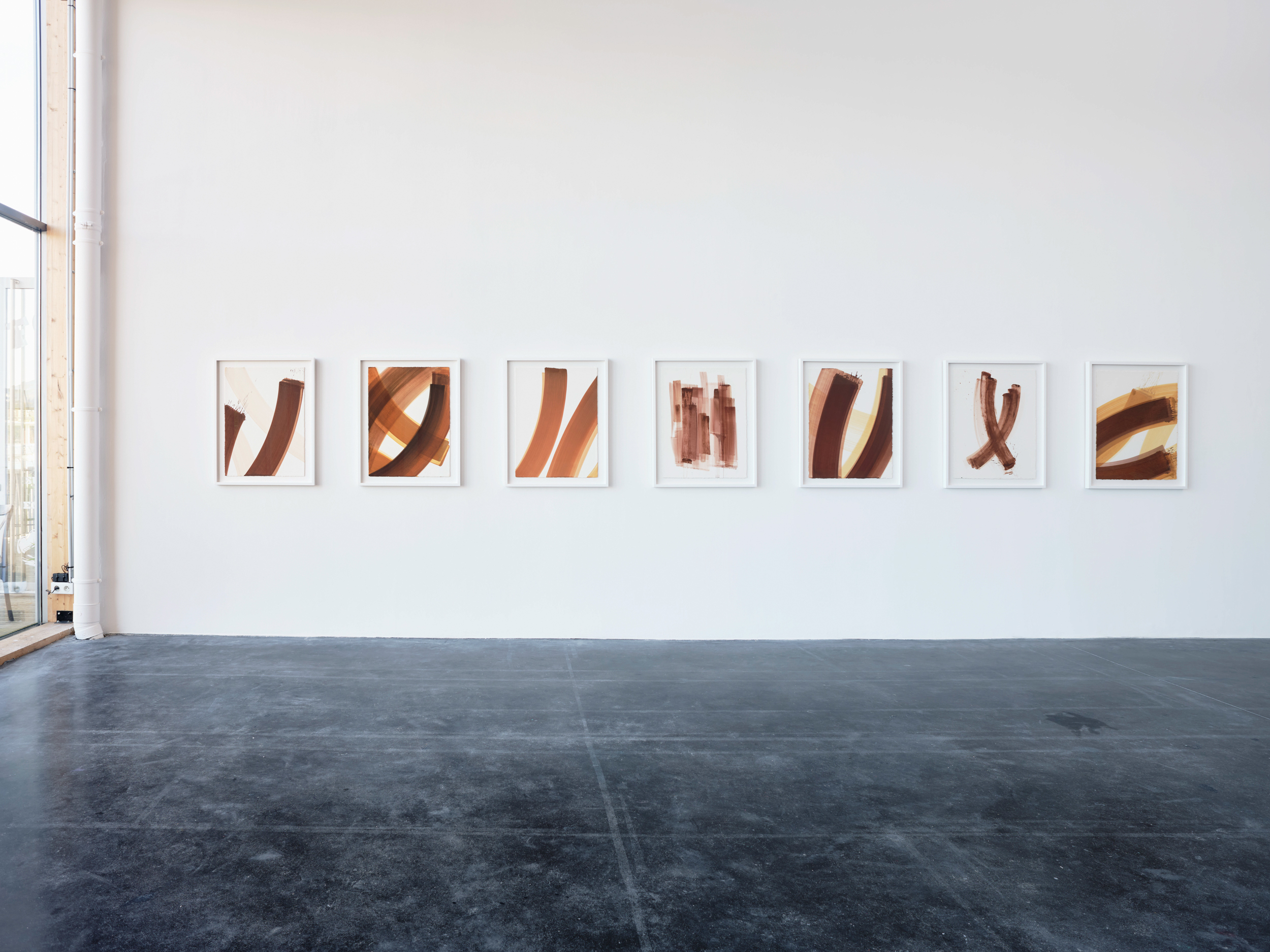
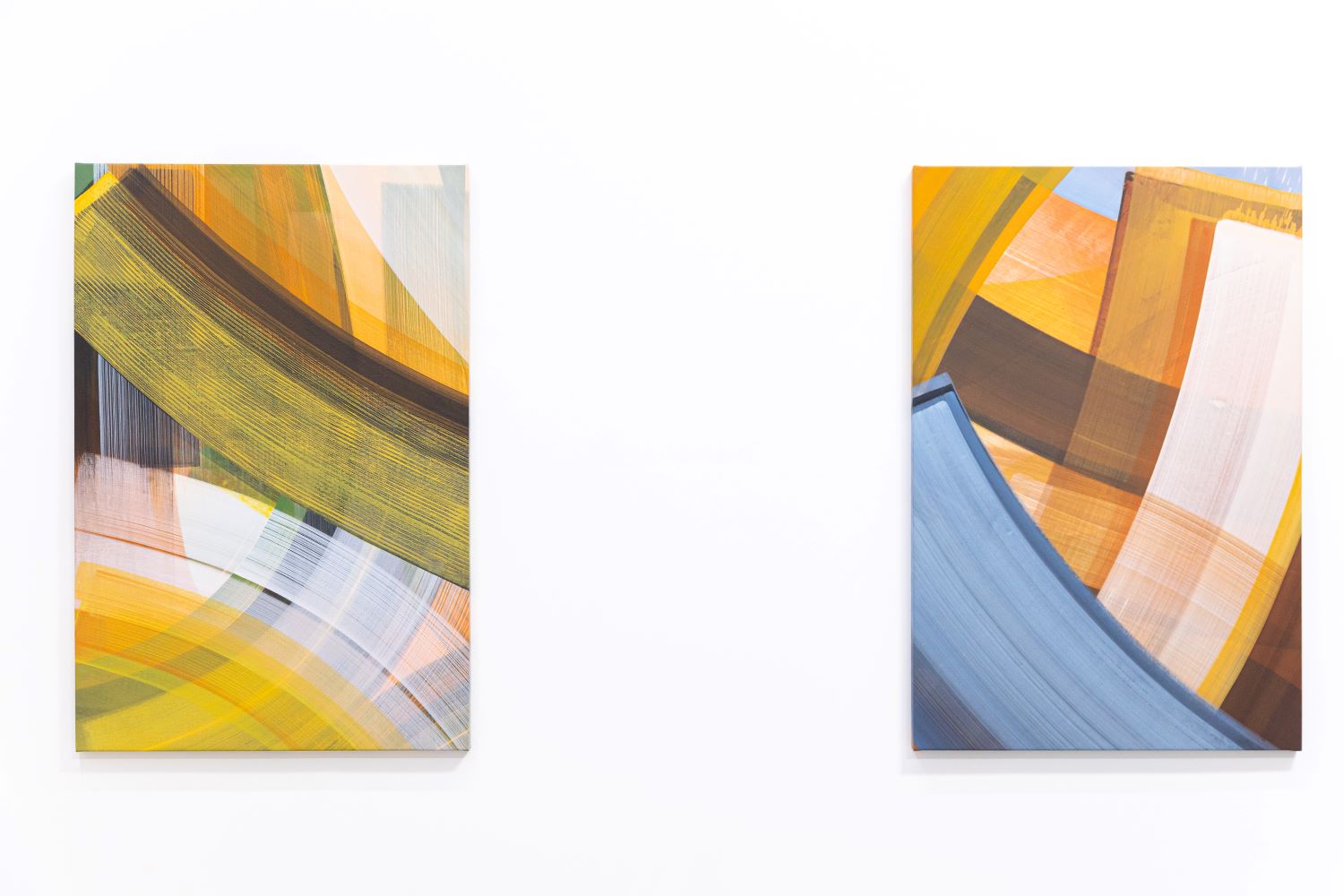
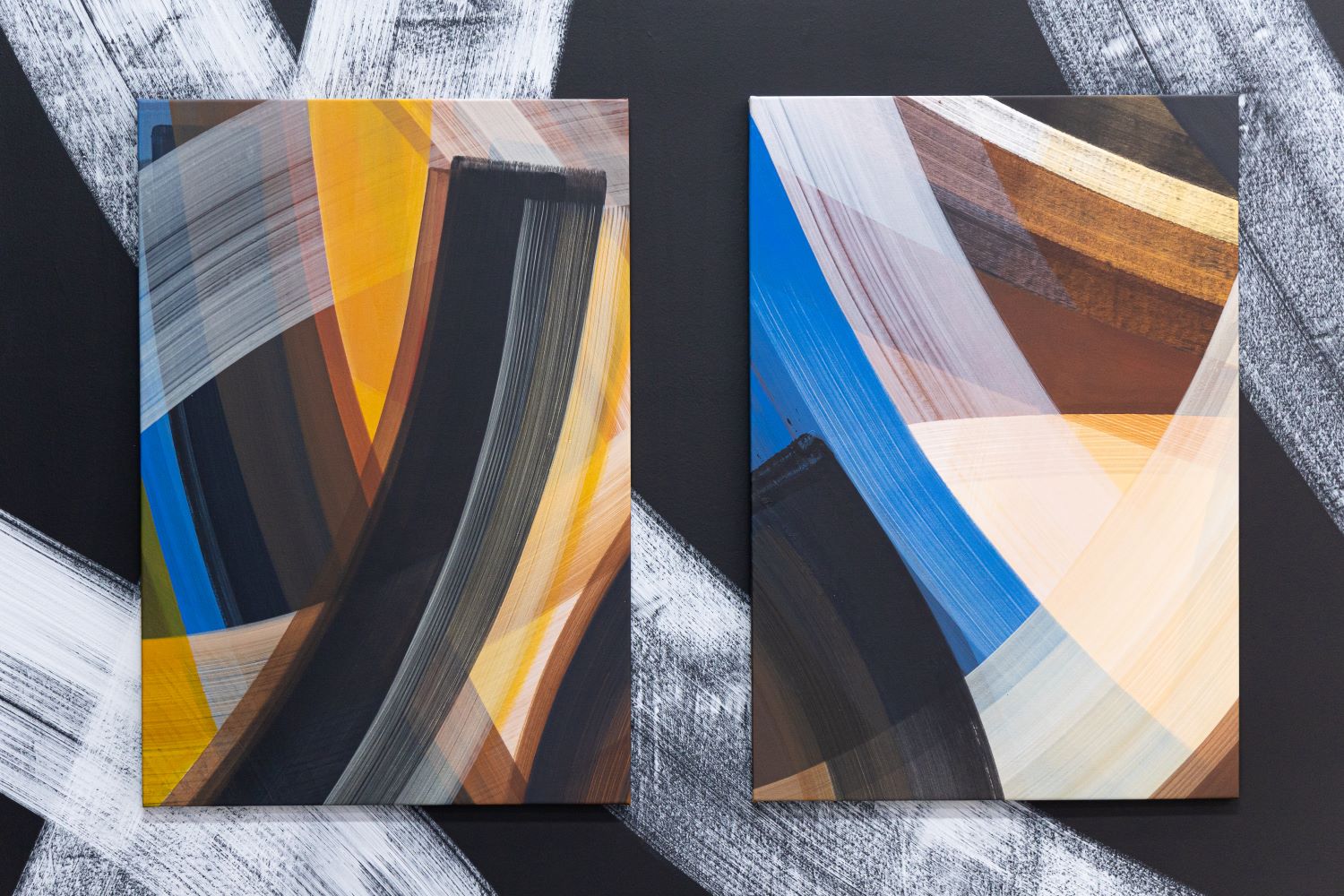
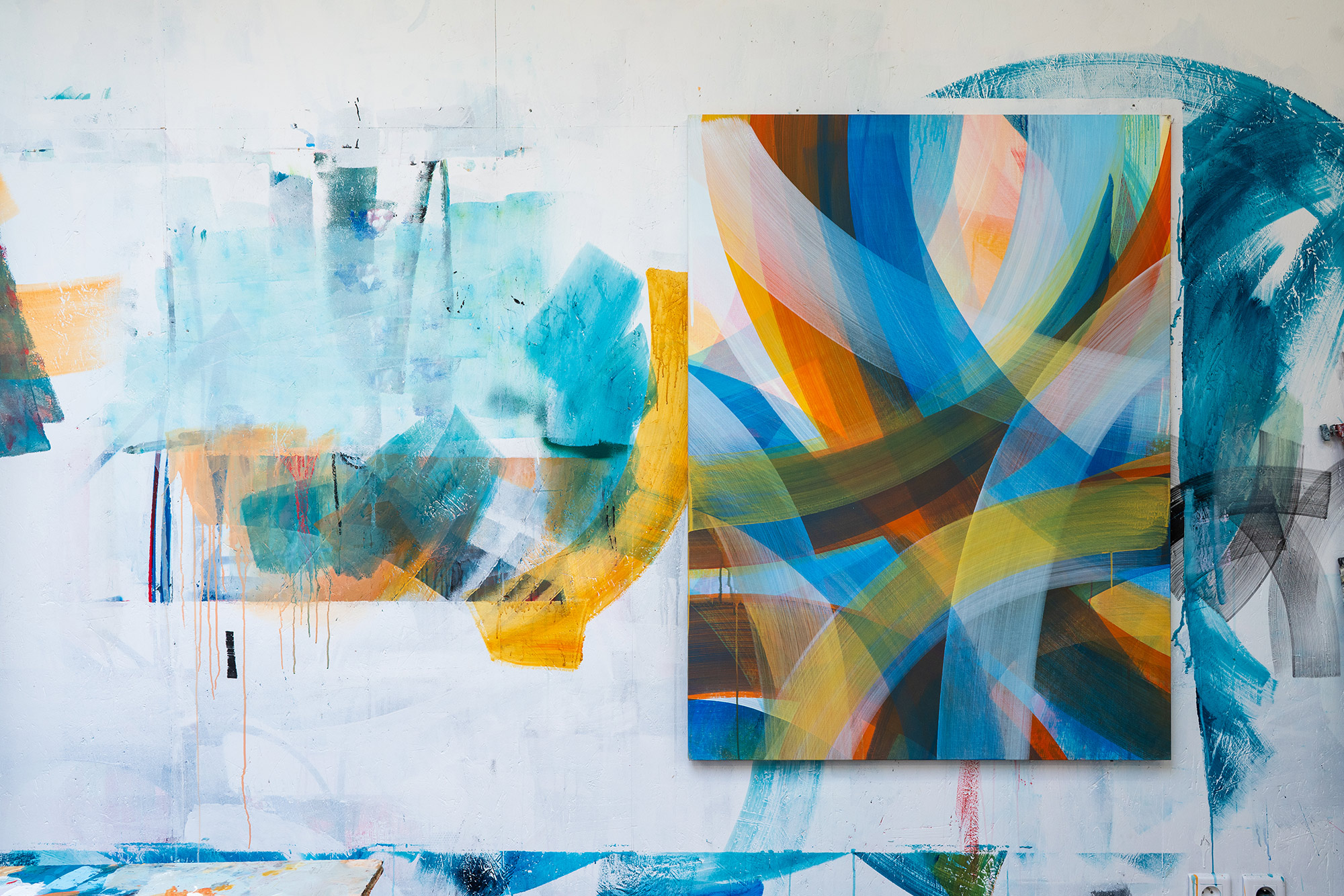
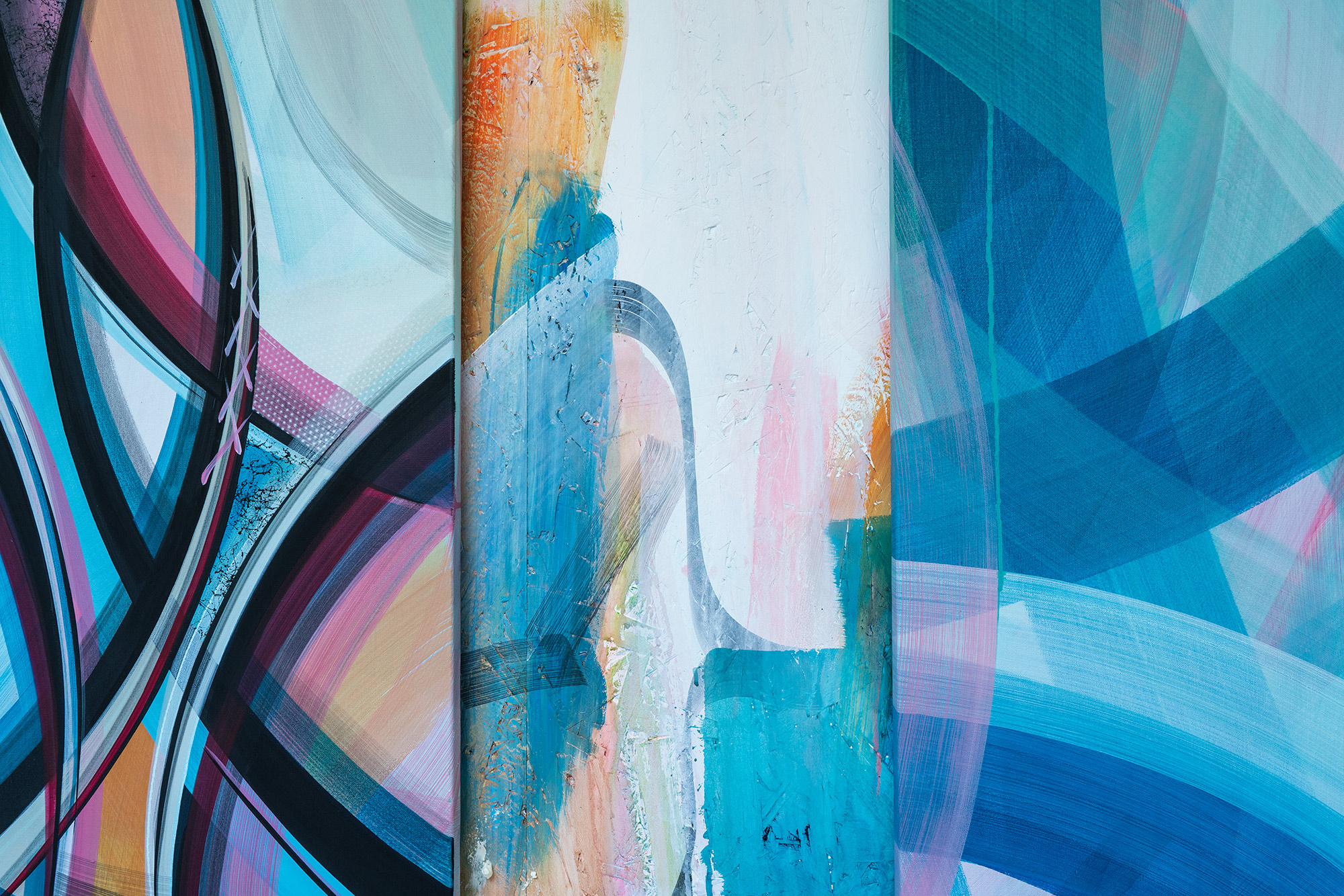
As part of the creation of a stained-glass window designed for the Chapelle des Pénitents in Pézenas, in collaboration with master glassmaker Carlo Roccella, Romain Froquet continues his exploration of invisible connections, light, and the transformation of spaces.
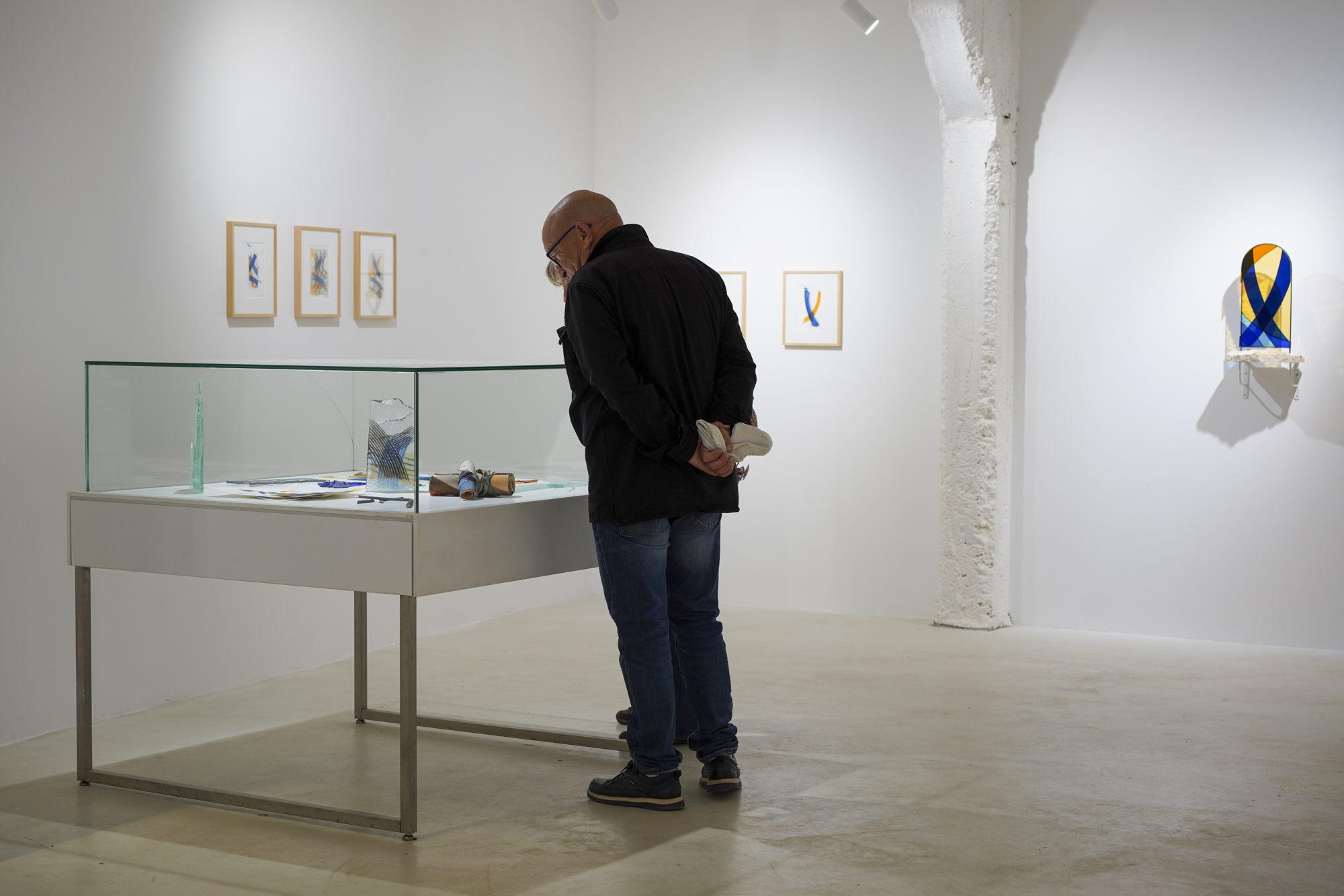
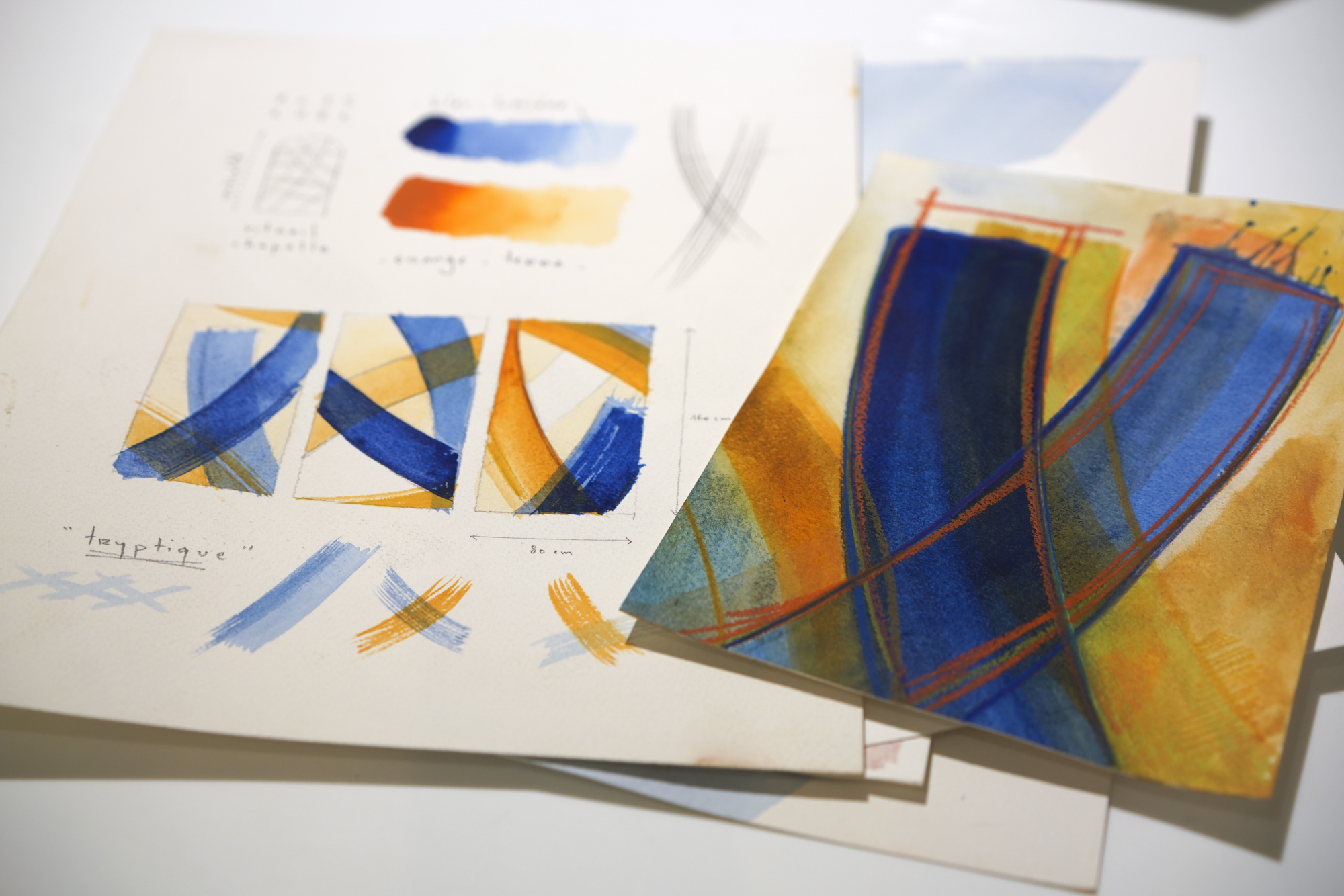
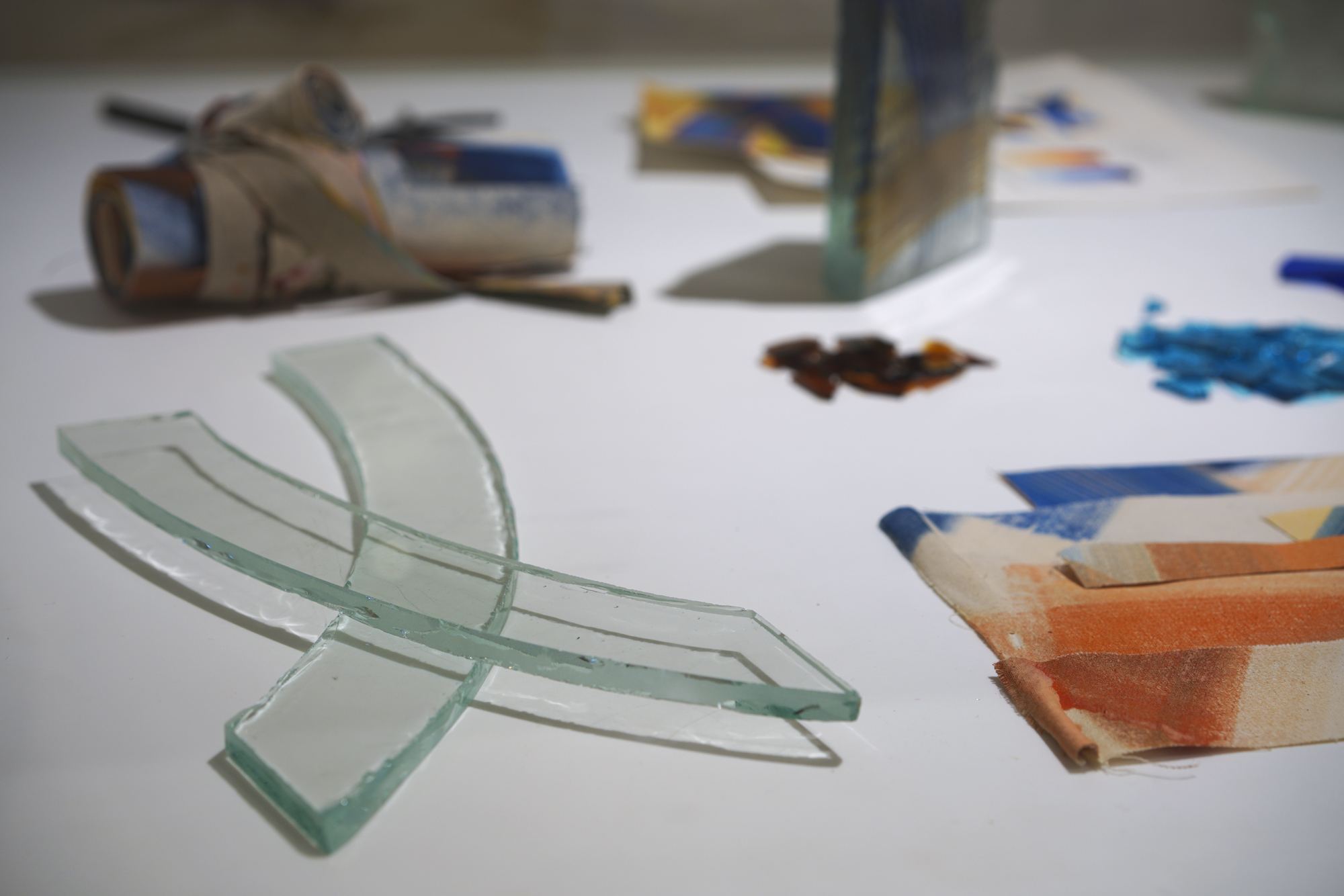
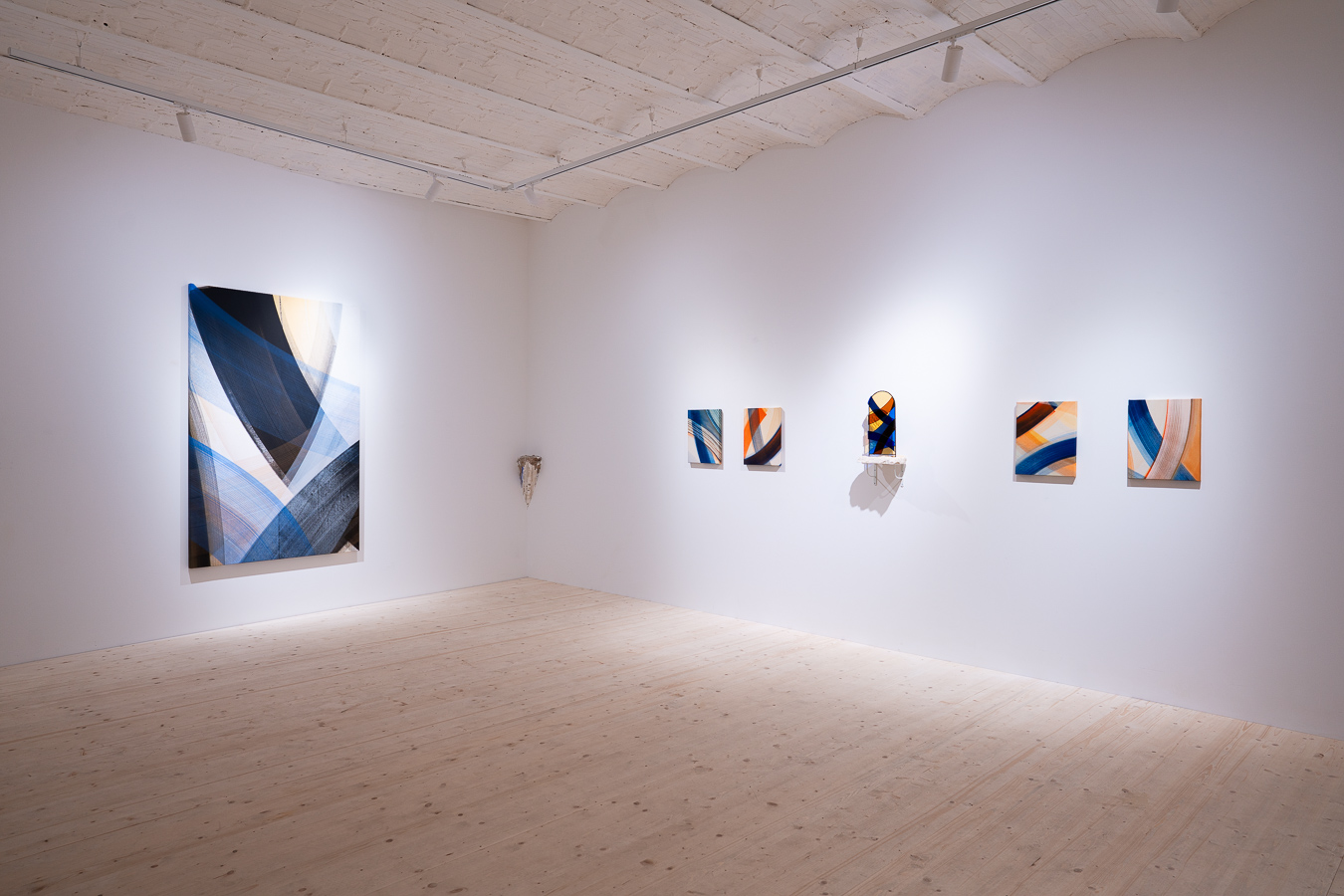
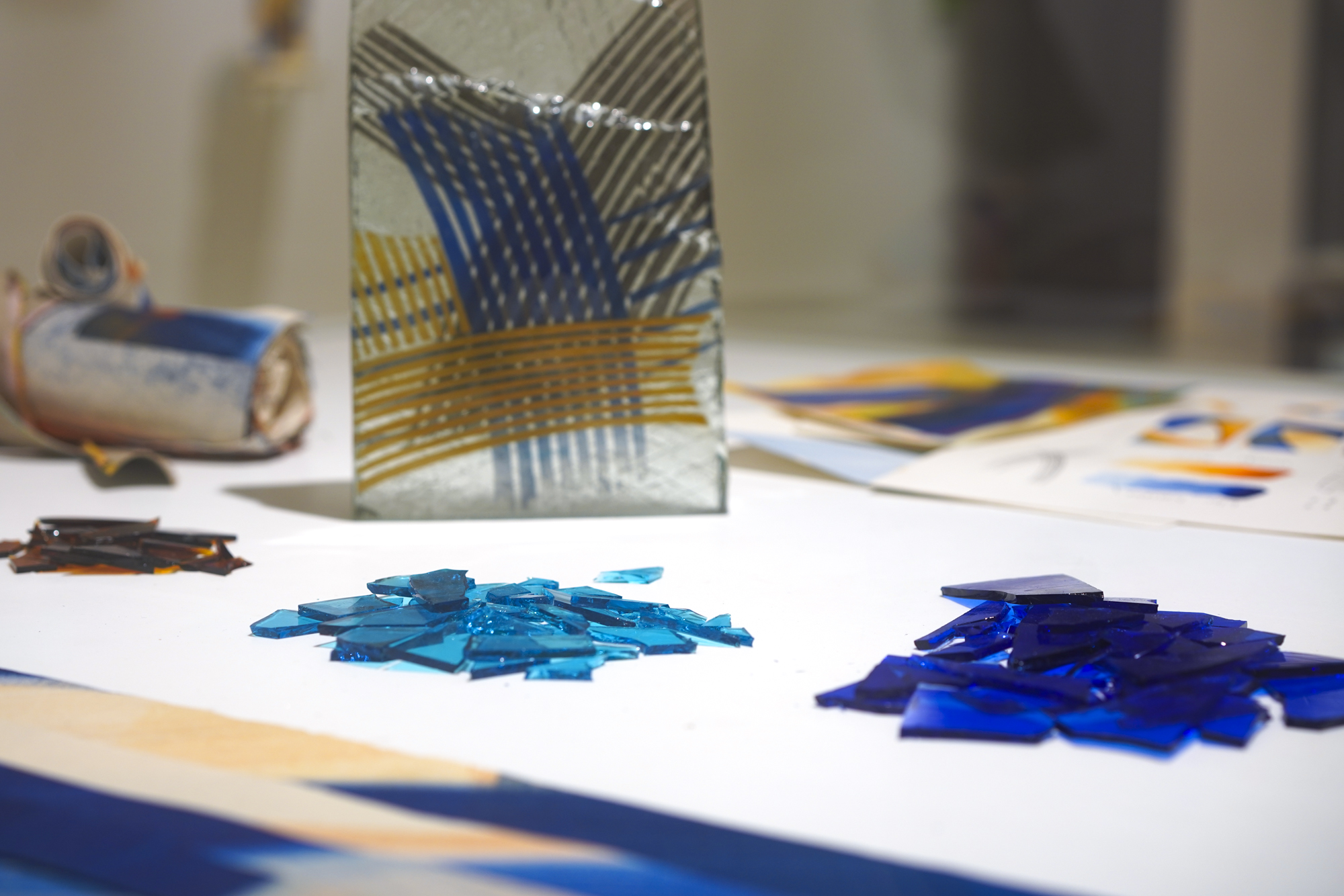
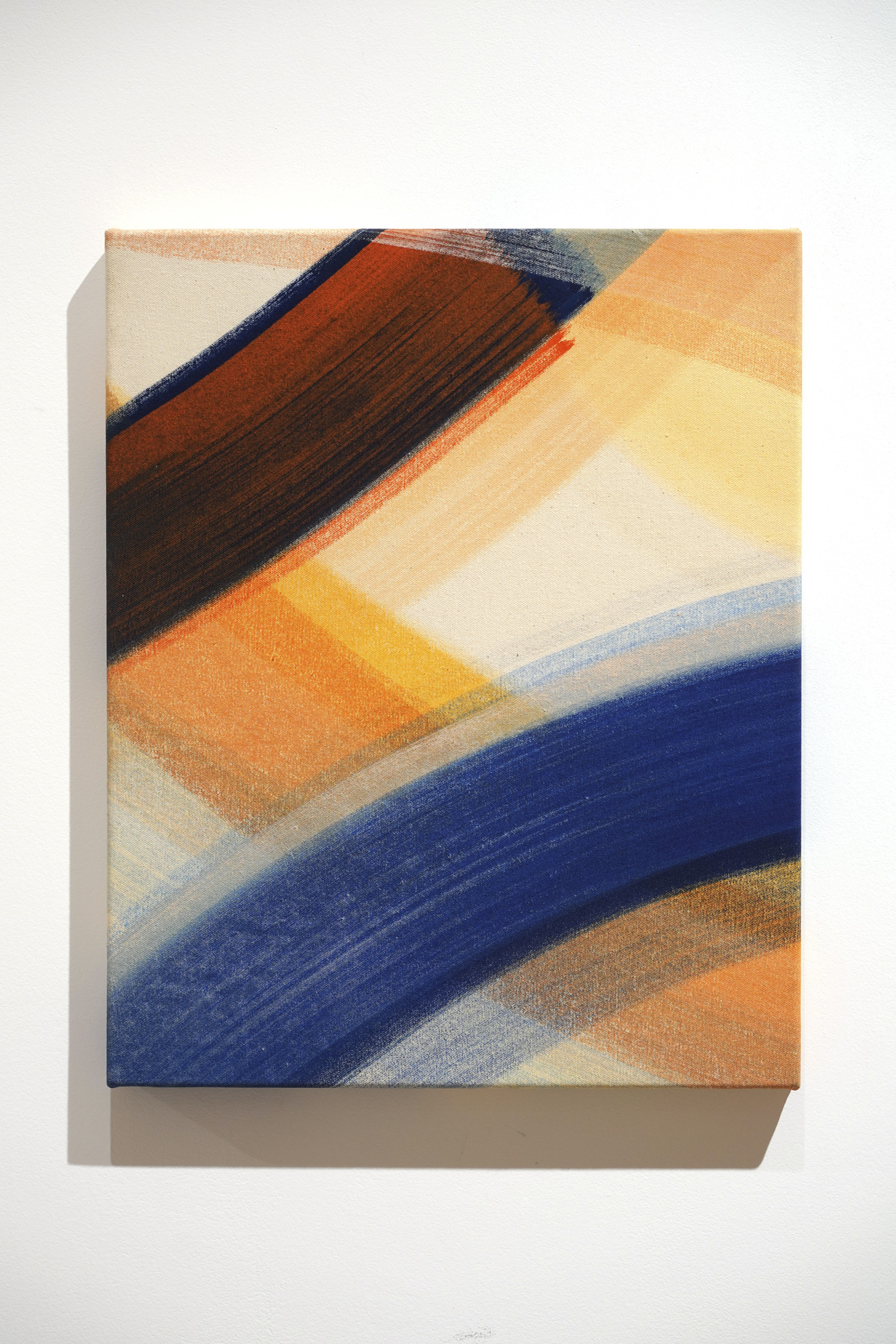
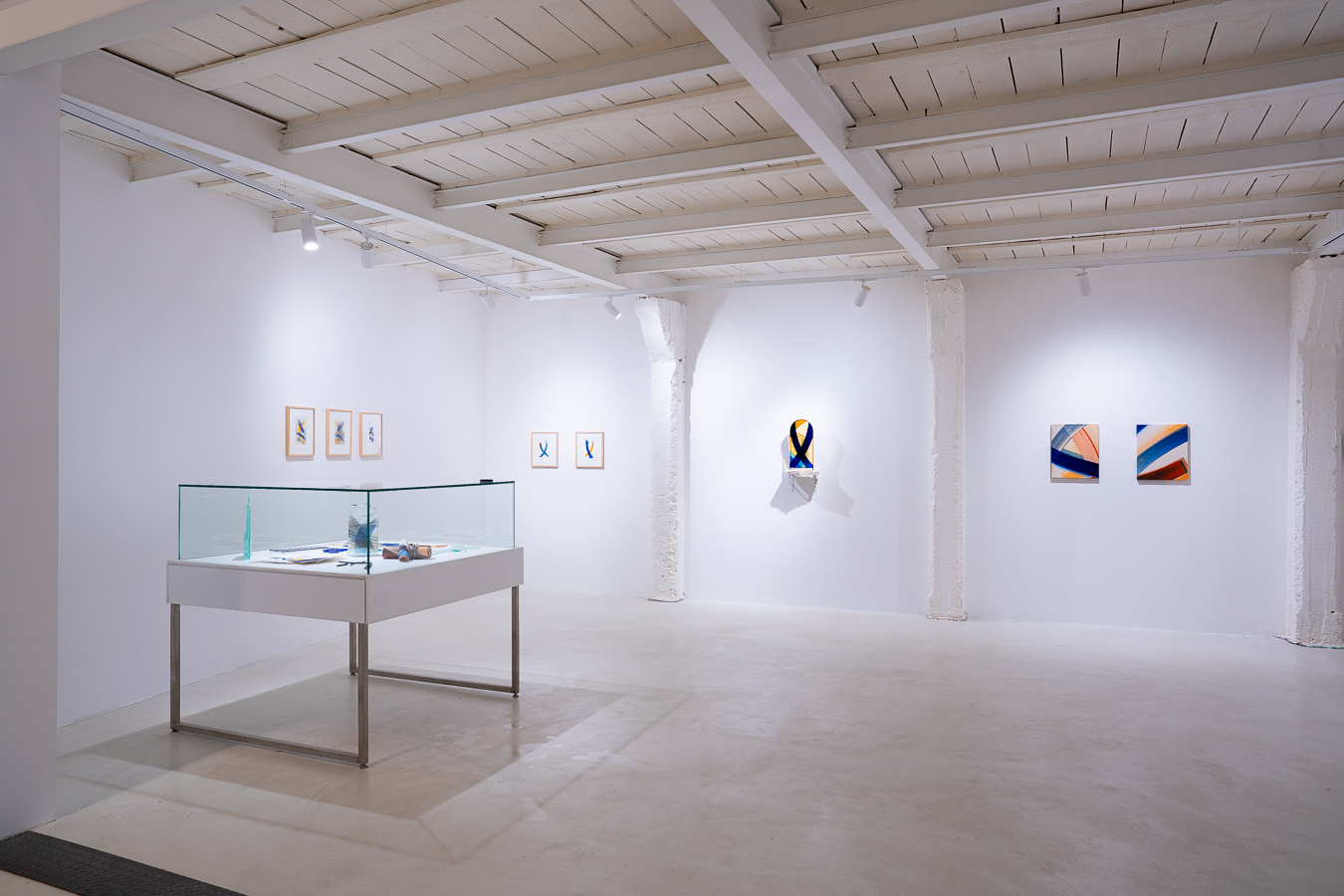
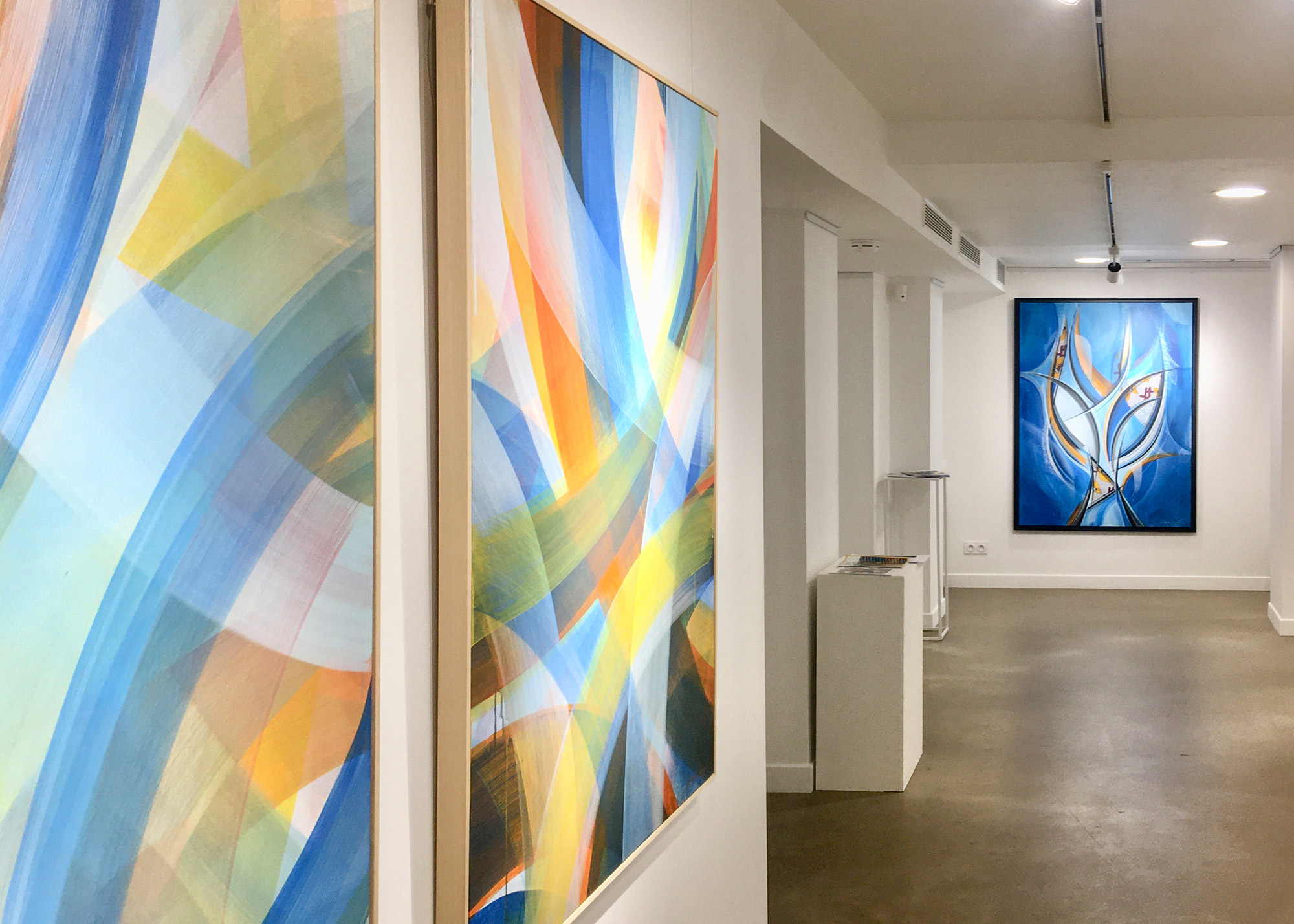
Conceived as an extension of this experience, Refraction brings together the different stages that led to the creation of the stained-glass window: watercolor studies, experiments with light and glass, works on glass, and new paintings created after returning to the studio.
This immersion in glasswork opens new horizons in the artist's practice. By passing through the material, light reveals not only forms: it acts, transforms, and shifts the viewer’s perspective. Between transparency and color, between movement and vibration, the works on display extend this dialogue born from the encounter between a pictorial gesture and an ancestral craftsmanship.
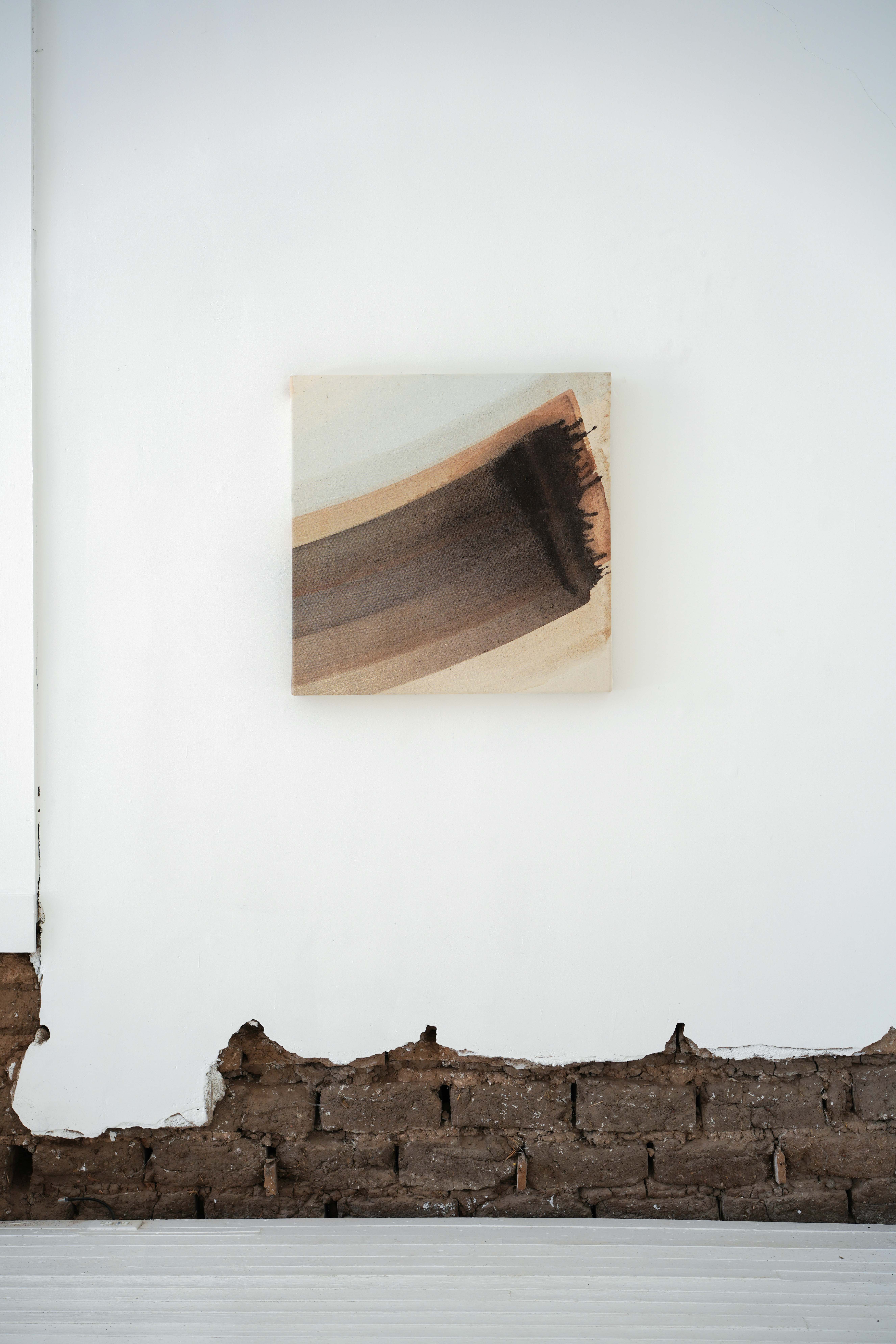
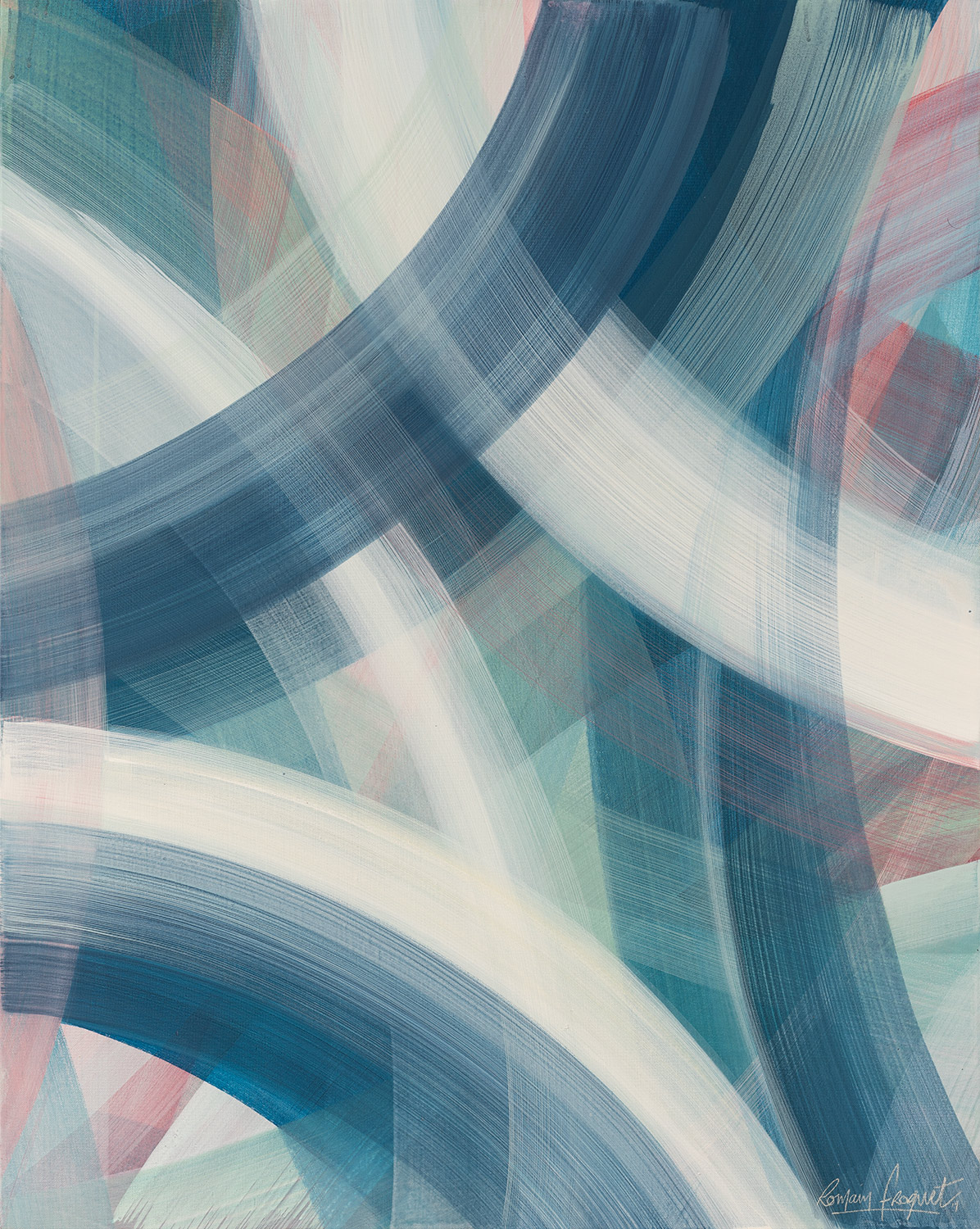
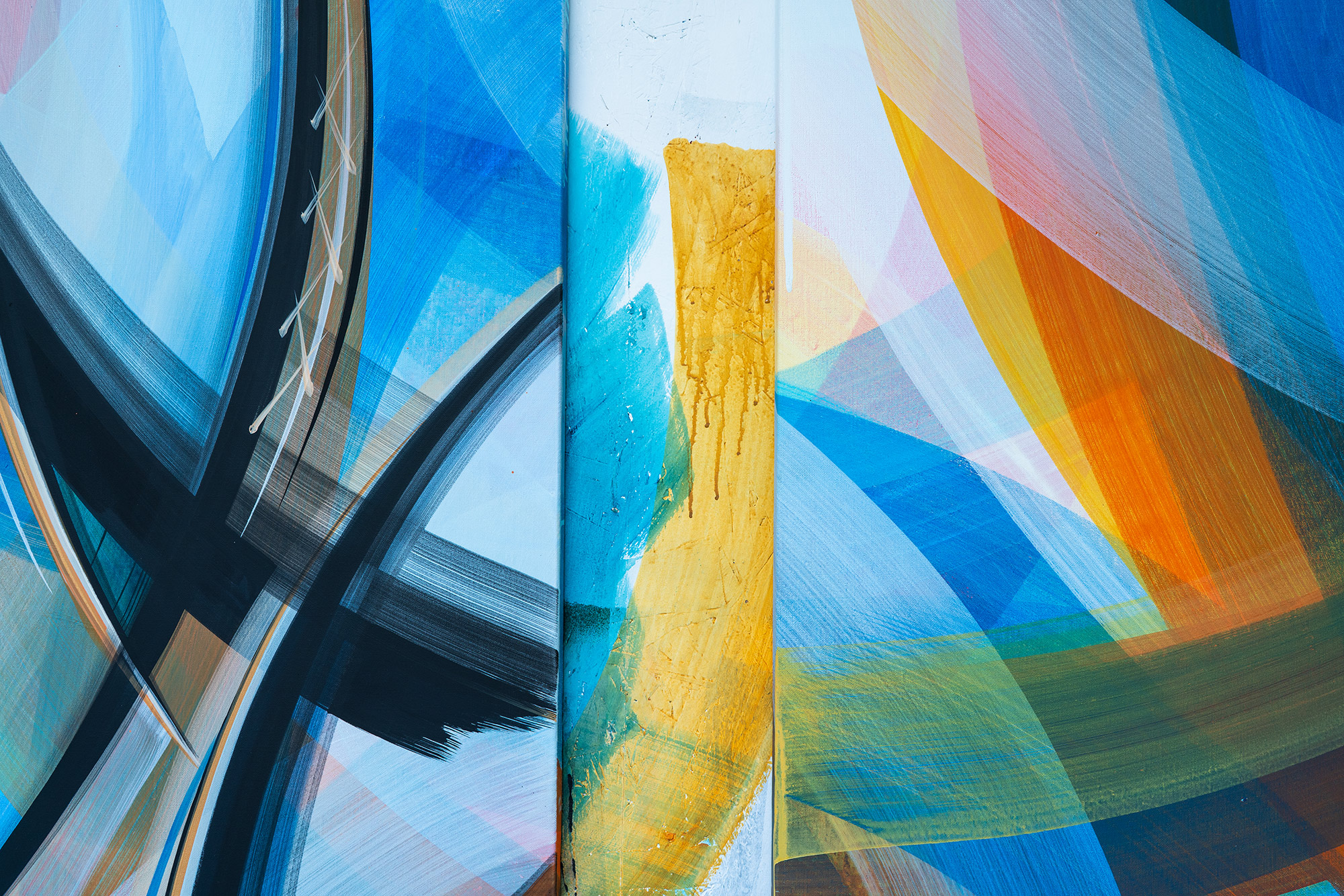
The paintings created after this experience seem to retain the memory of this journey. Color is displayed in a different way there, enhanced by shifts in light, rhythms, and balances that extend the sensory experience of this place.
Refraction turns light into a substance in its own right, a meeting place where the artist's inner landscape dialogues with architecture, time, and perception.
The sound of Ruidosa
2025 | Do Right Hall, Marfa
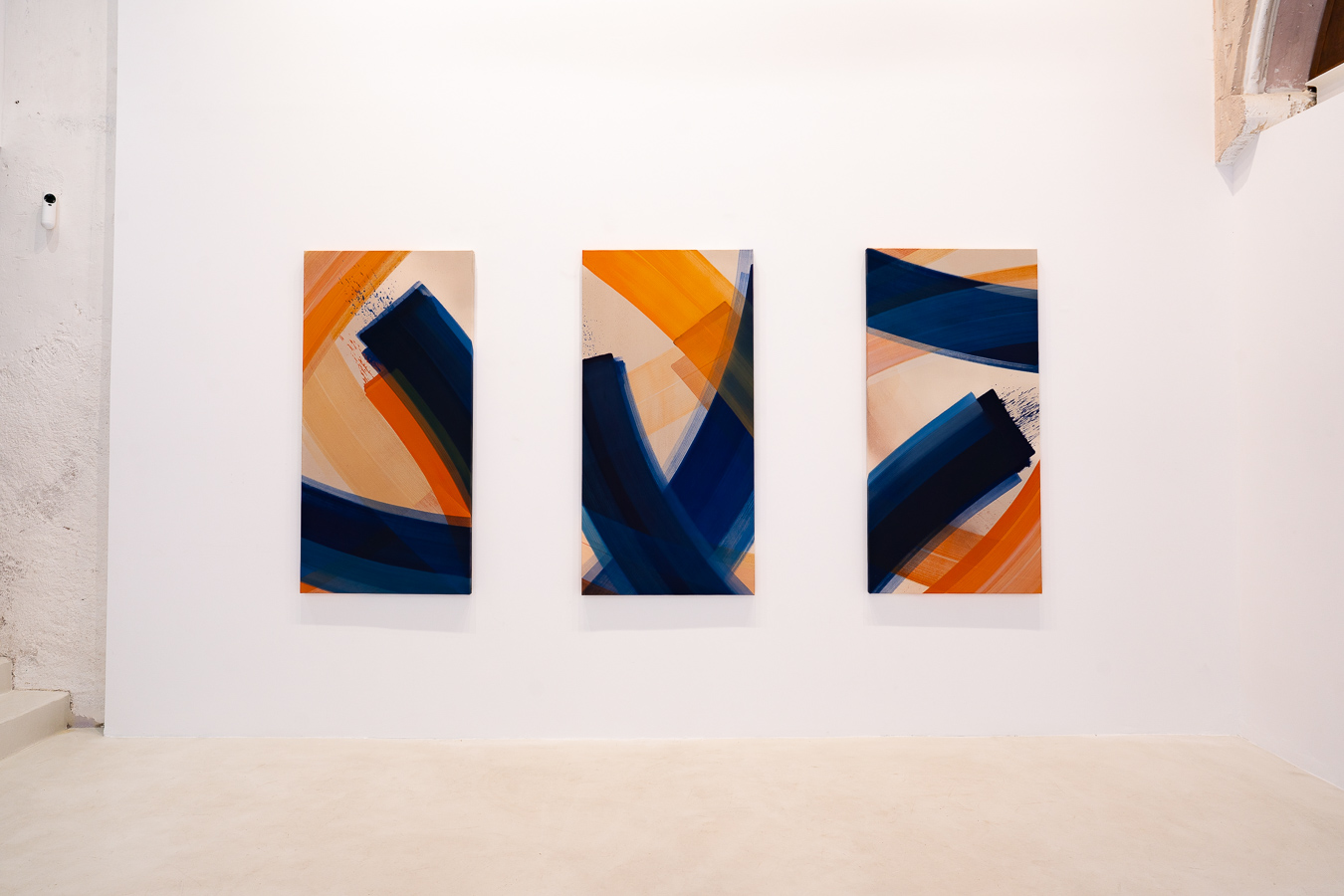
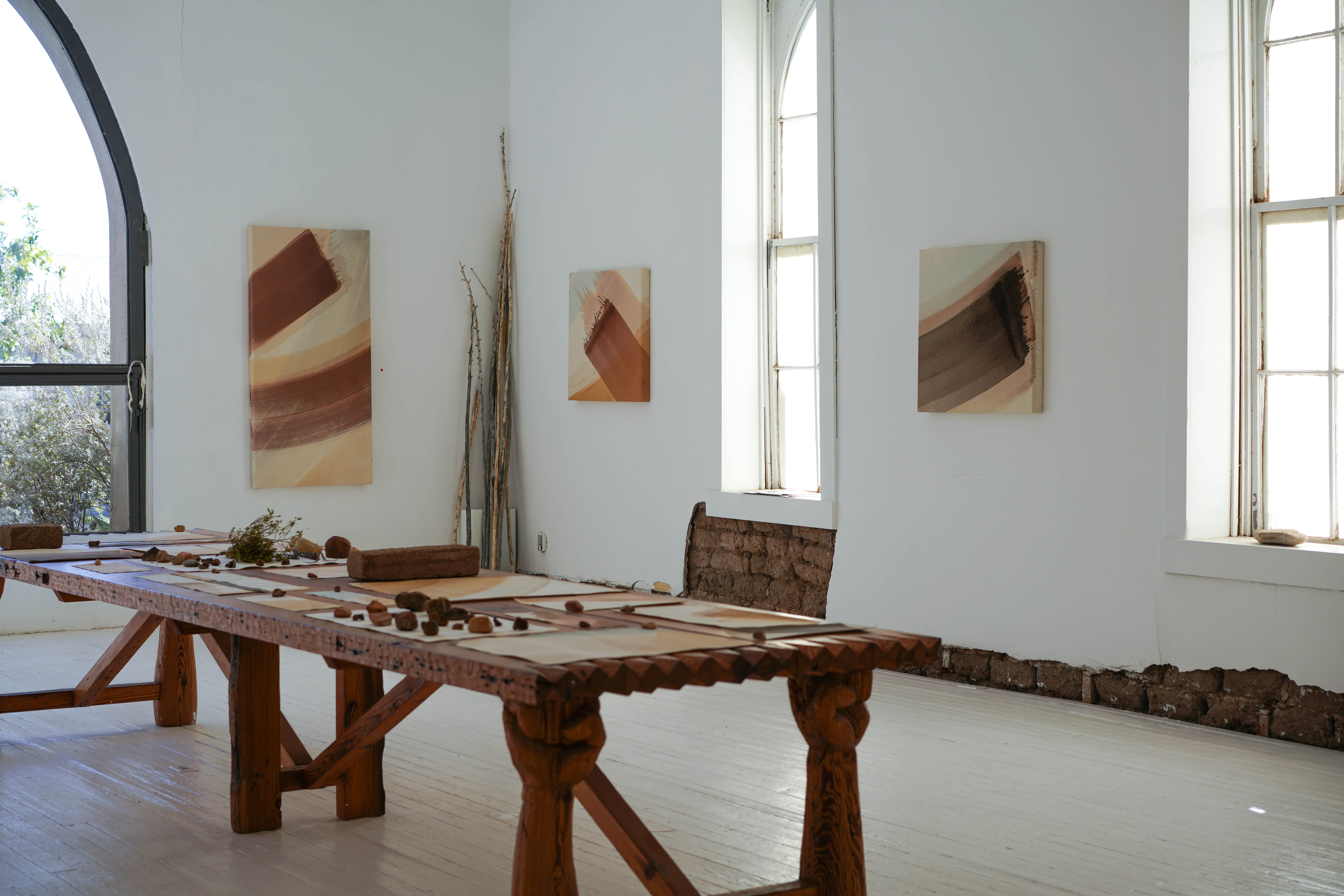
Following the installation created at the Ruidosa Church, a selection of works from this artist’s residency was featured in an exhibition at Do Right Hall, in Marfa.
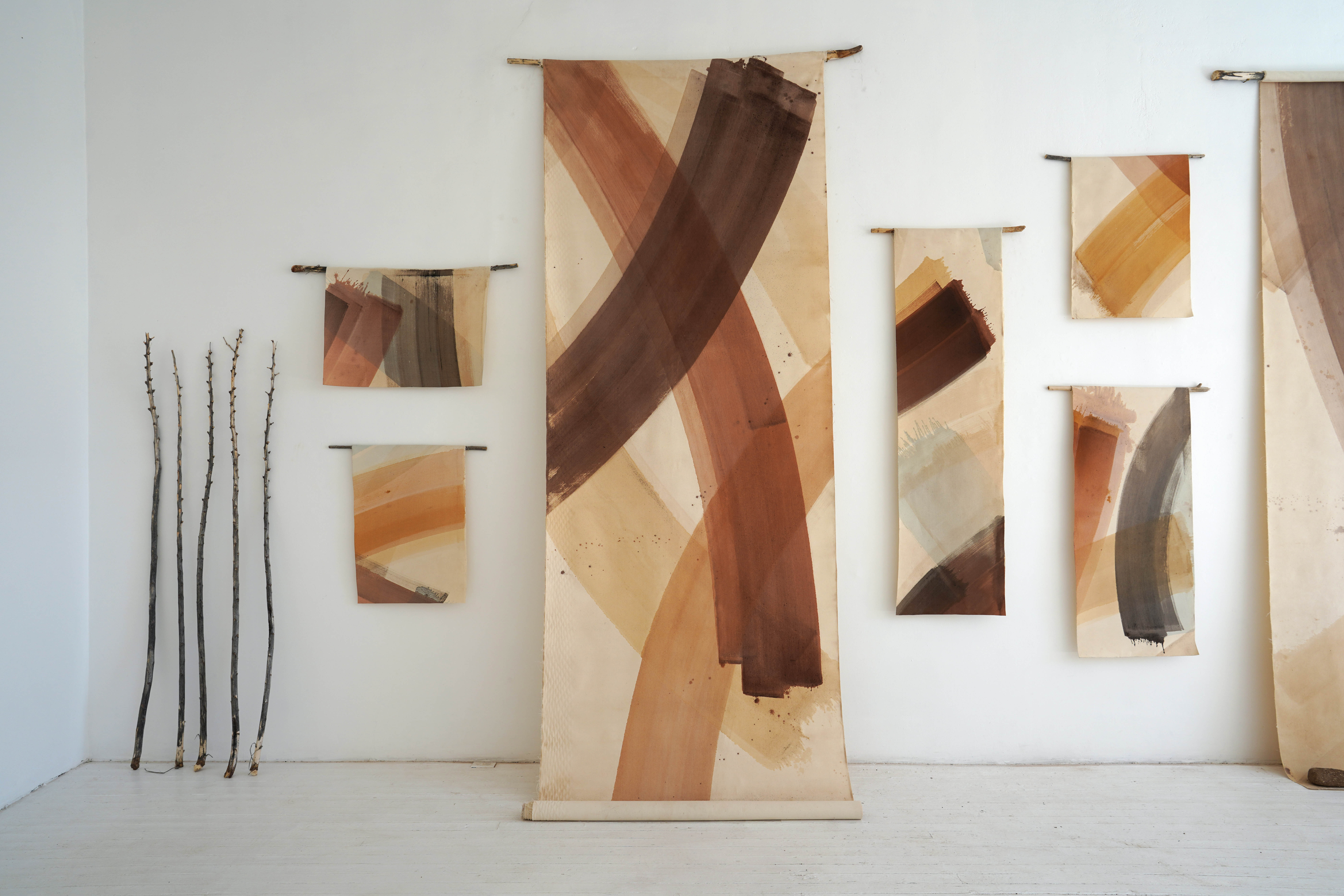
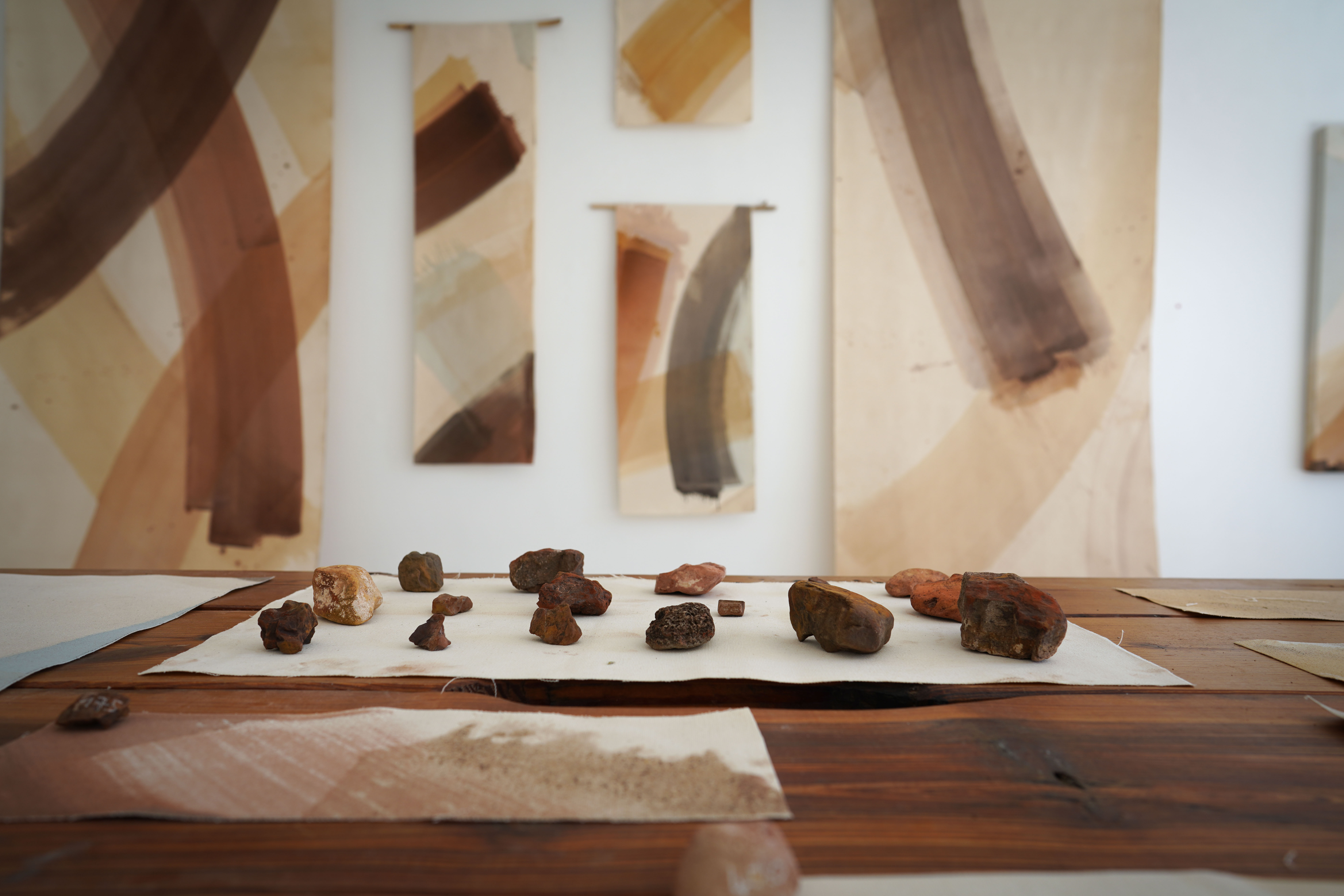
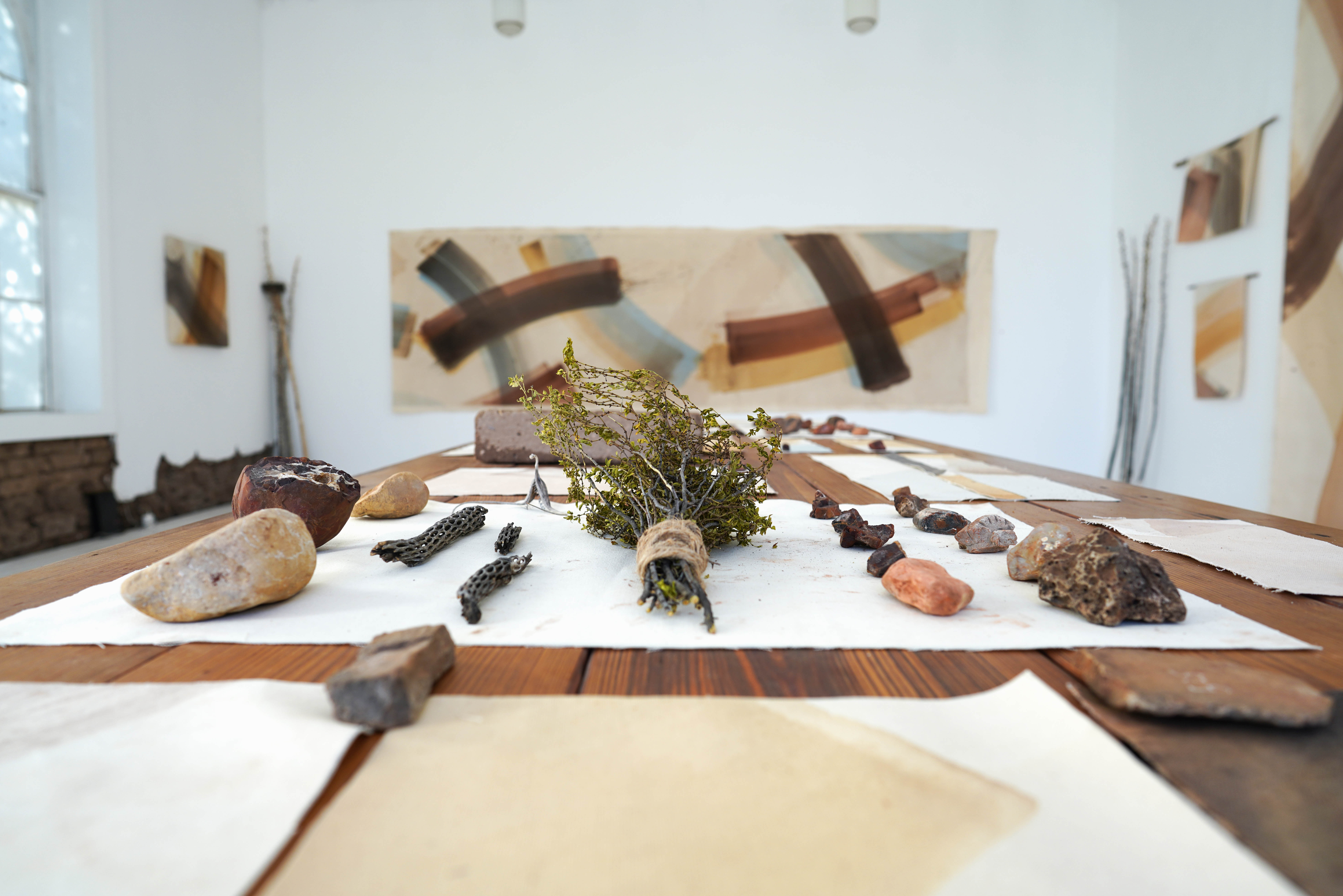
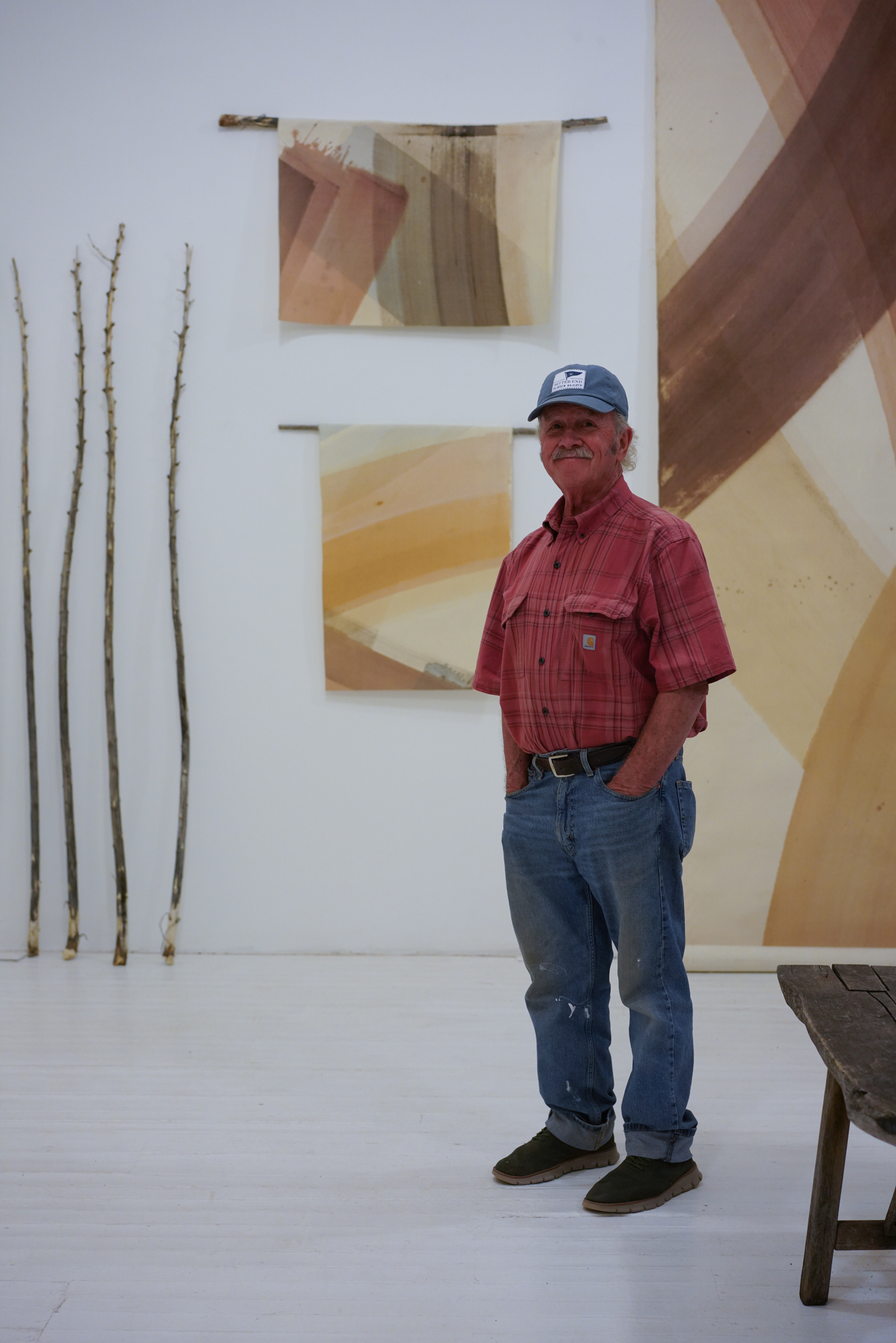
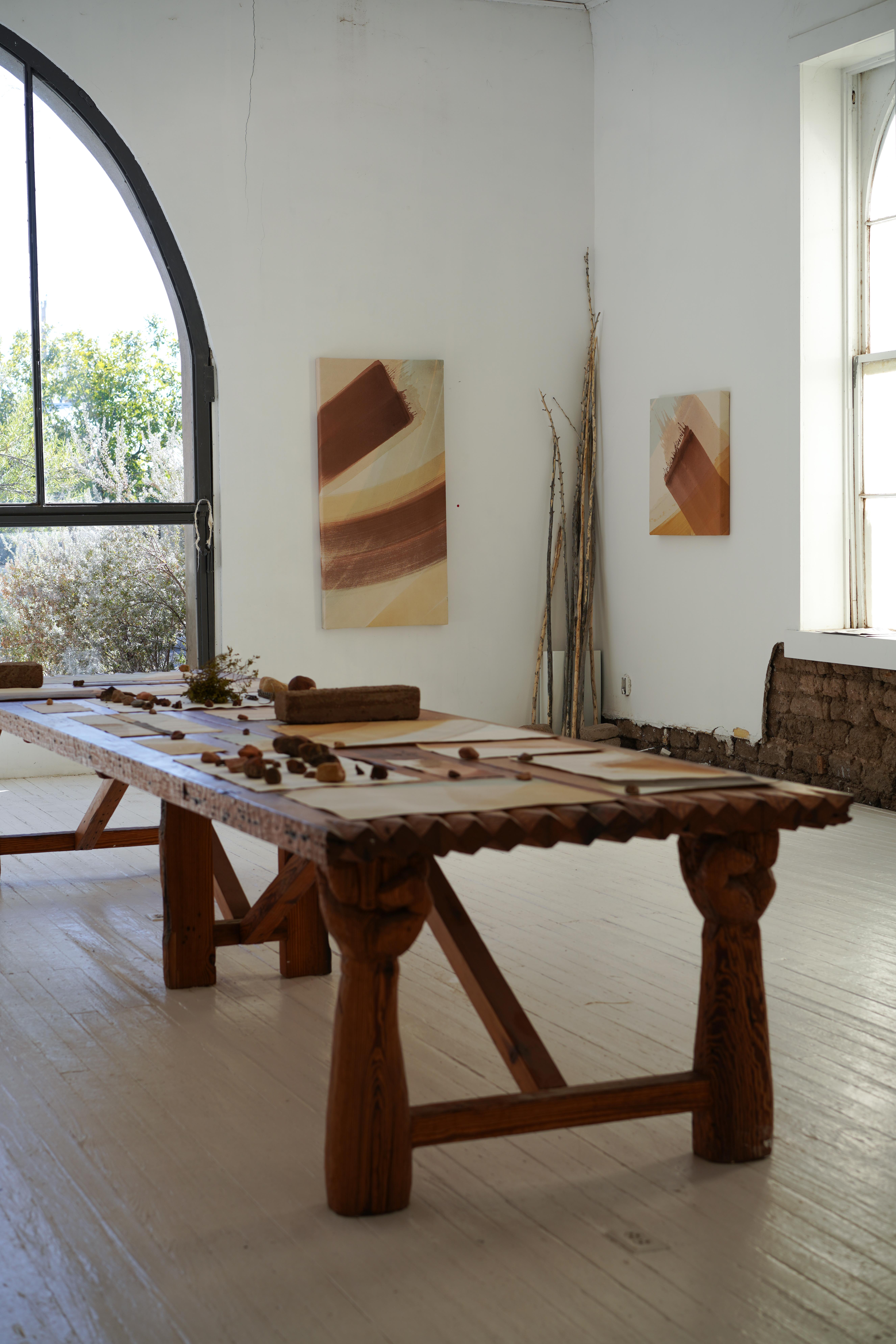
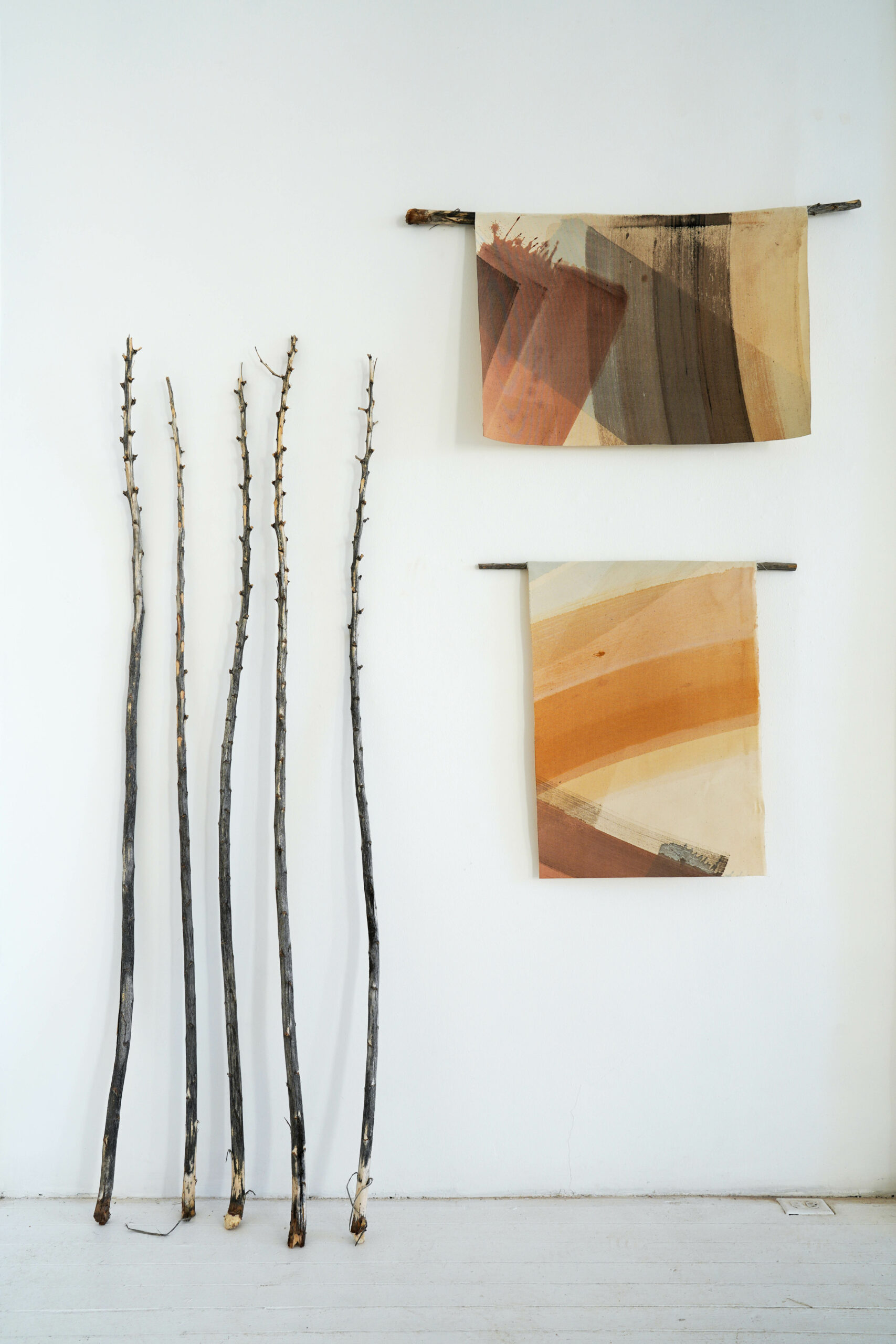
This presentation brought together several fragments of the project The Sound of Ruidosa: fabrics painted during the residency in Ruidosa, preparatory drawings, as well as elements documenting the different phases of creation in the West Texas desert. The exhibition was a way to extend the installation experience by offering another perspective on Romain Froquet’s work, between archive of gesture, memory of place, and transformation of the artwork in situ.
Conceived as a moment of sharing with the artistic community and the residents of Marfa, this exhibition marked the public conclusion of this second chapter of the Connections project, while paving the way for a future institutional presentation bringing together the works, the visual and sound archives, as well as the documentary film produced around the project.
Connections
2025 | Hangar 107, Rouen
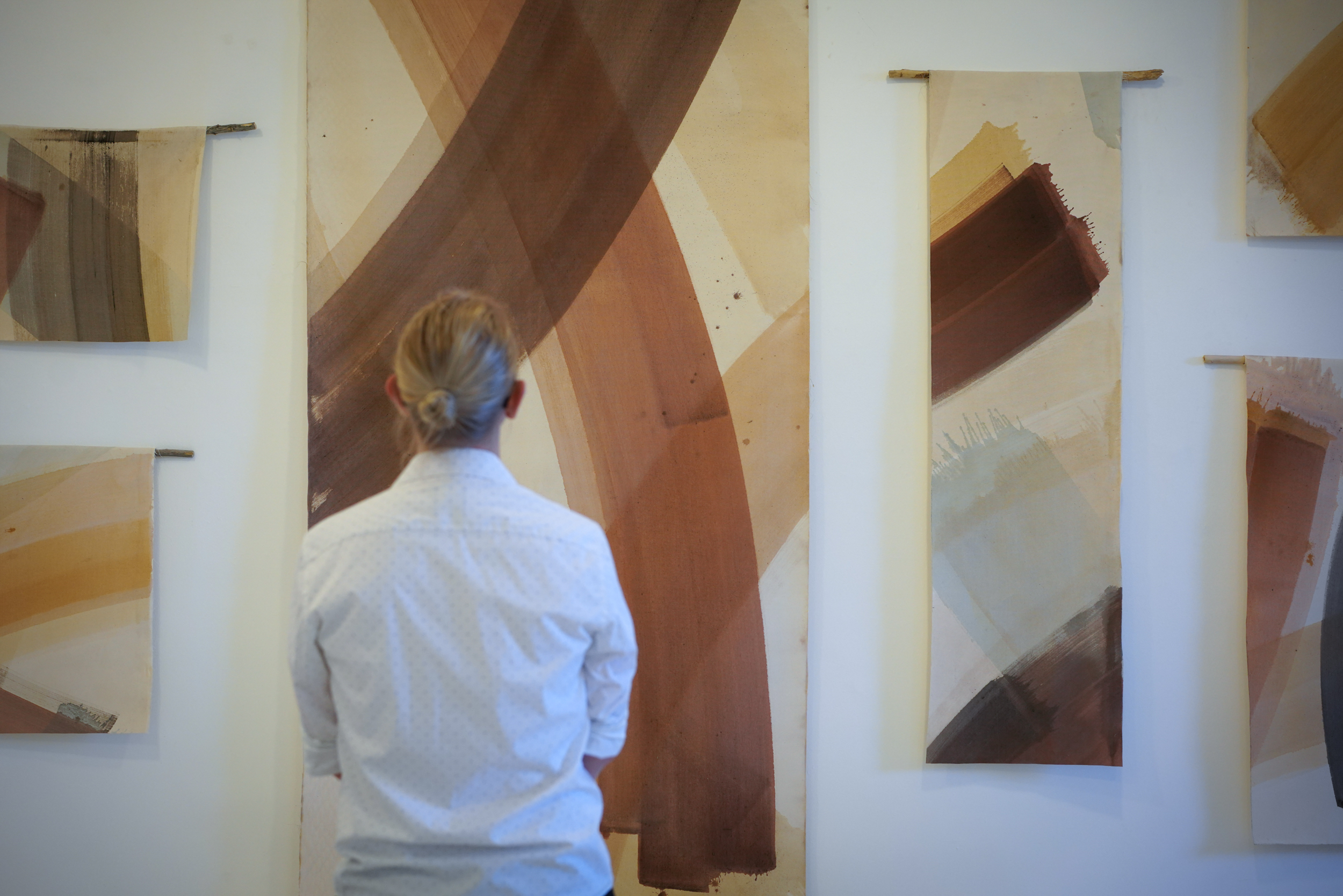
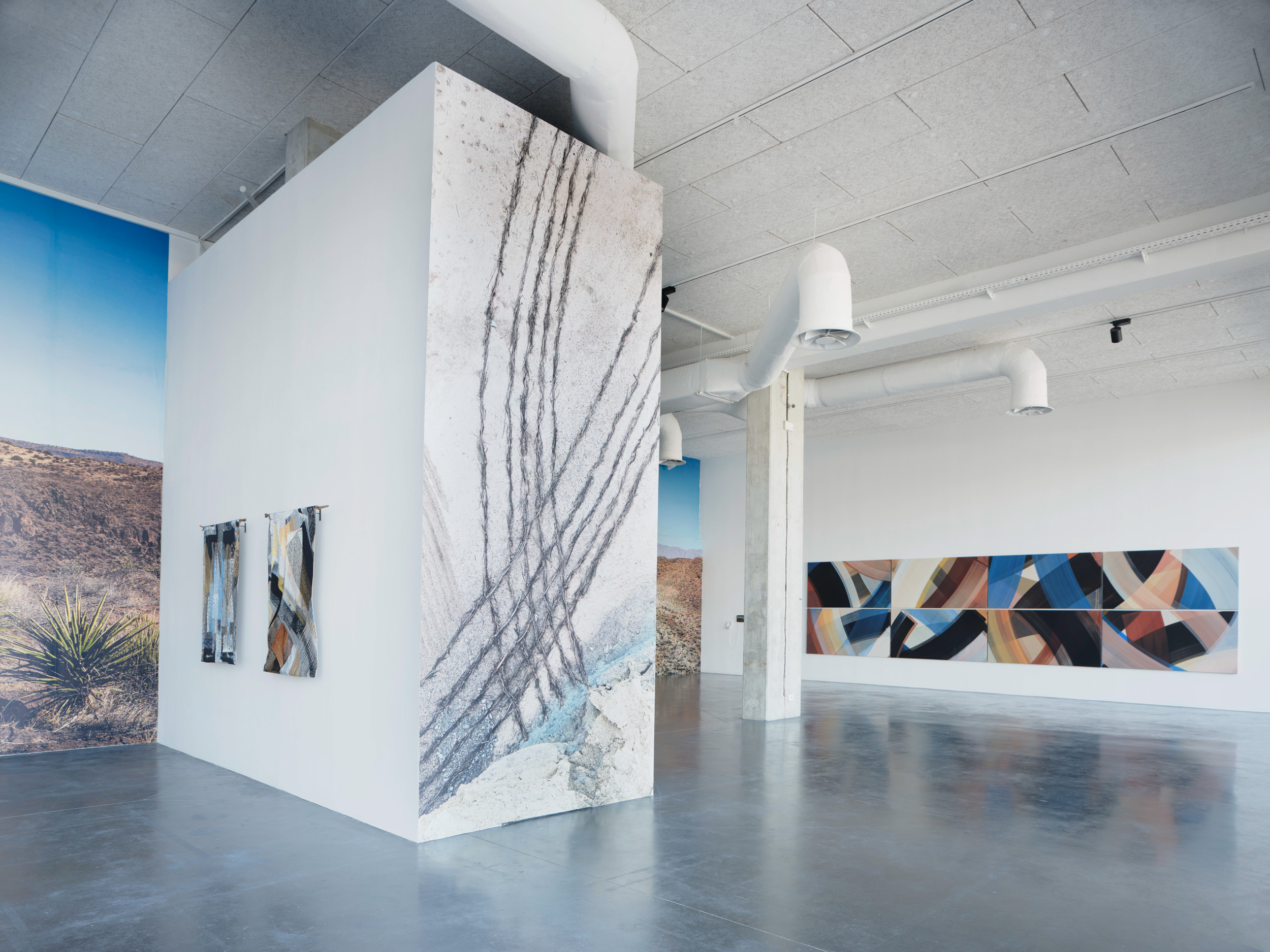
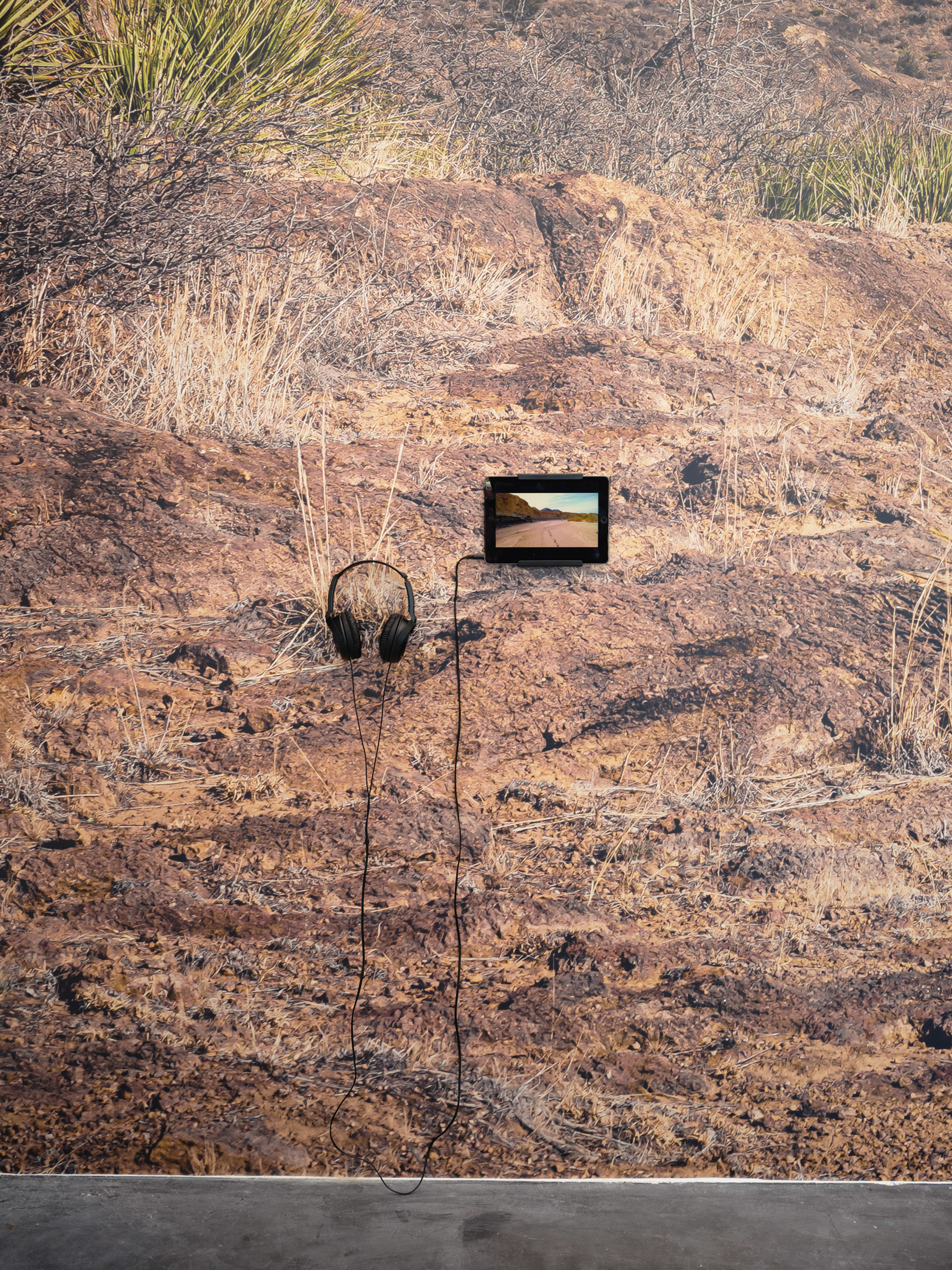
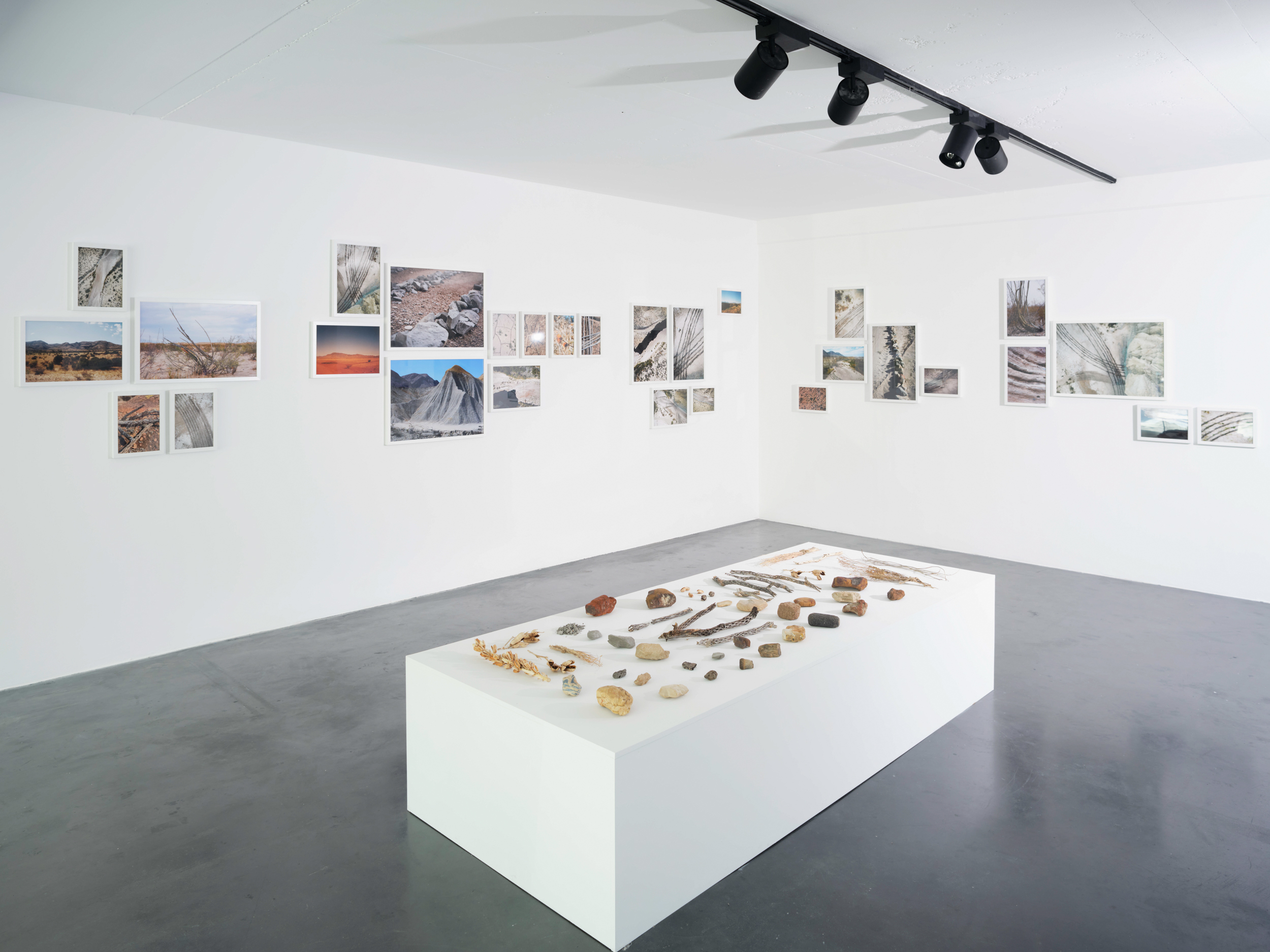
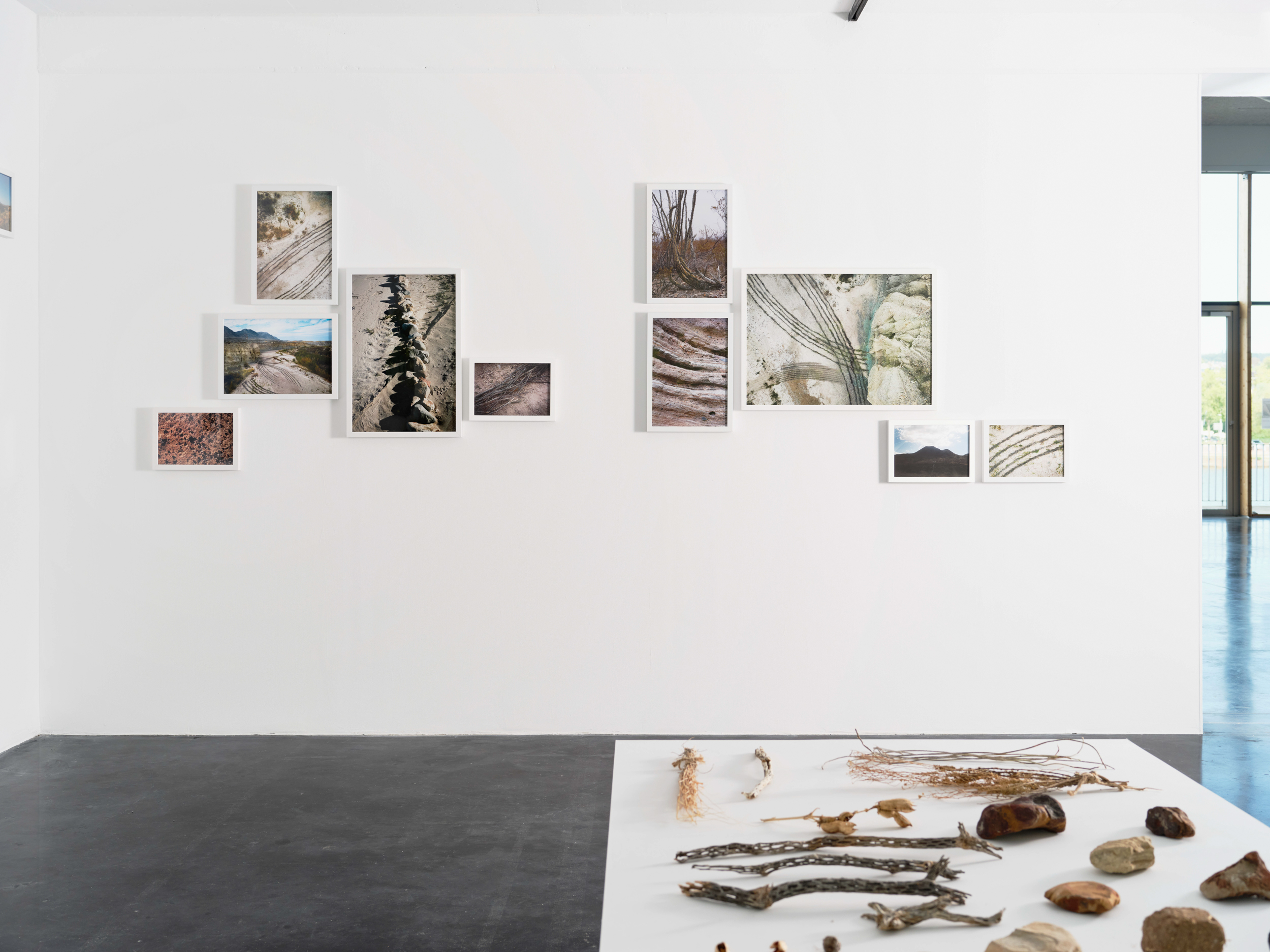
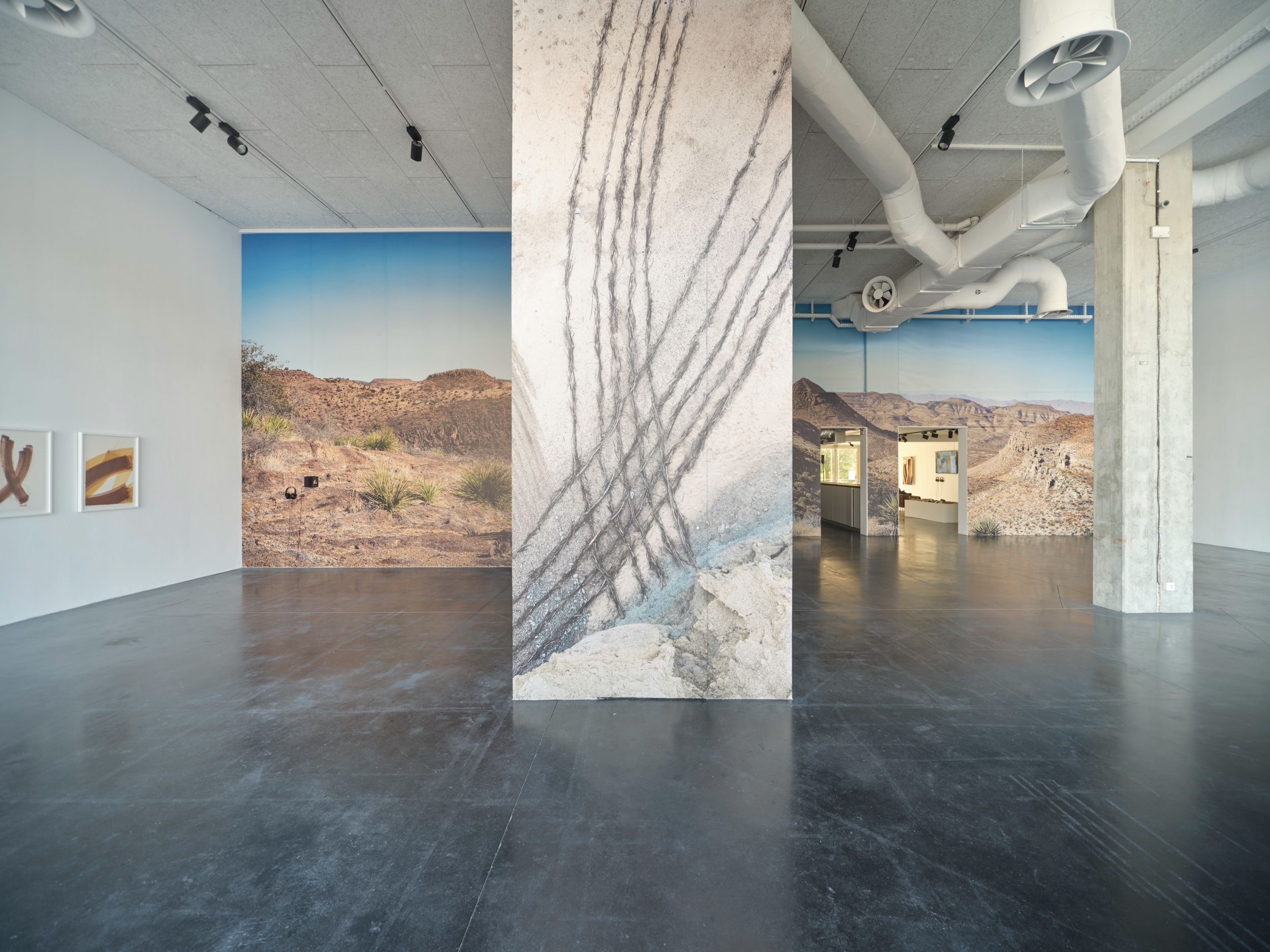
Connections was born in the Chihuahuan Desert, in West Texas — a vast and arid territory, crossed by winds, silences, and stories. Romain Froquet spent time there regularly, roaming the landscapes, listening to their rhythms and echoes. This process of immersion gave rise to an ephemeral land art piece, traced directly onto the ground of a dry riverbed. This inaugural gesture, simple and fragile, opened a new artistic path — a dialogue between man and territory, between the visible and what passes through us without always being spoken.
Connections was born in the Chihuahuan Desert, in West Texas — a vast and arid territory, crossed by winds, silences, and stories. Romain Froquet spent time there regularly, roaming the landscapes, listening to their rhythms and echoes. This process of immersion gave rise to an ephemeral land art piece, traced directly onto the ground of a dry riverbed. This inaugural gesture, simple and fragile, opened a new artistic path — a dialogue between man and territory, between the visible and what passes through us without always being spoken.
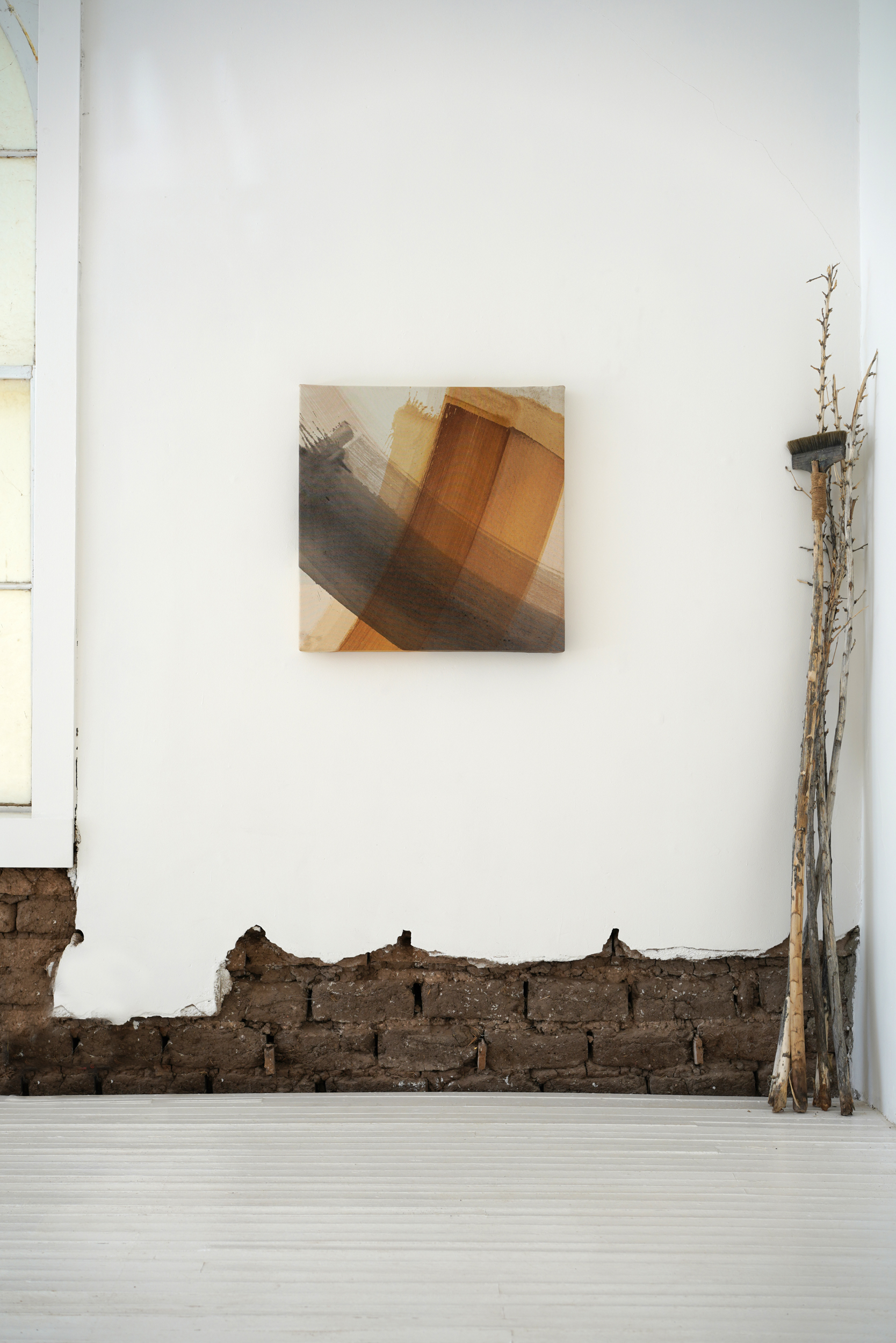
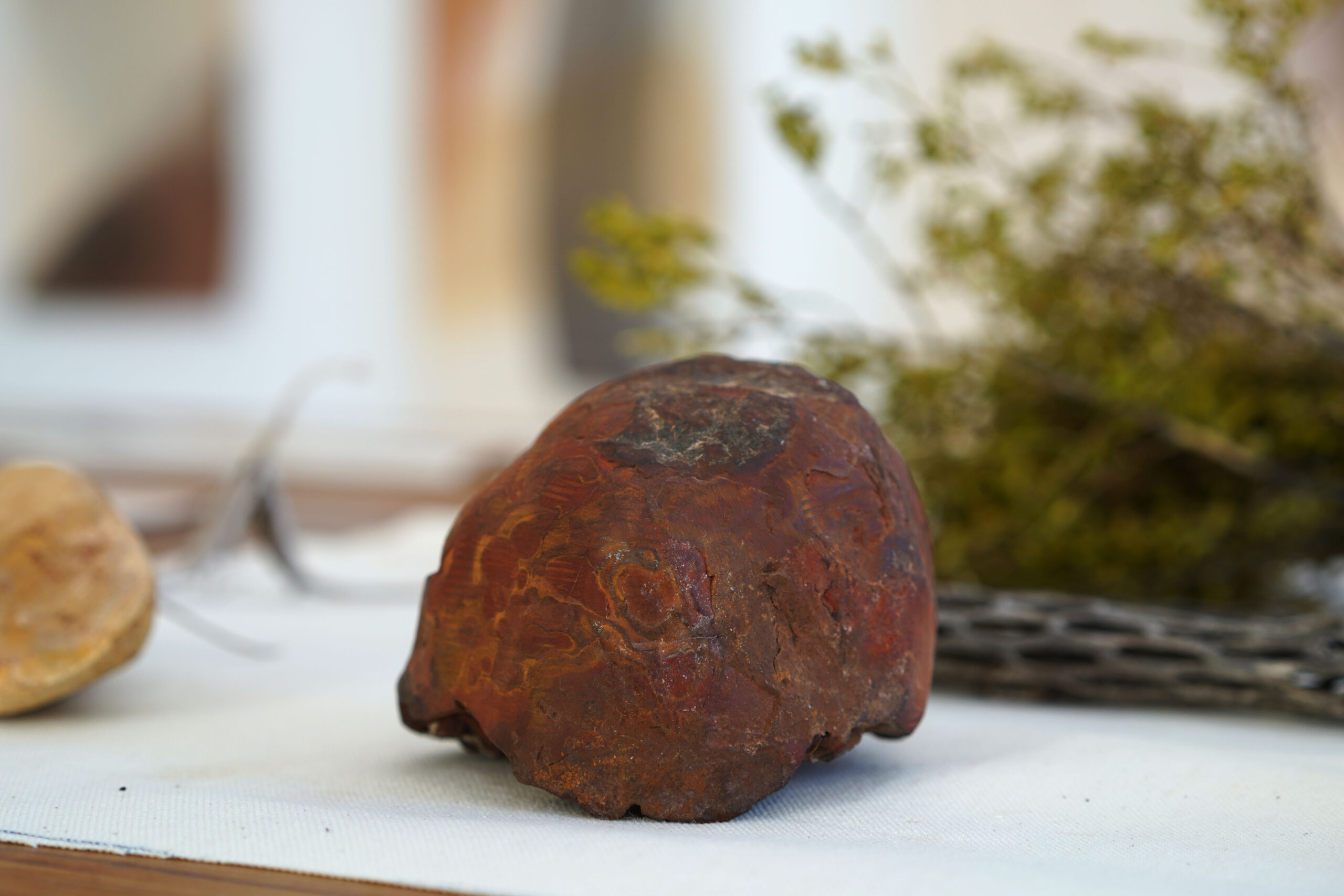
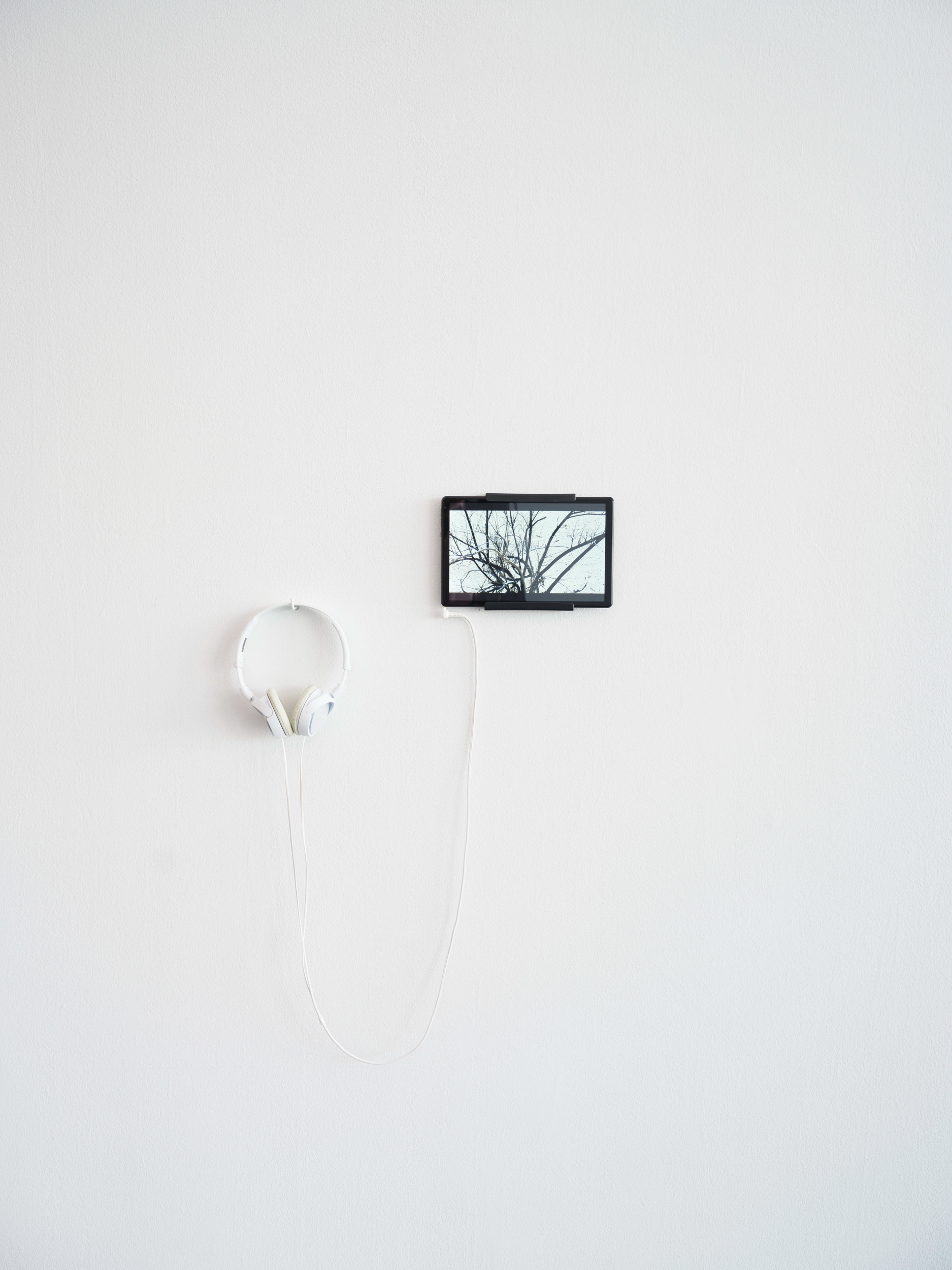
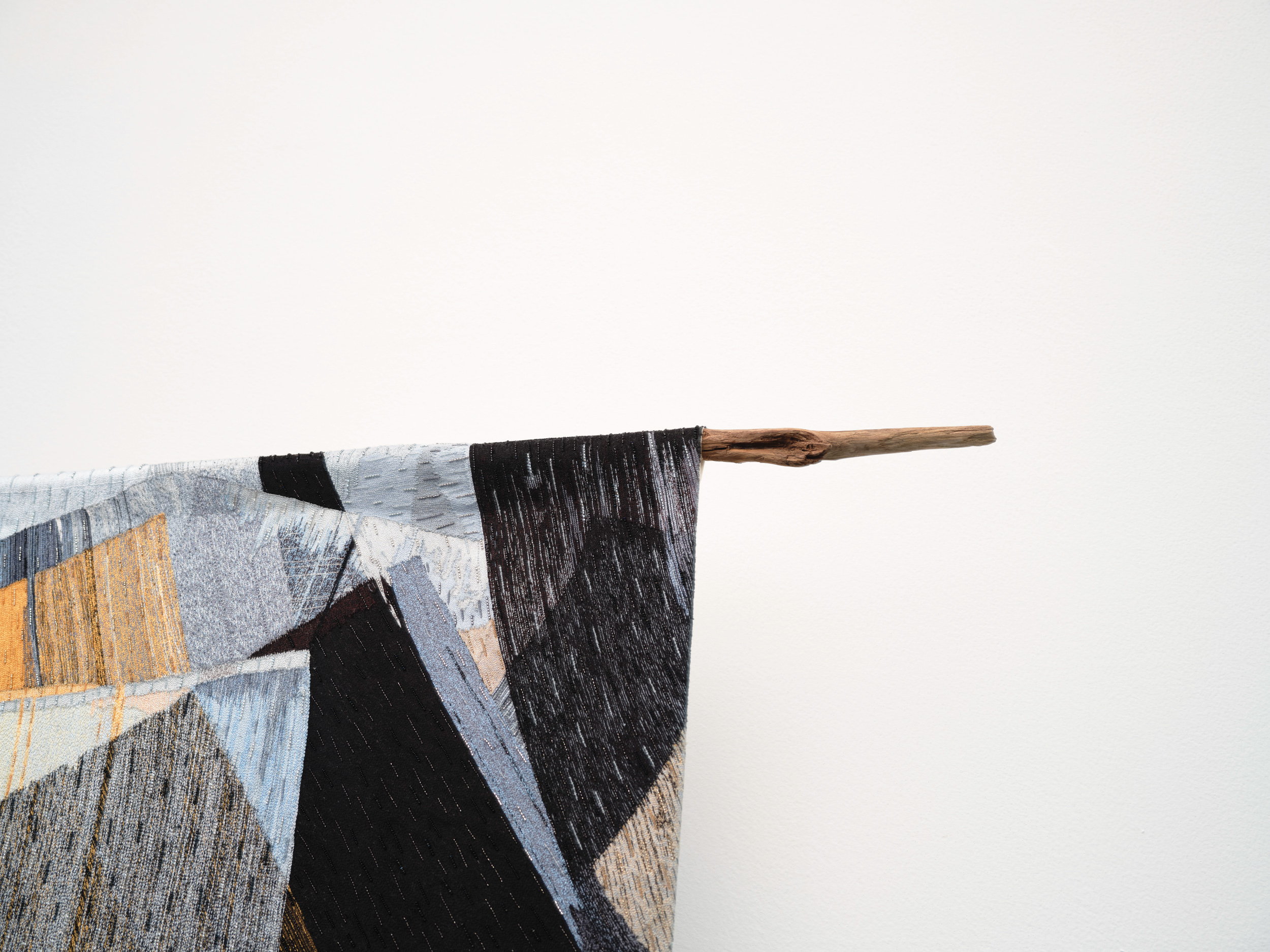
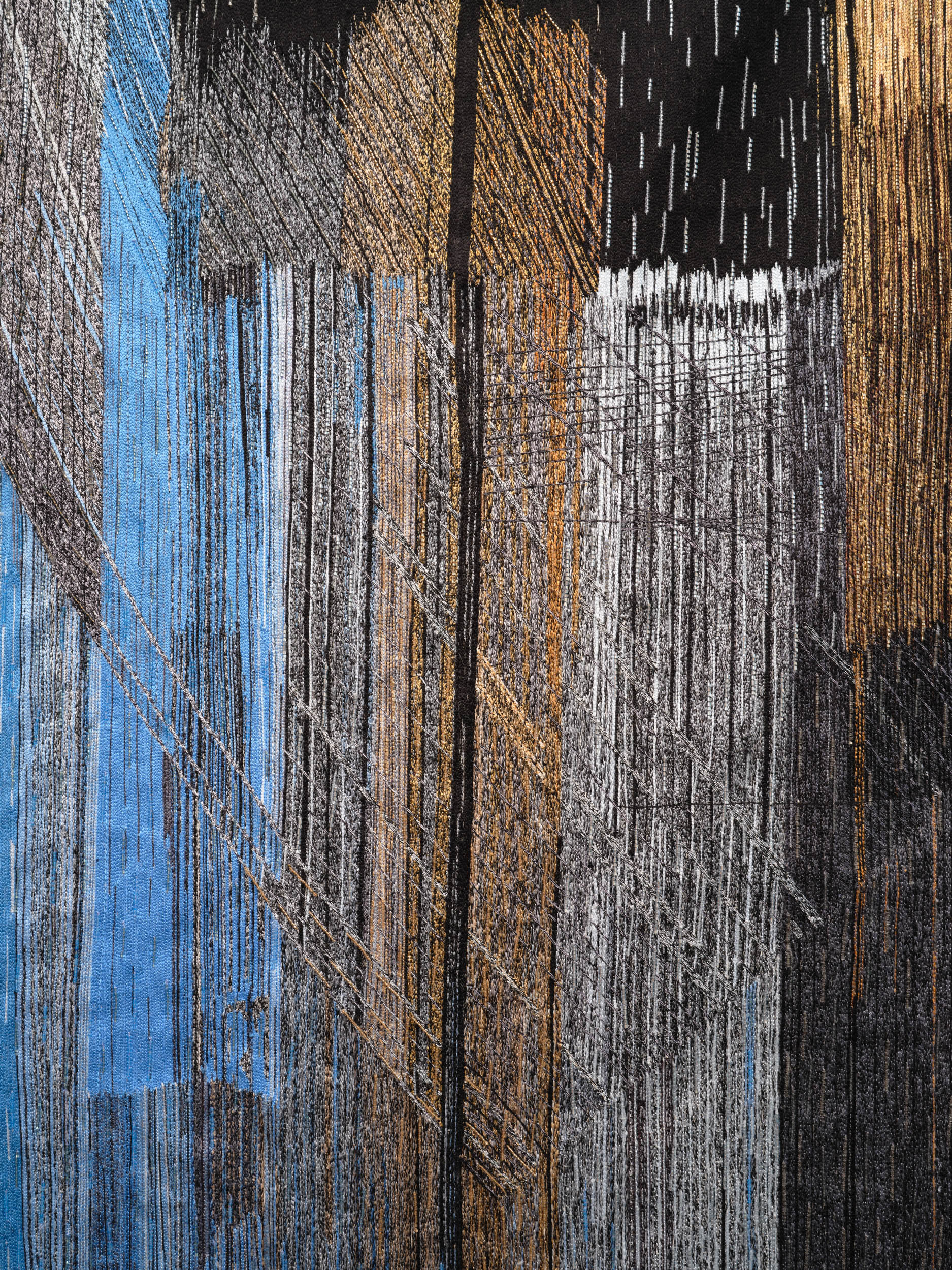
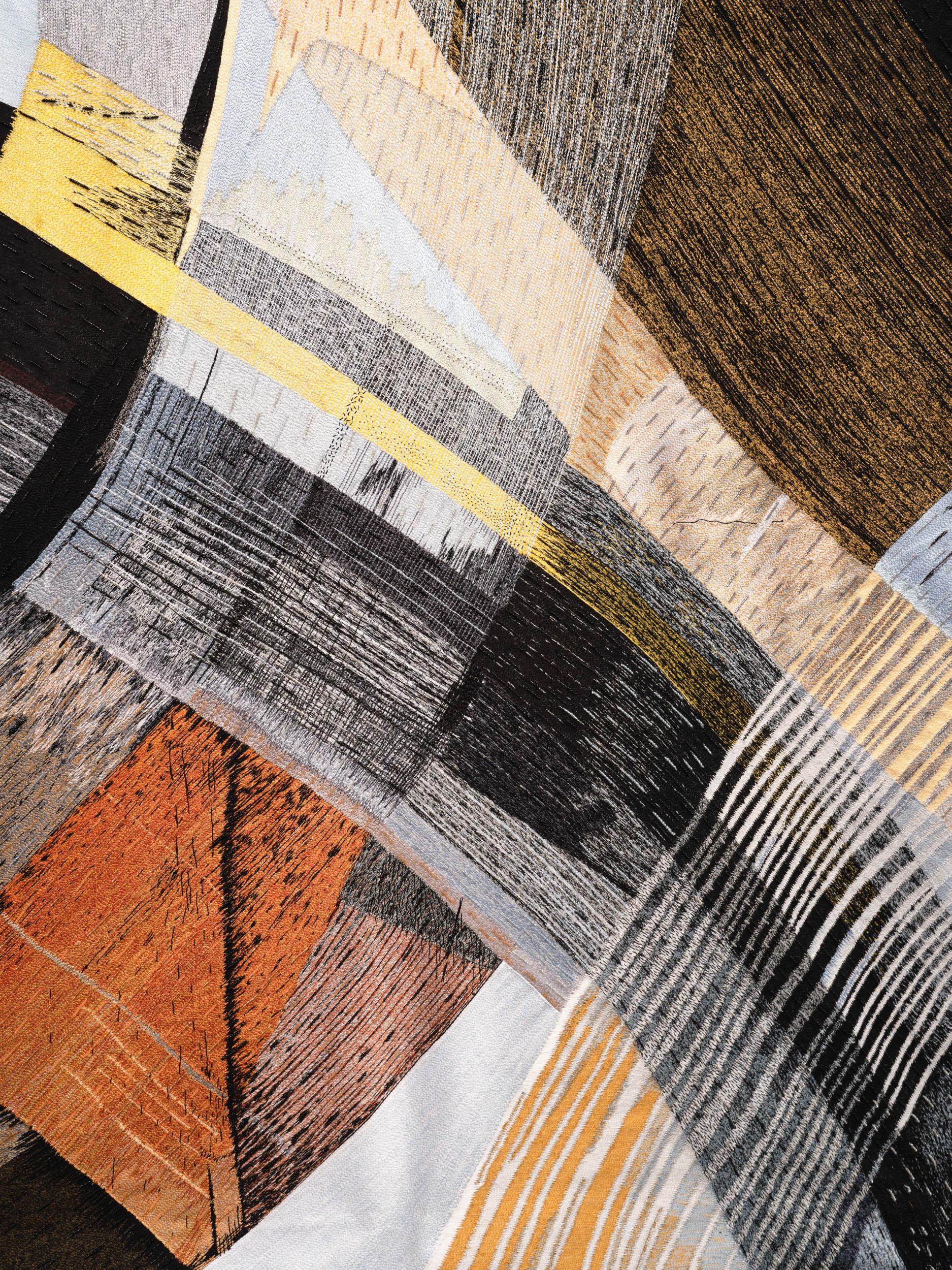
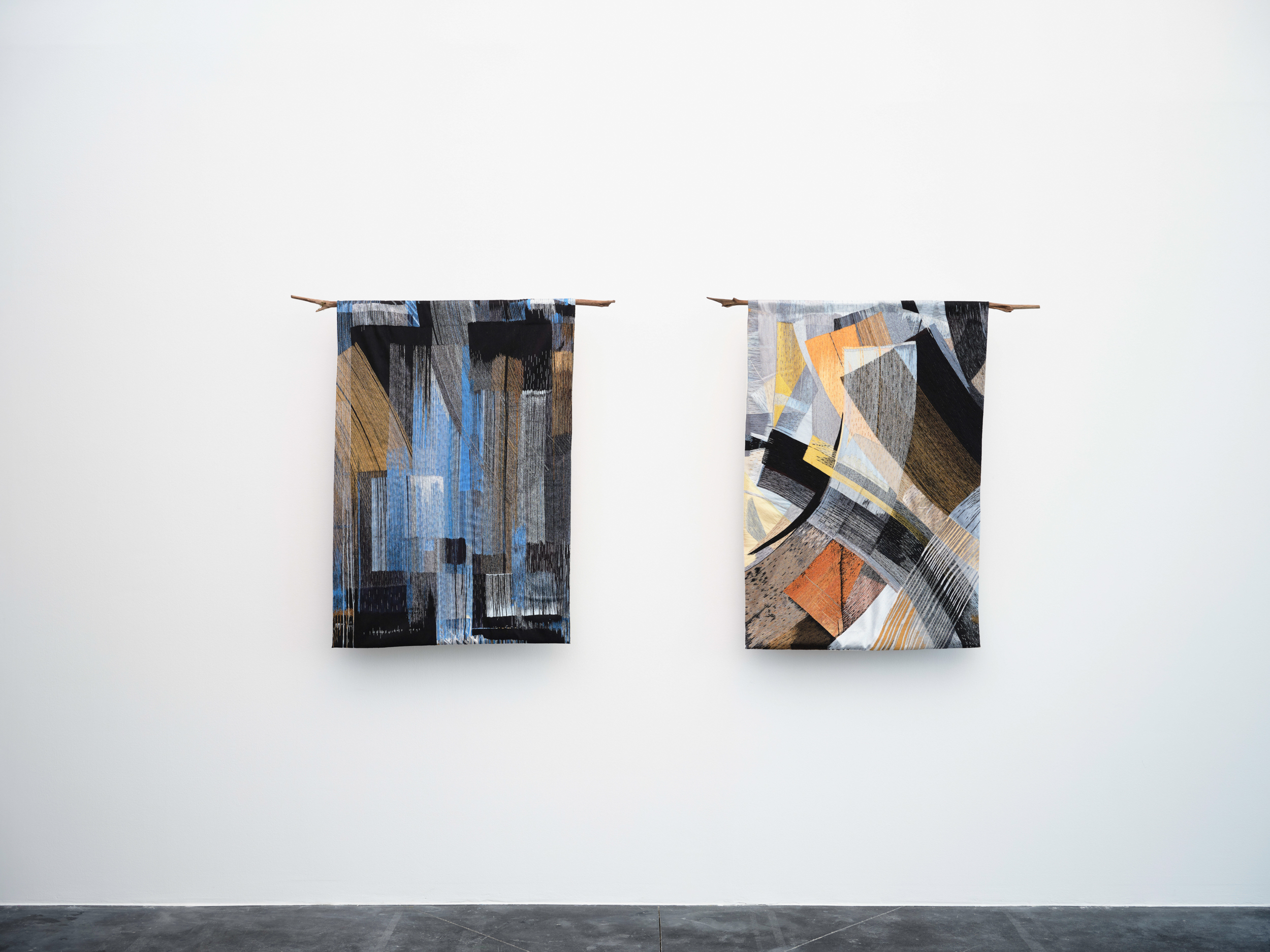
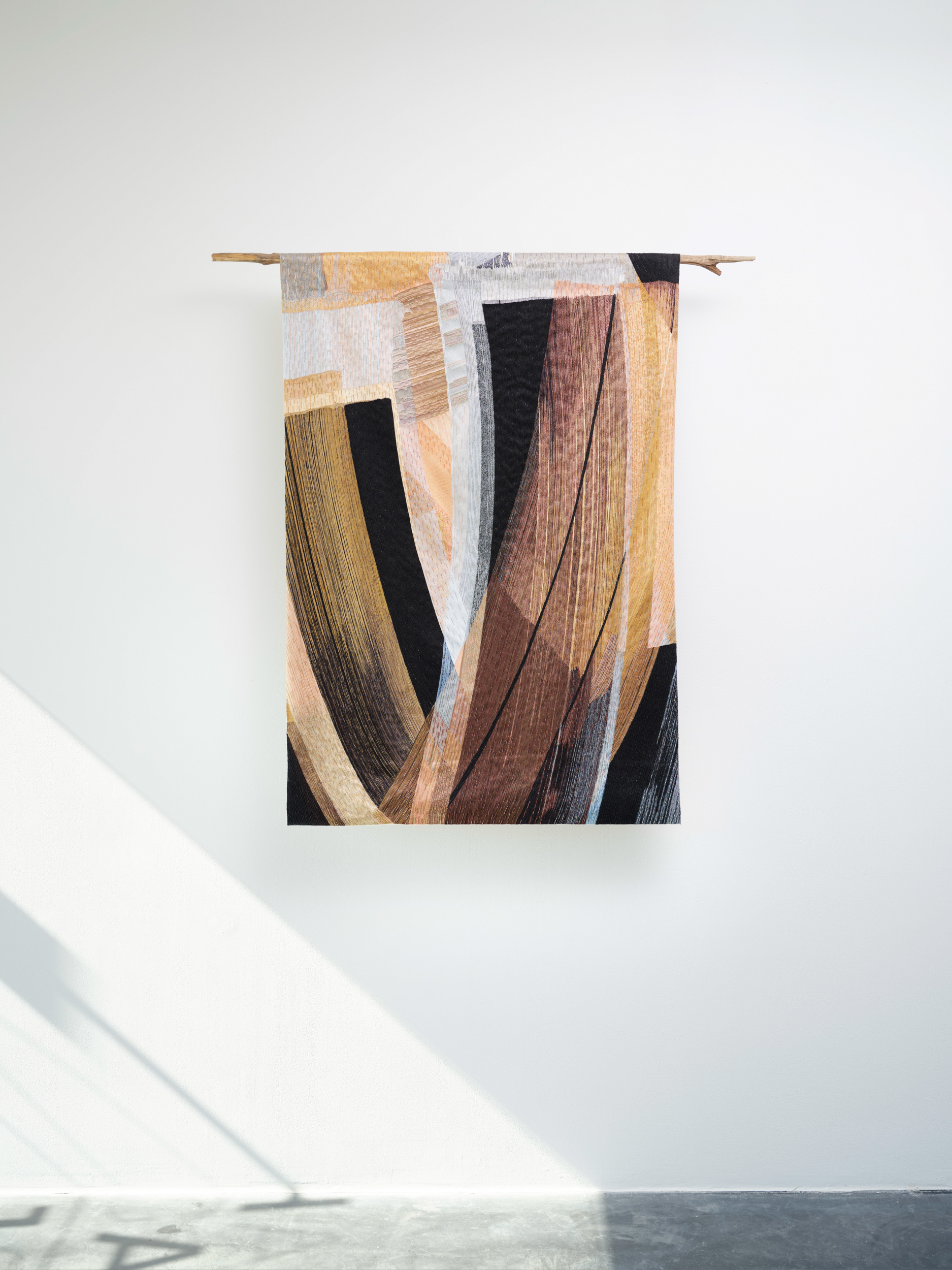
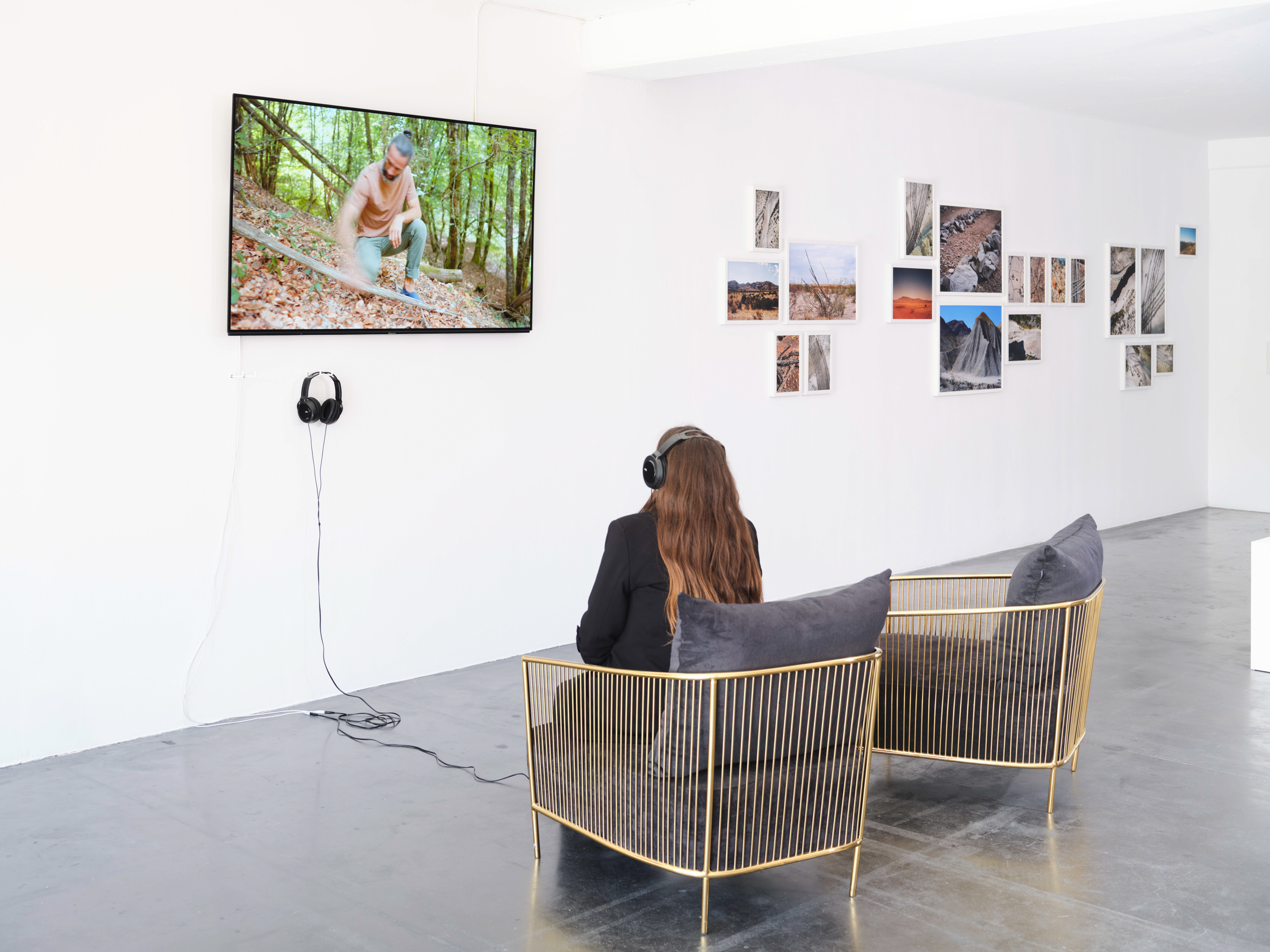
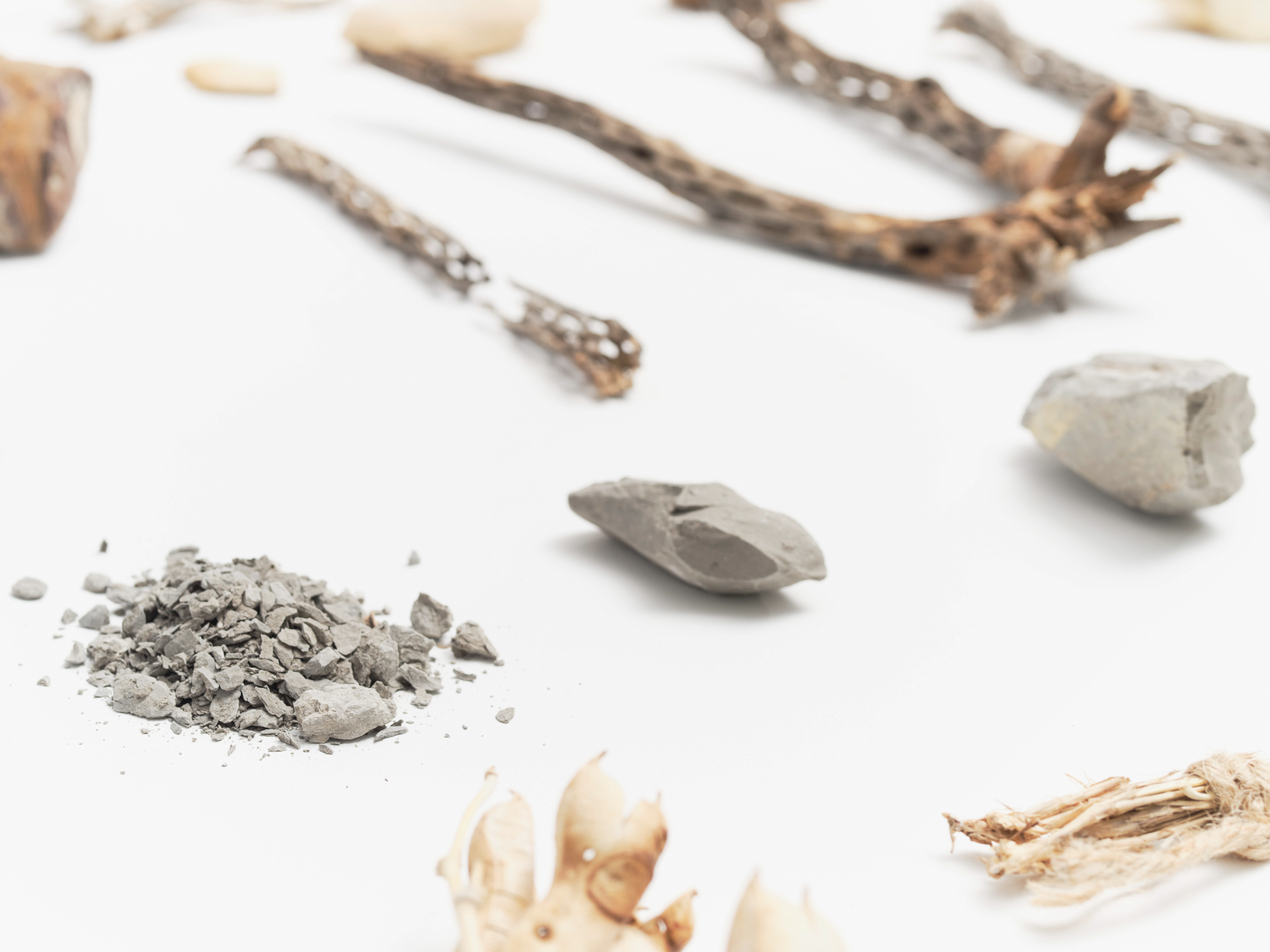
The exhibition at Hangar 107 reveals its artistic extensions: series of paintings inspired by these landscapes, some of them created using natural pigments collected on site; embroideries designed by the Safrane Cortambert workshops, which reinterpret motifs drawn from his works; objects collected in situ, photographs and a documentary film, as well as a collection of sounds and material samples. These works are the fragments of a journey: they carry within them the memory of a place, the gestures that revealed it, the forms it inspired.
Each piece acts as an anchor point in an intimate cartography. The line becomes thread, the pigment becomes memory, the motif becomes trace. The exhibition is built as a tension between gesture and territory, material and spirit, contemplation and listening. It is not about imposing a narrative, but about opening a space of perception: one where silent things—rocks, dust, plants—begin to speak to those who take the time to hear them.
"This project is about what we can’t see but can feel. I wanted to engage in a simple, human dialogue with an immense landscape, like a silent thread stretched between beings and elements, without seeking to impose myself, just to share what I have experienced." —
Romain Froquet
Partners
Gilles Treuil Endowment Fund | Desperados Foundation for Urban Art | TFAA |French Consulate in Houston | Yvonamor Palix Fine Art | Hotel Saint George, Marfa | Art Houston Magazine | Crowley Theater Marfa | In Situ Art Club
Patrons
Eric McLaughlin | Eliot Castillo | Andrea Waller | Vilis Inde | Tom Jacobs | Christine Jugla | Philippe Tavaud | Marc Briand | David Meyer | Nicolas Laugero Lasserre | John and Monica Santarelli | Steve Boriak
Acknowledgments
Odette Mc Donald | Thomas Granovsky | Philippe Denjean | Nicolas Couturieux | Alain Revel | Jim Martinez | Robert and Jane Crocket | Sabrina Lejeanvre - Matheis| Bettina Gardelles | Estelle Domergue | Marcus Froquet | Valerie Baraban |
Anne Adams | Dedie Taylor | Jim Martinez | Benjamin Camarata | Mark Bayse | Alfredo Vargas | Samuel | Denis Powsang
Sailing Home
2024 | Zhoushan Art Museum, Chine
A contemporary and interactive artwork inspired by the ocean
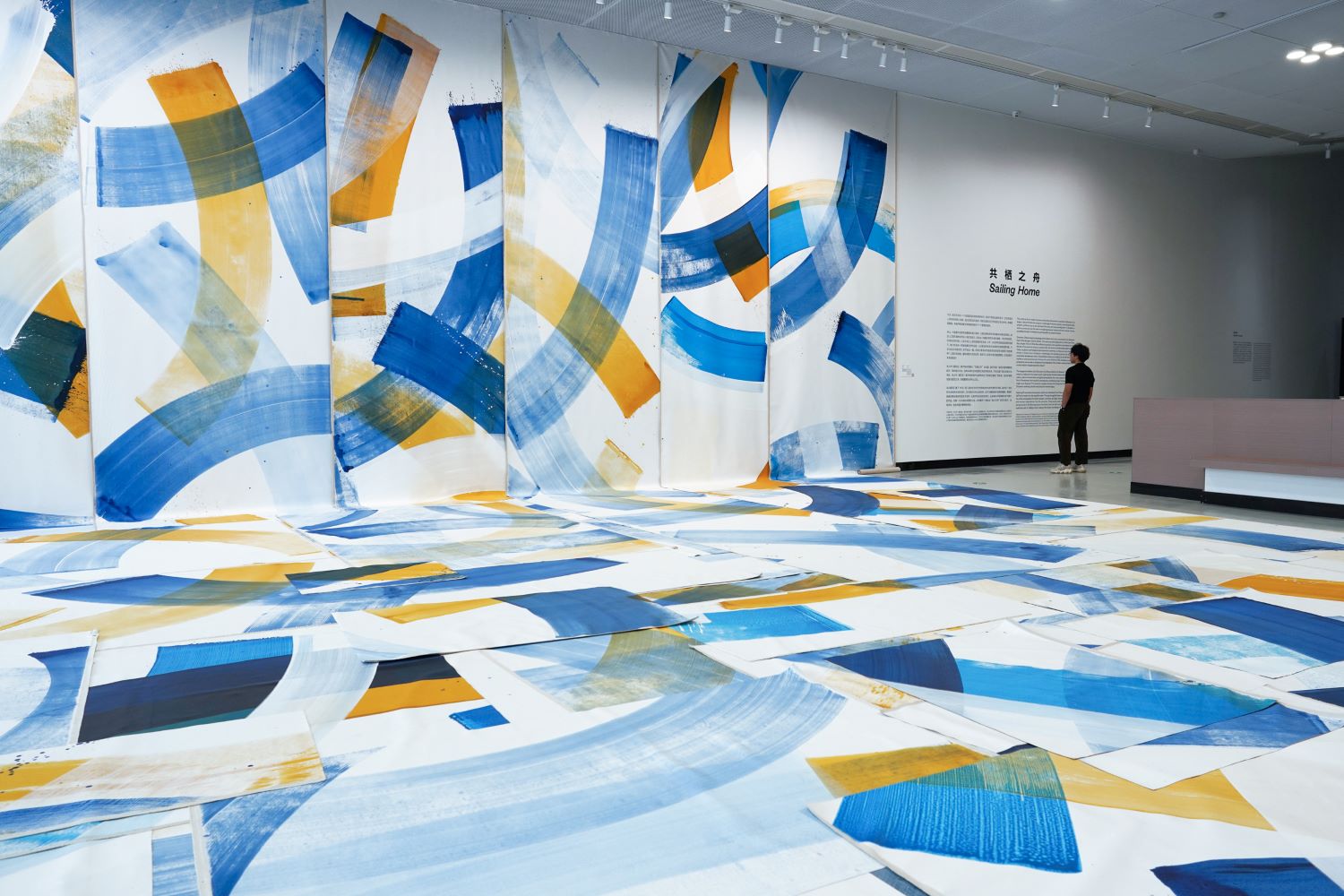
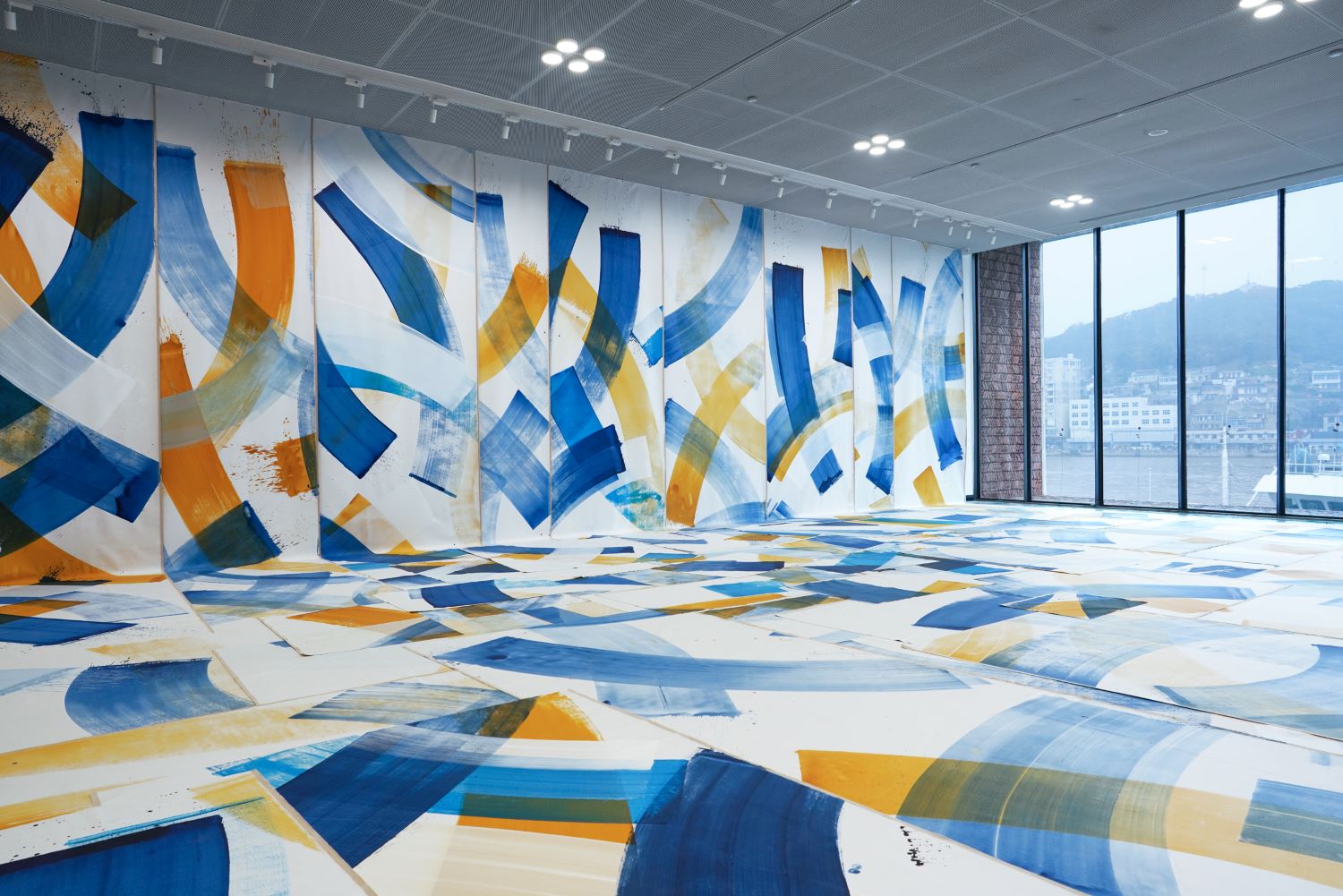
On the map of China, Zhoushan is an archipelago, an island, and a city located south of Shanghai. The city has just over one million inhabitants who can now enjoy a brand-new museum: the Zhoushan Art Museum. The cultural institution is kicking off its program with the exhibition Sailing Home. Sixteen contemporary artists from China and abroad present work inspired by what shapes Zhoushan’s identity: a culture, an economic activity, and a natural environment strongly influenced by the ocean.
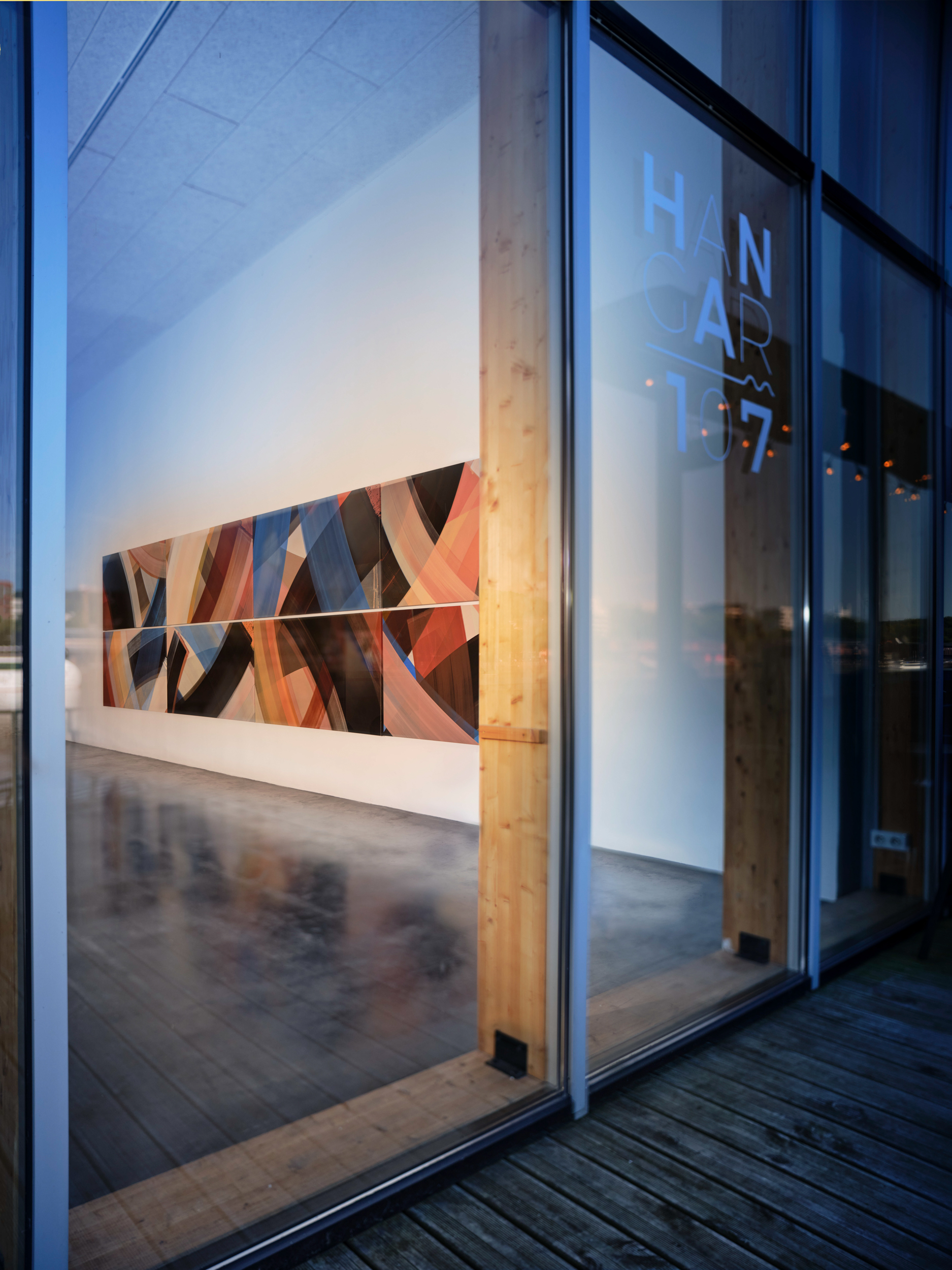
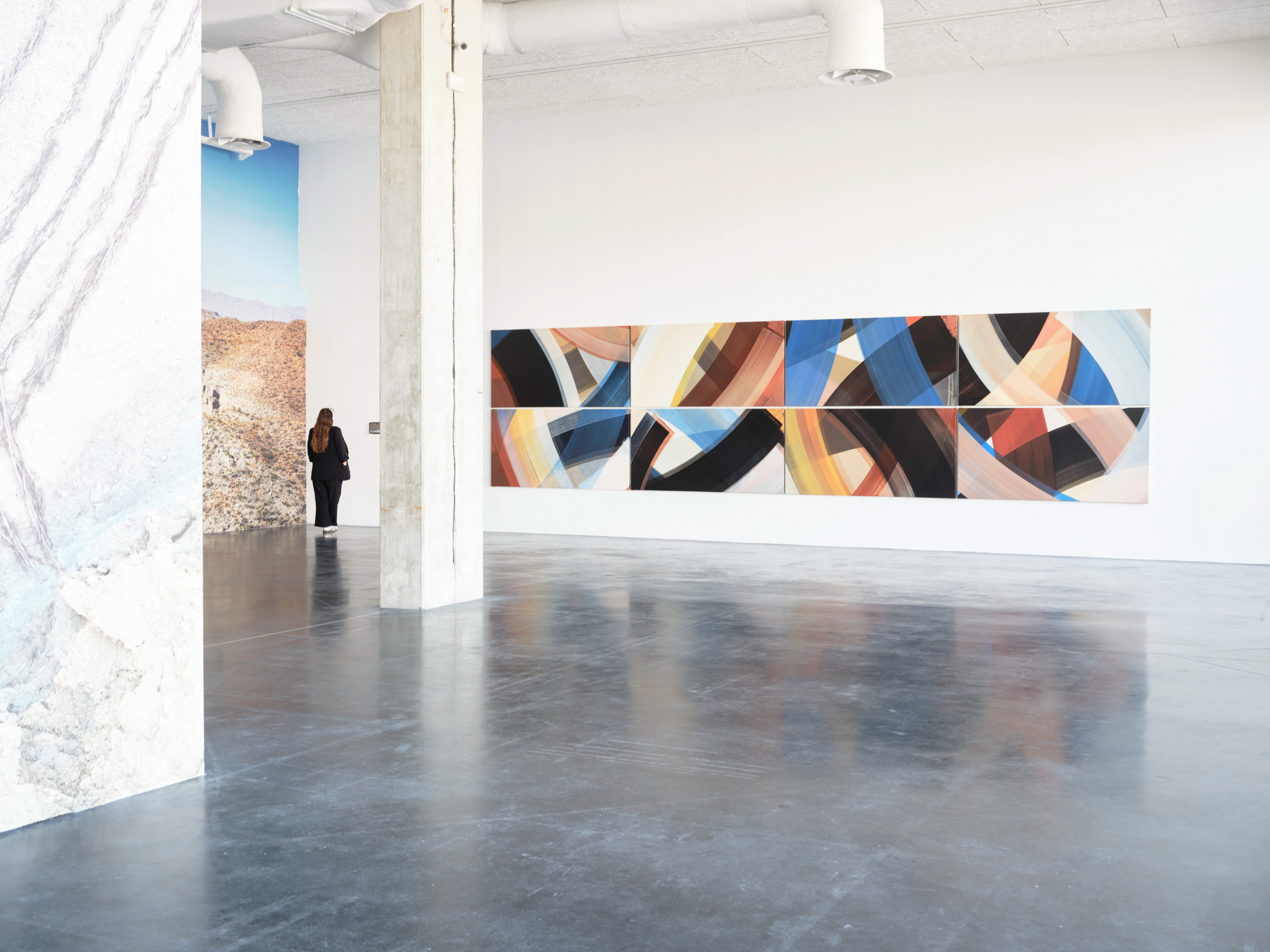
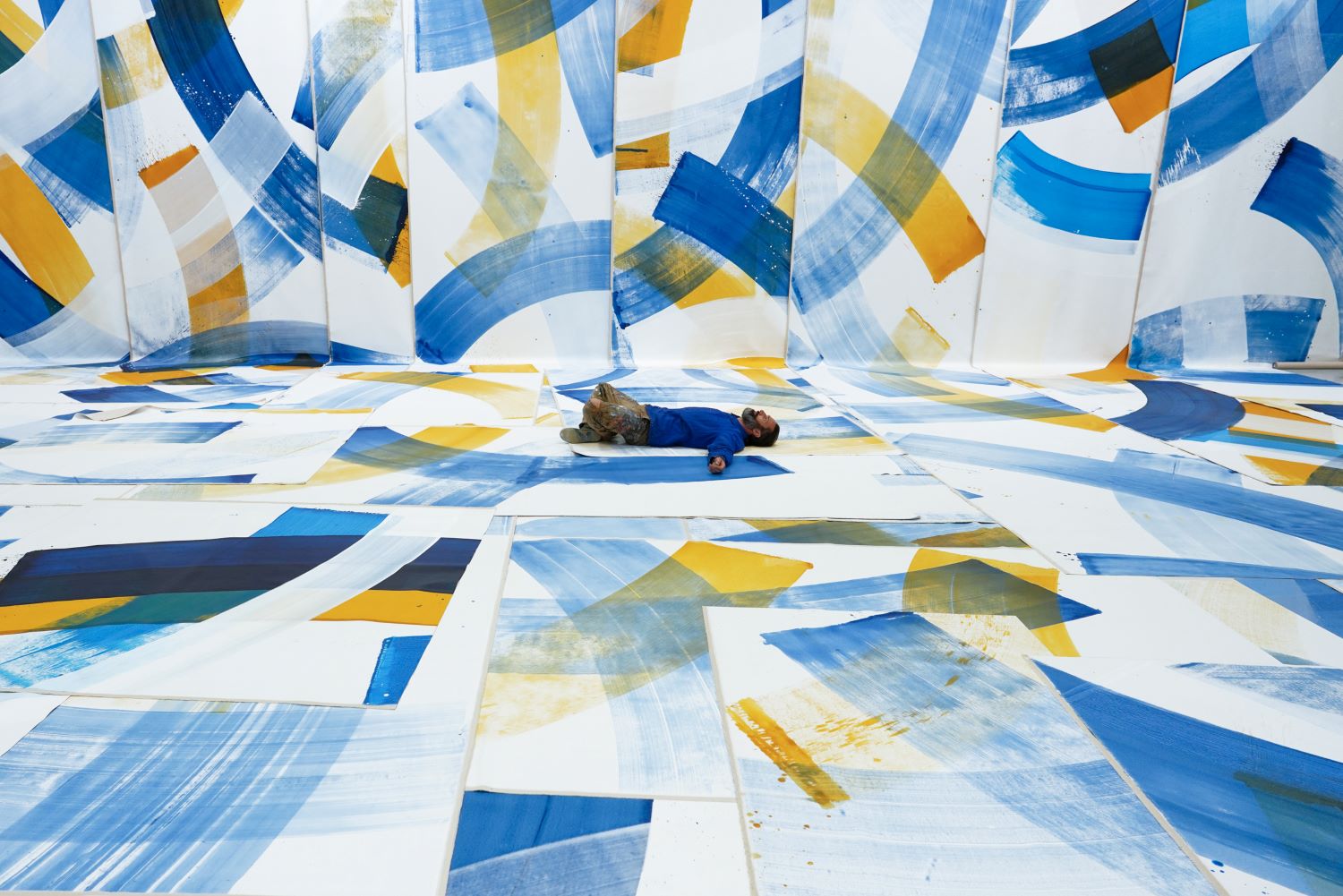
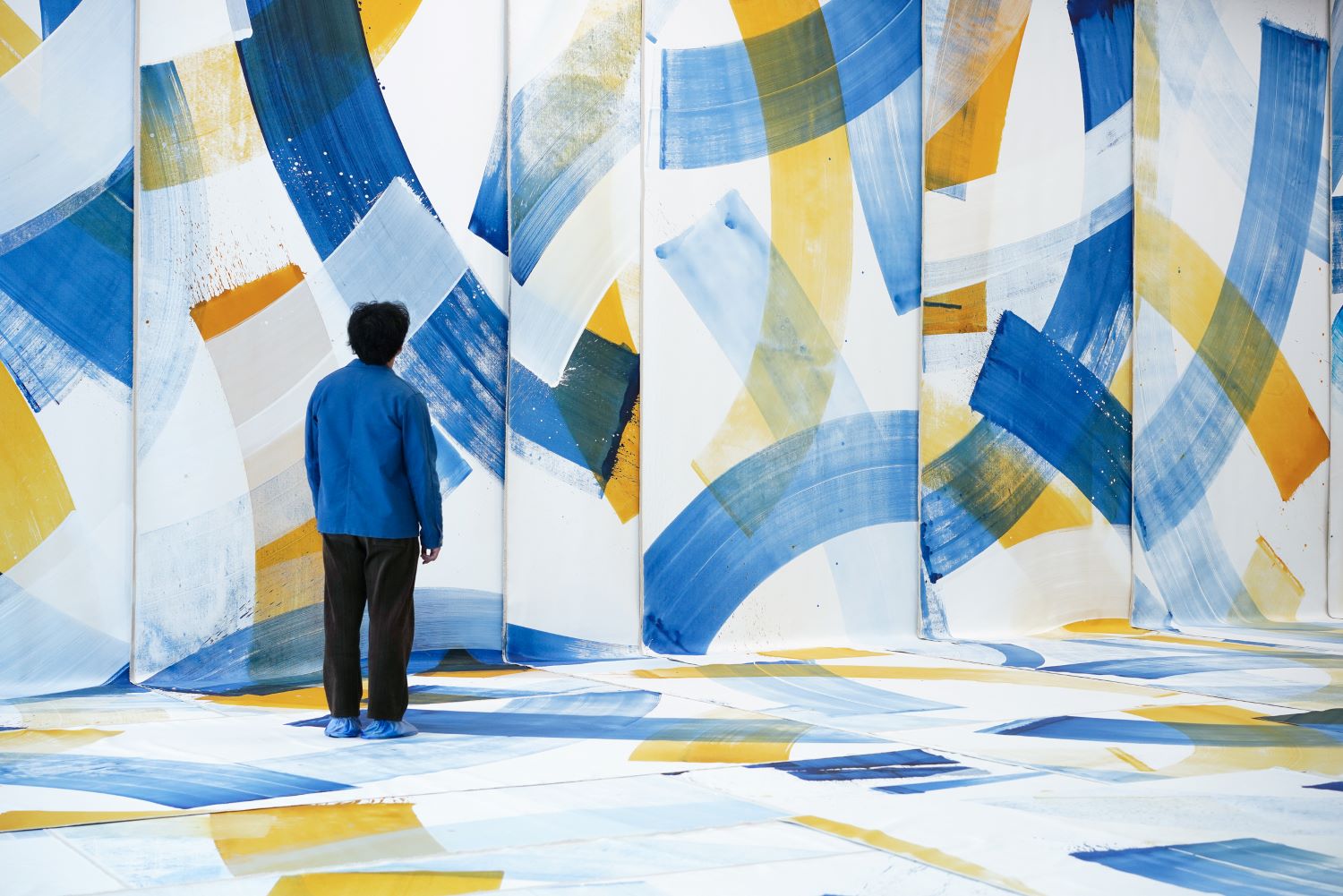
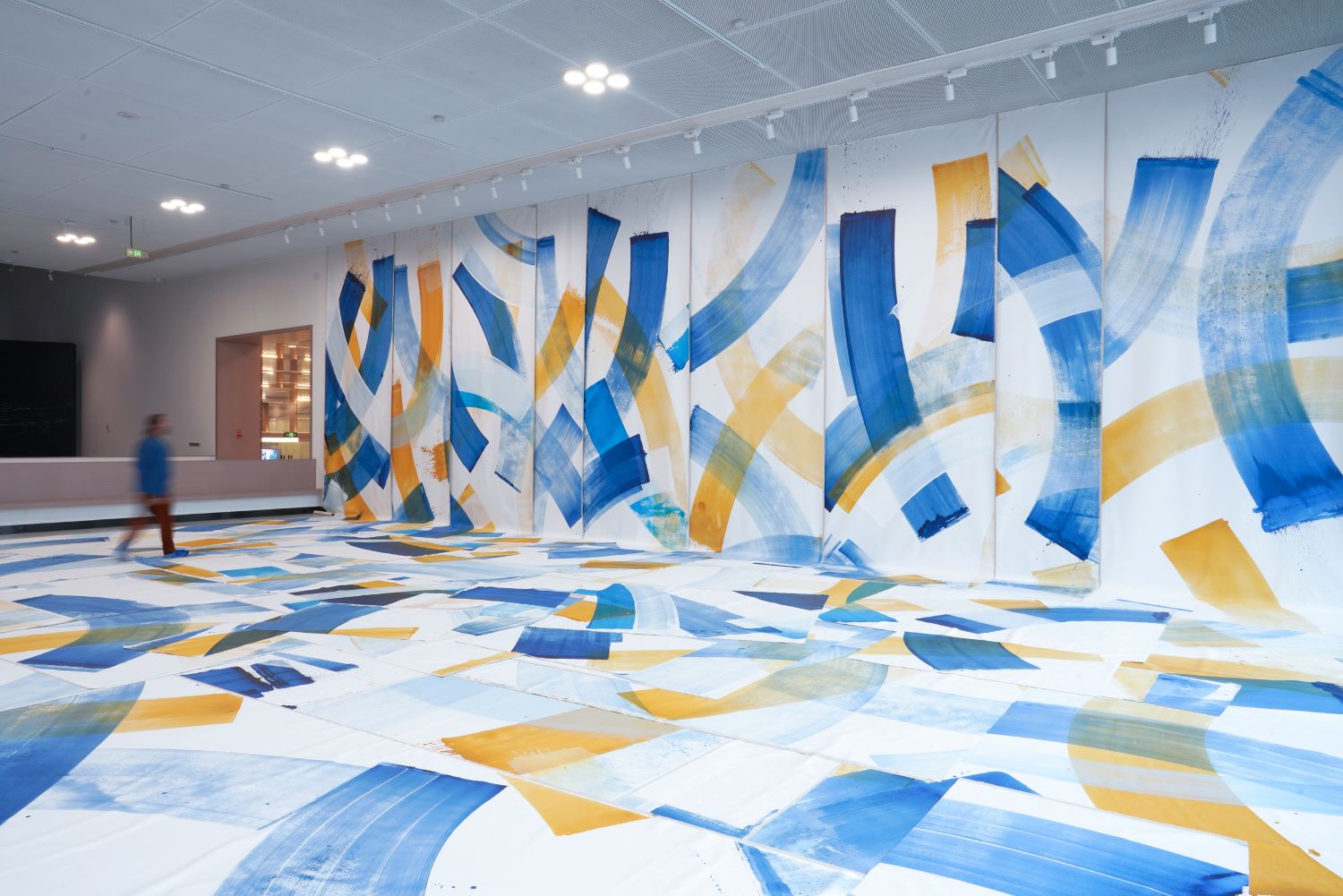
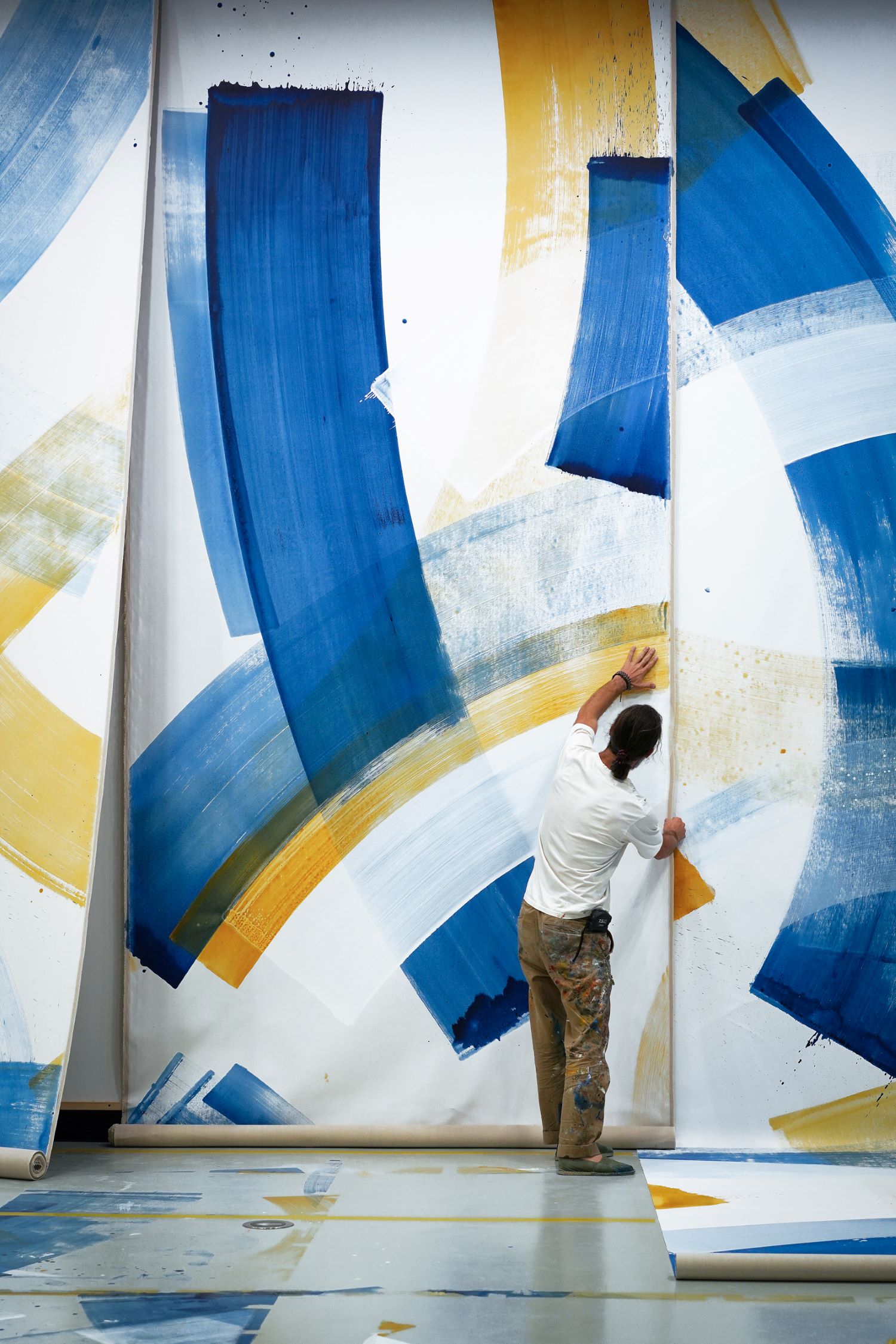
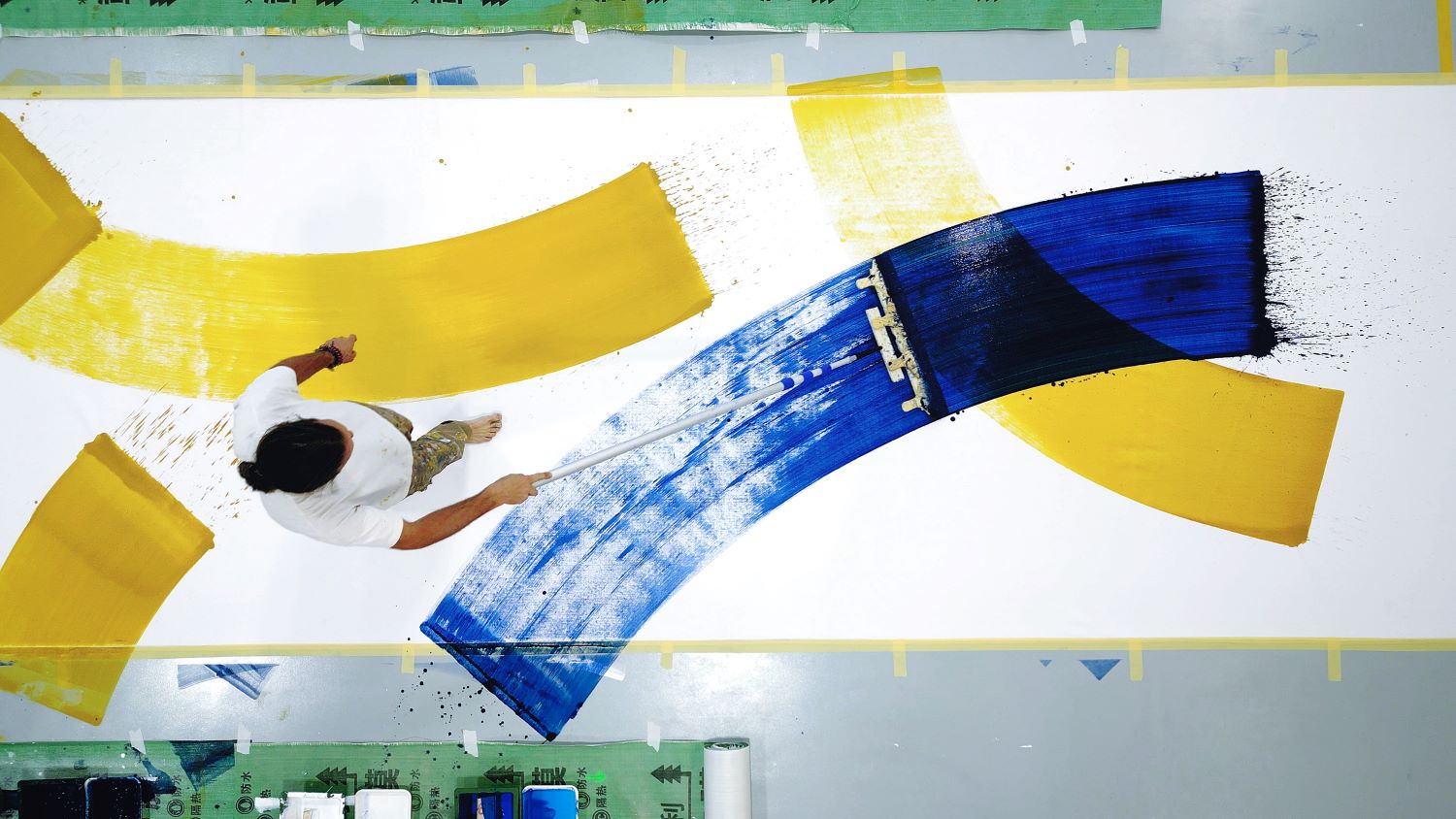
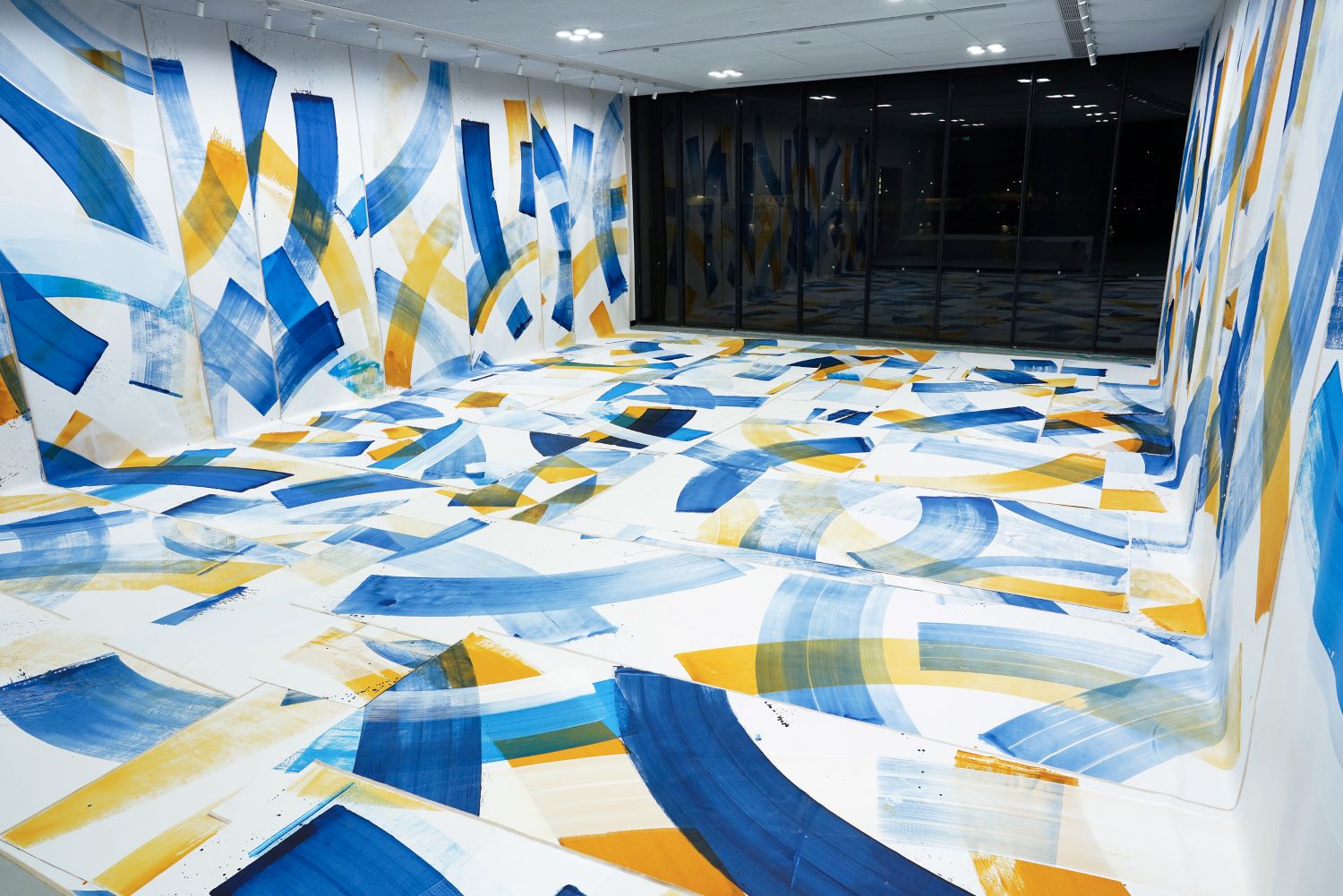
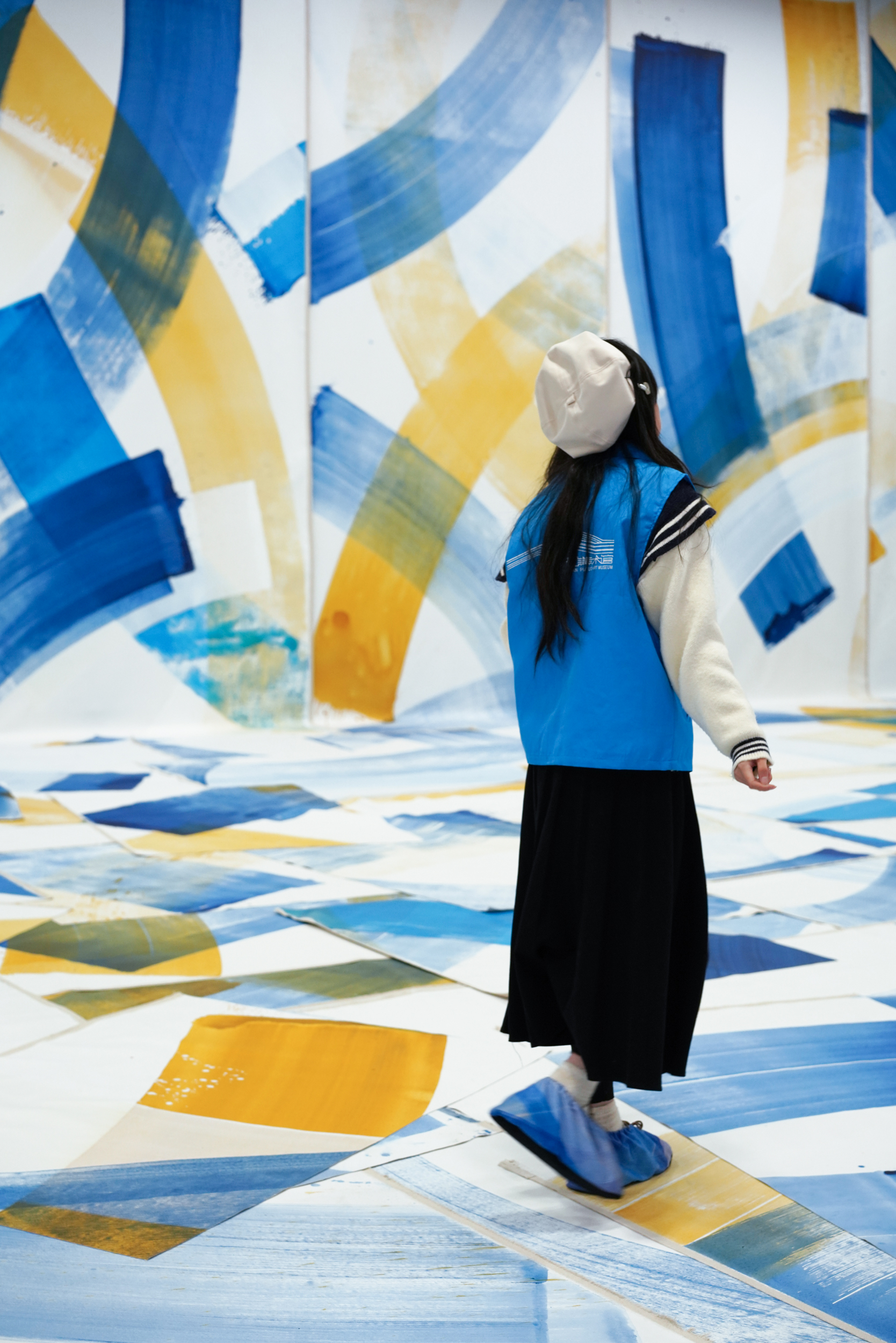
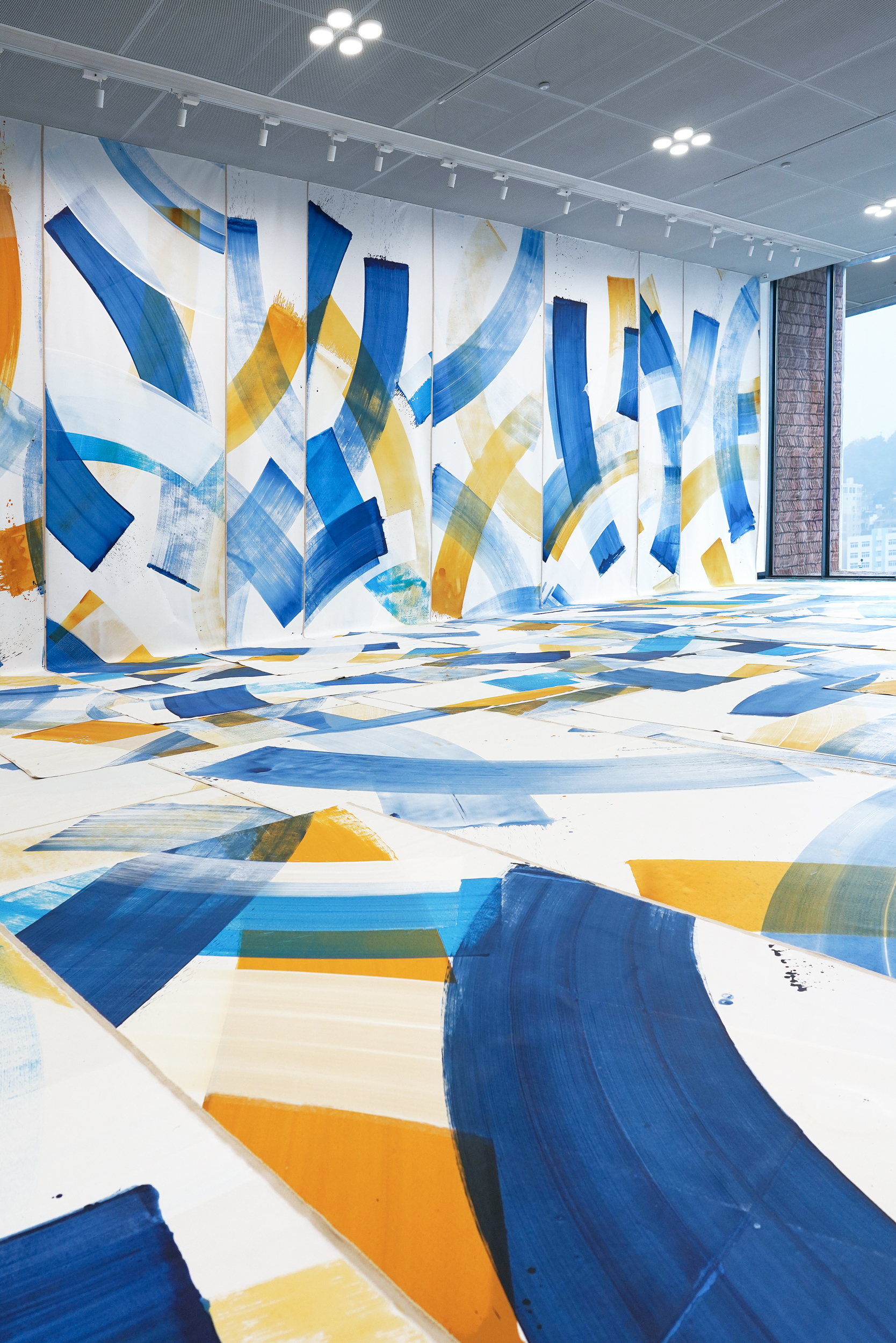
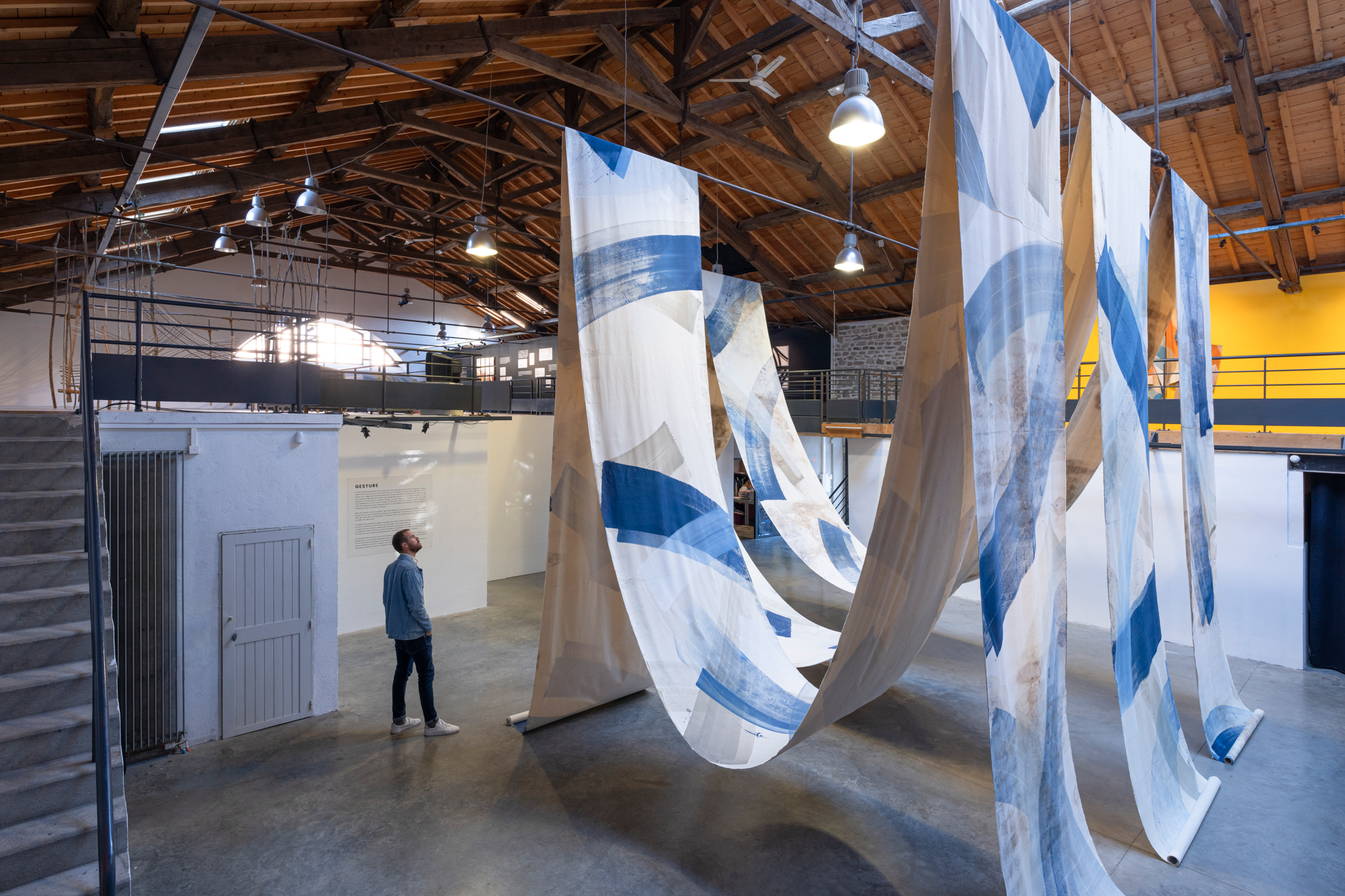
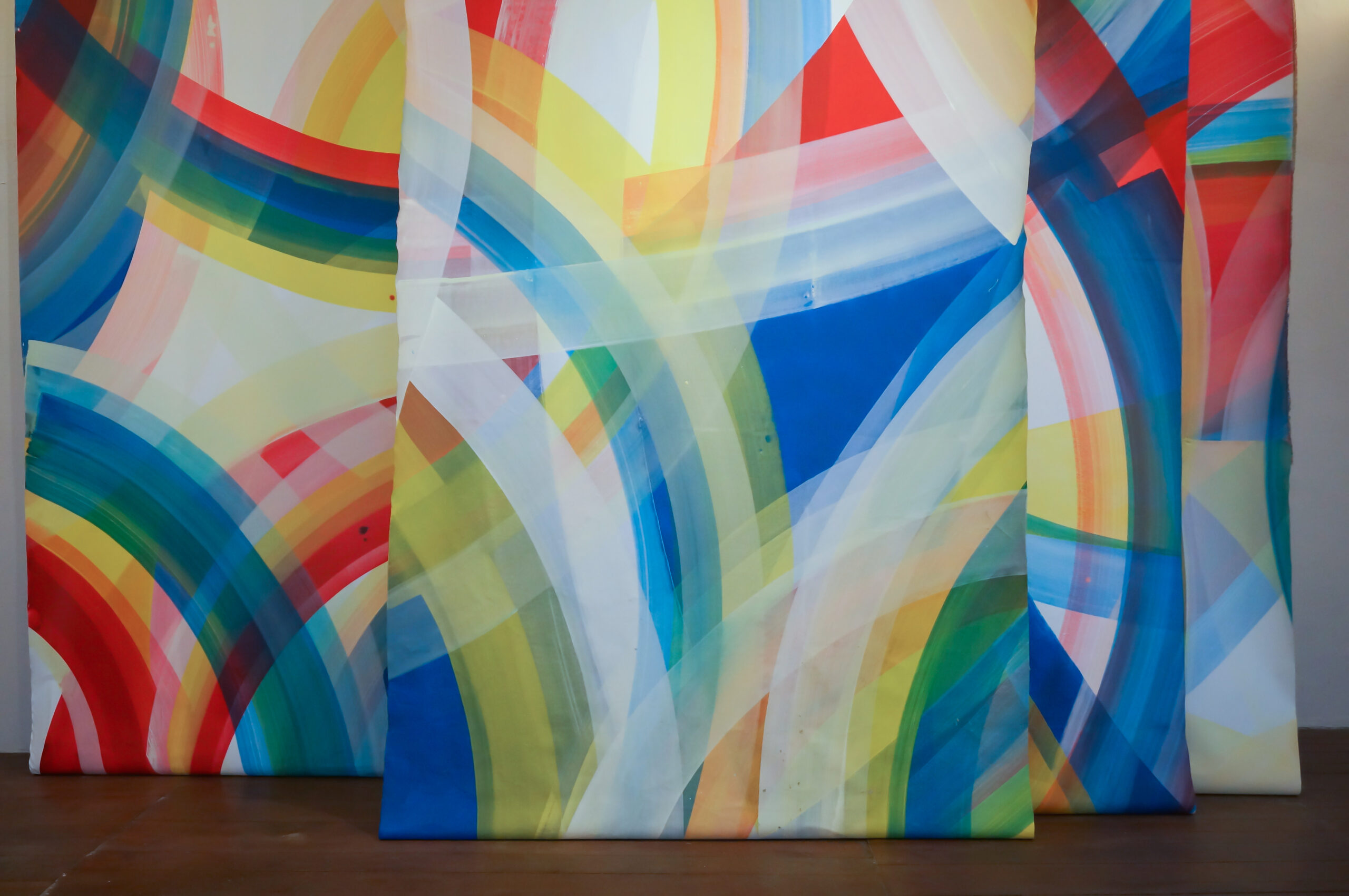
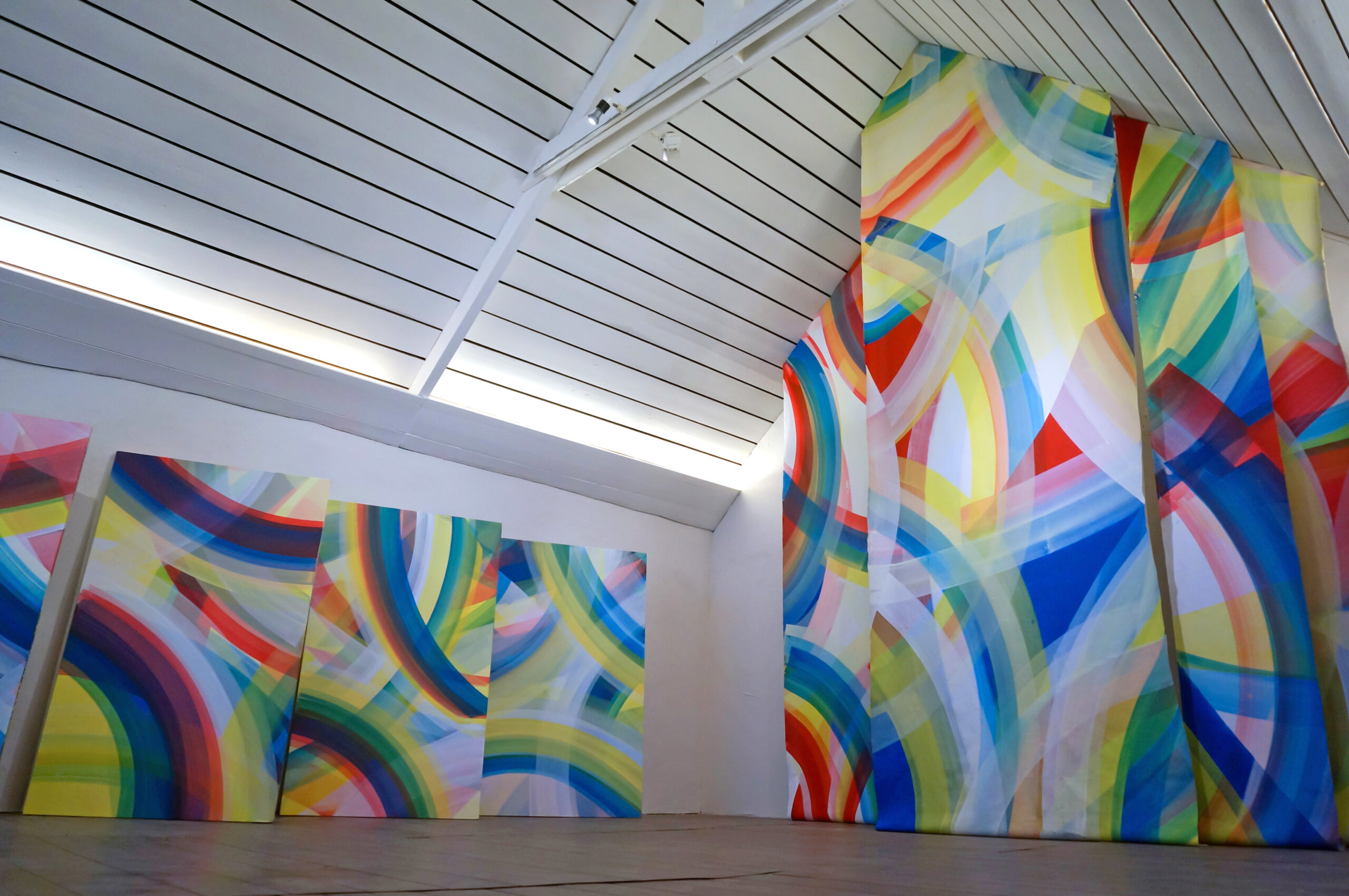
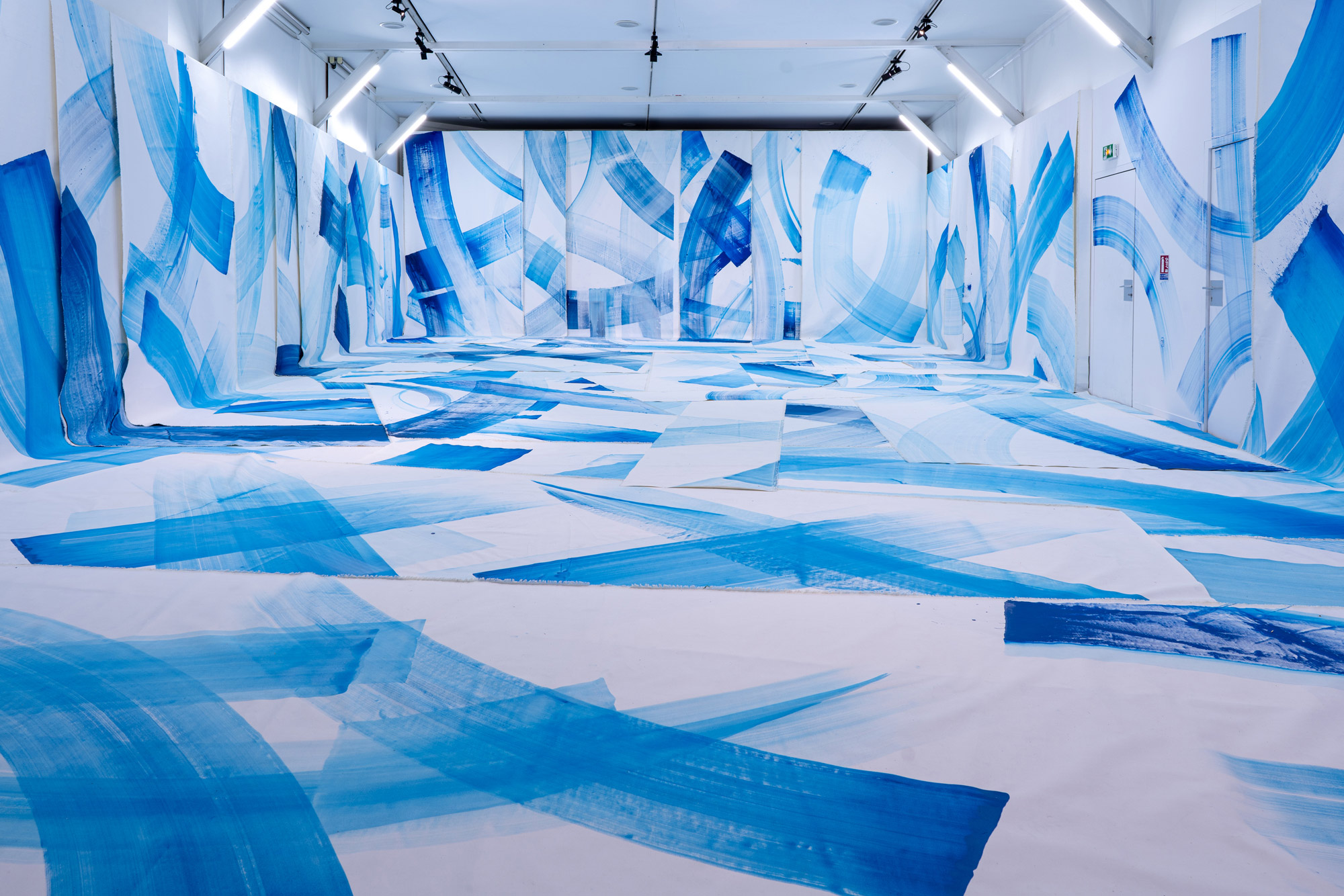
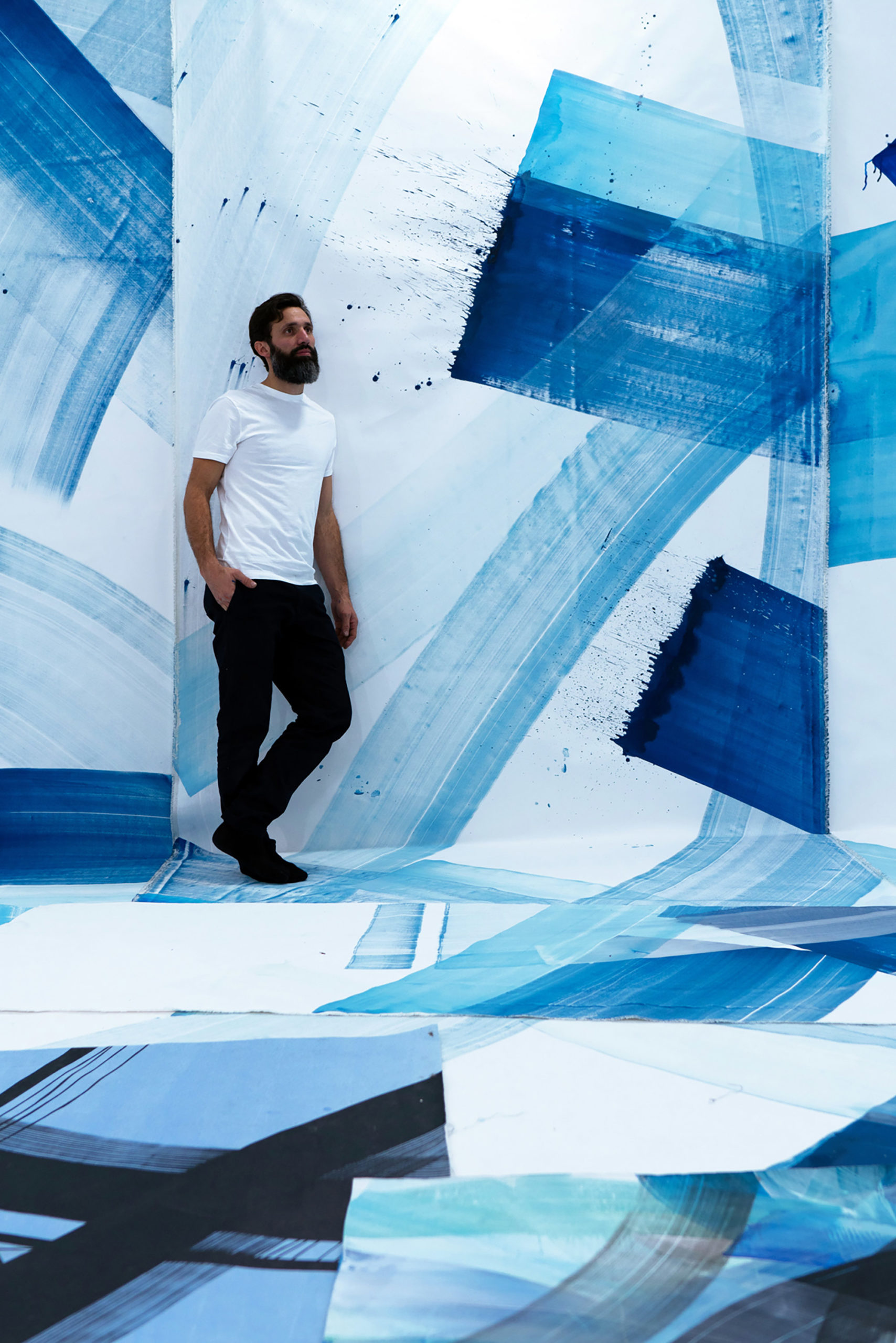
For this exhibition, Romain Froquet focused on the oceanic landscape surrounding Lujiazhi Port—a natural setting visible from the gallery space assigned to him. He reflects this environment by recreating his personal vision of the sea through a work that occupies nearly the entire space: Gesture. This artistic creation took shape through a succession of pictorial gestures made by the artist. The repeated curves spill over the walls and spread across the floor. Gesture is designed as an immersive experience that calls for audience participation. Inside the room, visitors find themselves integrated into the canvas. They can take part in the creation of the work by moving the canvases on the floor and combining them according to their imagination.
Terra Incognita
2024 | Colector Gallery, Monterrey
The desert, a source of inspiration for a series of contemporary artworks
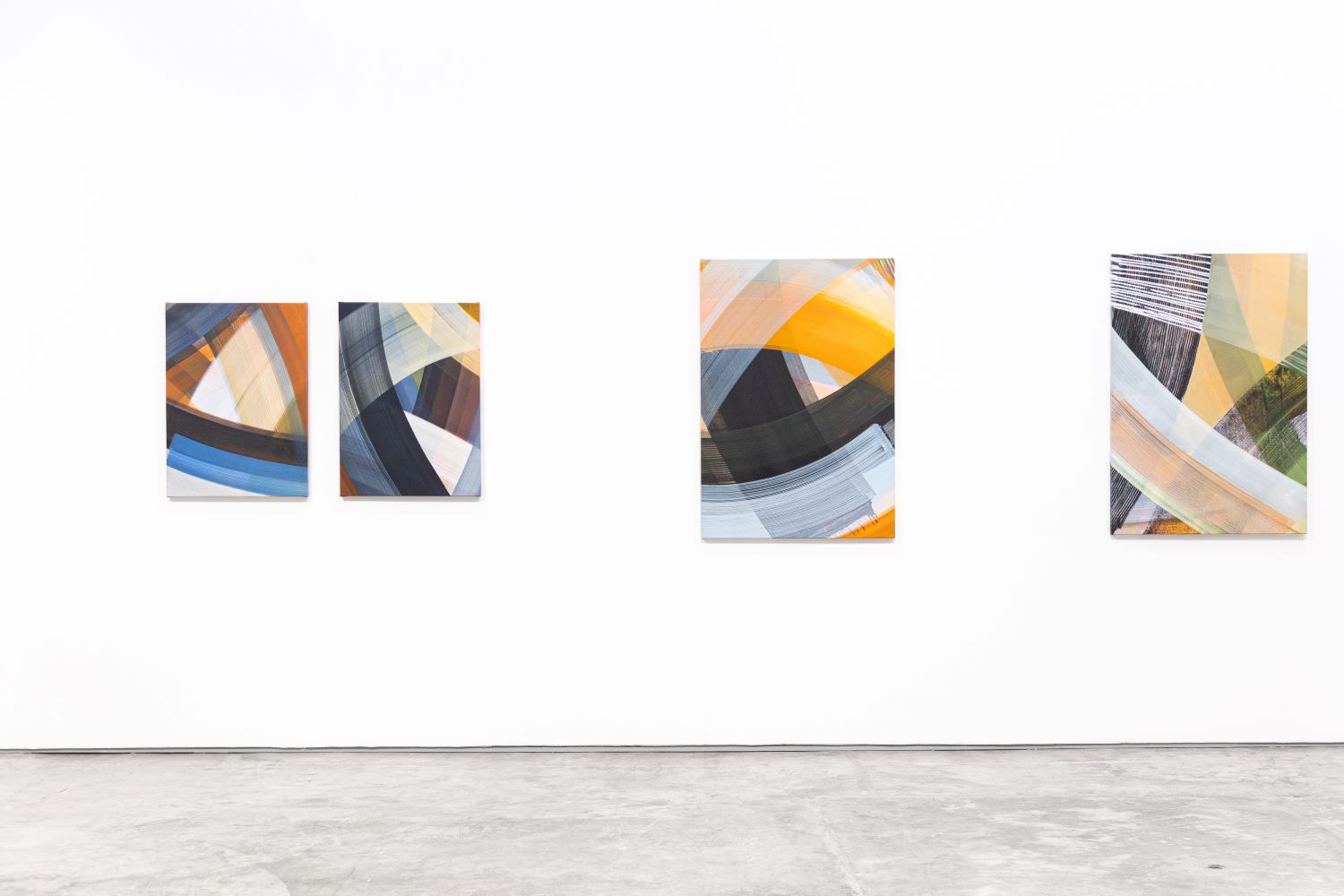
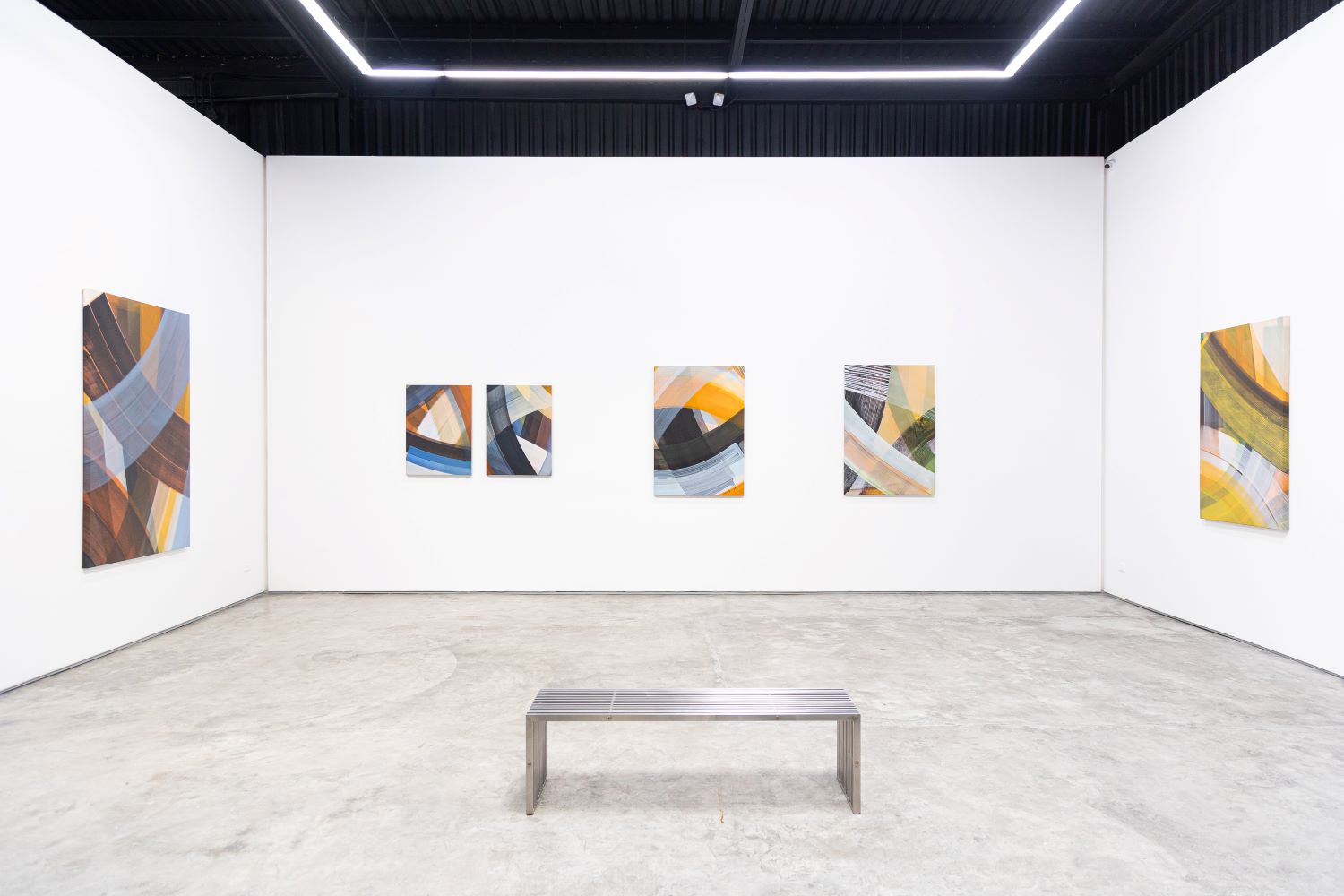
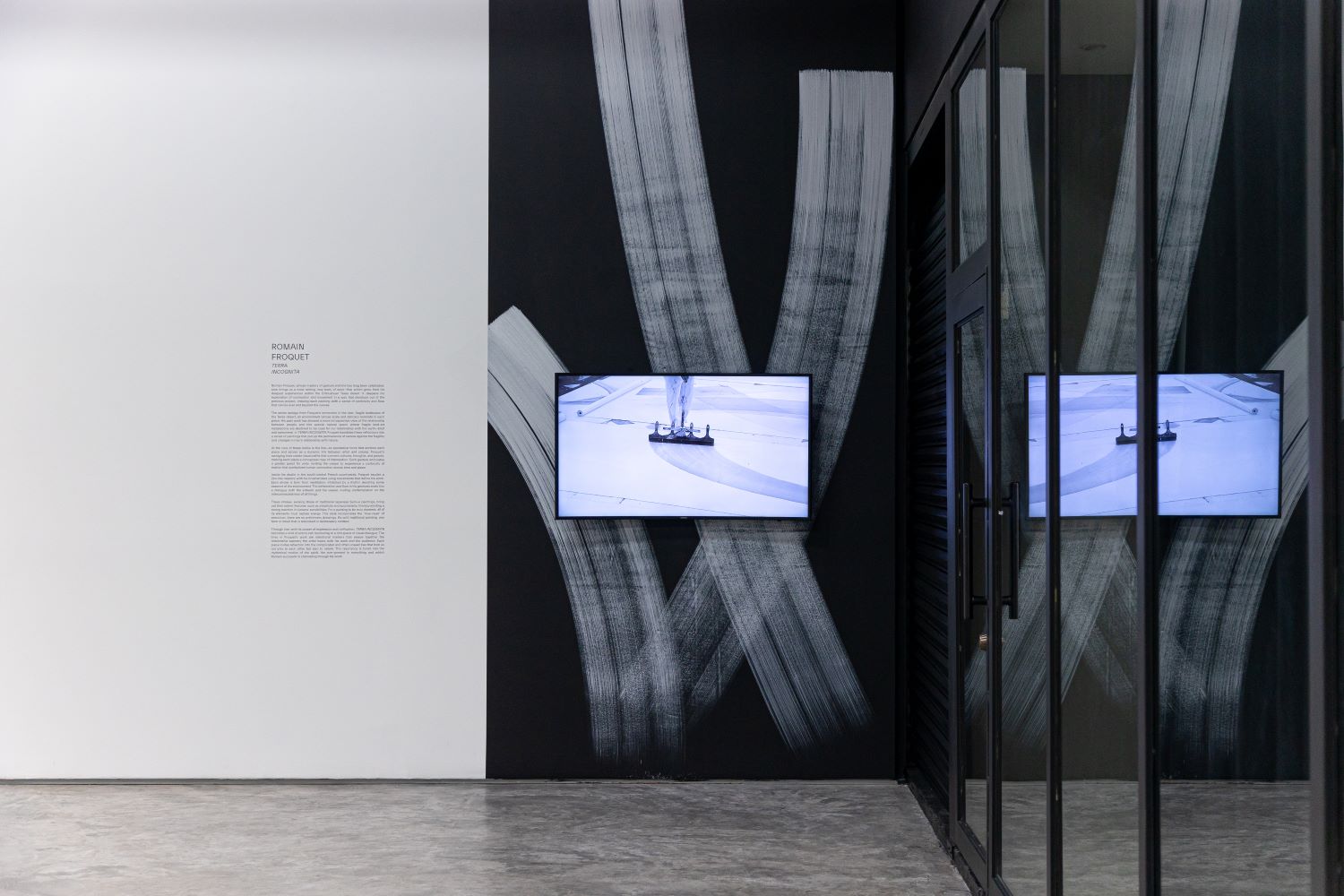
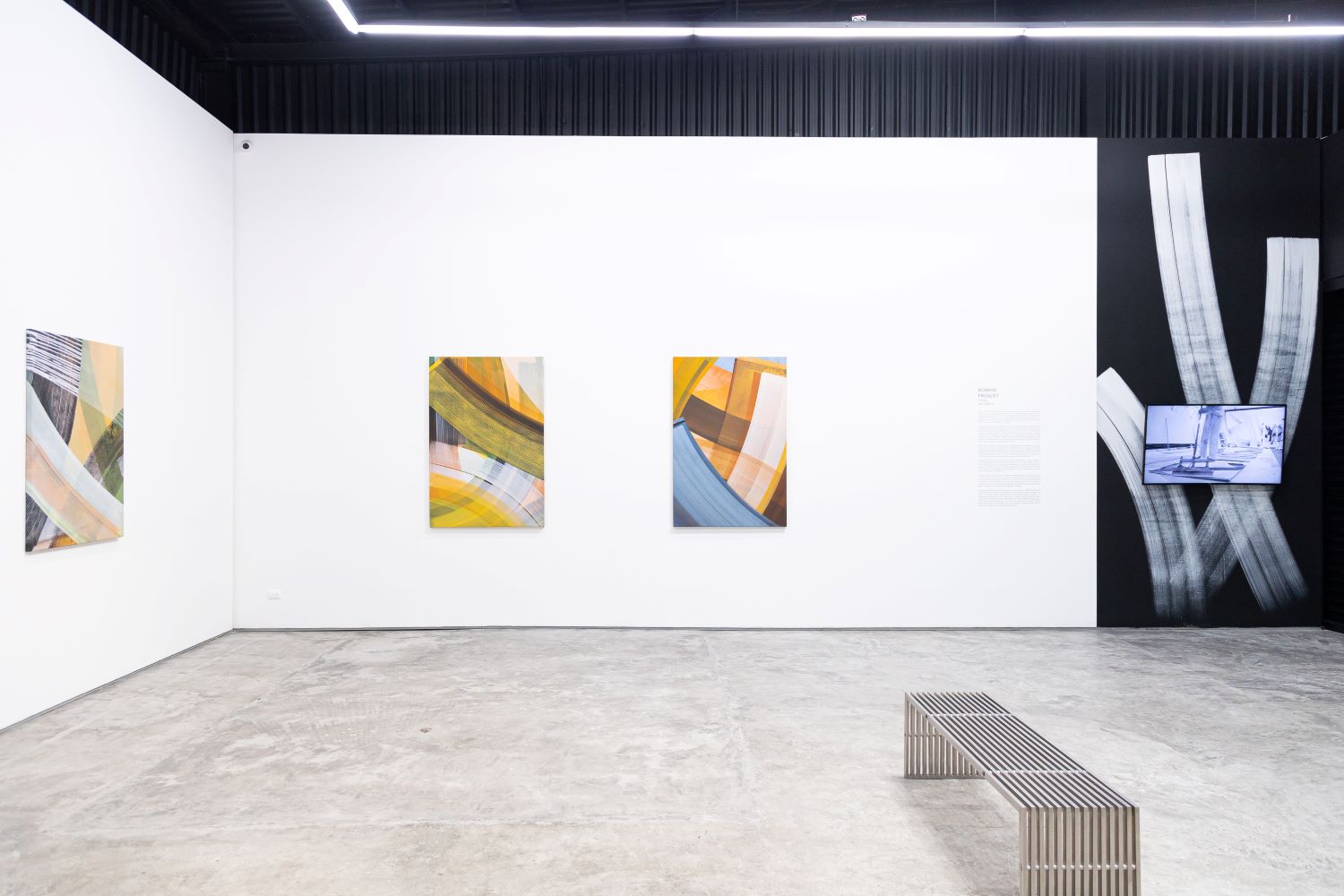
It was in the Texan part of the Chihuahuan Desert that Romain Froquet found inspiration for his exhibition Terra Incognita. Immersed in this arid zone, his thoughts turned to the fragility of this natural environment—a feeling he wished to translate into his new artistic creations.
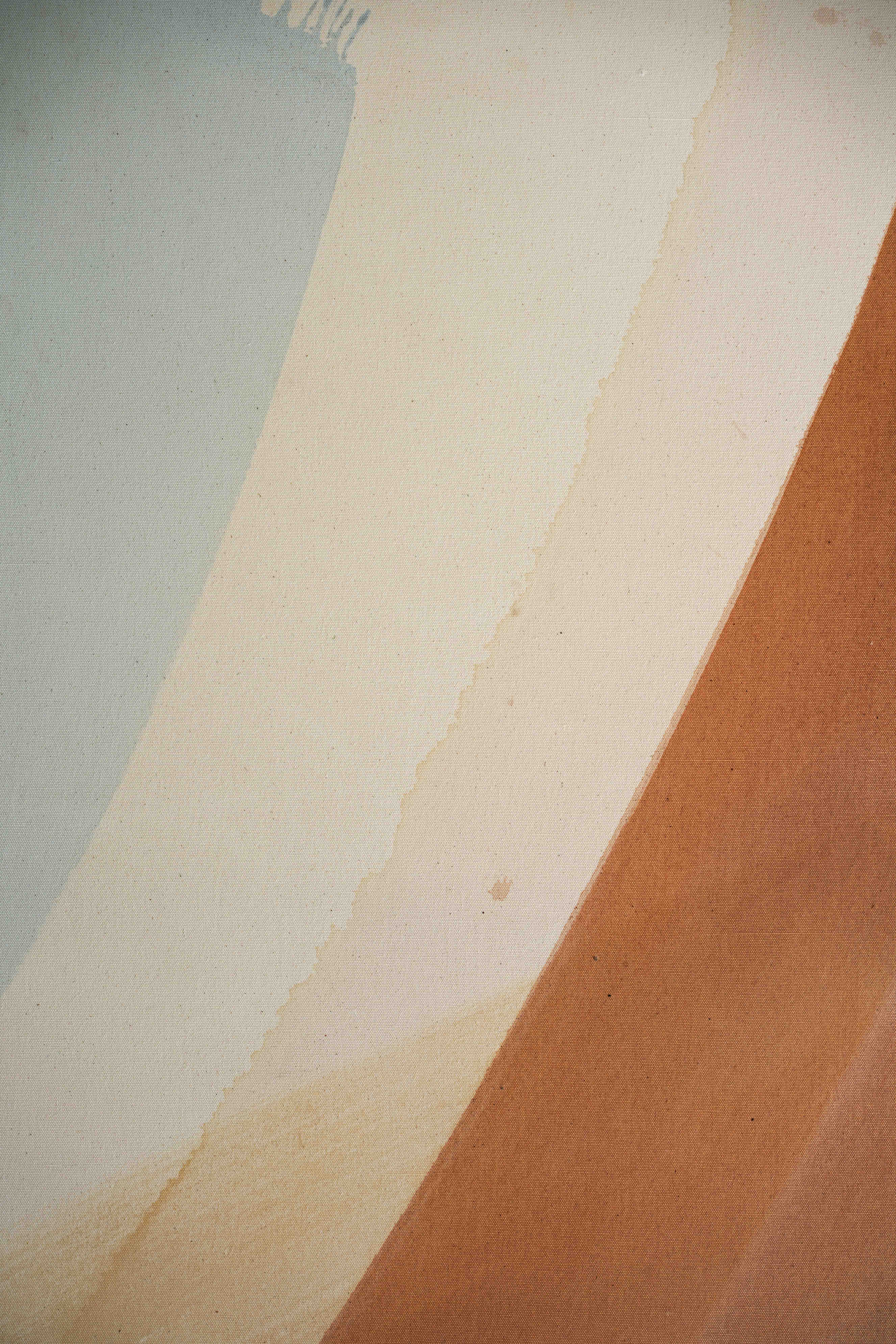
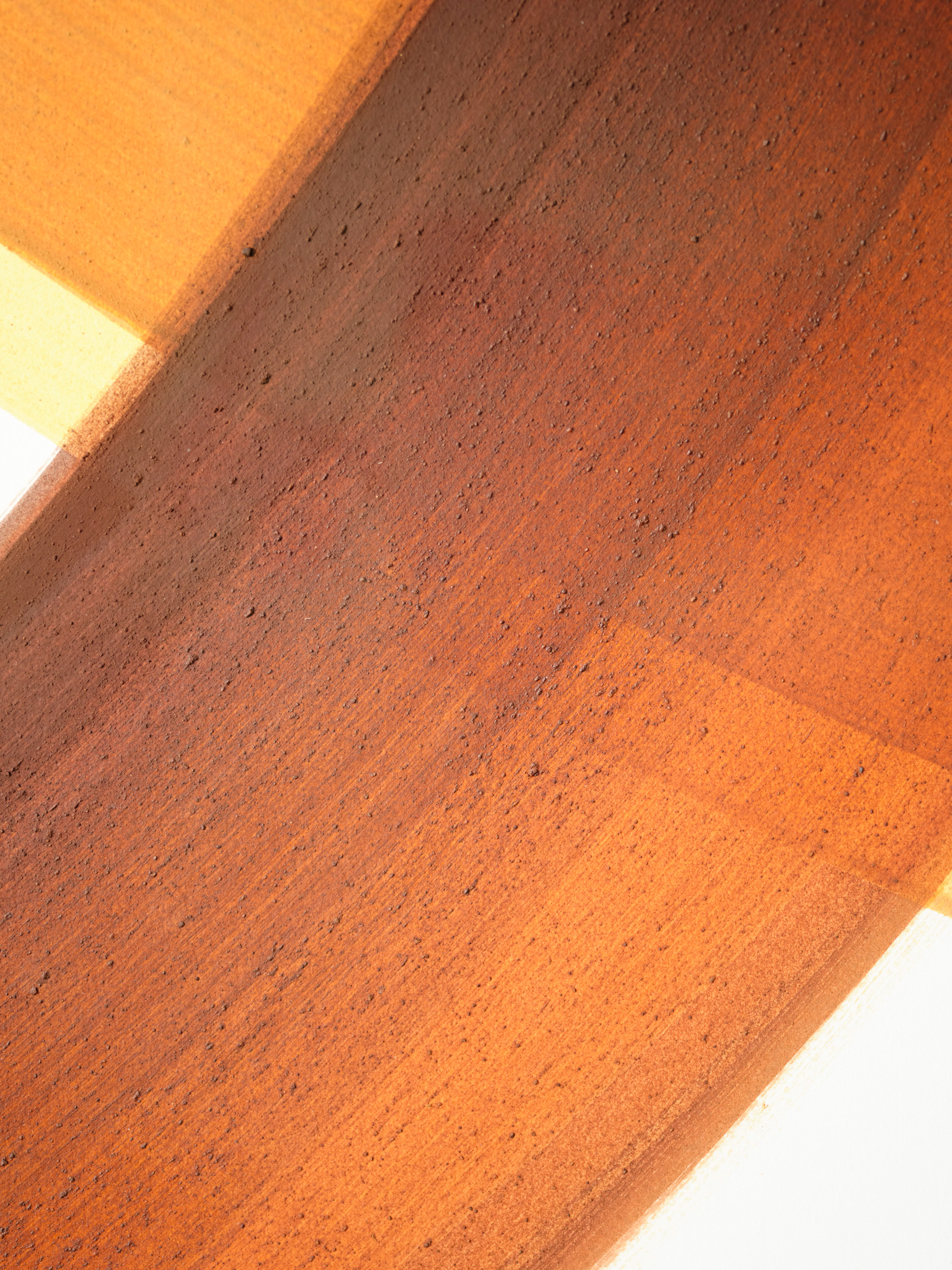
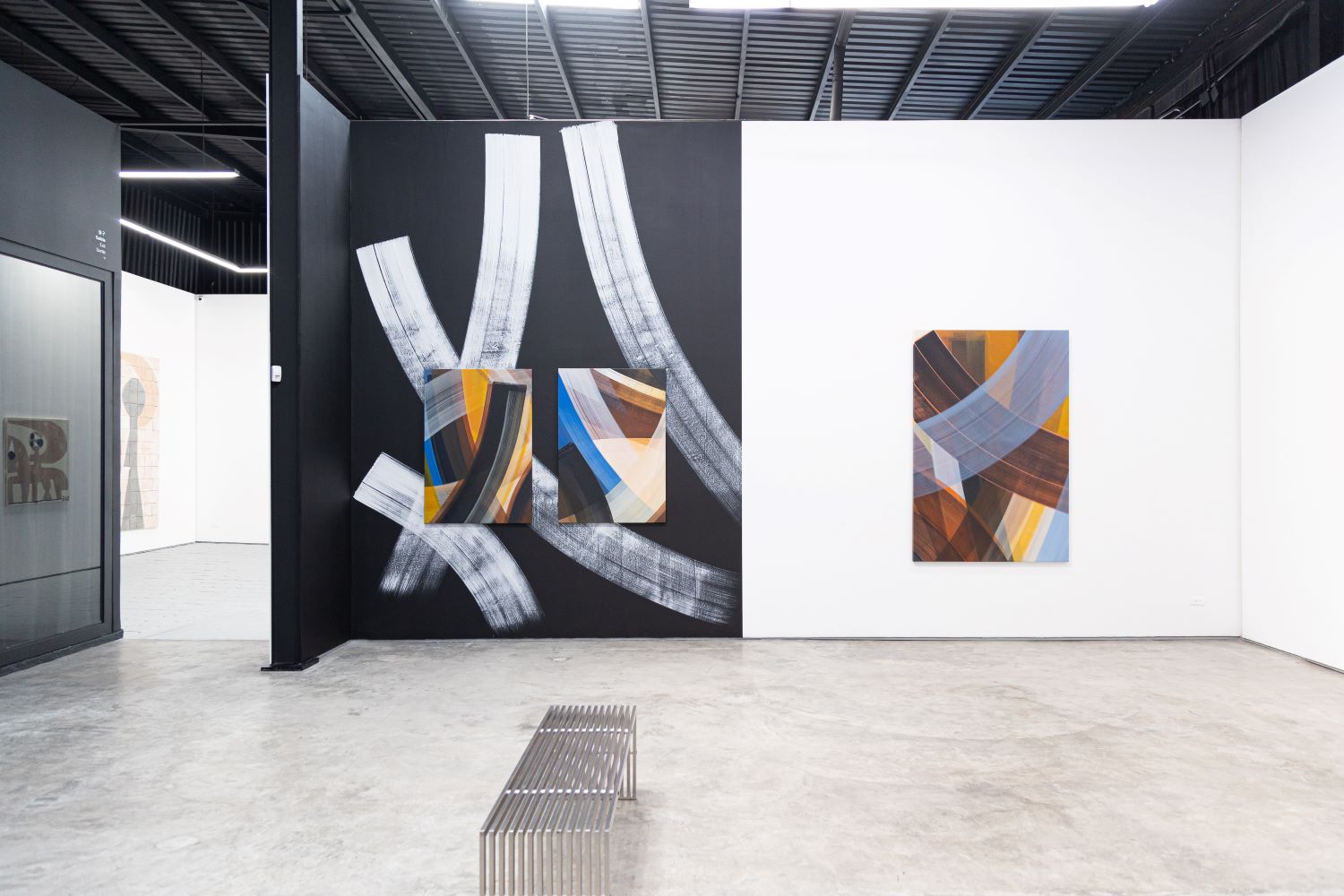
The exhibition Terra Incognita takes place at the Colector Gallery in Monterrey, one of the largest cities in Mexico. Romain Froquet unveils a series of works entitled Gesture (Connections II). They are the result of a reflection on the interaction between humans and the vast, fragile environment of the Chihuahuan Desert. This connection is reflected in the artworks through a combination of materials: natural pigments collected in the Chihuahuan Desert are mixed with oil and acrylic paint. It is a way of physically connecting them to the place from which they draw inspiration, while emphasizing a visual and spiritual tension between the natural and the artificial.
The Gesture (Connections II) series is part of Romain Froquet’s years-long exploration of the line—an investigation that goes beyond the technical and visual aspects; it is also conceptual. The broad, dynamic strokes on the canvases evoke a connection between cultures, ideas, and people. The artworks are conceived as visual dialogue. In this exhibition, Terra Incognita, the focus is on the spiritual connection between humans and their natural environment.
Capitale(s)
2022 I Hôtel de ville de Paris
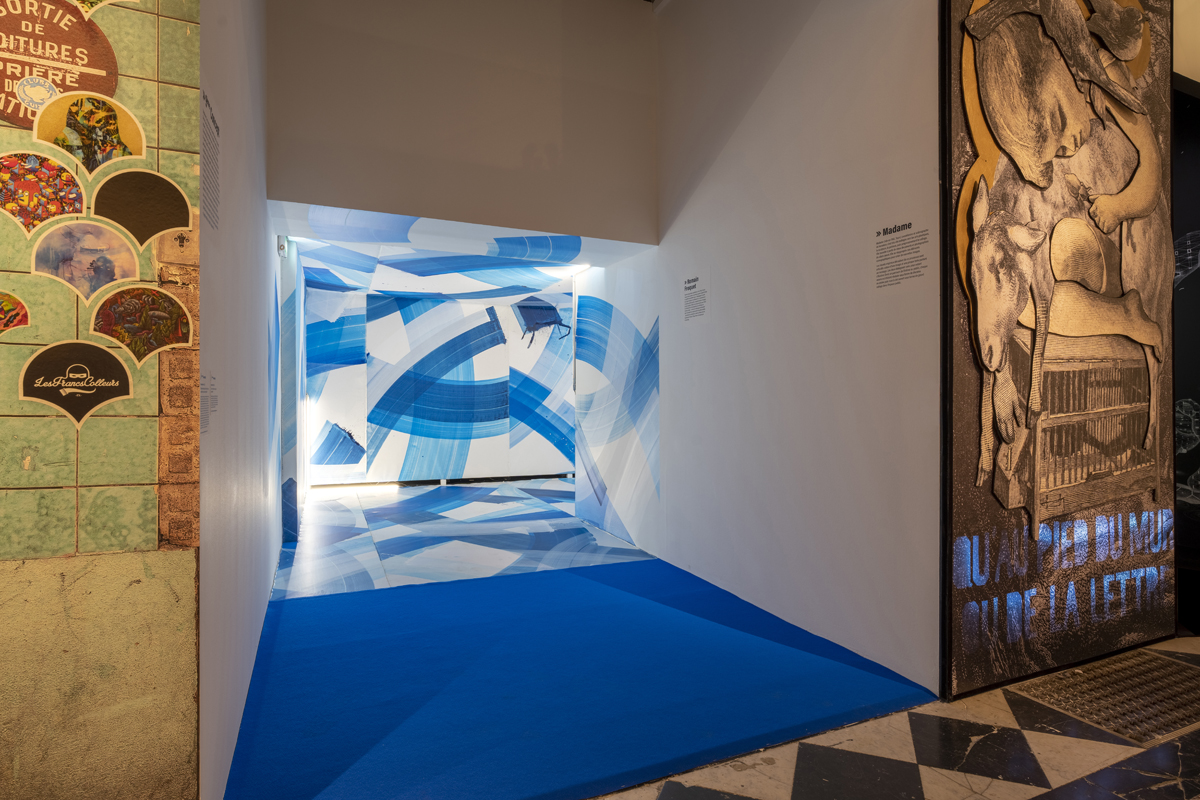
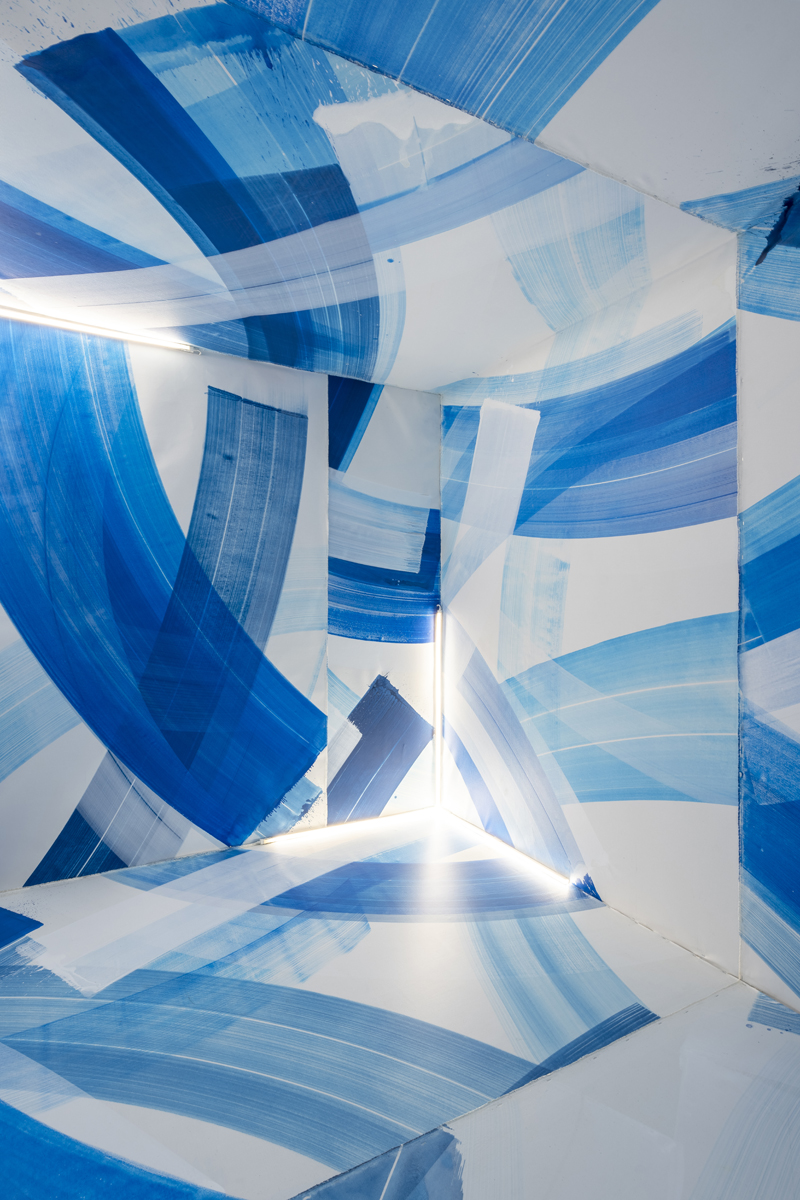
Immersive Installation: “Gesture”
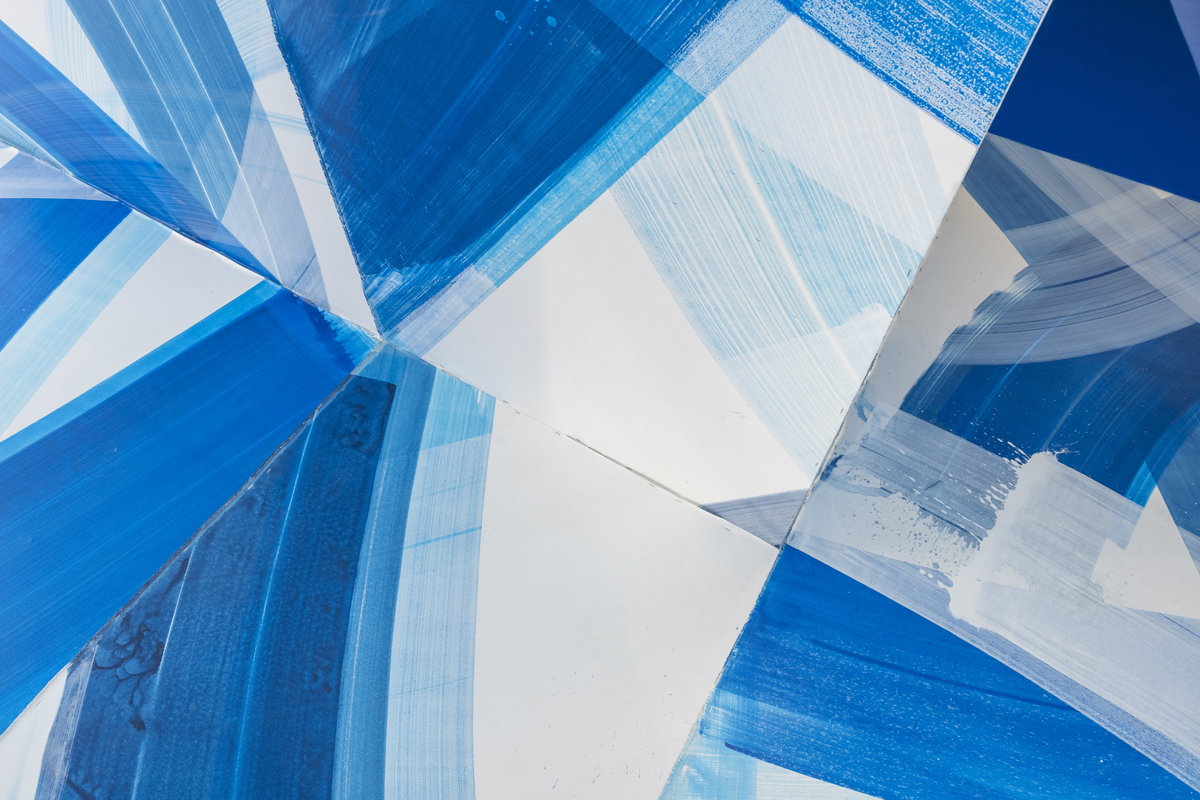
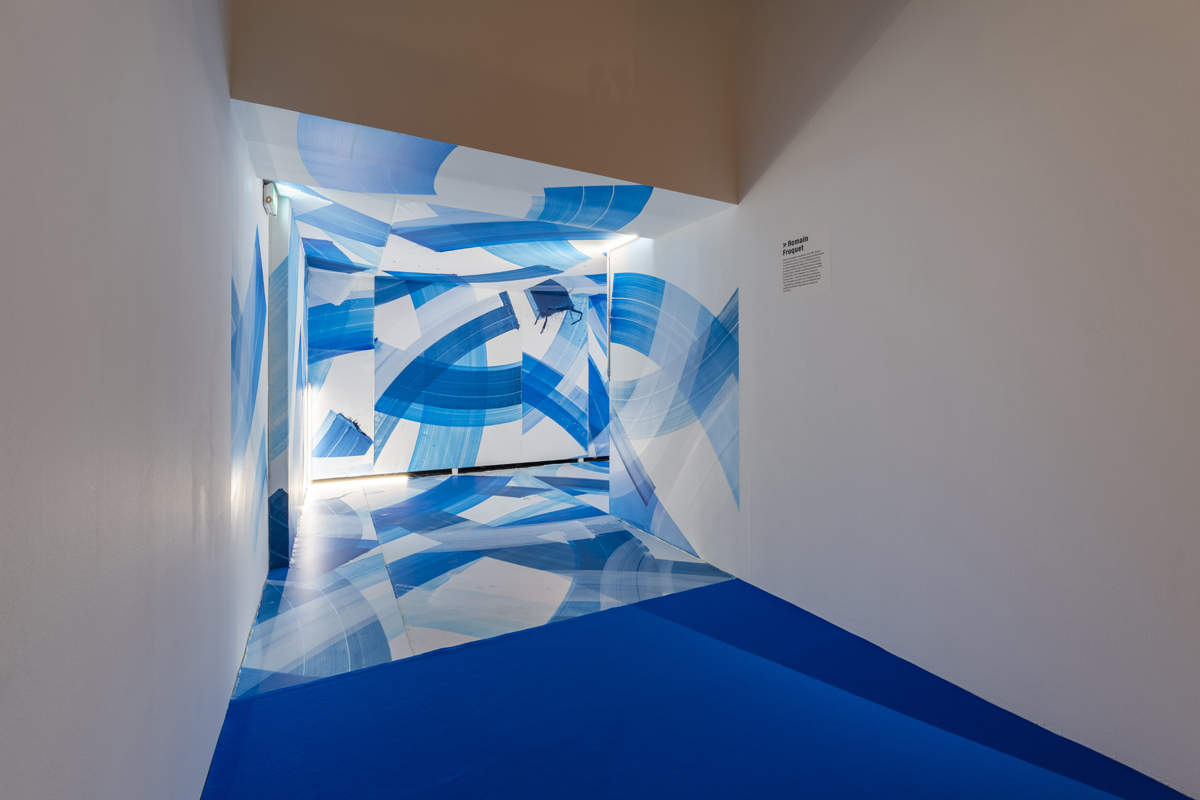
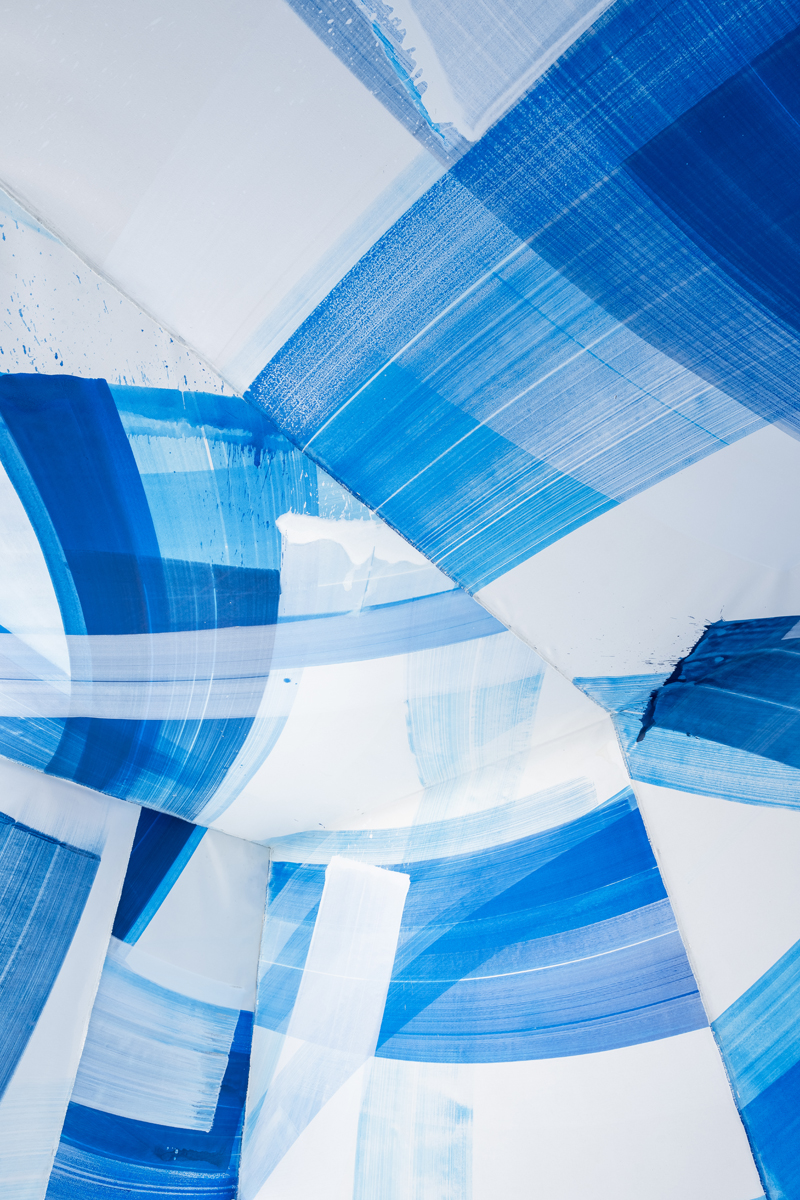
At the end of a journey rich in artworks, I invite you to experience the very heart of my lines. In this room, you may meditate, wander, observe, follow the movement of the line, walk on the canvas, perhaps even lie down on it, share this moment with someone, run, jump, and bring the work to life.

Flux, liens et mouvements
2022 | La Lune en Parachute, Épinal
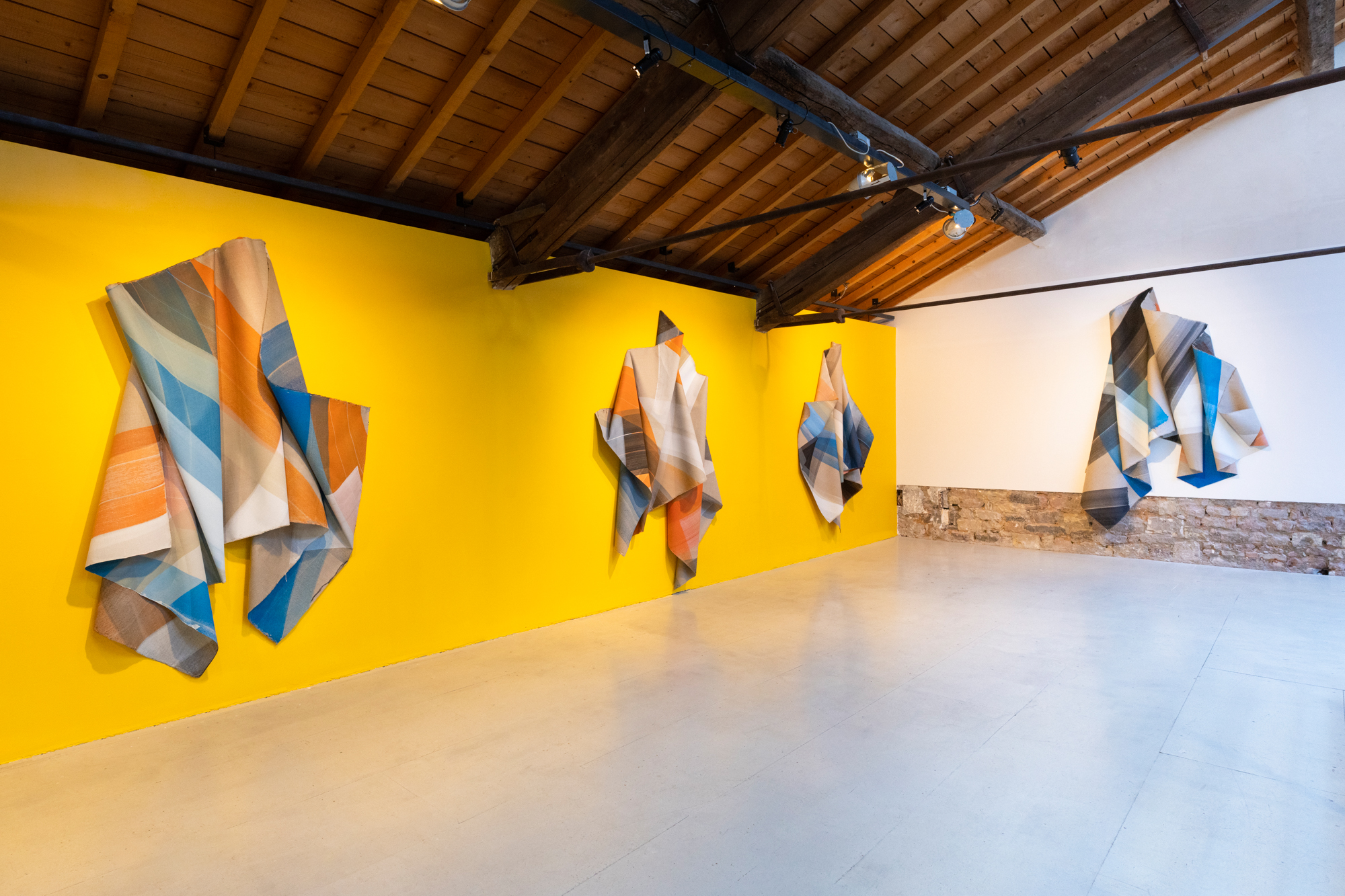
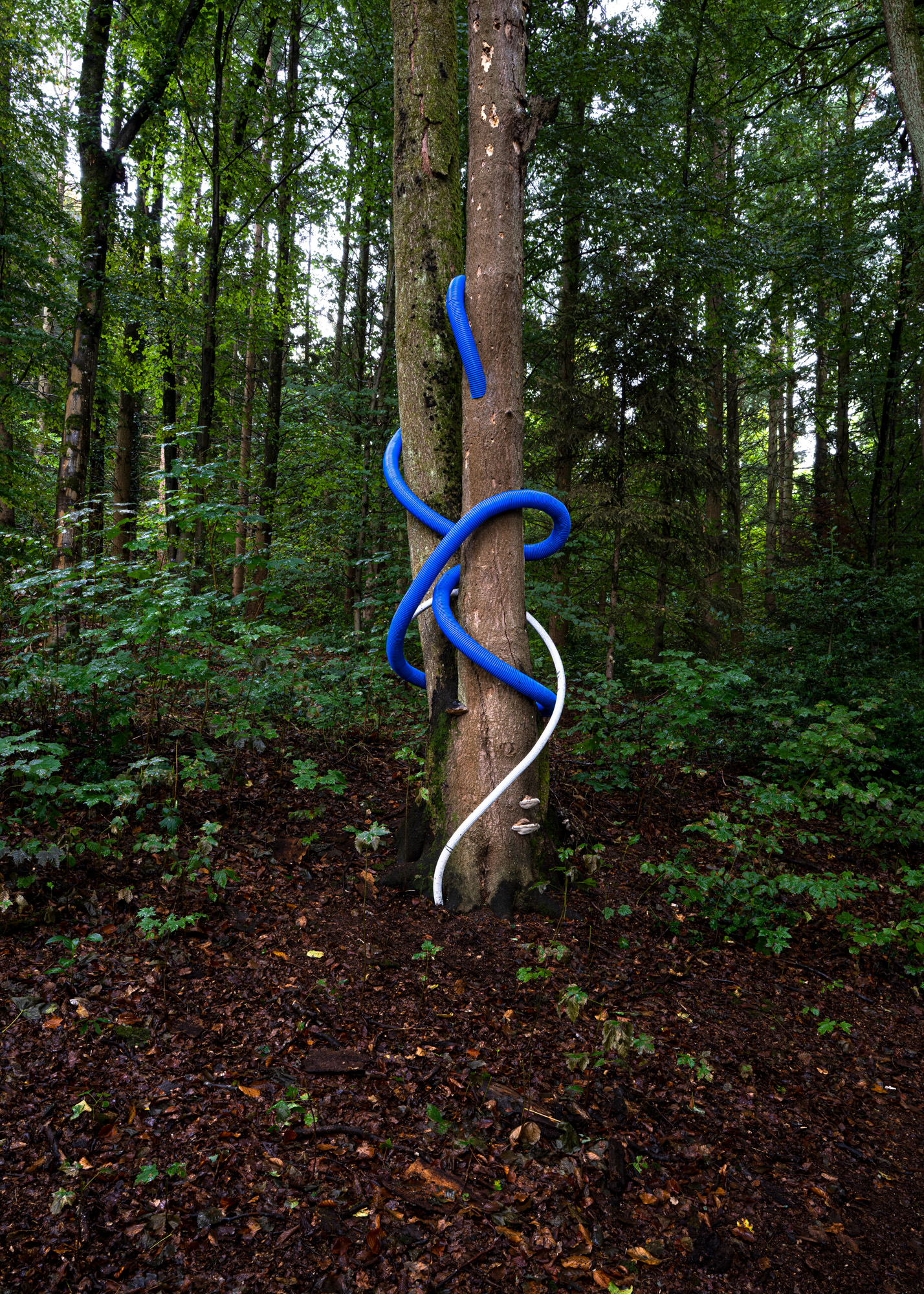
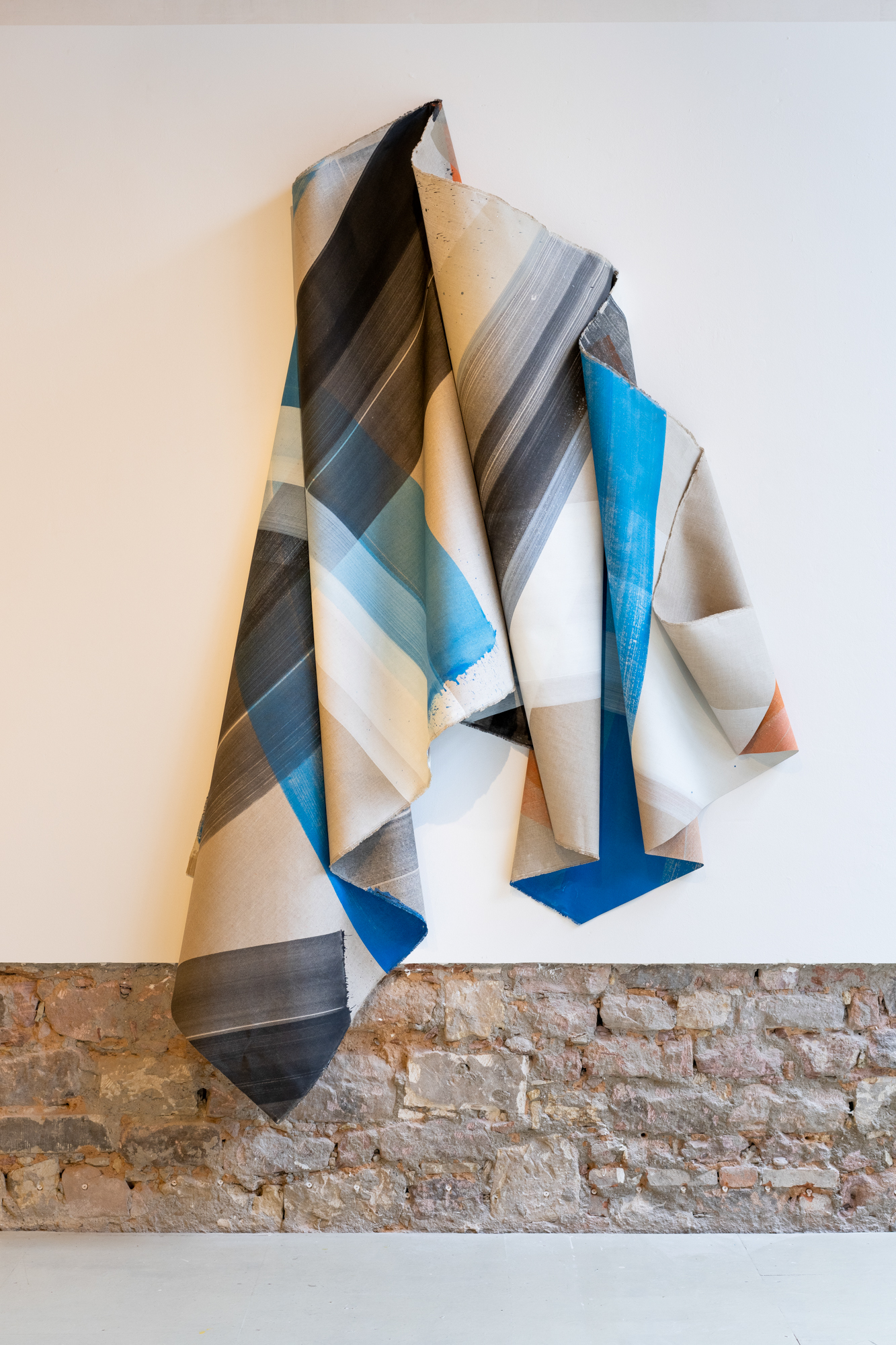
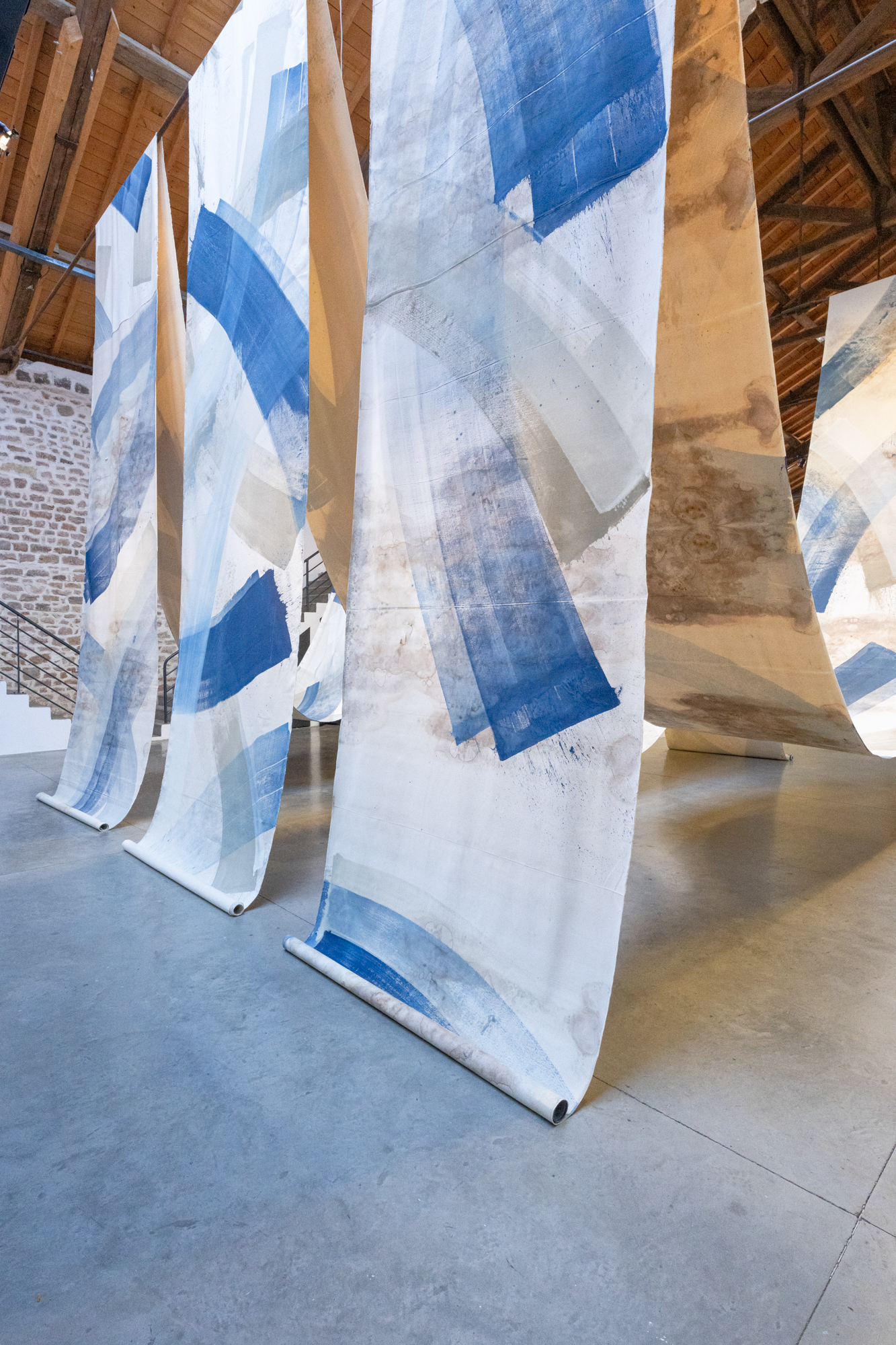
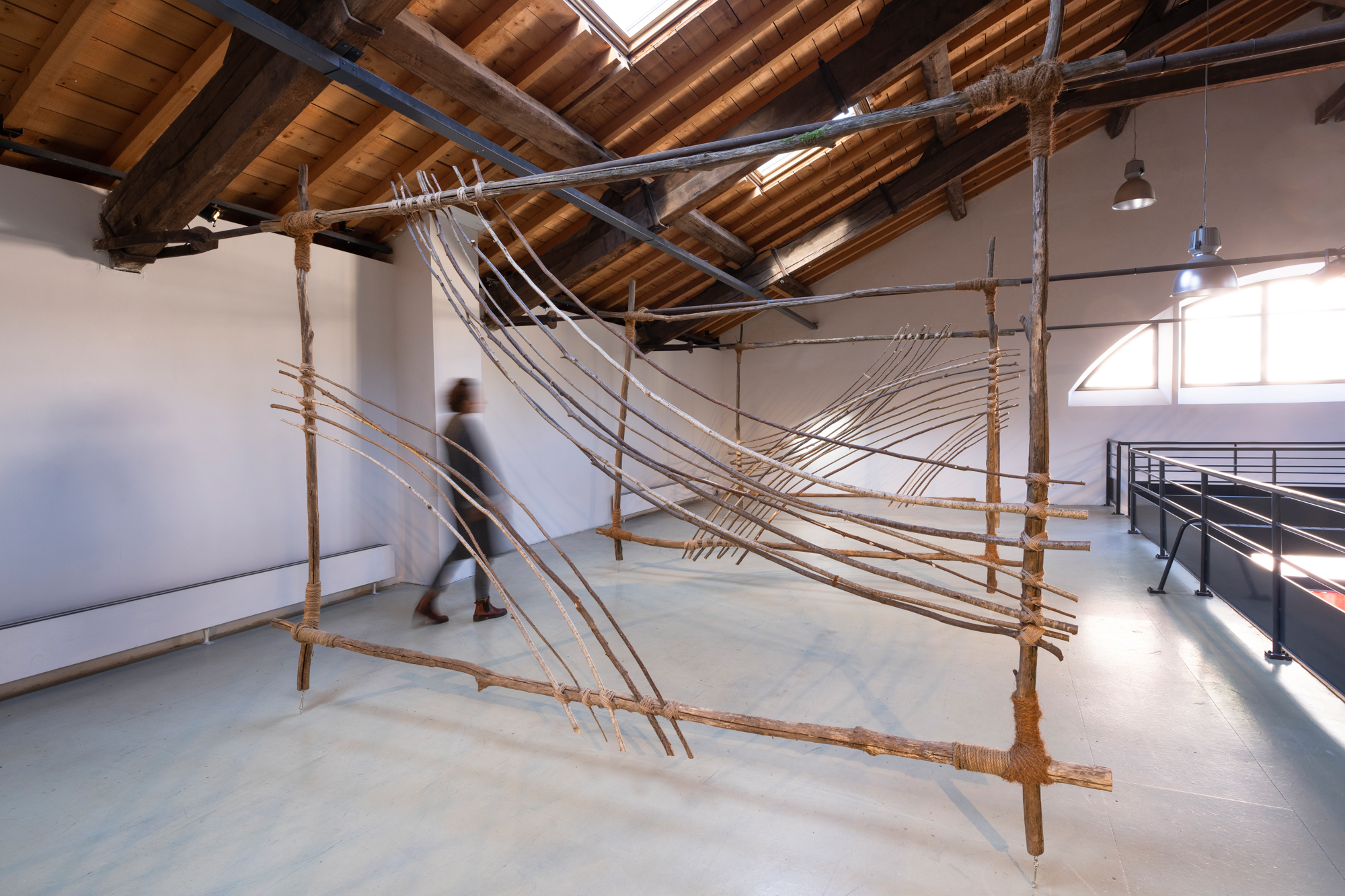
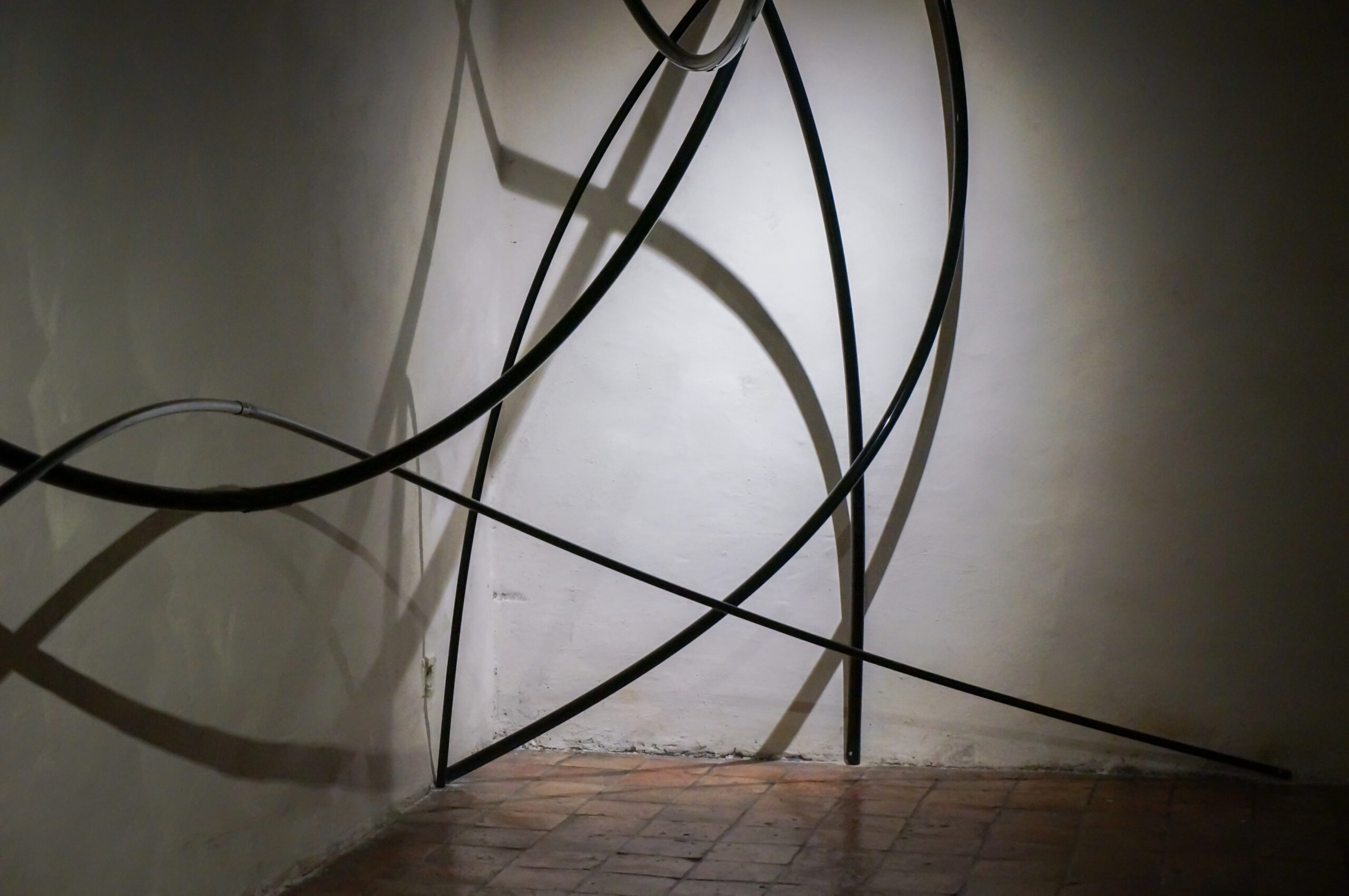
Imbued with symbolic strength, figurative or spatial, the line structures the universe. We trace imaginary lines in the sky between the stars, giving birth to constellations. The line is also a path, a trajectory, a union or a rupture. Straight, dotted, or infinite, it is the curve that Romain Froquet favors.
It begins as the outline of an object, but then the line takes on a polysemic dynamic and structures the elements of space. The precision of the line follows strict guidelines and seeks perfection, to ultimately dance across the surface, captivating the eye.
His fascination with the curved line and its movement leads us to wander between the urban environment, raw material, and ethnic origins. The exhibition Flux, Liens et Mouvements established itself as a bridge between an already well-honed body of work and a gateway to new experiments. In the same way, the materials and mediums that Romain Froquet offers us are multiple. He creates links between already existing worlds but can also deconstruct them to offer us a new reality.

Rupture
2021 I L'essentiel, Paris
An Experimental Artwork in an Ephemeral Art Exhibition
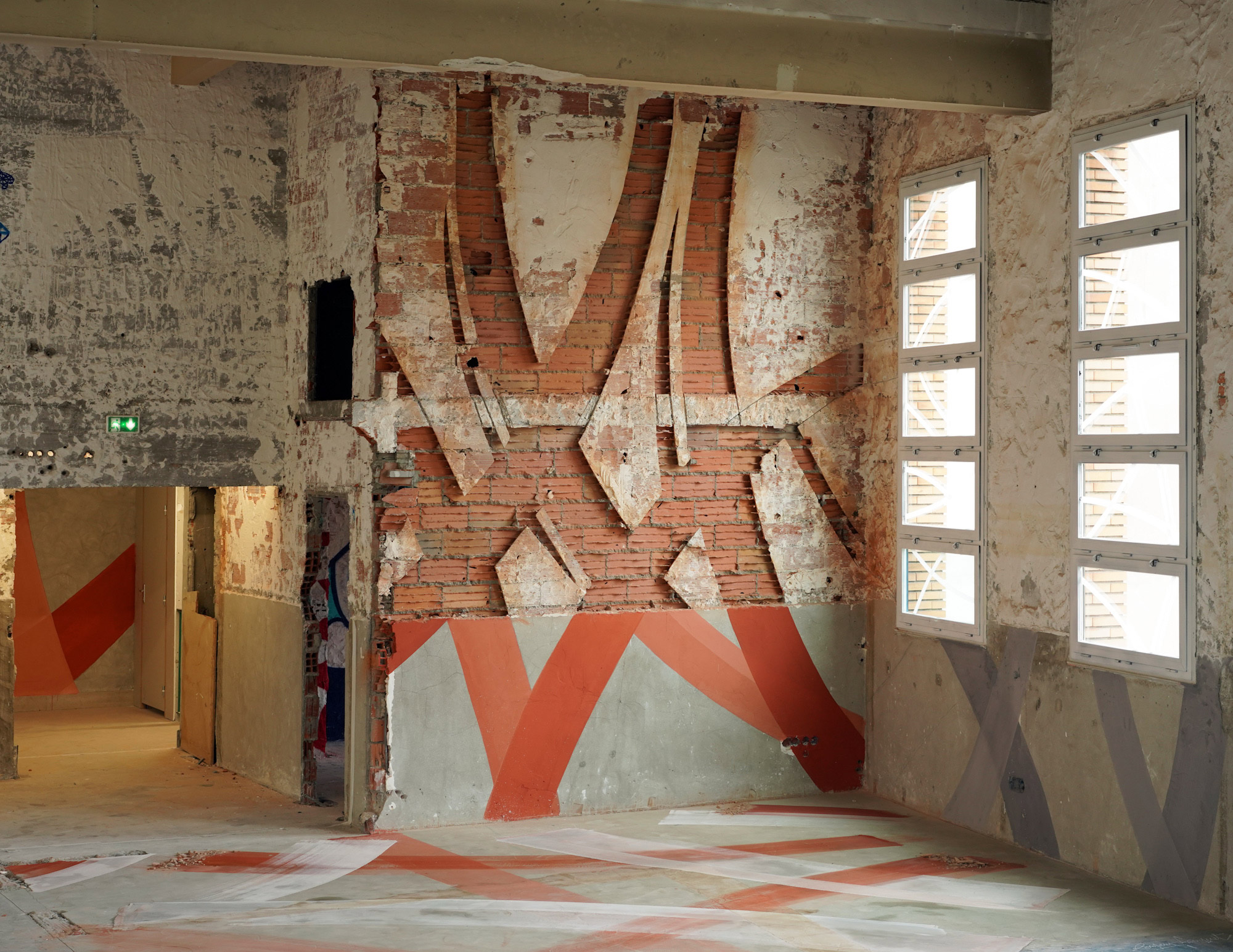
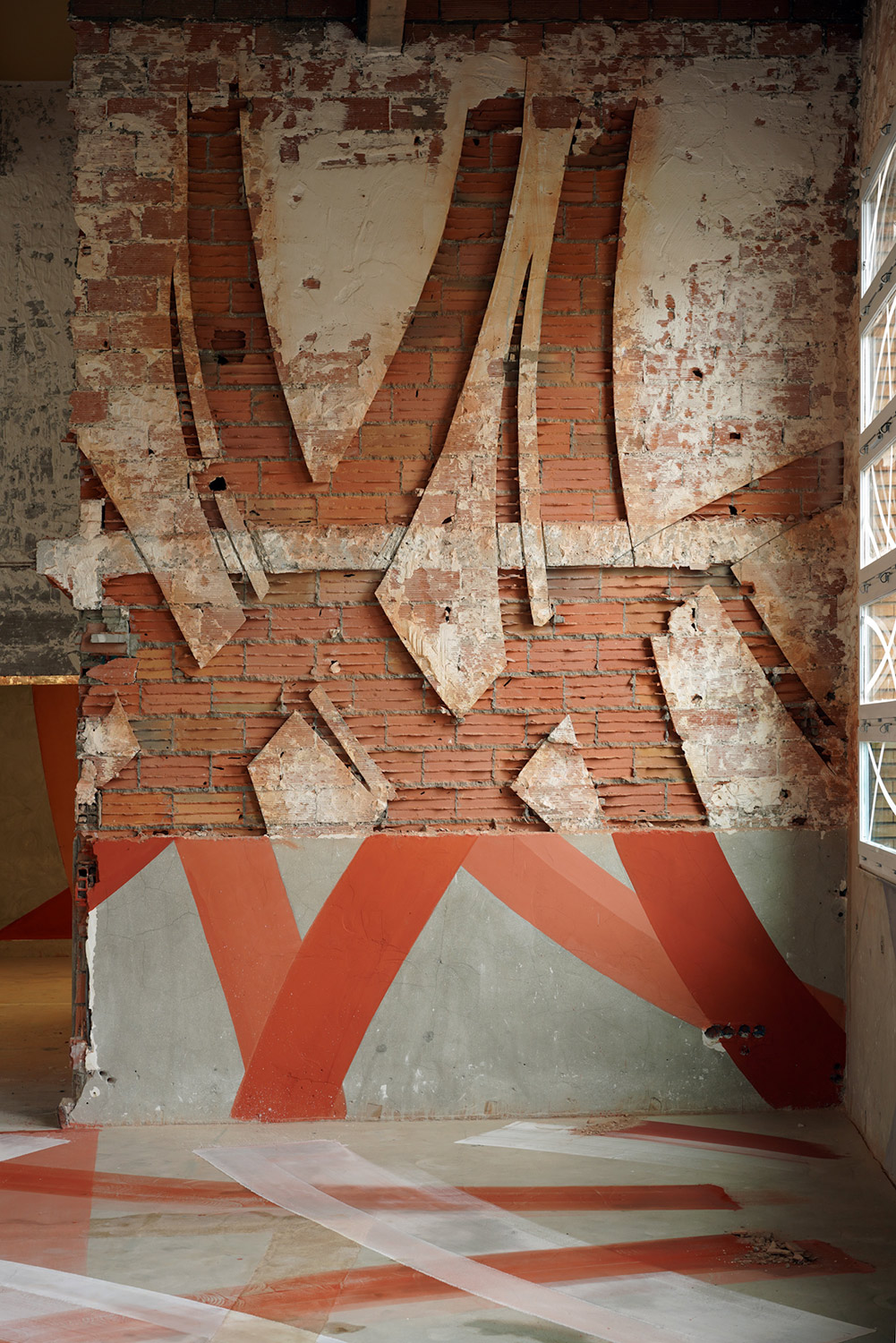
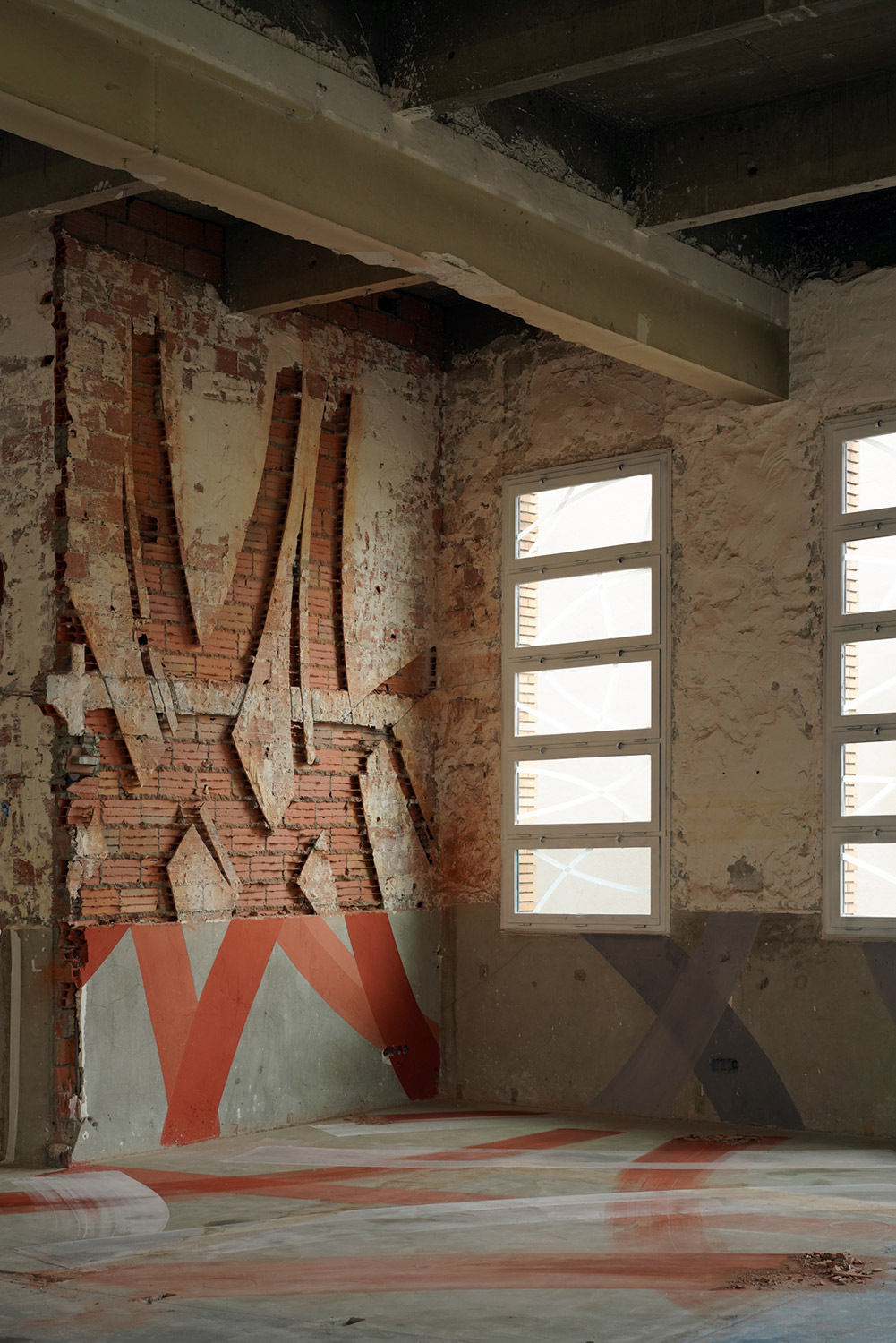
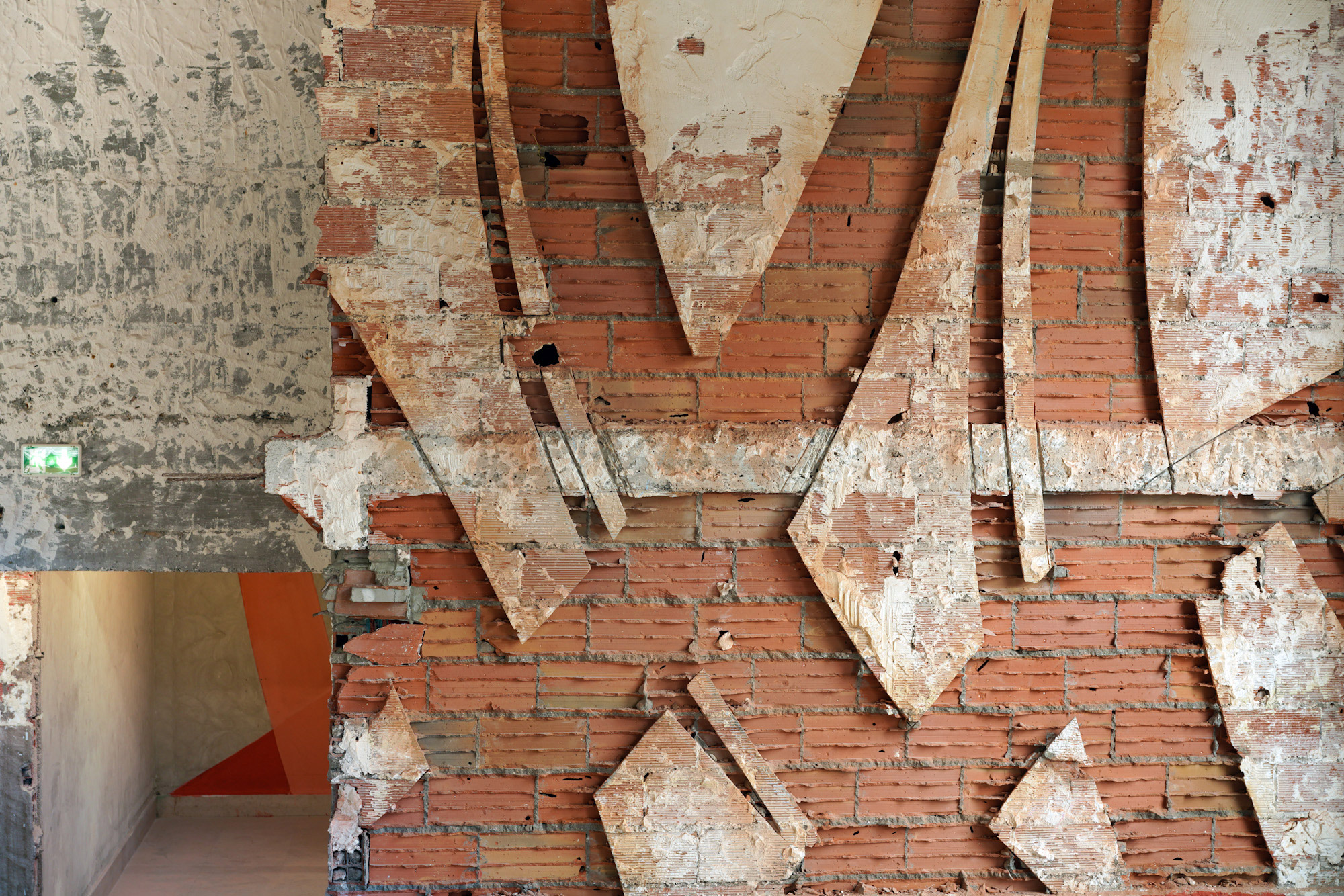
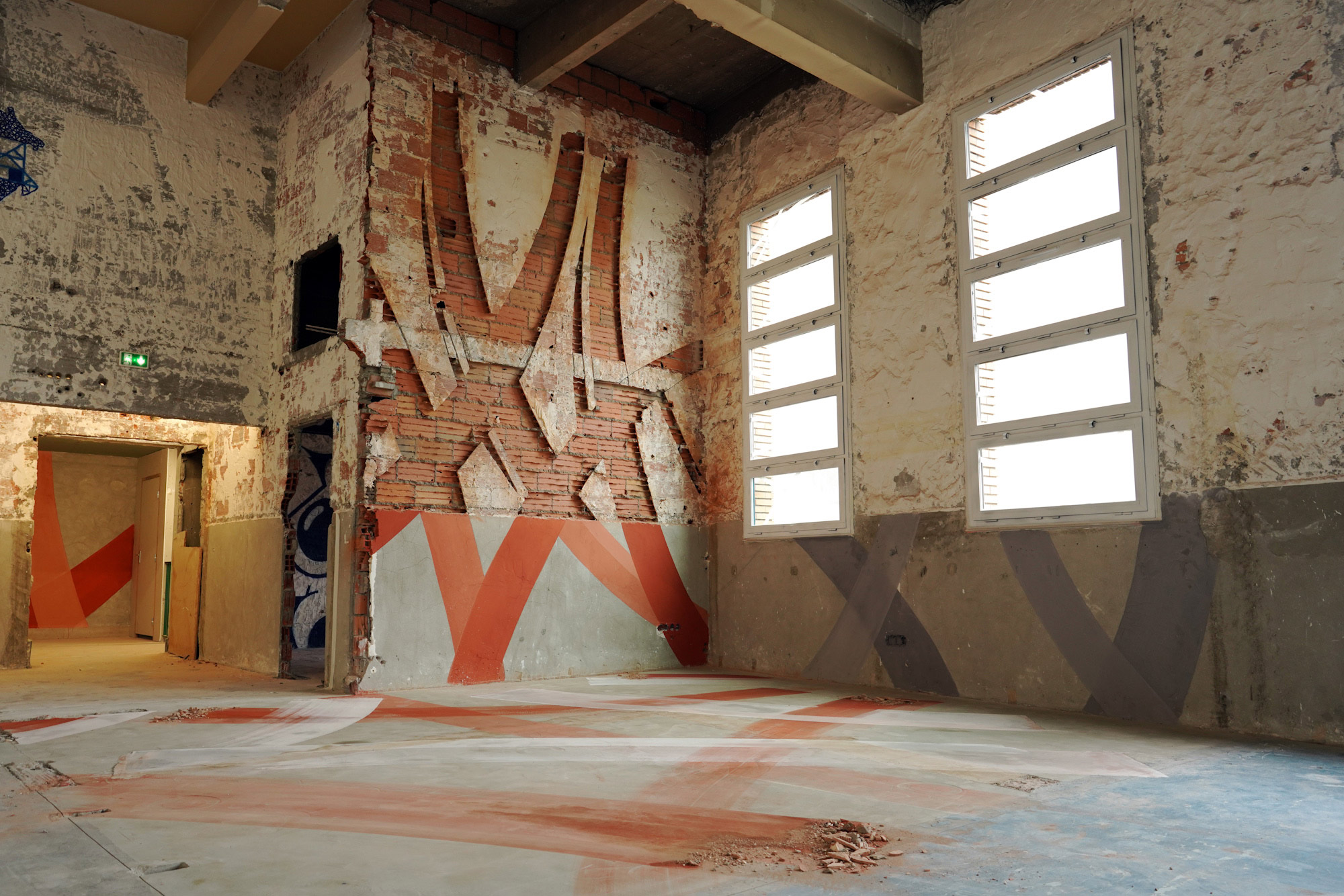
A former Parisian post office and sorting center was converted, for the summer of 2021, into an ephemeral art space. Its 2,000 square meters were made available to 43 contemporary artists before renovation. This collective artistic project was named “L’Essentiel” (“The Essential”). It echoed the relegation of culture to a non-essential domain as decided by the authorities during the pandemic. Within this vast building, a generously sized space was entrusted to Romain Froquet.
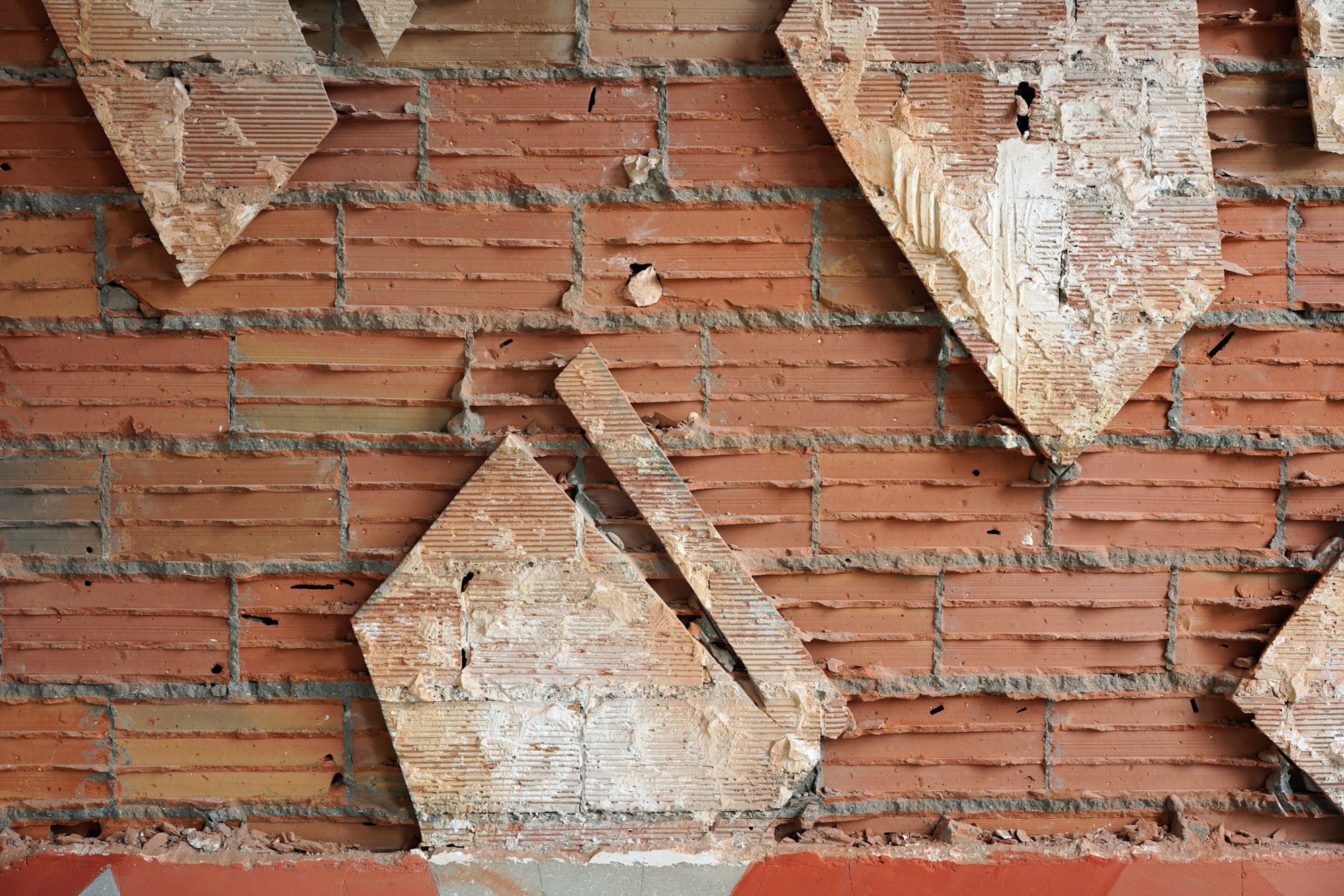
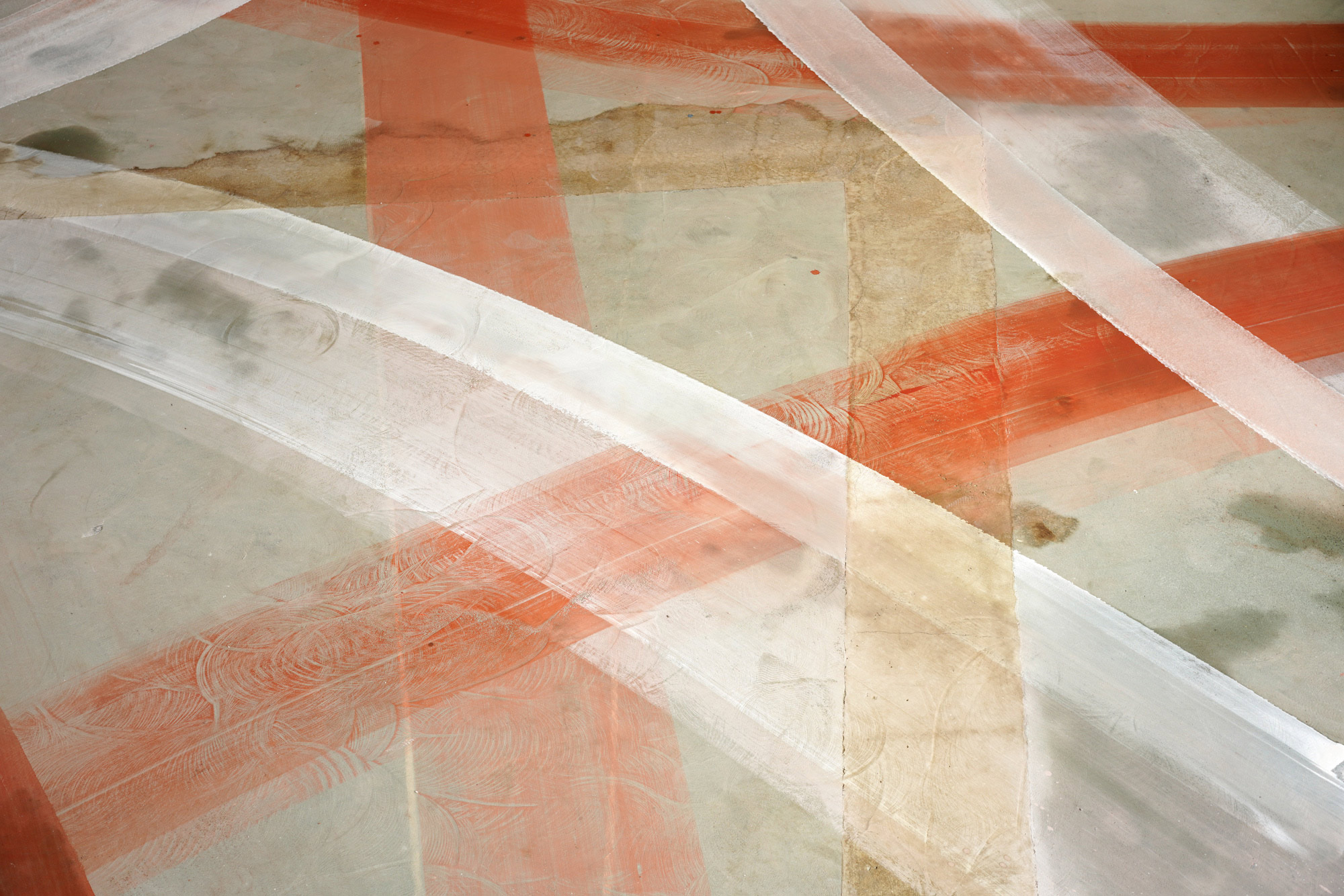
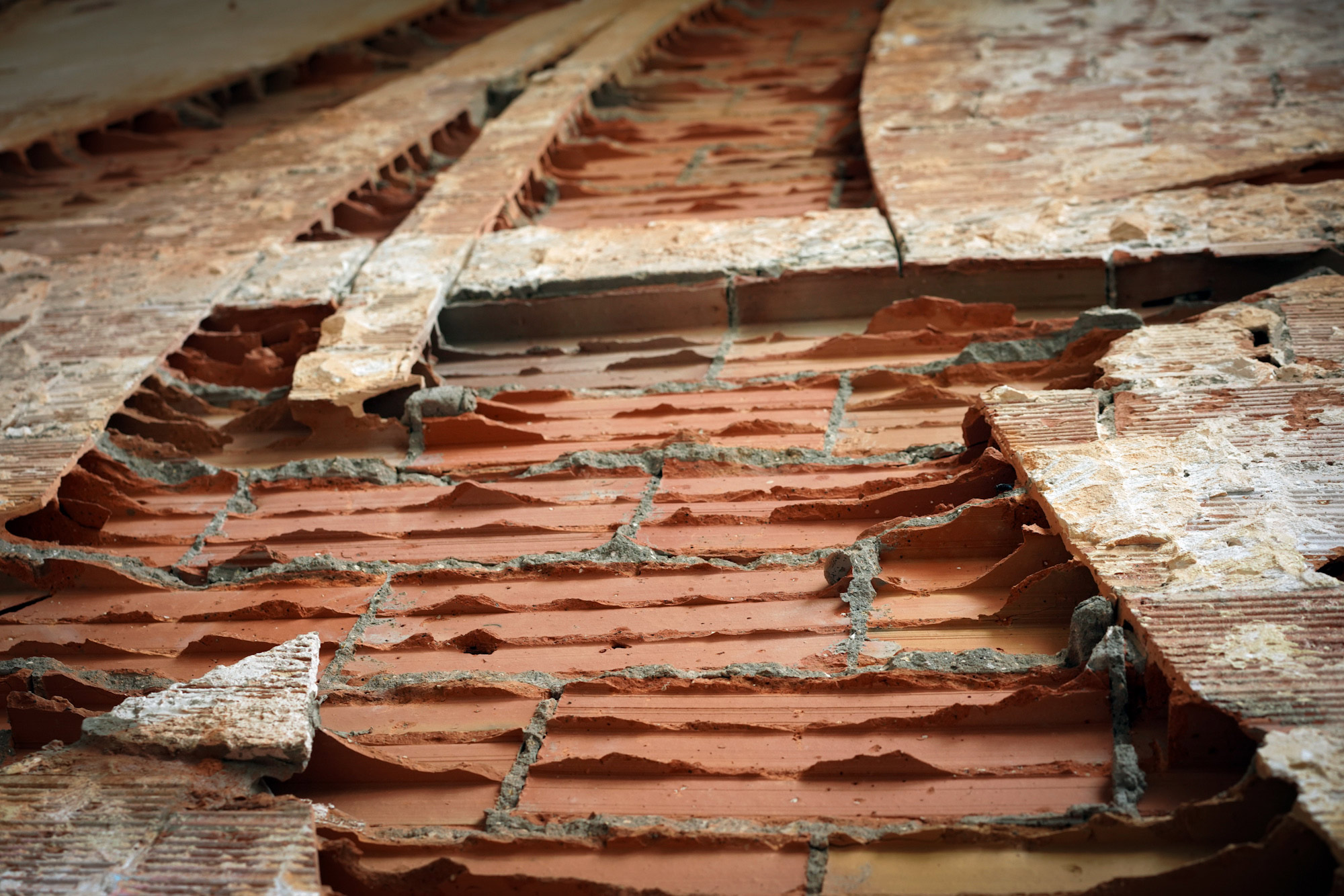
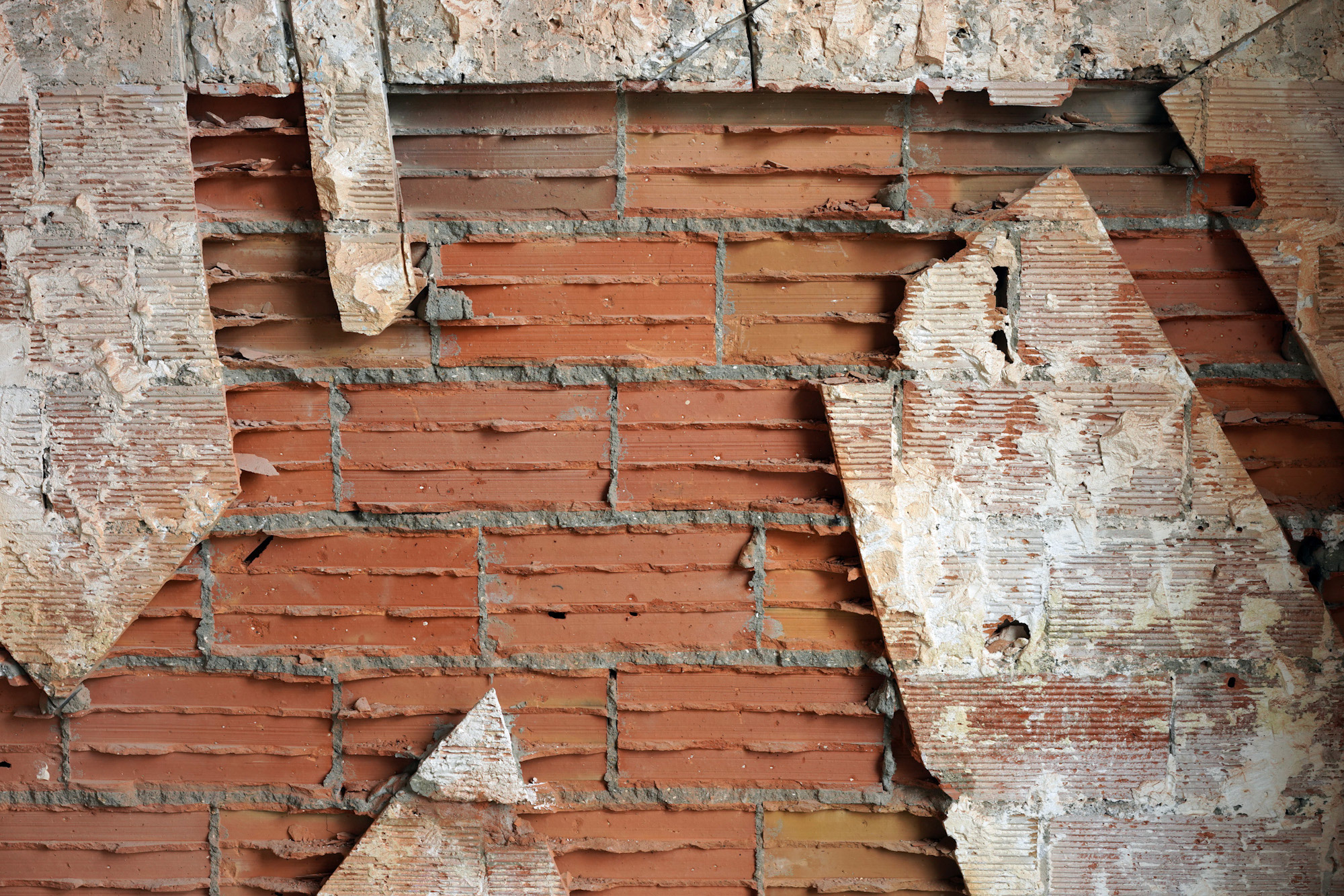
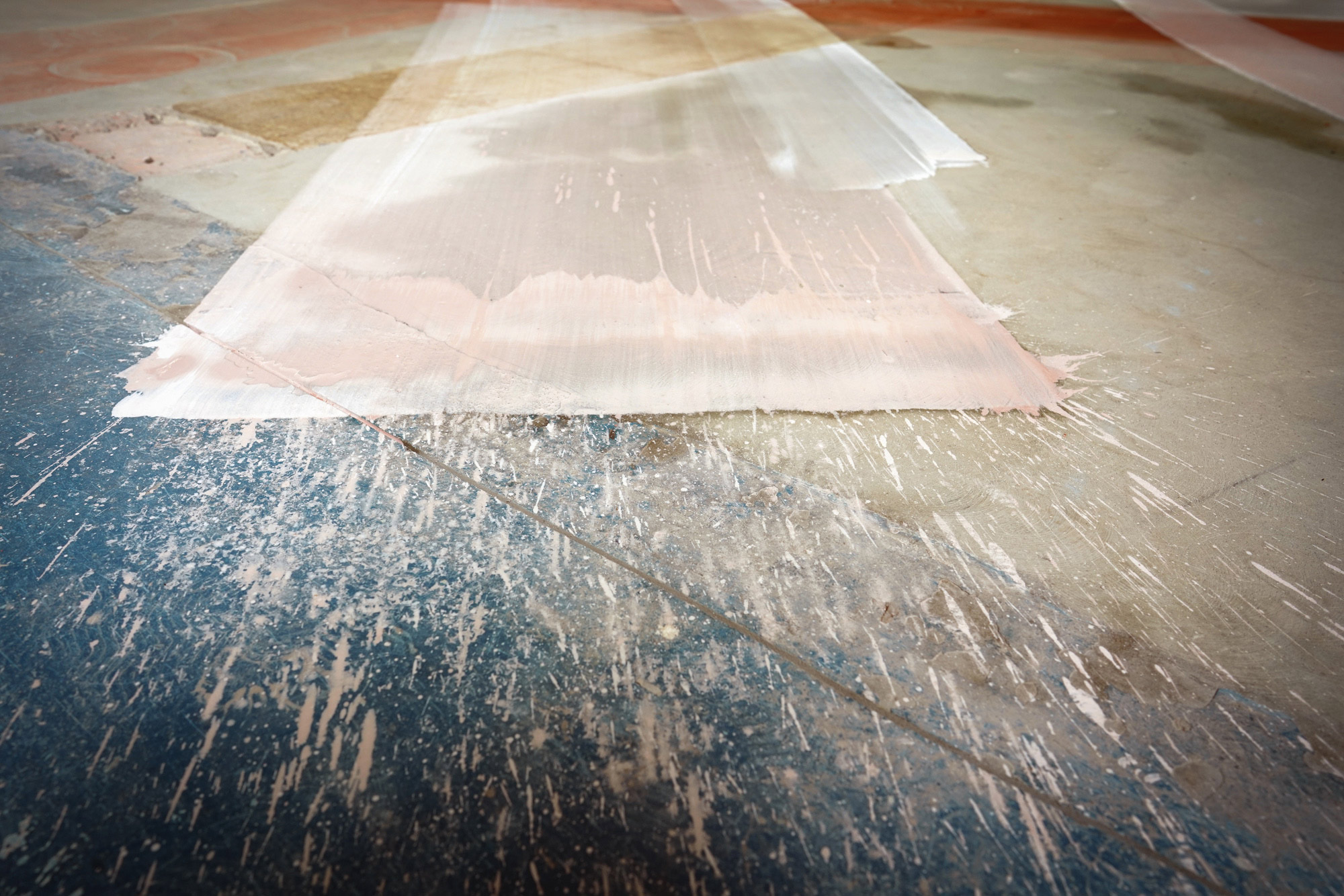
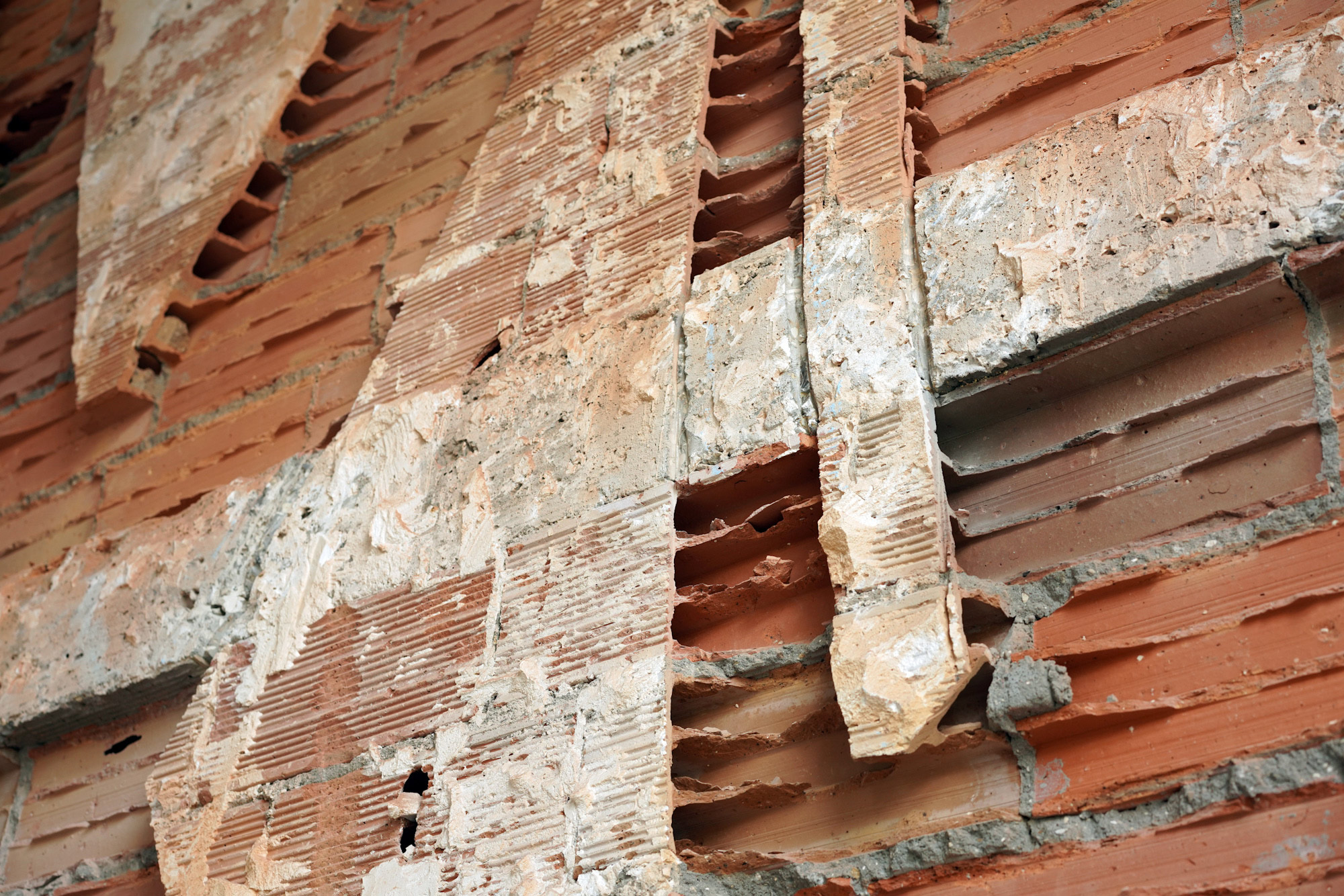
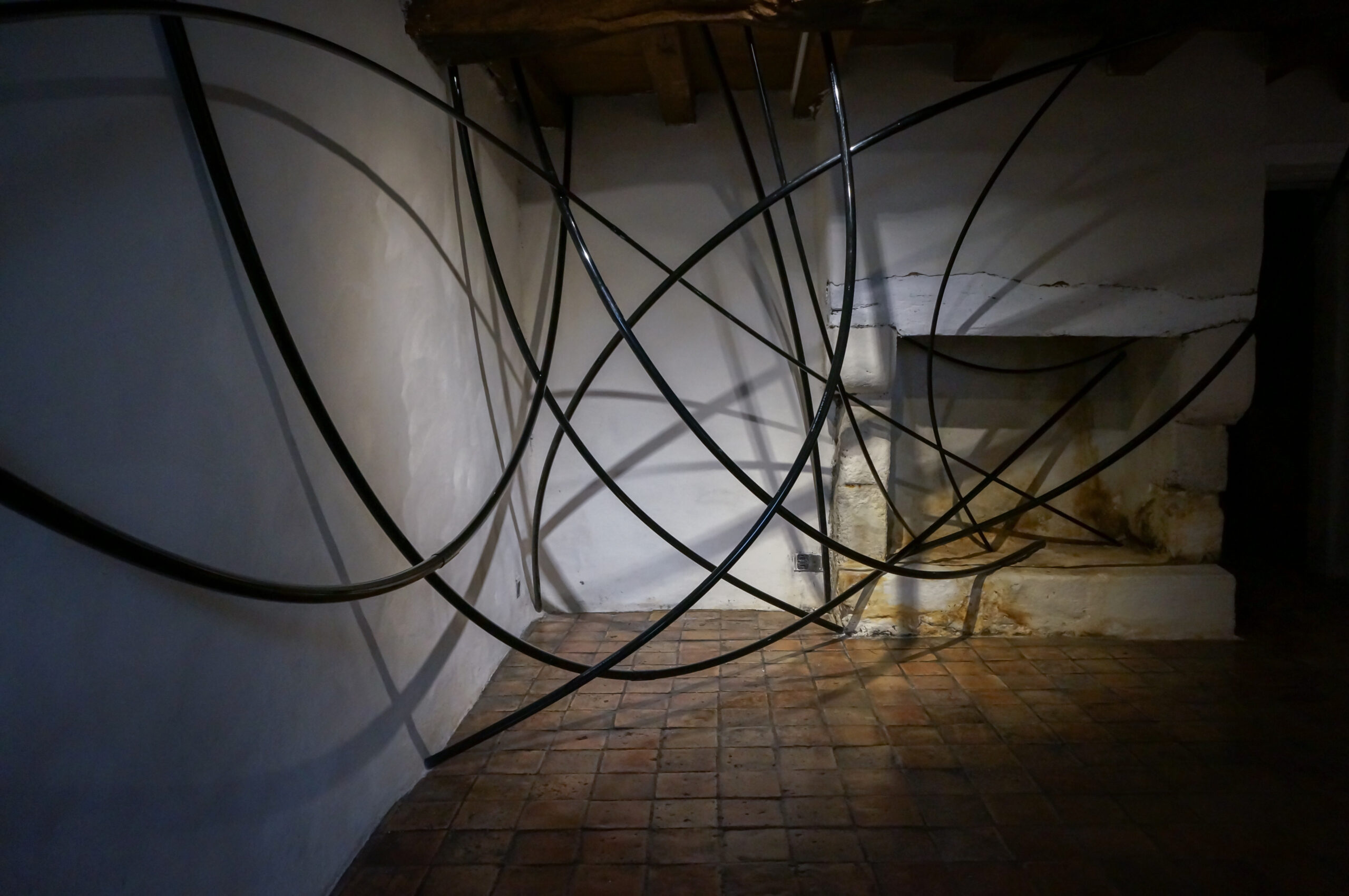
He carried out an experimental artistic work with the objective of adapting his art to this abandoned room. Creating a dialogue between the lines he traces and the place itself. Romain Froquet carved a brick wall using an angle grinder and a chisel. The lines carved into the wall were extended by painted lines on the floor. The whole composition blend into the room.
Exhibition curators: Elise Herszkowicz, Cristobal Diaz, Lek



Imaginaires de murs
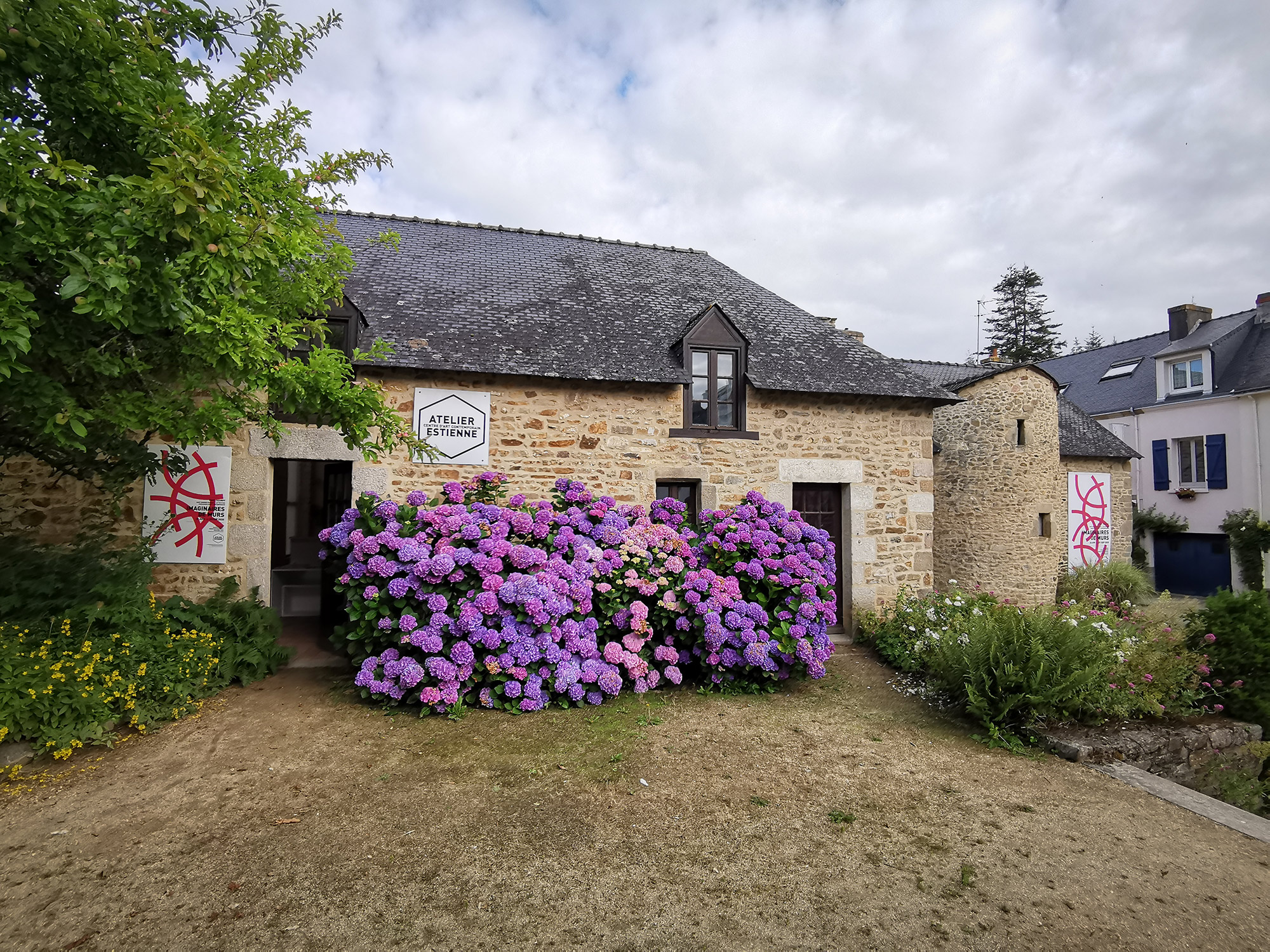
2020 I L'Atelier d'Estienne, Pont-Scorff
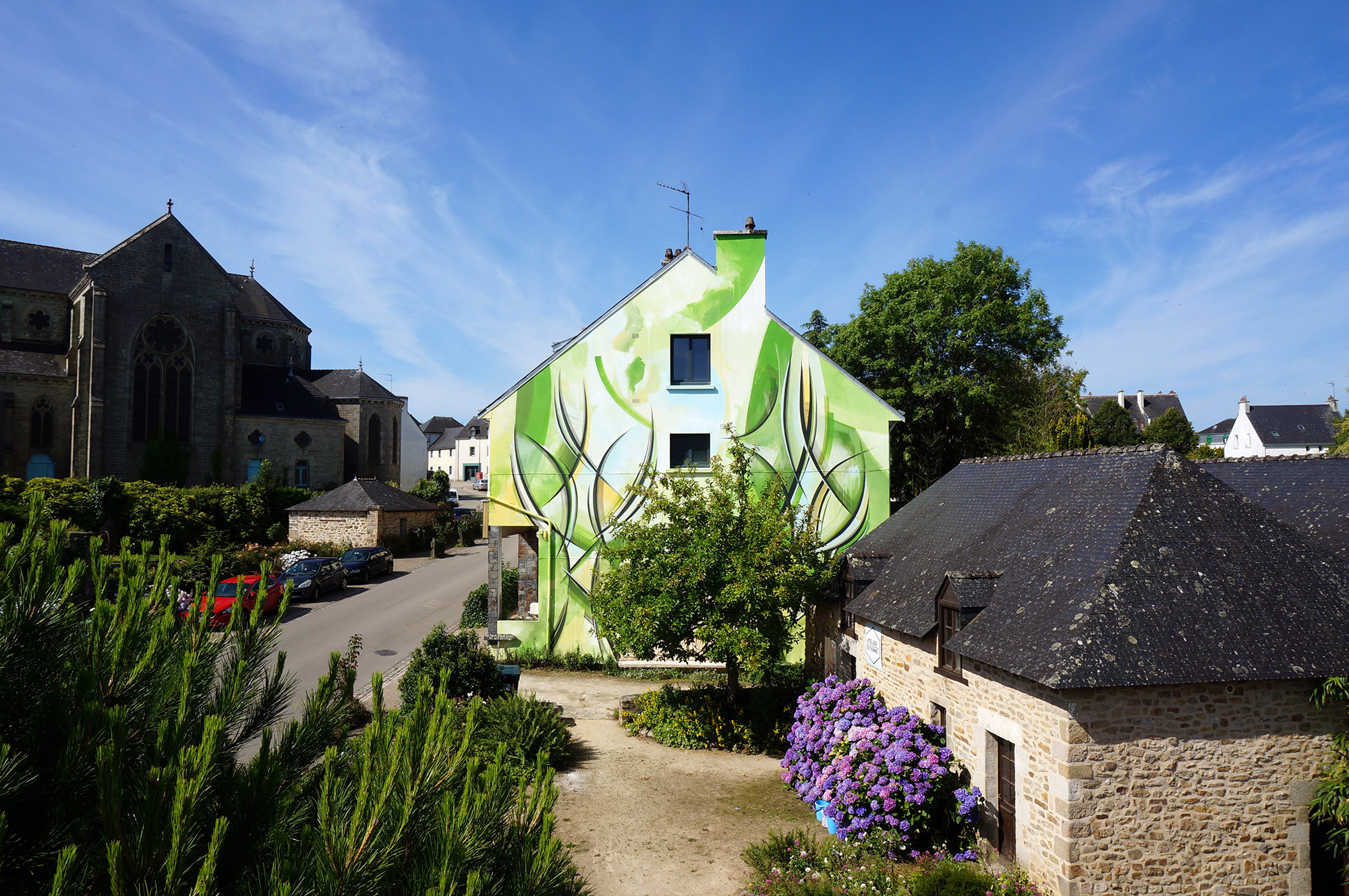
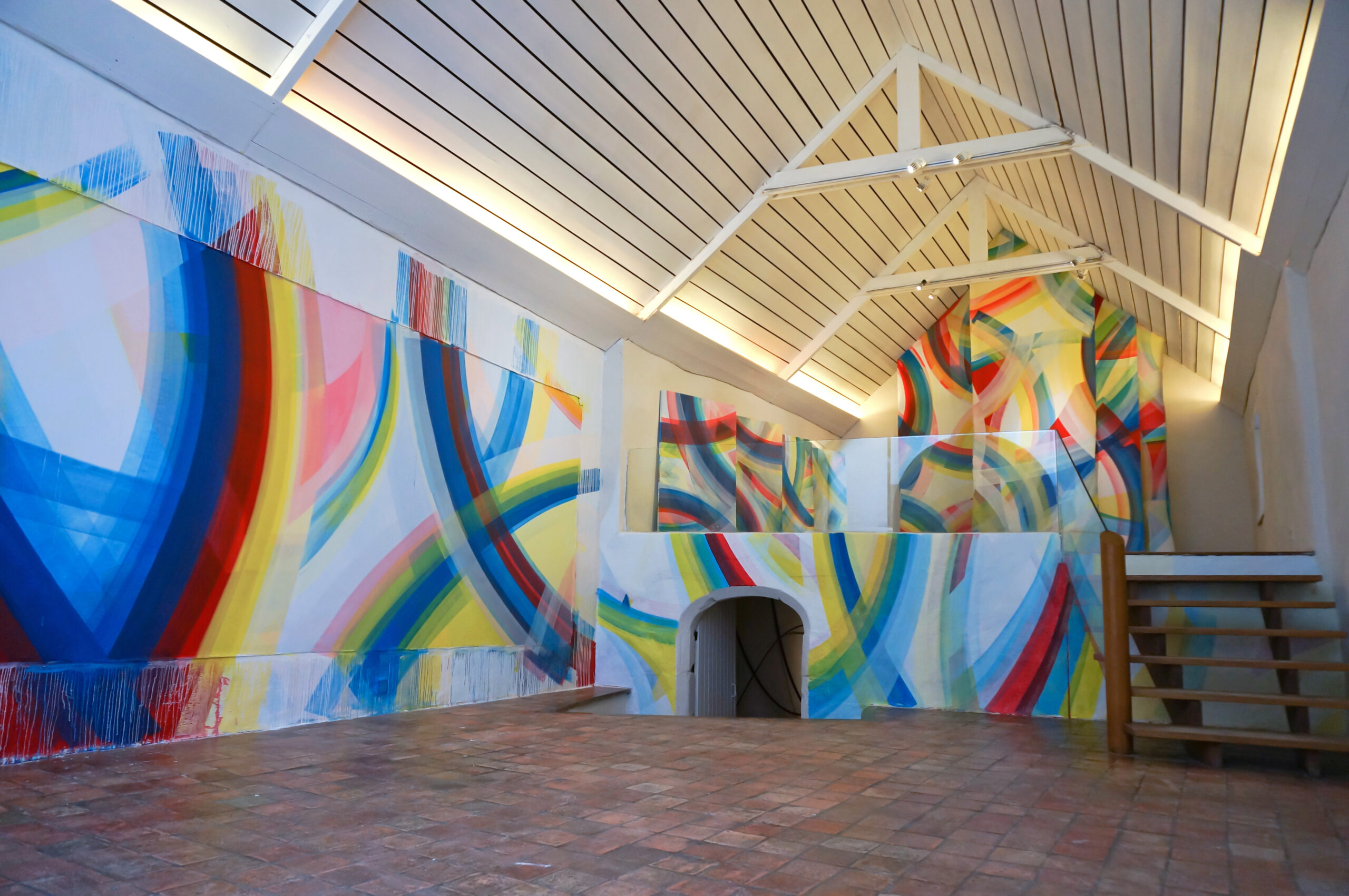
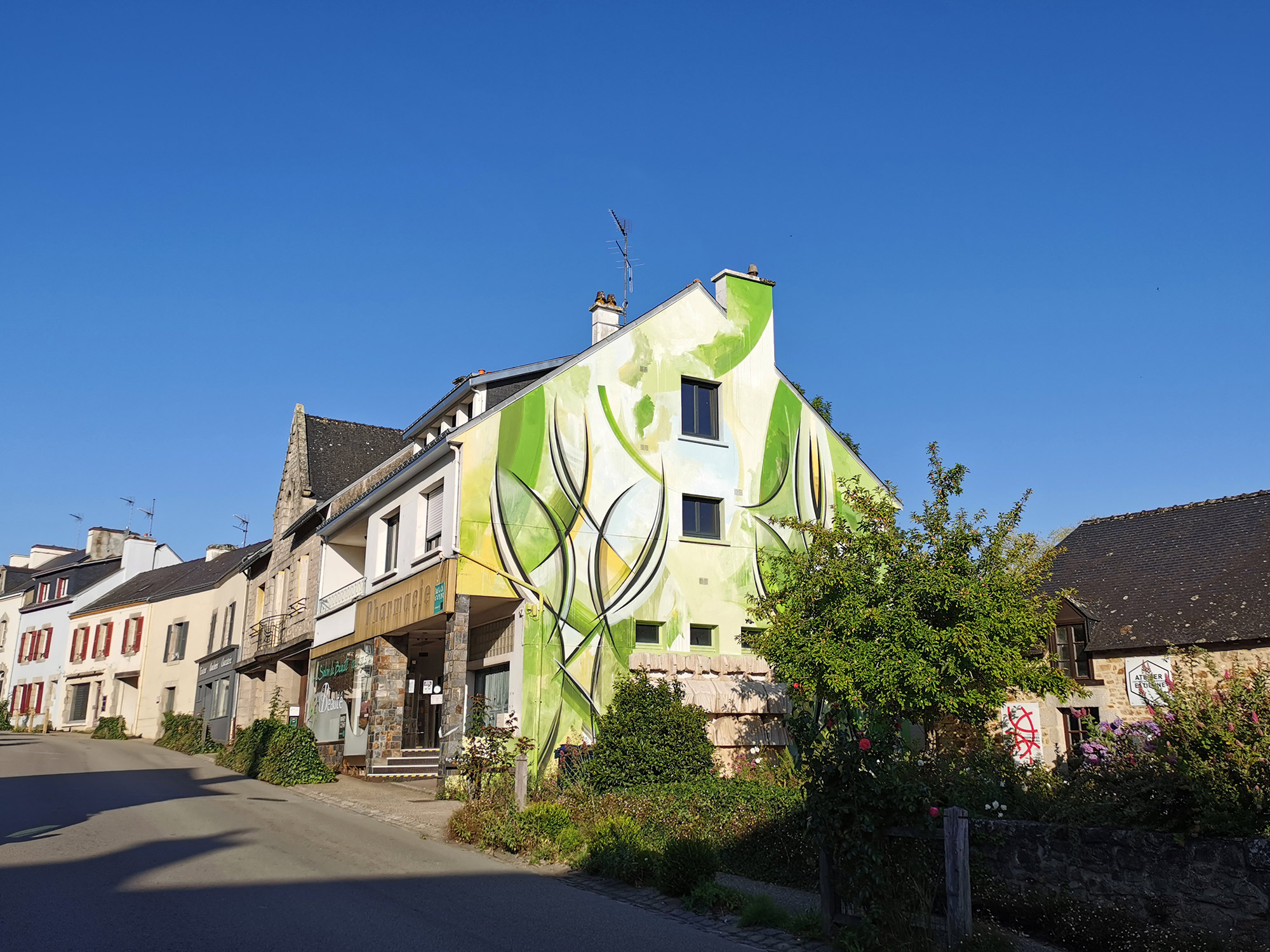
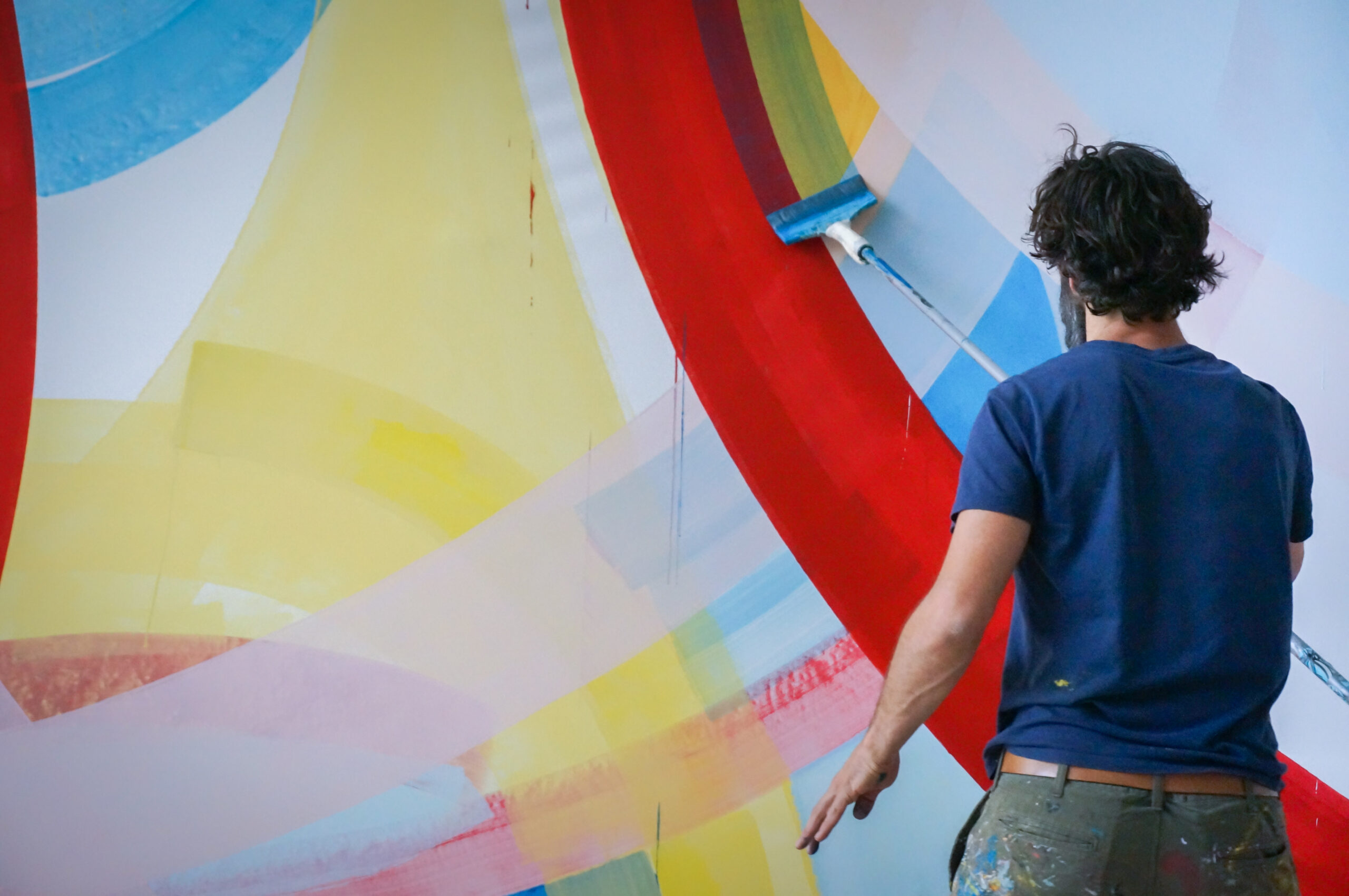
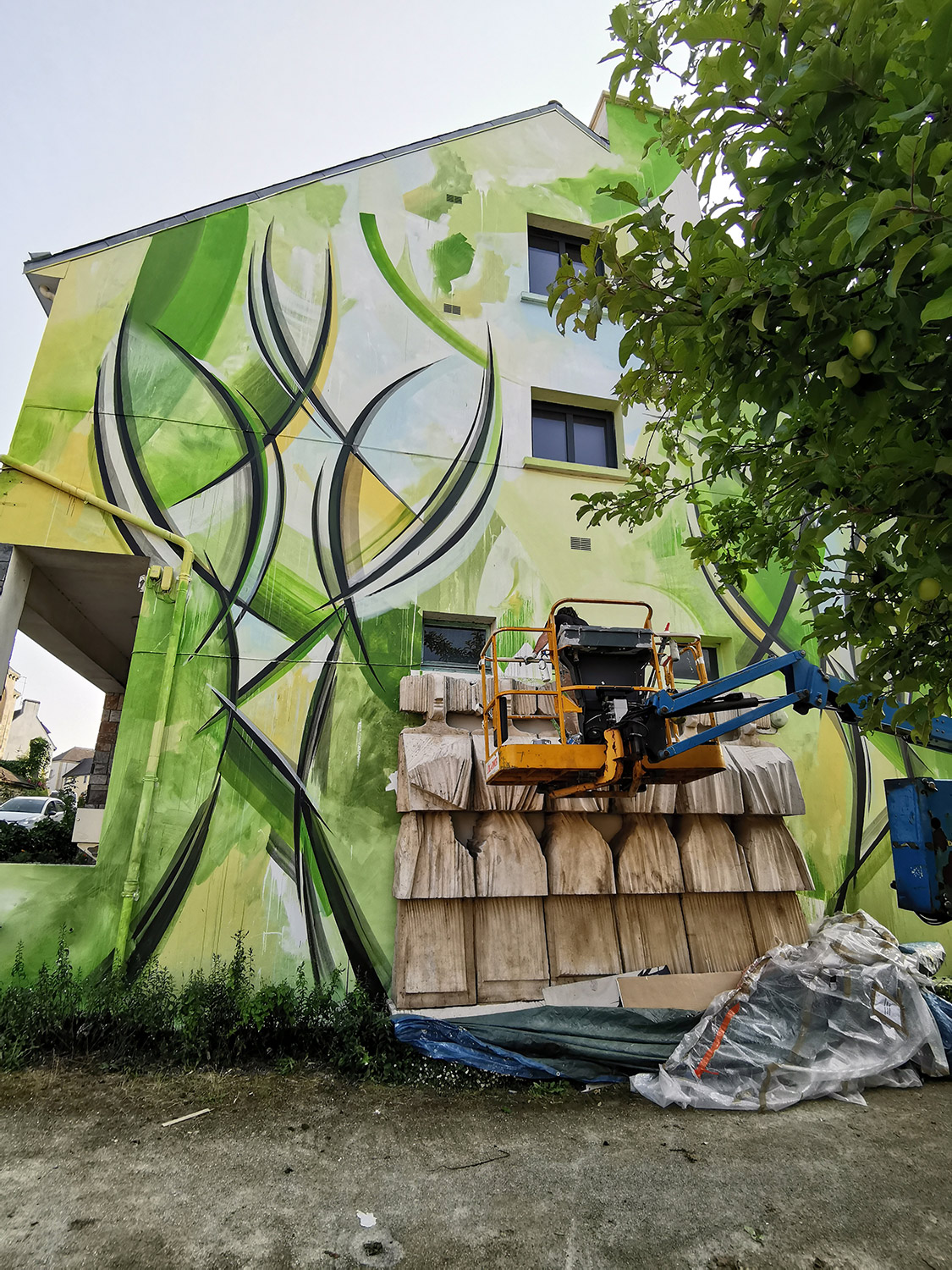
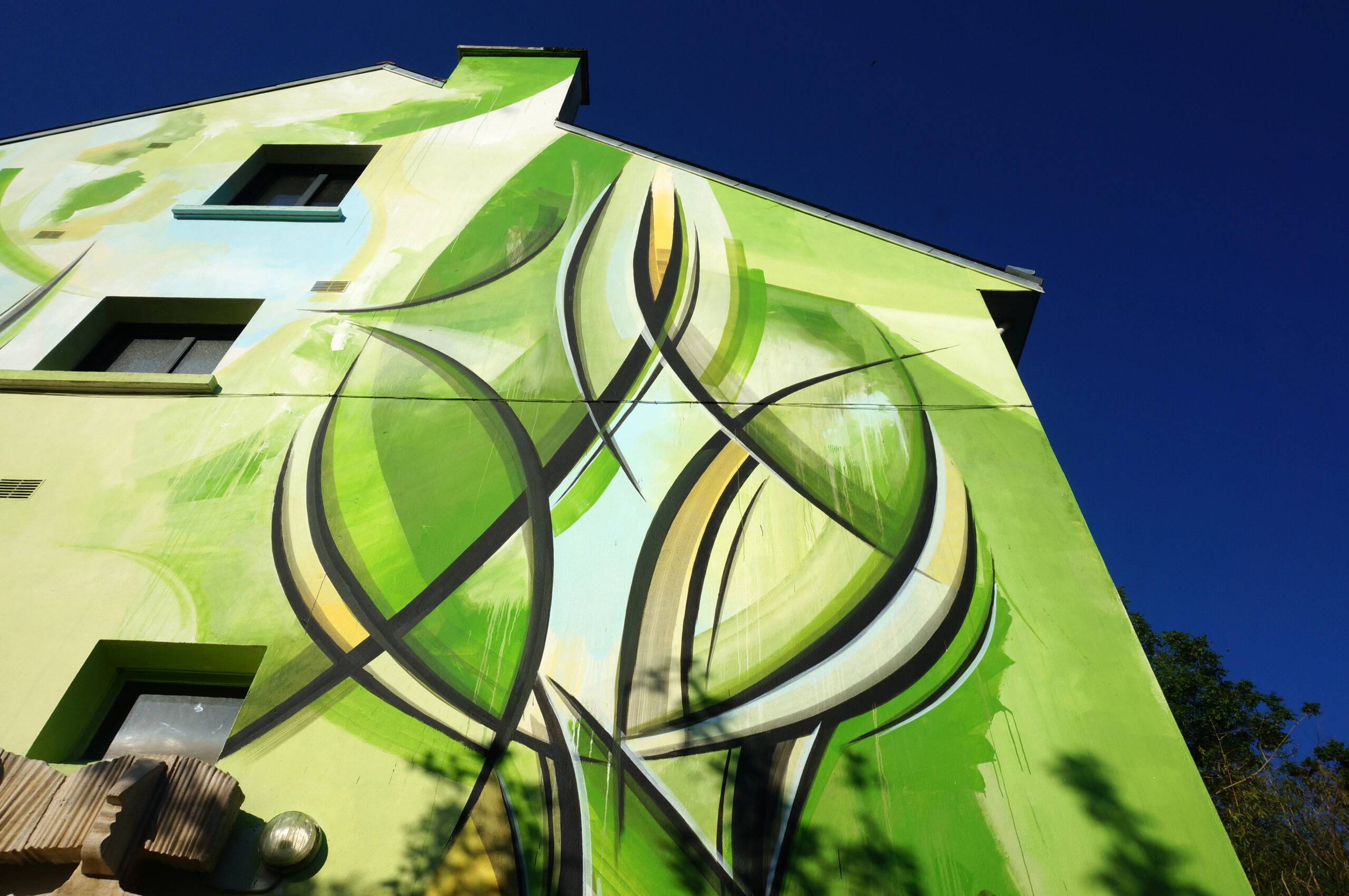
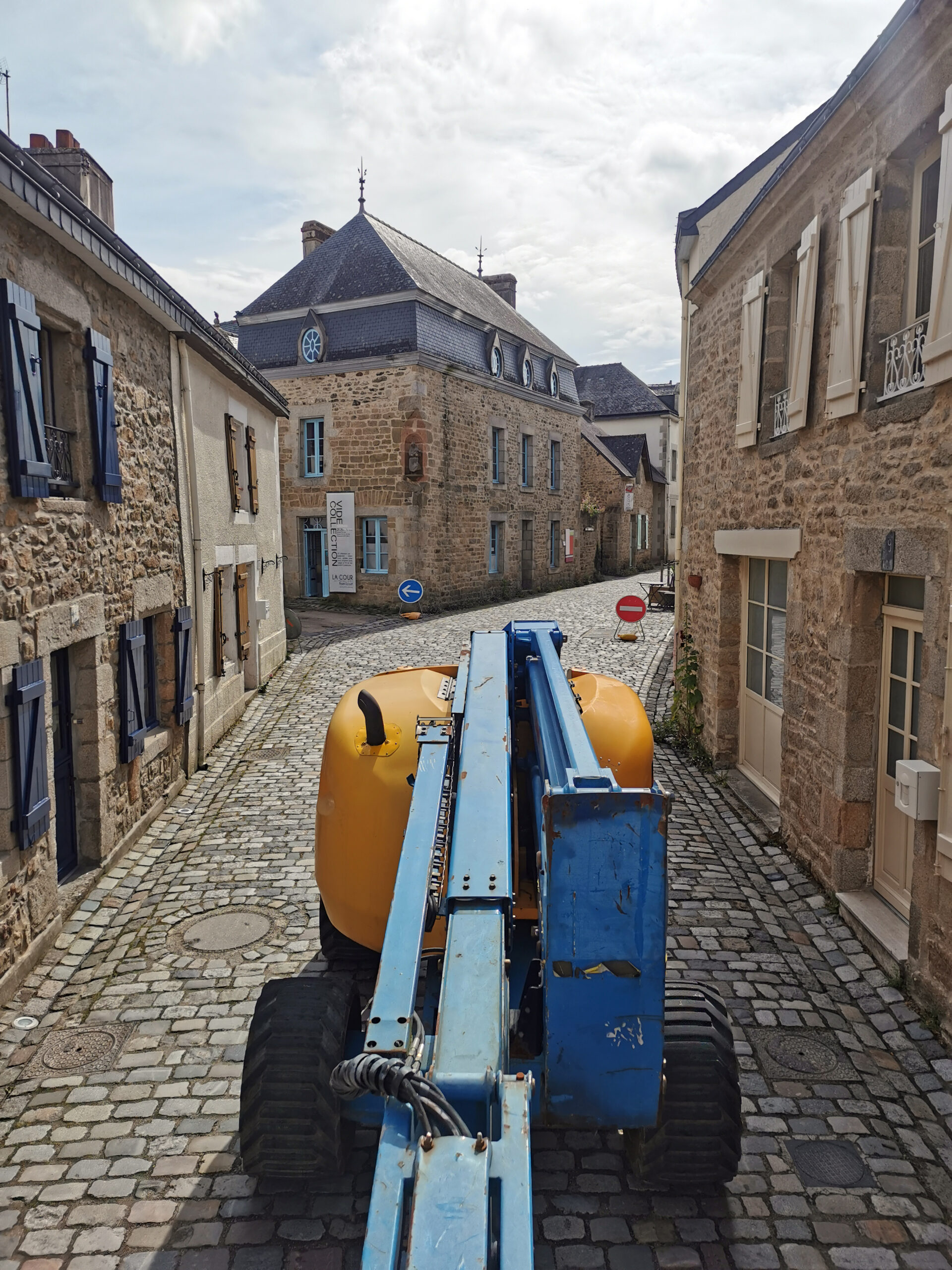
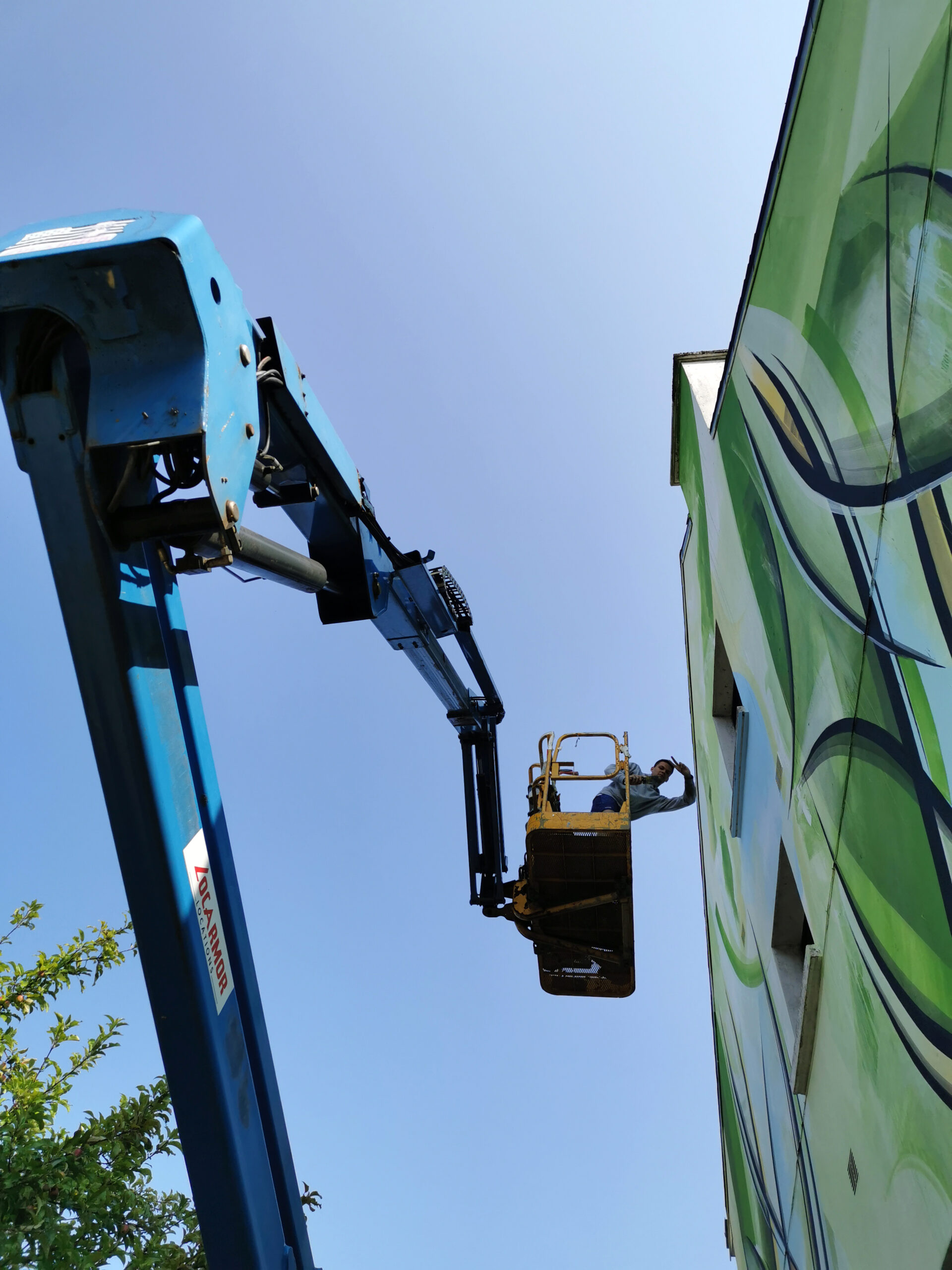
As part of the theme on urban art, street art, and graffiti, Christian Mahé invites Elise Herszkowicz, director of Art Azoi, who offers contemporary urban artists the opportunity to share their vision of a contextual, bold, and inventive art. These artists, from diverse backgrounds and with singular forms of expression, will bring their artistic practices into dialogue with the landscapes and terrain of Pont-Scorff.
When we talk about walls, the symbolism often leads us toward separation, borders, distance, impossibility, or protectionism. The aim here is to take the opposite approach to these representations and give free rein to an art form that is open, colorful, and decidedly focused on others and on modernity. In this troubled and unprecedented time, this art trail— featuring a mix of site-specific works, immersive installations, and large-scale paintings—offers an "artistic reunion." Through serene and curious wandering, aesthetic discoveries, unexpected encounters, and a new era in which we can focus on what truly matters.
Exhibition curators: Elise Herszkowicz et Christian Mahé
Patronage: UNIKALO



Film Thomas Granovsky
Lignées
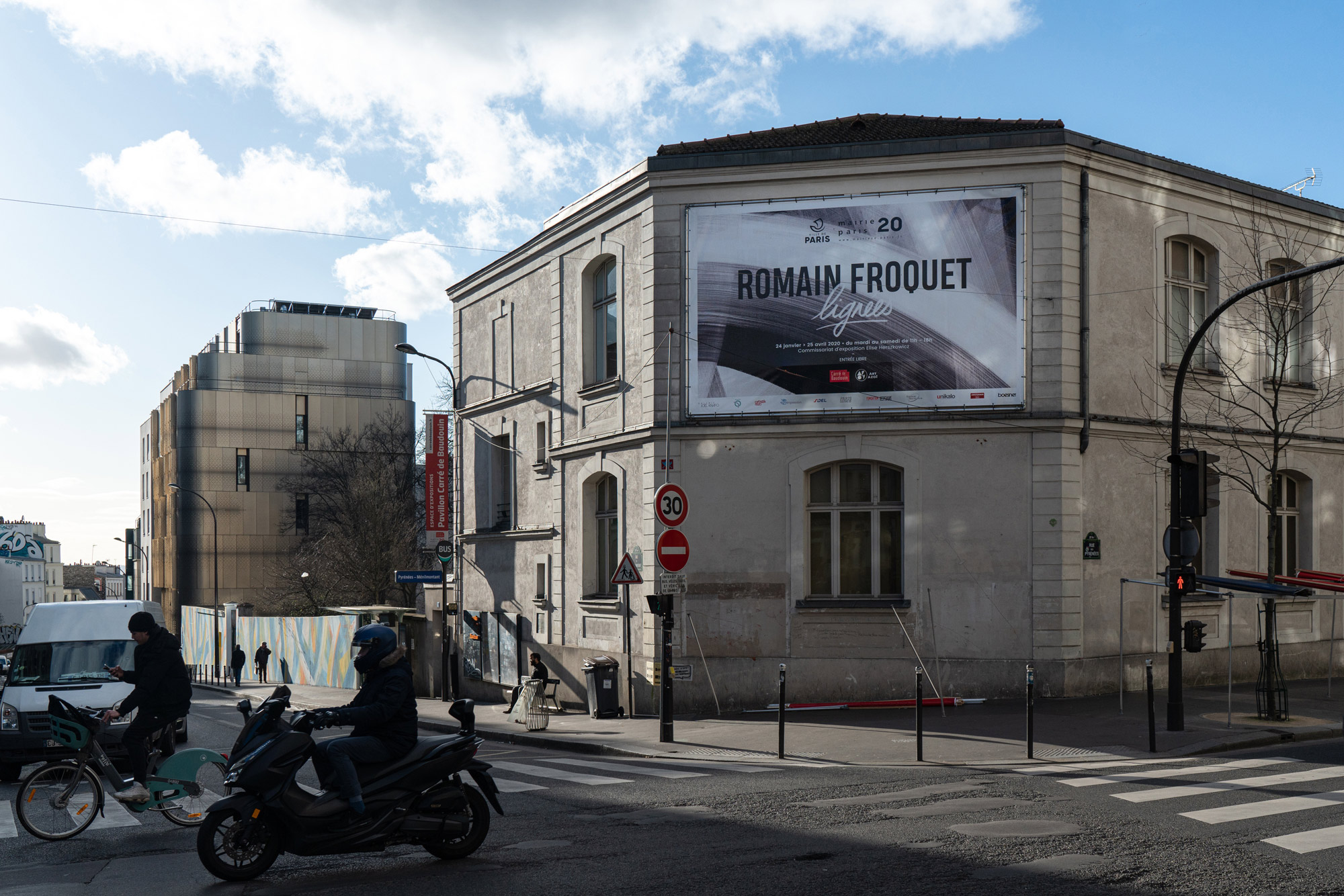
2020 I Pavillon Carré de Baudouin, Paris
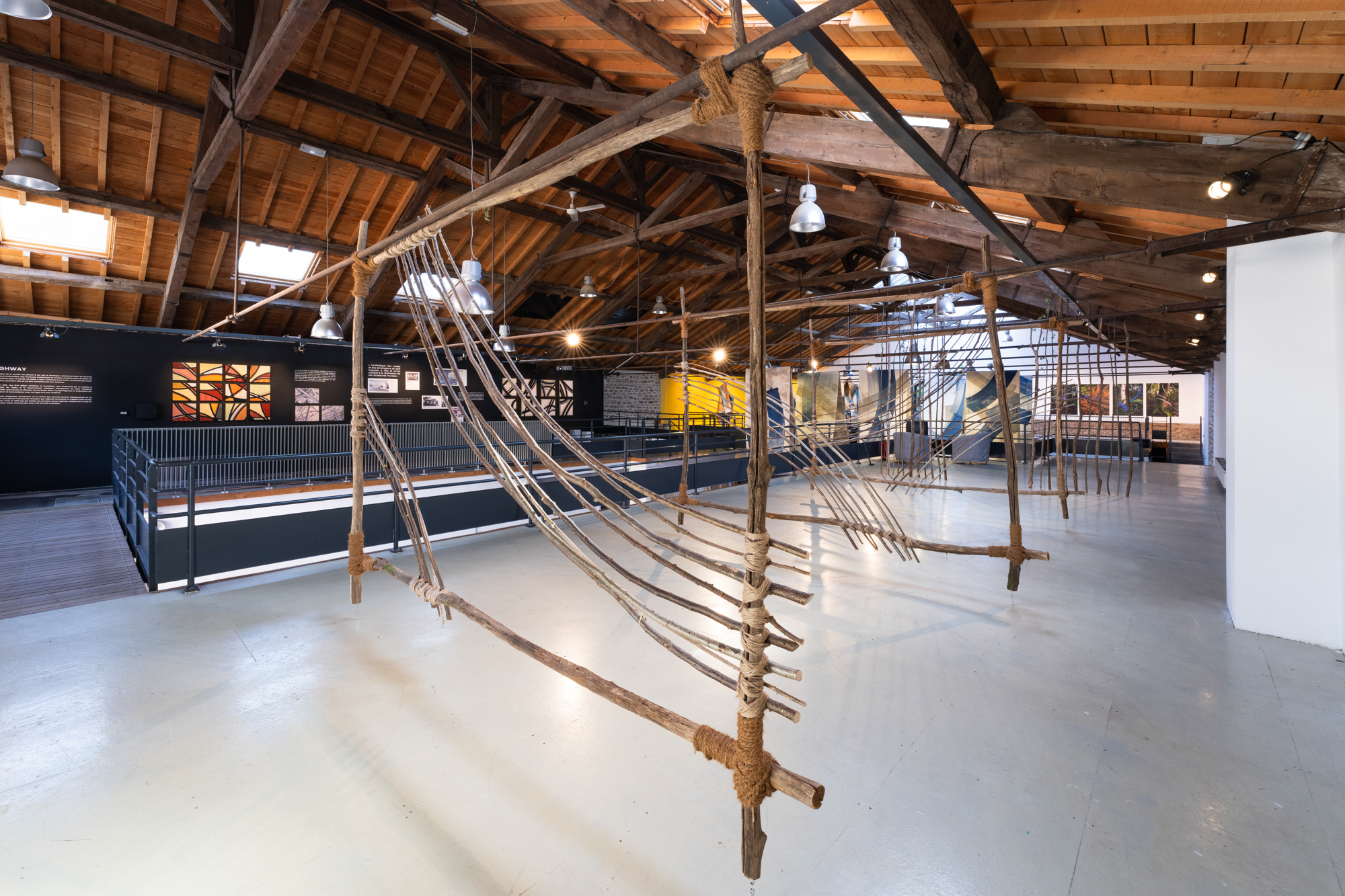
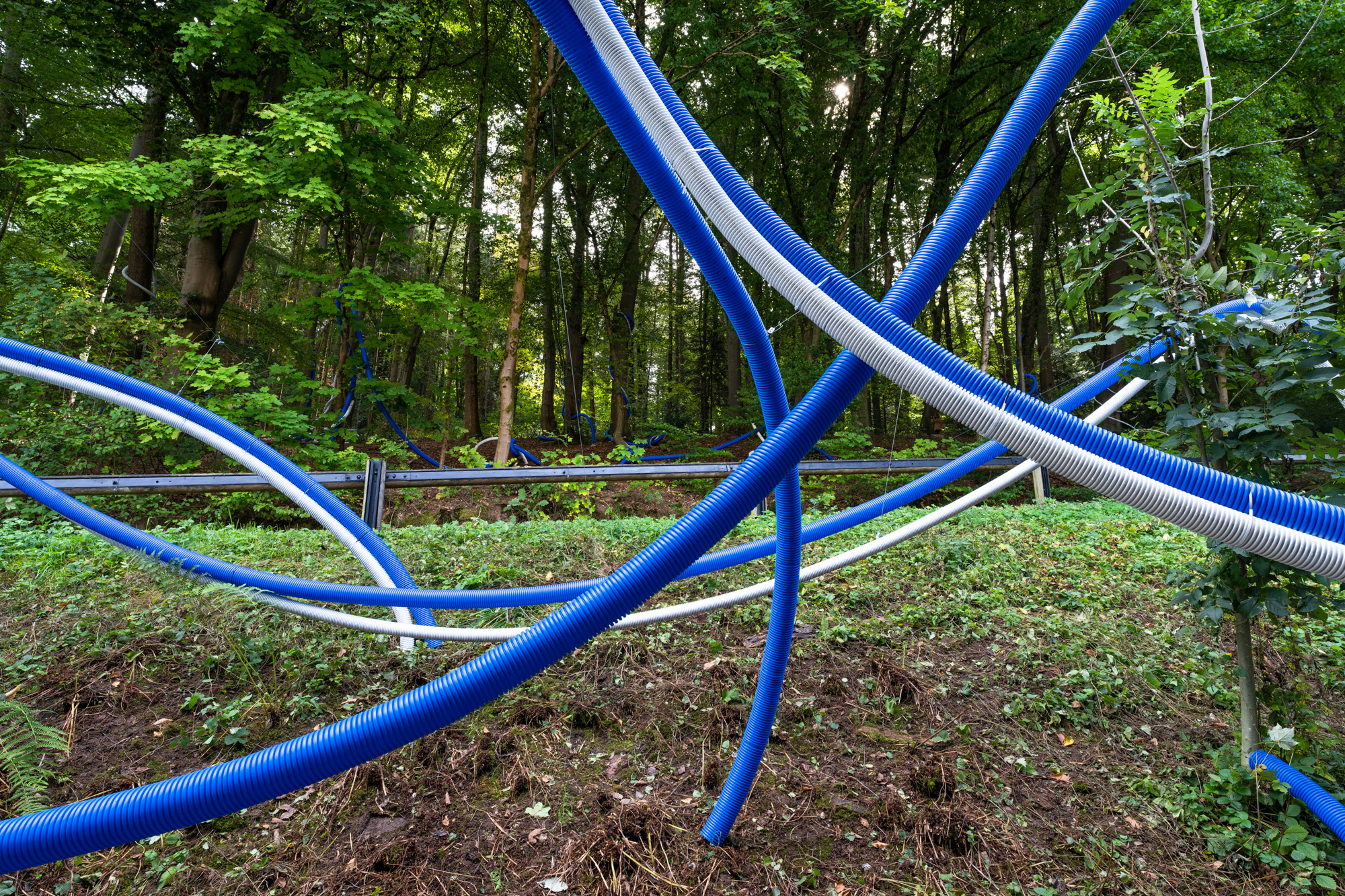
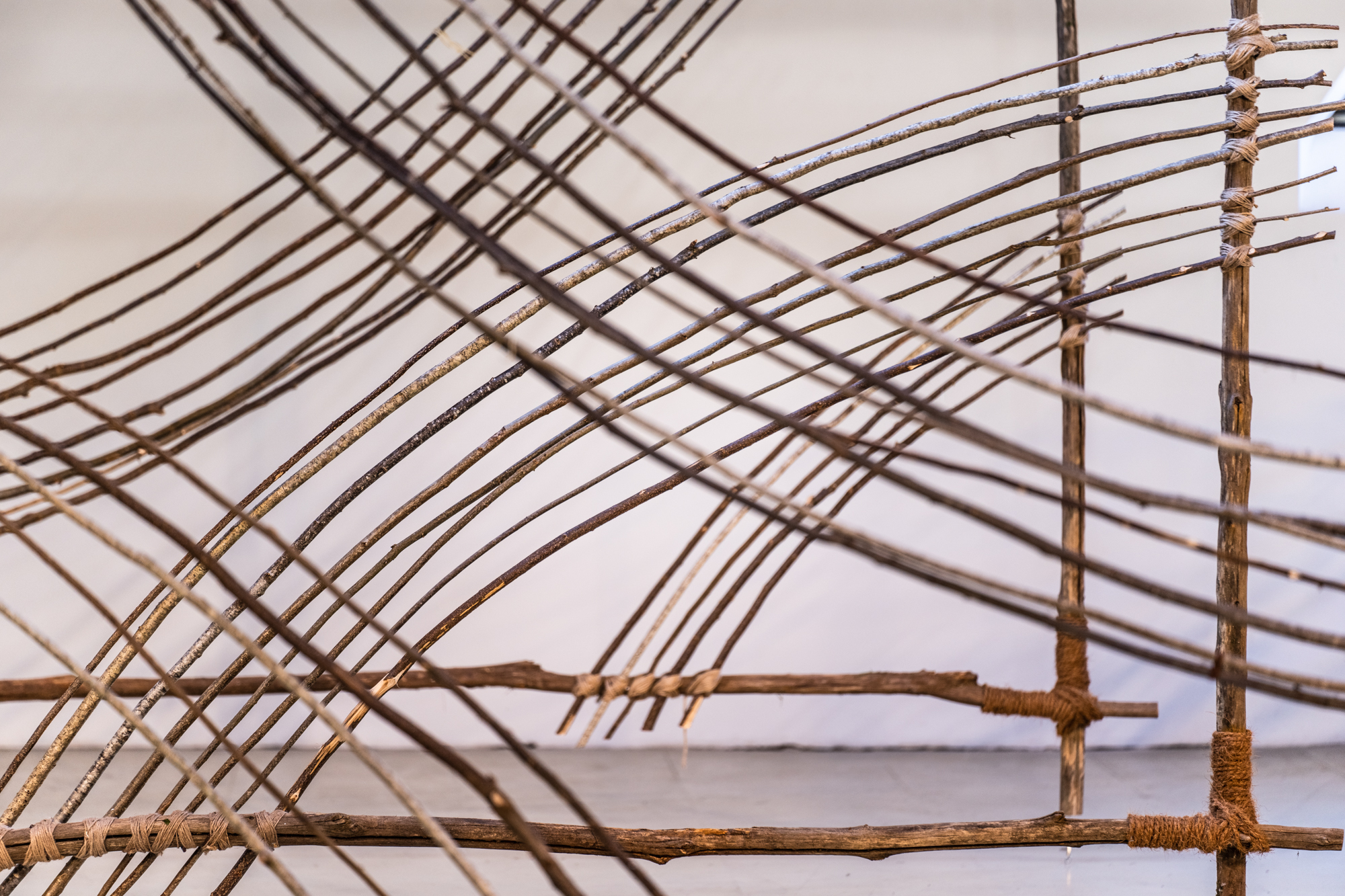
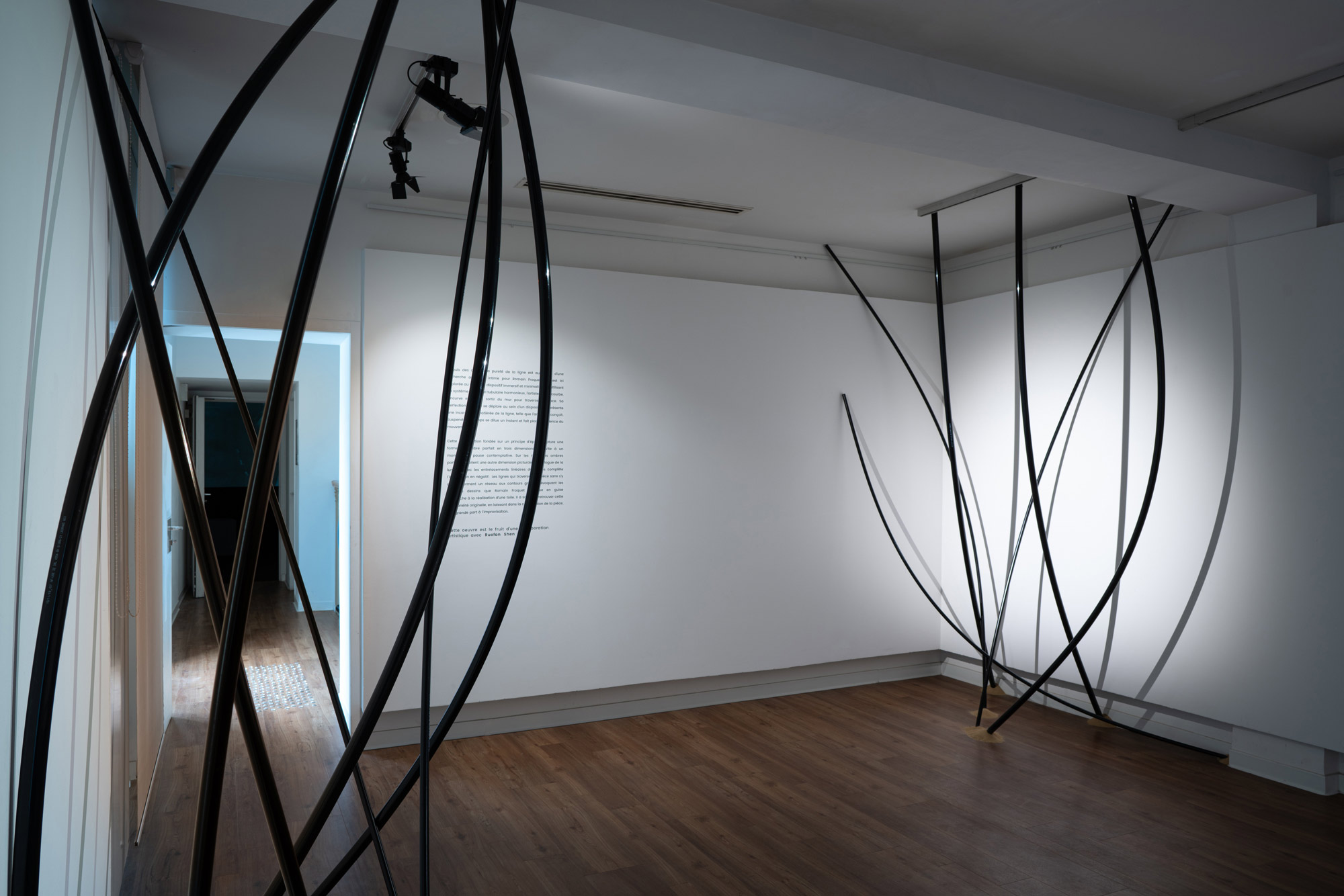
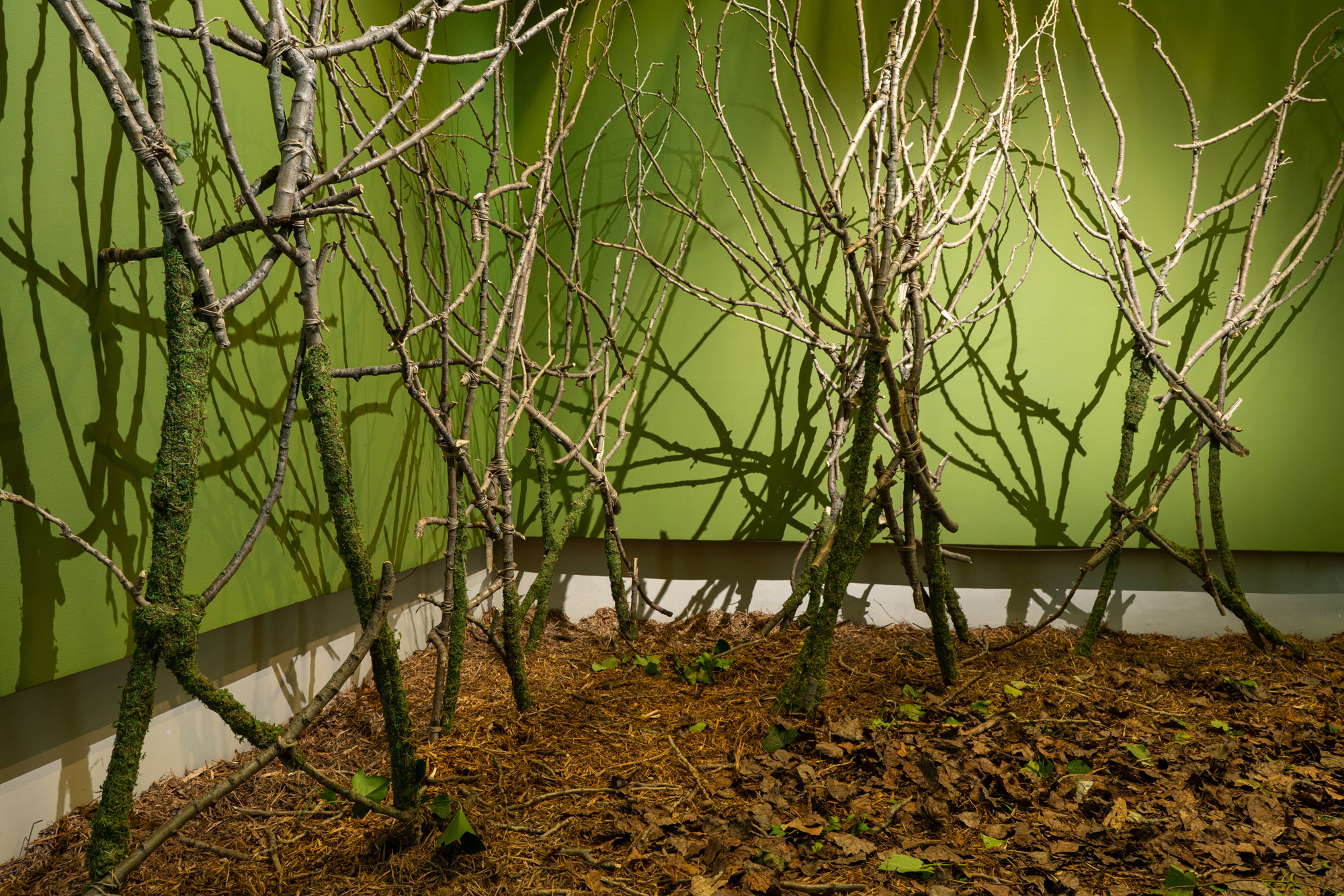
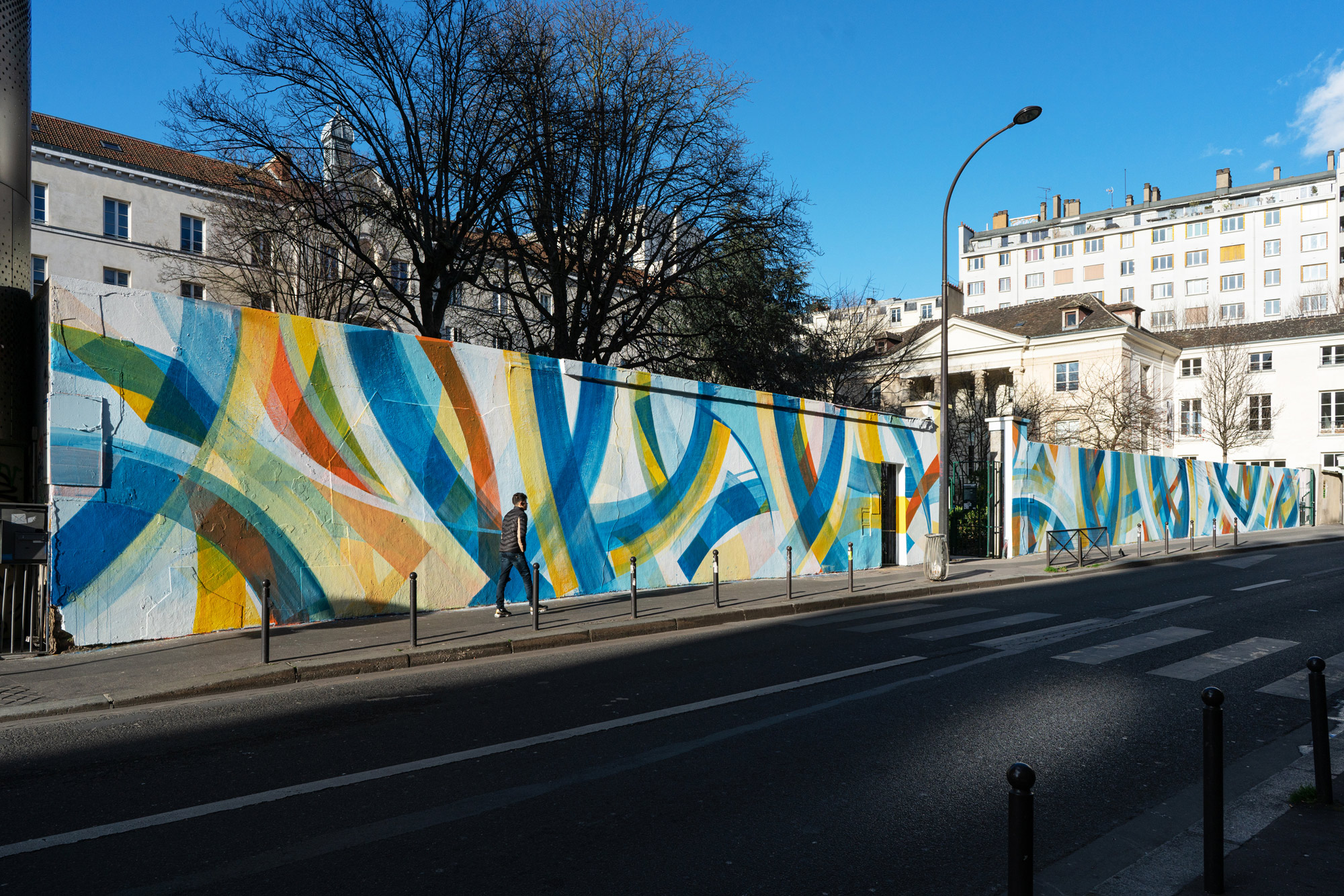
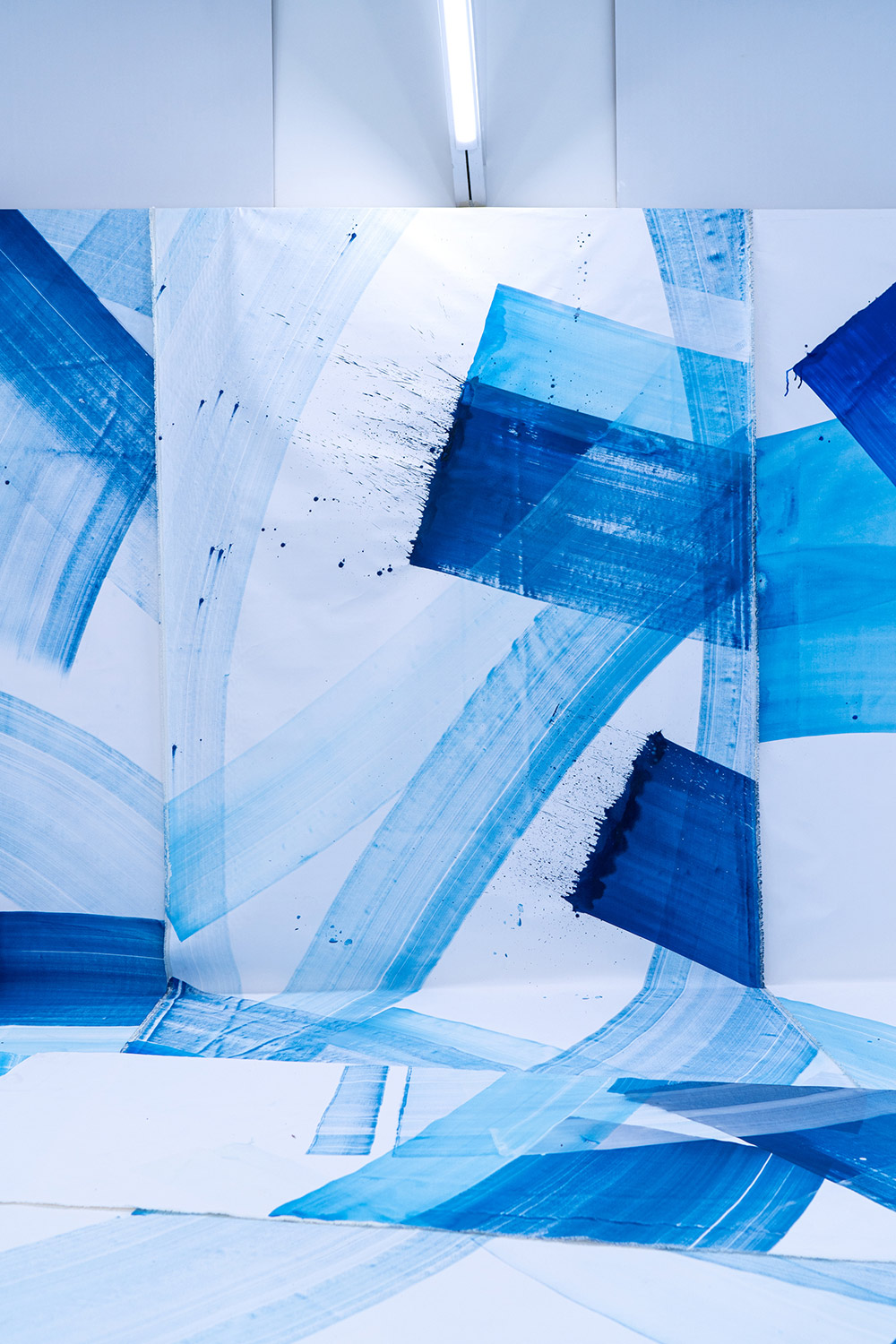
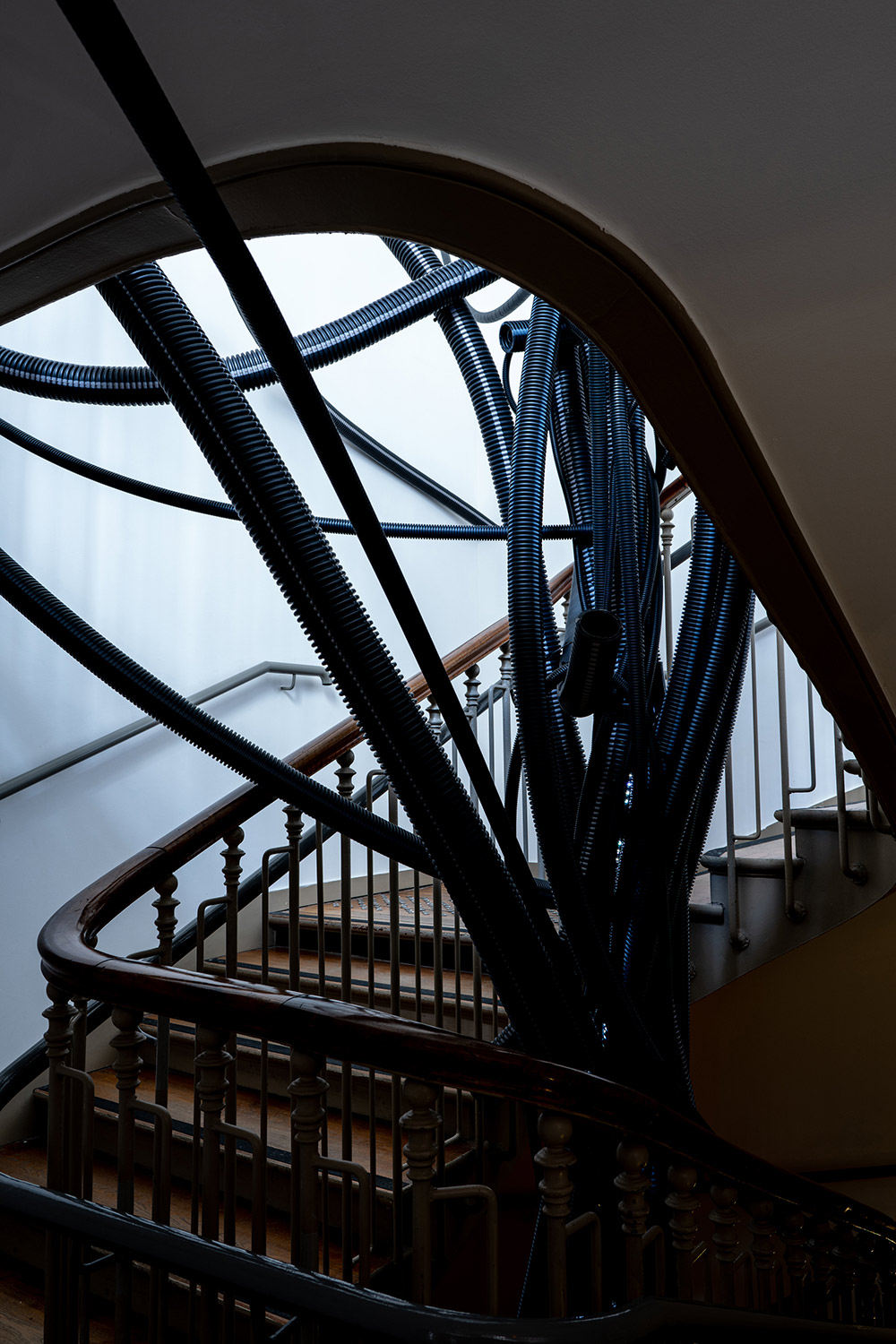
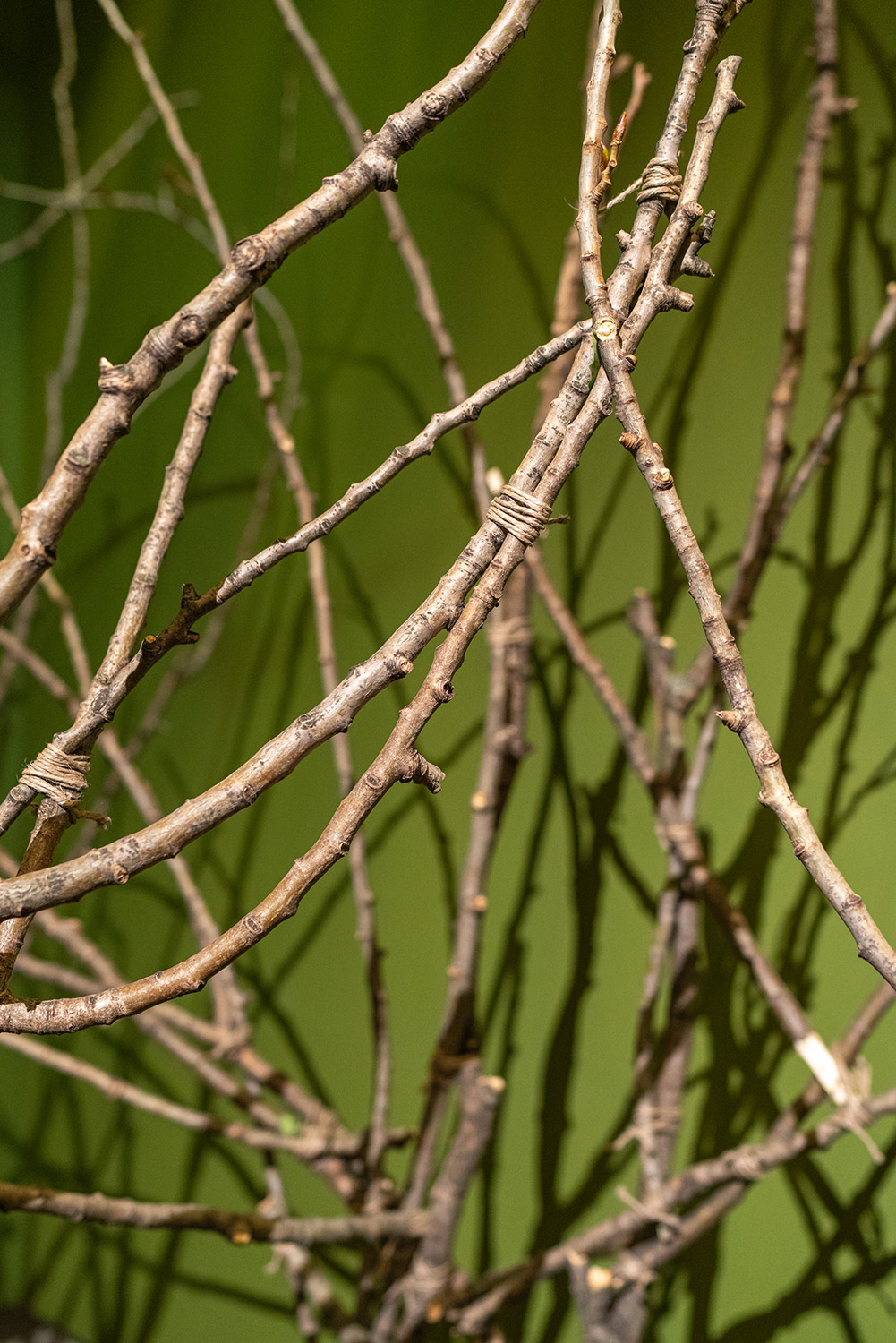
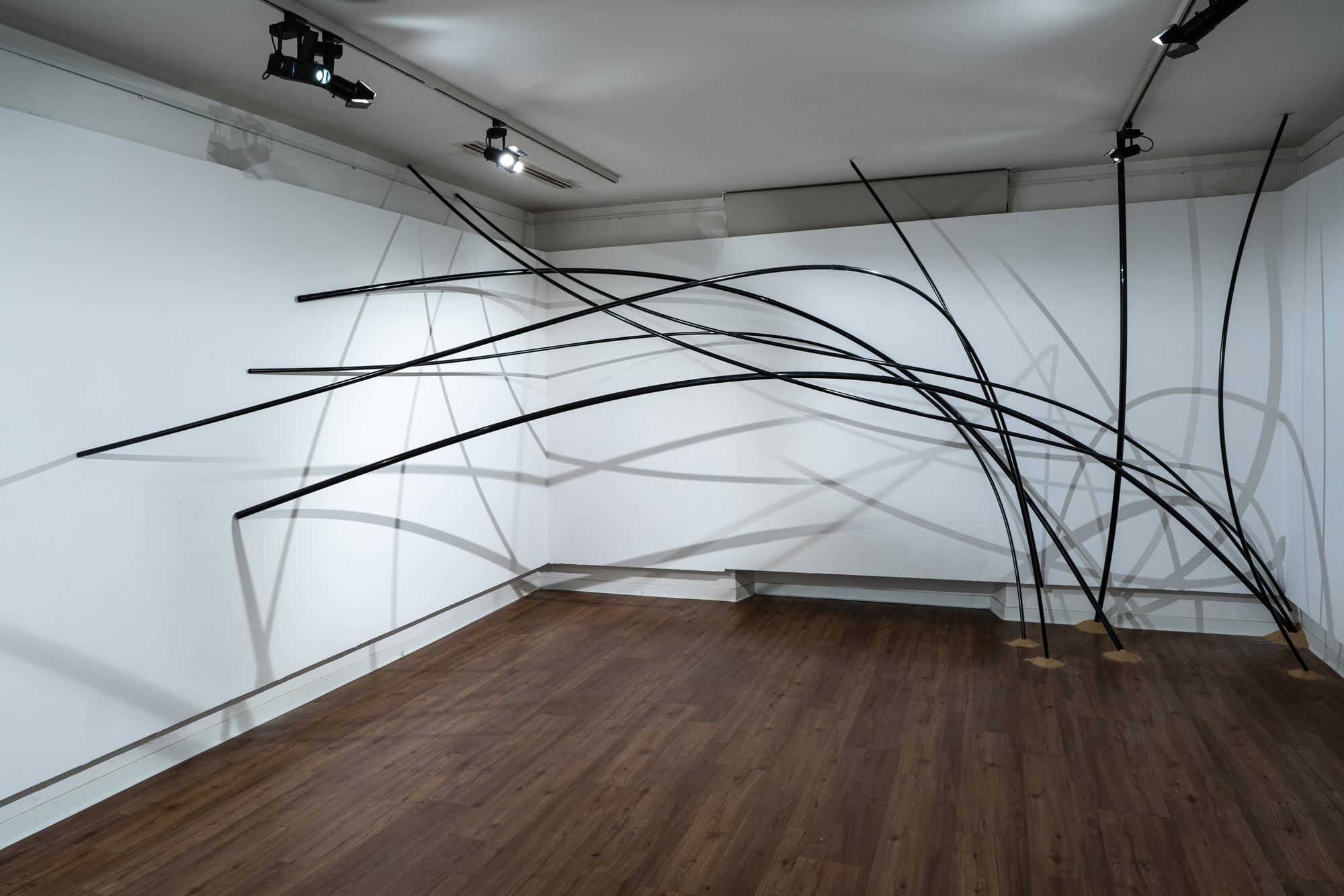
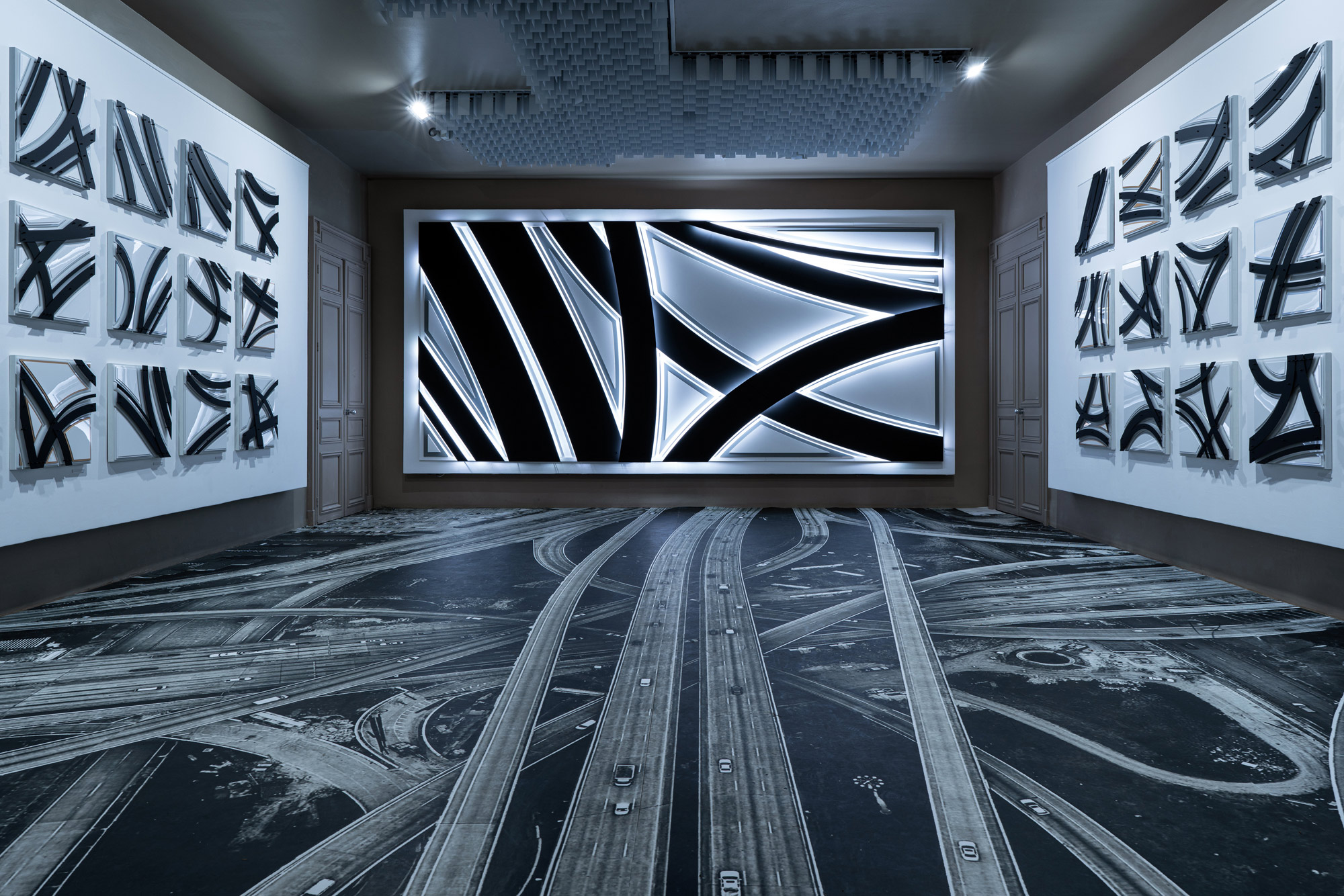
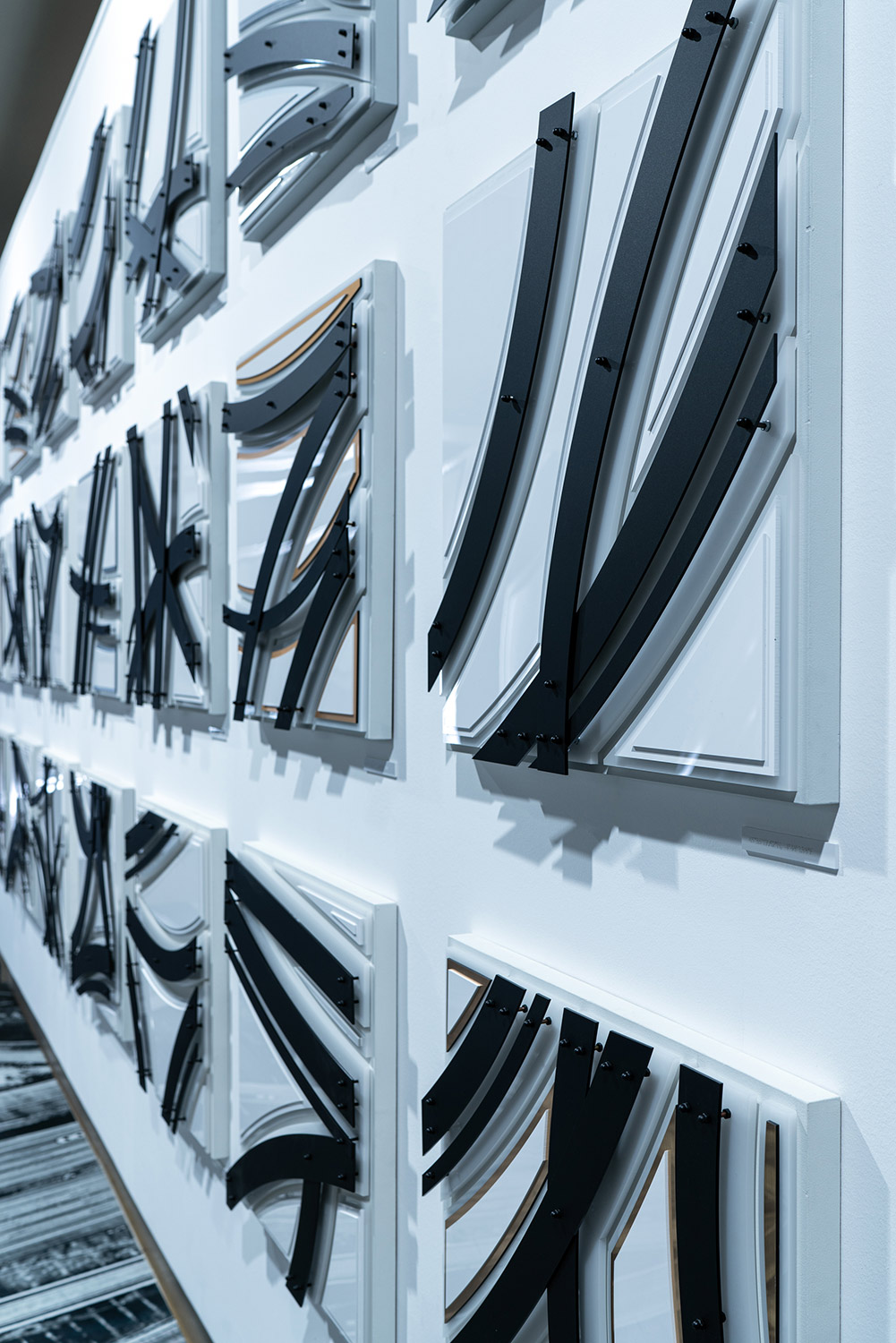
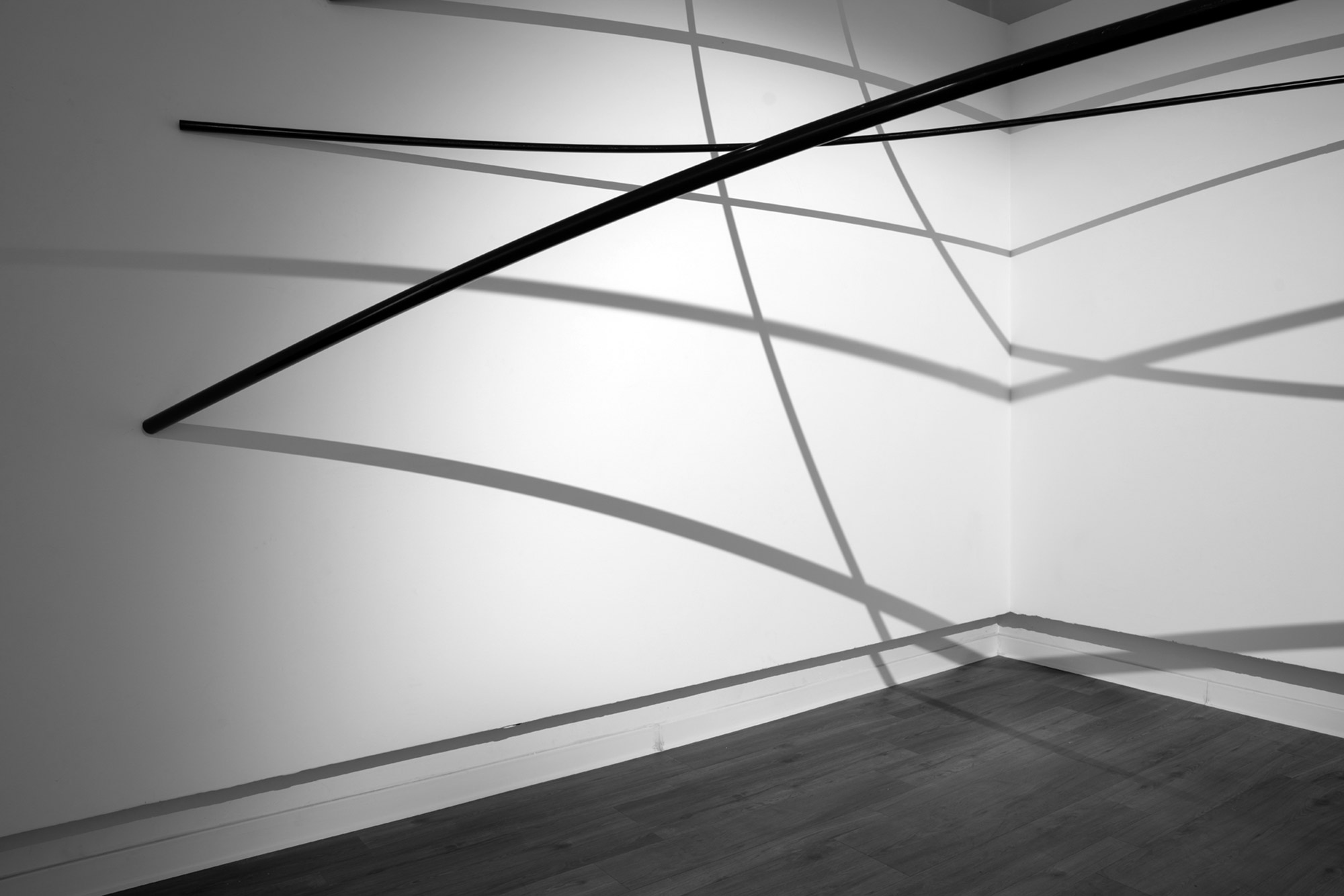
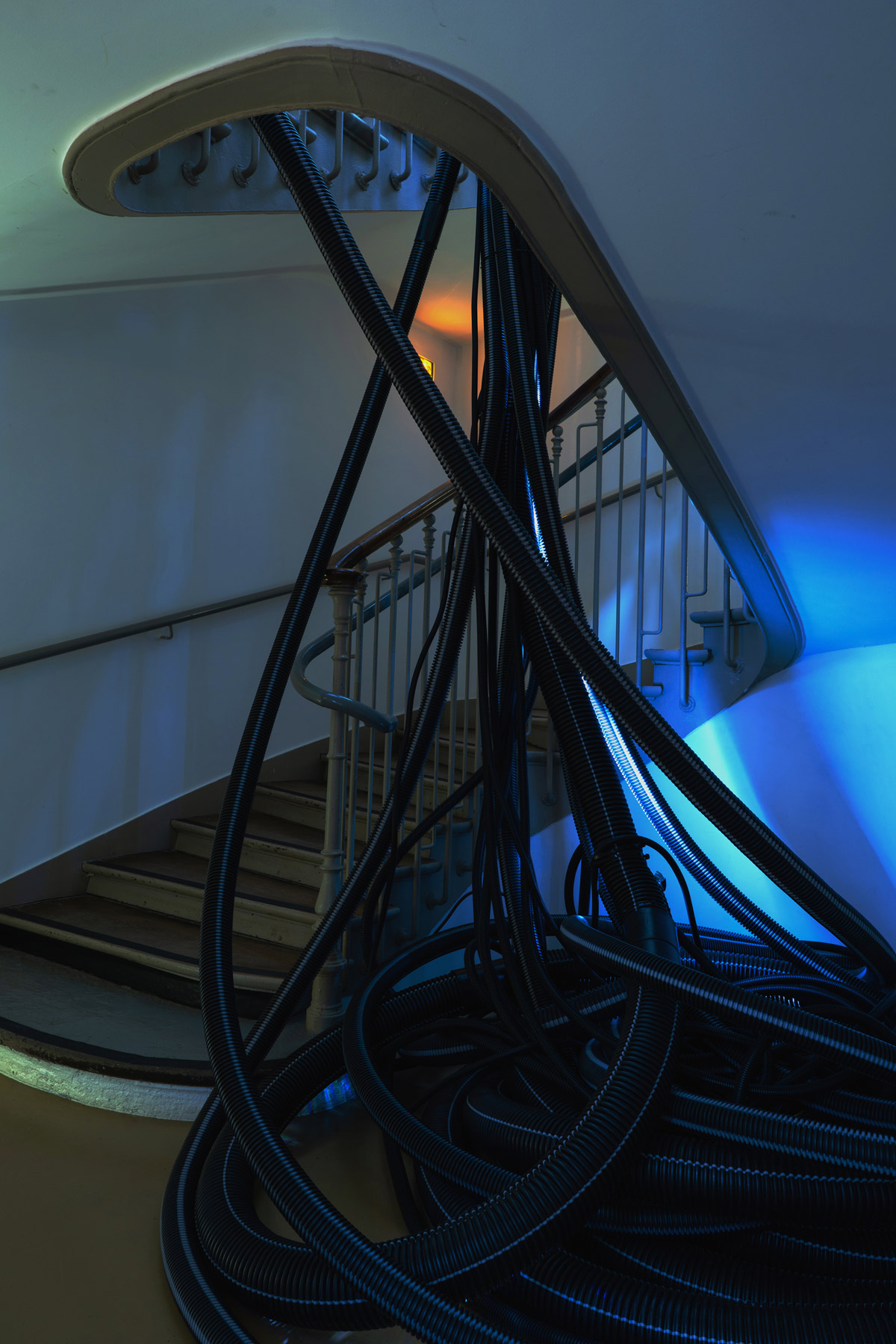
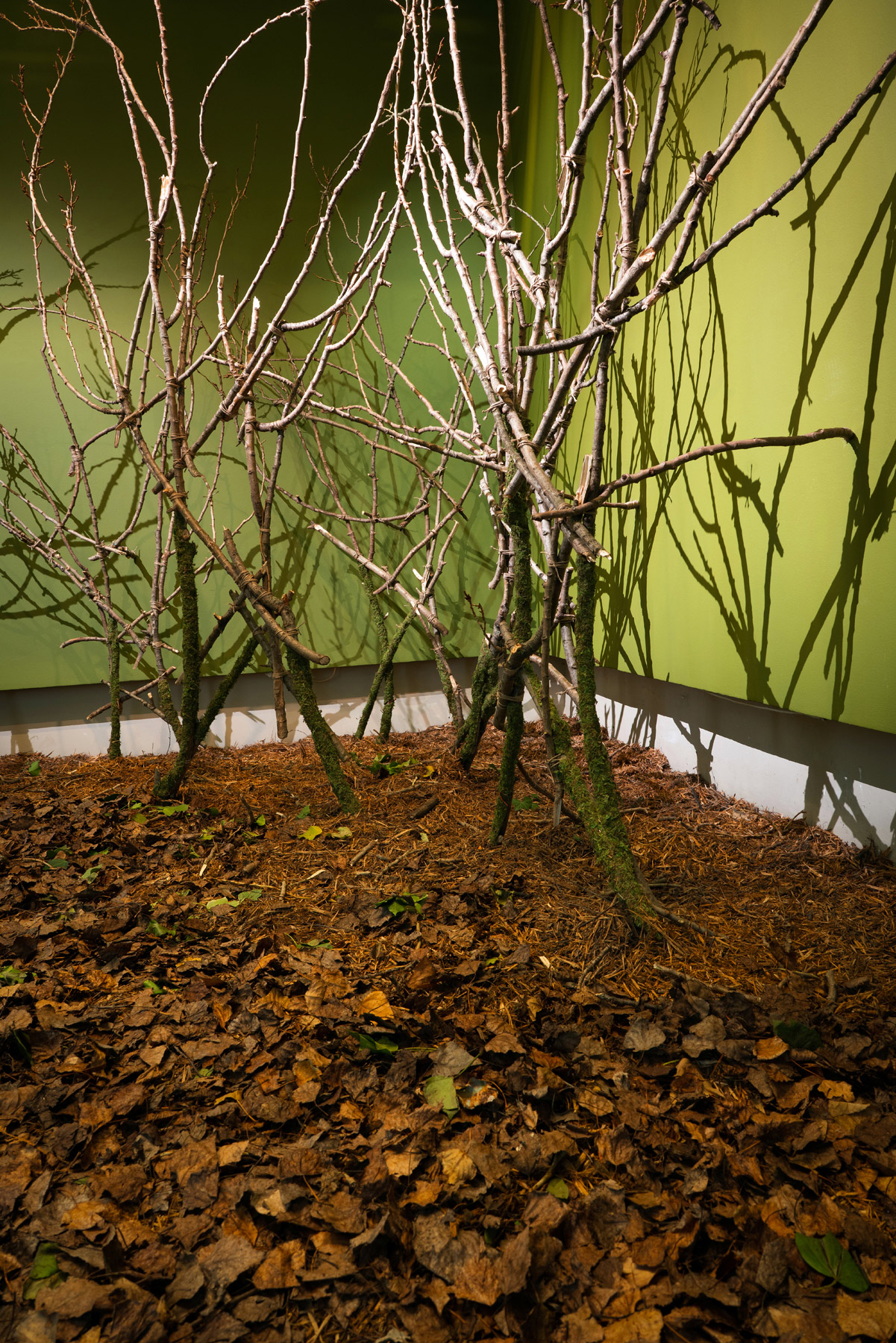
Lignées features immersive installations where the raw and processed urban materials are combined with plant and mineral elements. Visitors are invited to explore an aesthetic where familiar and unexpected forms and materials coexist. At the invitation of the City Hall of Paris’s 20th arrondissement and Art Azoï, Romain Froquet presents Lignées, an exhibition in which he explores his vision of diverse flows and exchanges through sculptural and pictorial representations.


Même à sec la rivière garde son nom
2019 I Galerie Joël Knafo, Paris
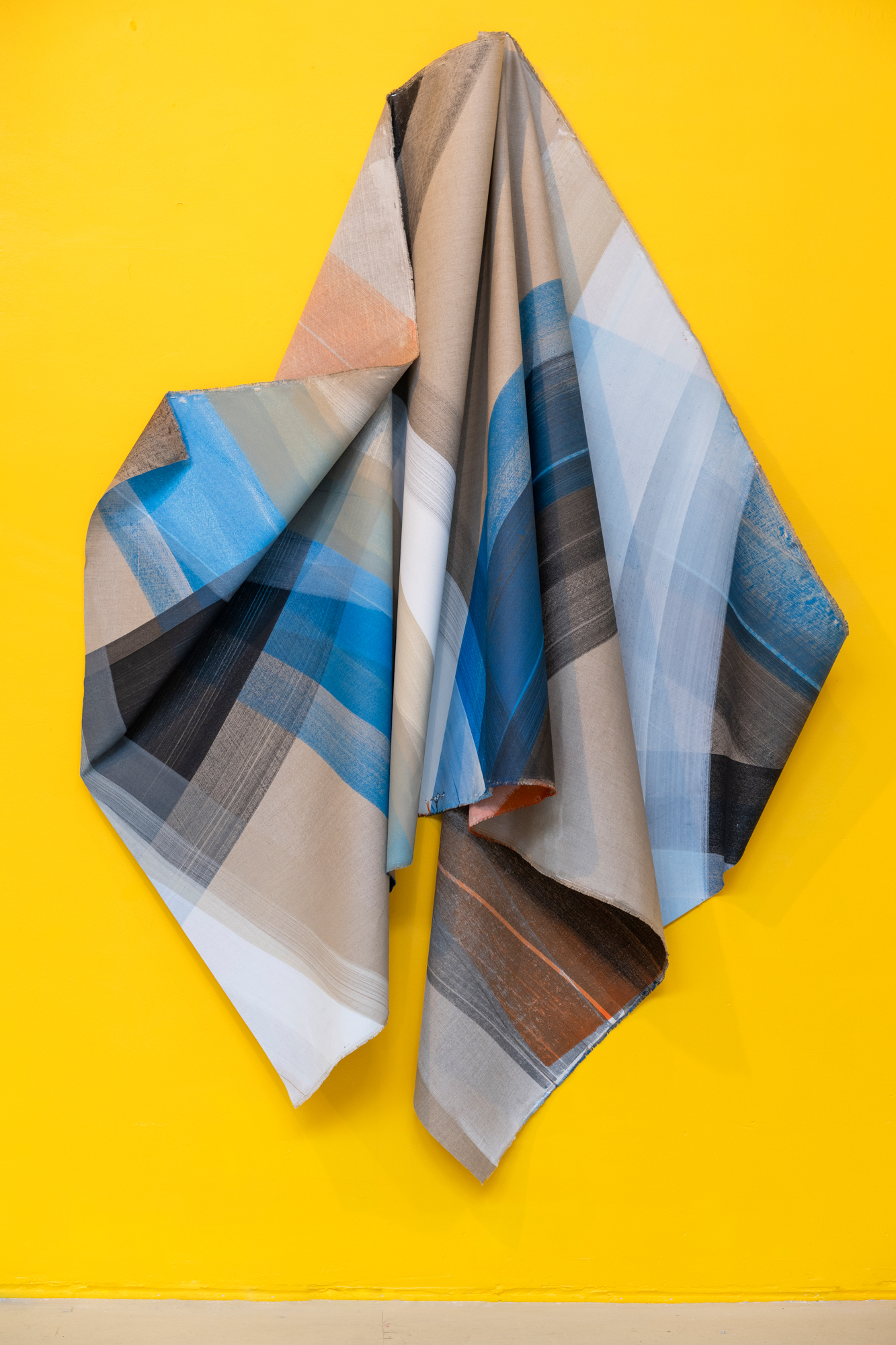
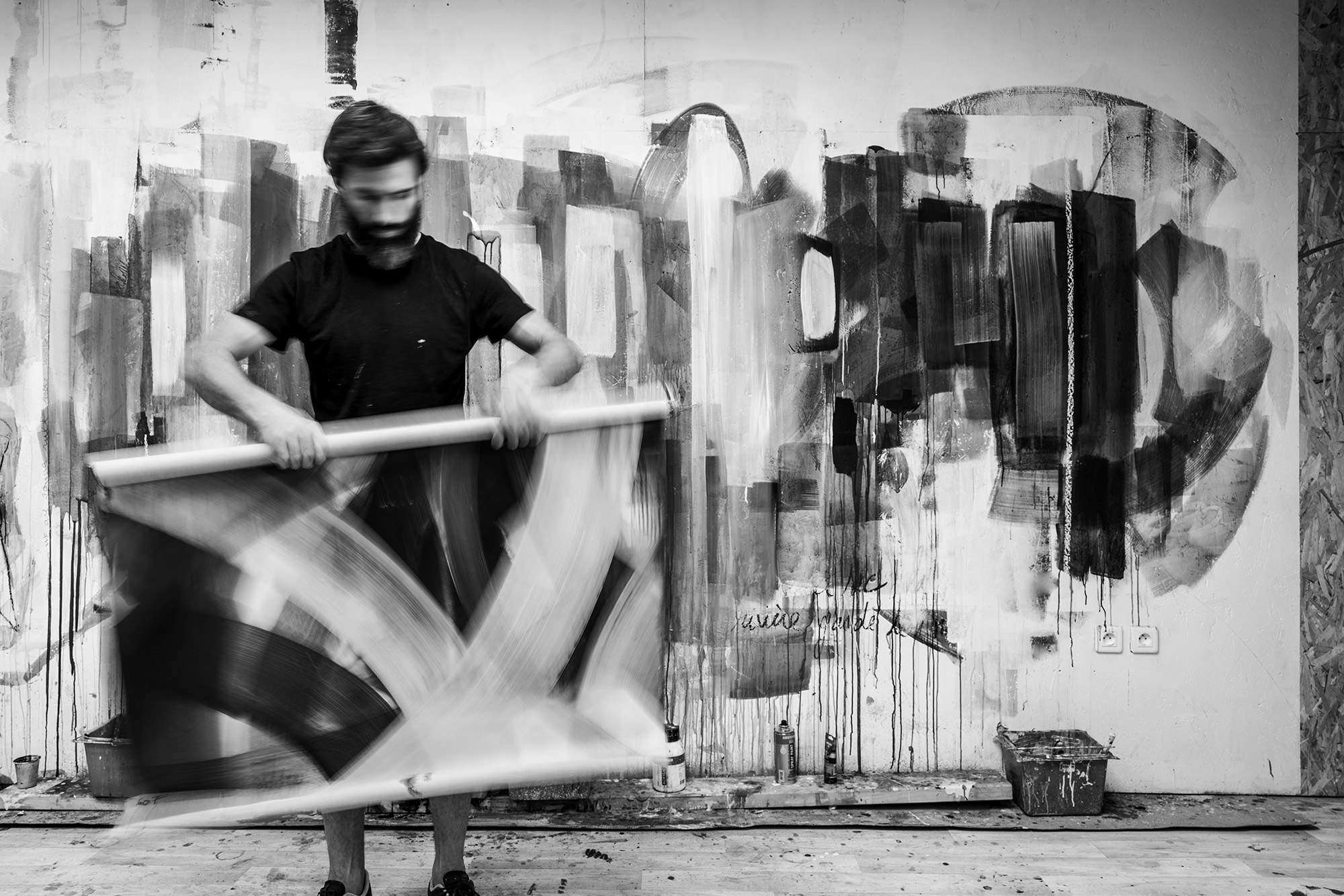
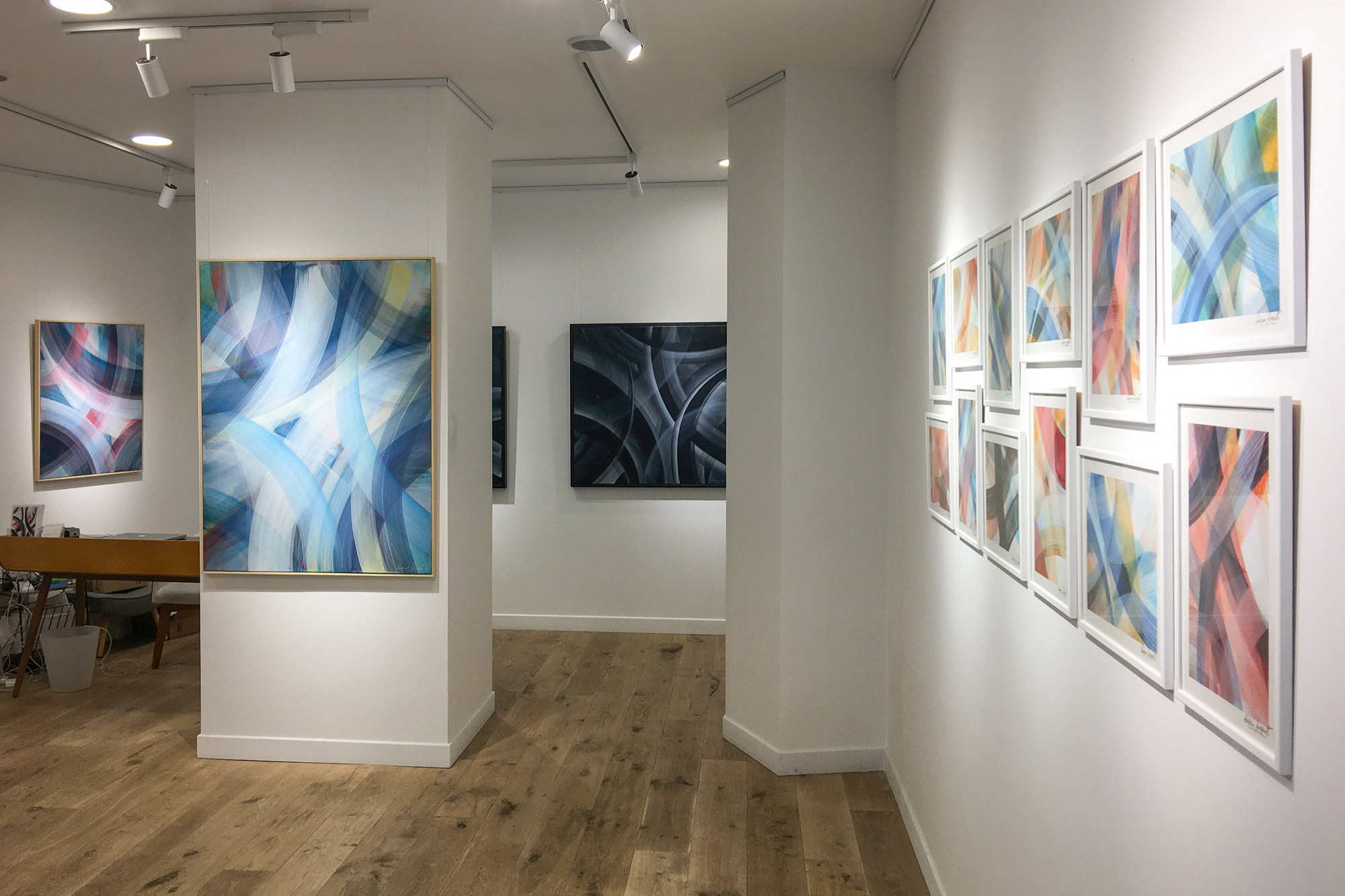
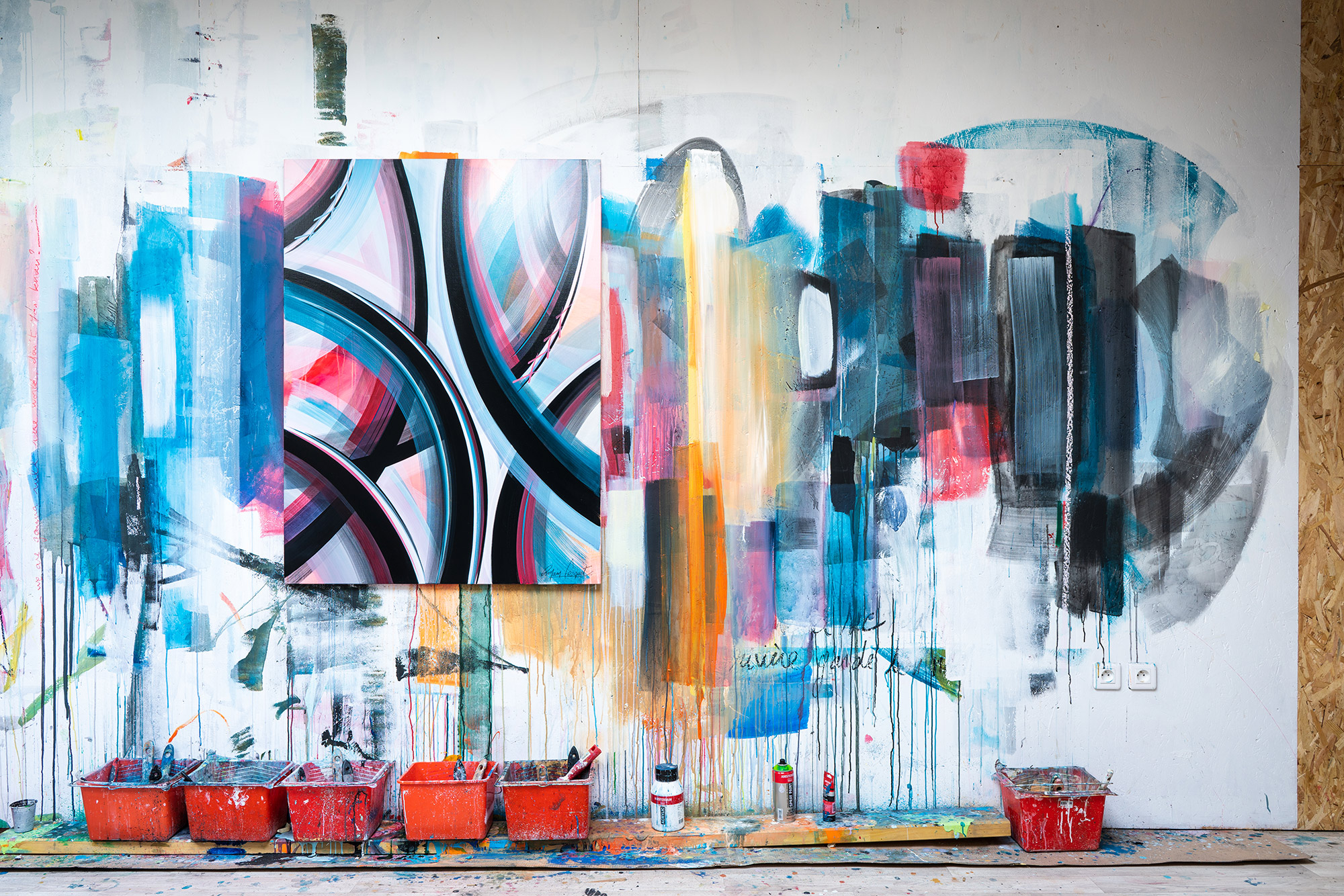
Romain Froquet explores memory, history, and the human being, and he demonstrates this through his solo exhibition “Même à sec, la rivière garde son nom” (Even When Dry, the River Keeps Its Name), from October 10 to November 2, 2019, at the Galerie Joël Knafo. The canvas serves as the medium for a spontaneous gesture. “Même à sec, la rivière garde son nom” is the name of a wax fabric. These carefully conceived, woven materials are named in the same way as works of art. The repetition of patterns defines them. Always graphic and very often symbolic, wax fabric is more than just a decorative material.
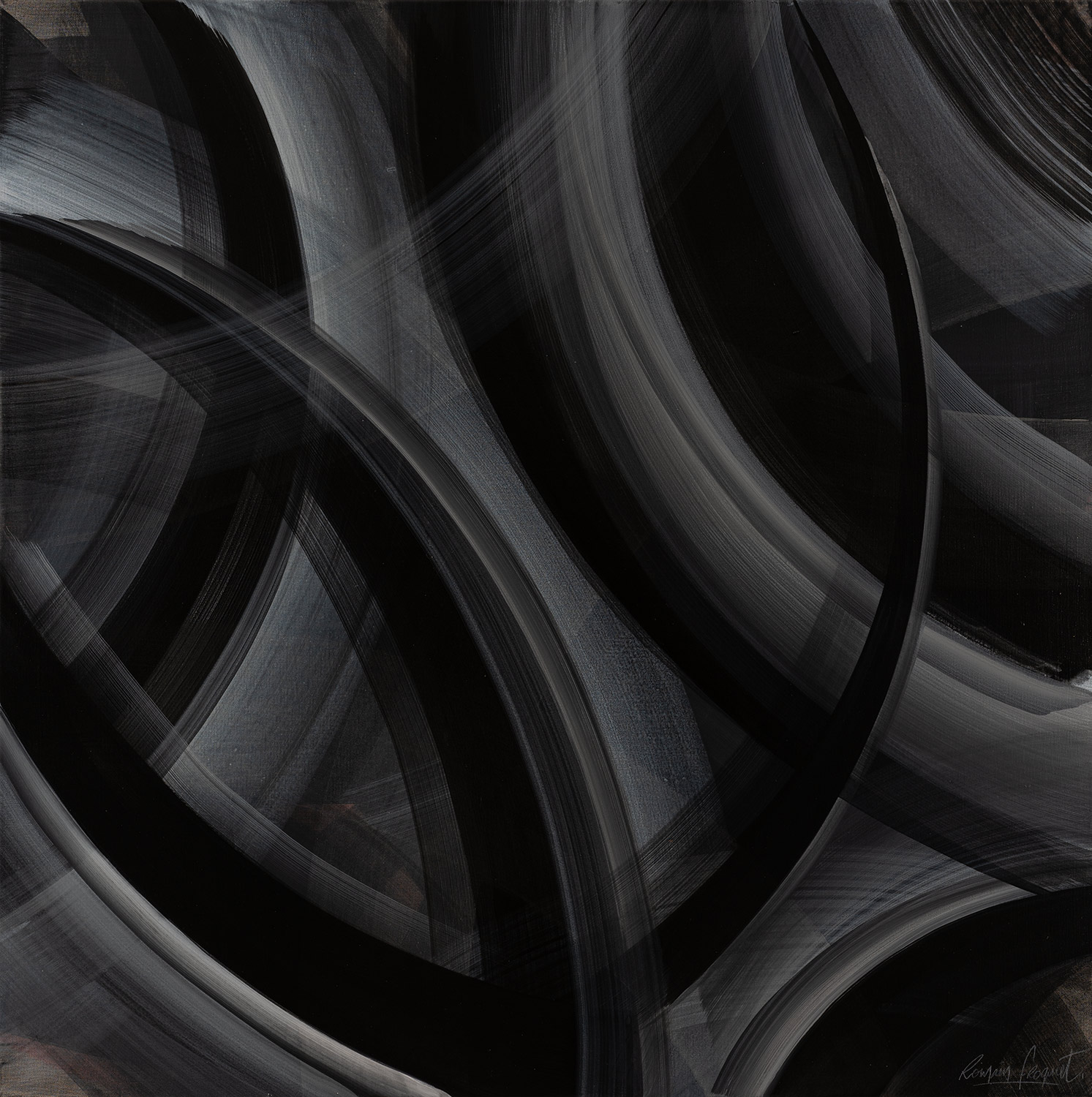
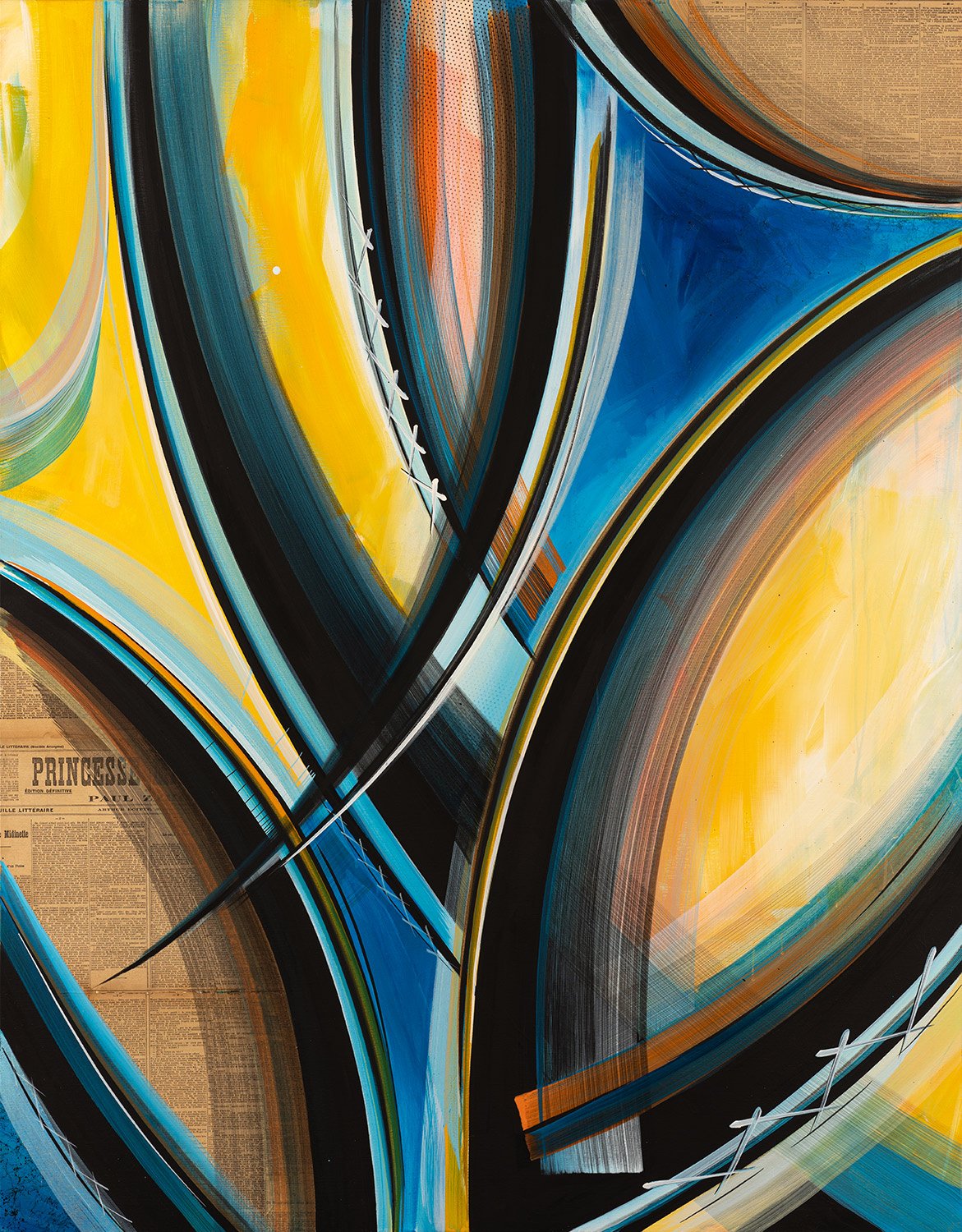
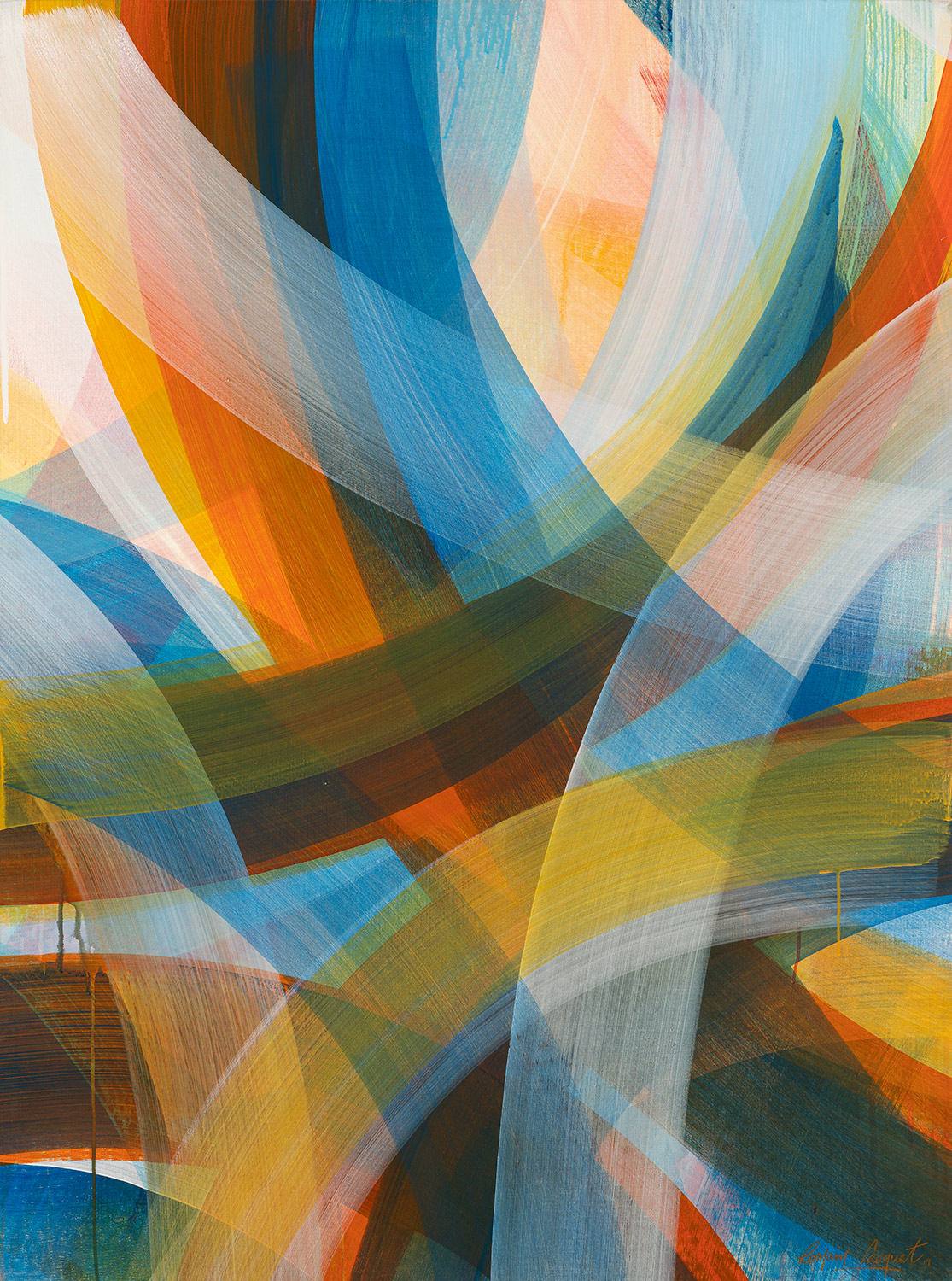
An artwork within an artwork, echoing his own questions, wax fabric fits perfectly, in all its singularity and temporality, within his pictorial universe. It challenges the viewer to reflect on what connects and separates us. Because Romain Froquet connects. He links together visual influences, scripts, and signs that he draws from the crossroads of the arts and civilizations of Africa, Asia, Oceania, and the Americas. In this way, his work breaks down barriers, successfully combining multiple cultures within a single expression. The black line flows between the solid colors and can fade away, prompting the viewer to reflect on what connects and separates us. His gesture, his color palette, and his line evolve, but—as if echoing the exhibition’s title, (“Even when dry, the river keeps its name”)—Romain Froquet's sensitive invisibility continues to reveal itself to us with the same intensity.


Film Jules Hidrot
Nature of magnetism
2018 I Askeri Gallery, Moscou
Moscow Second round at the Askeri Gallery
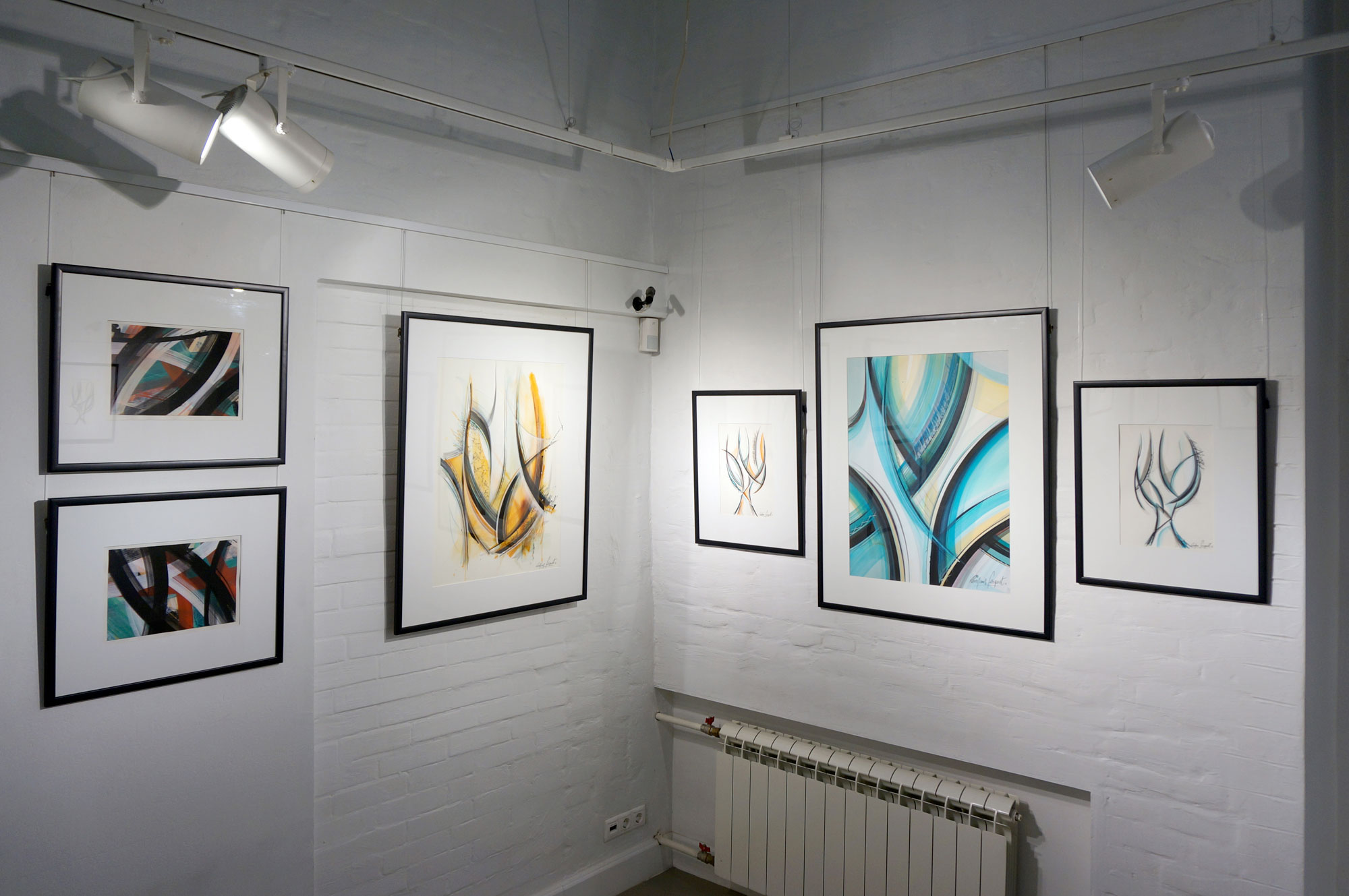
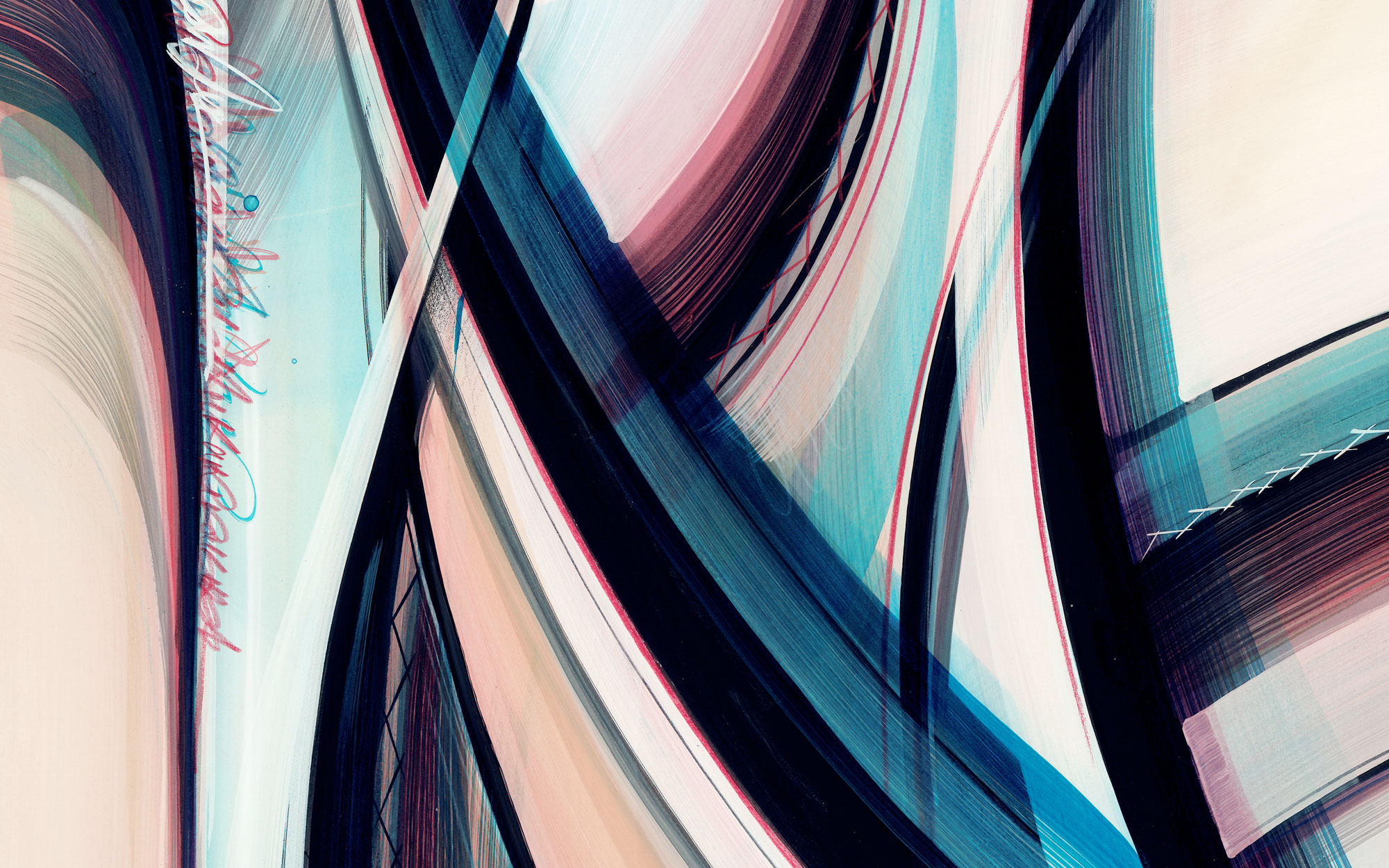
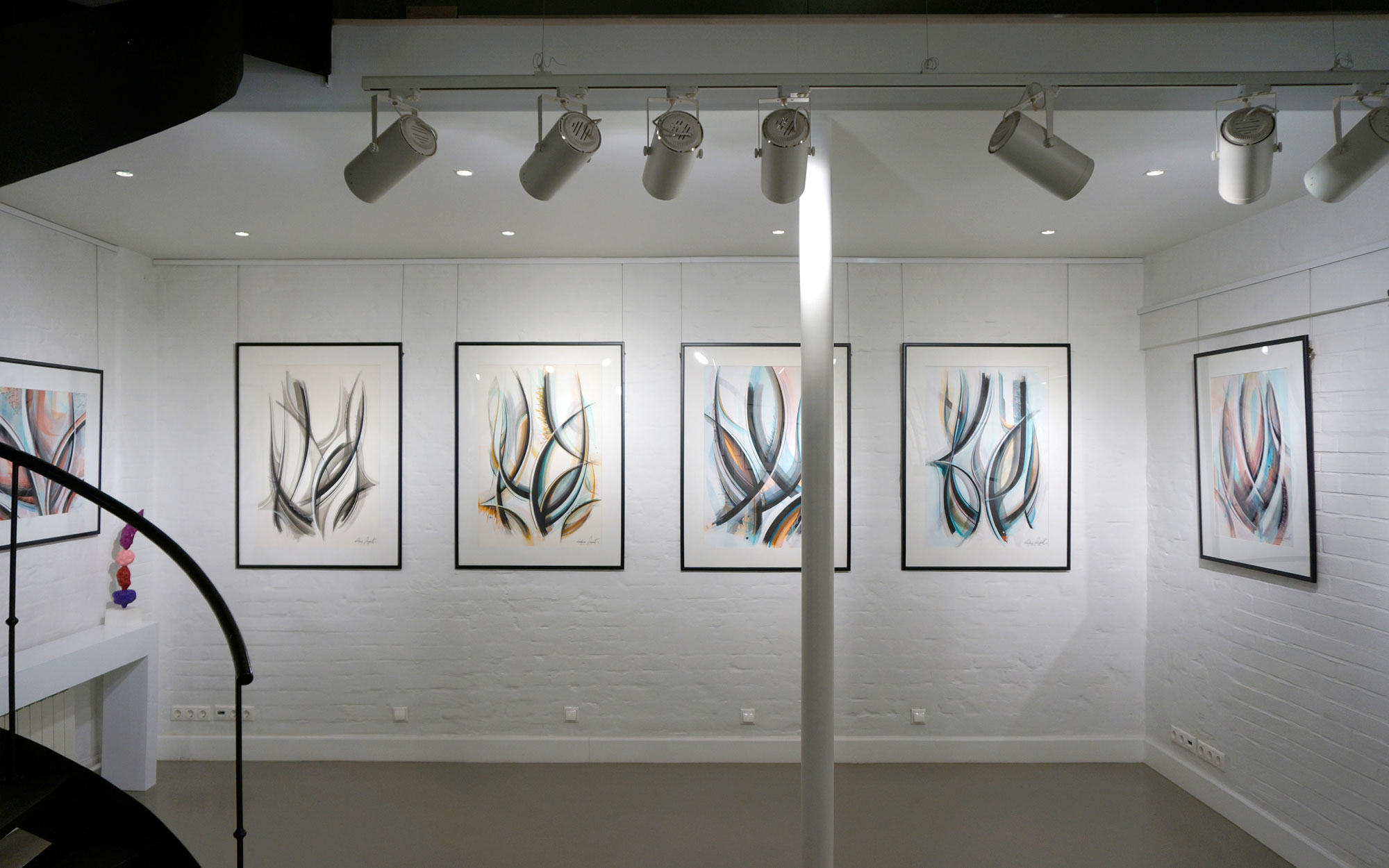
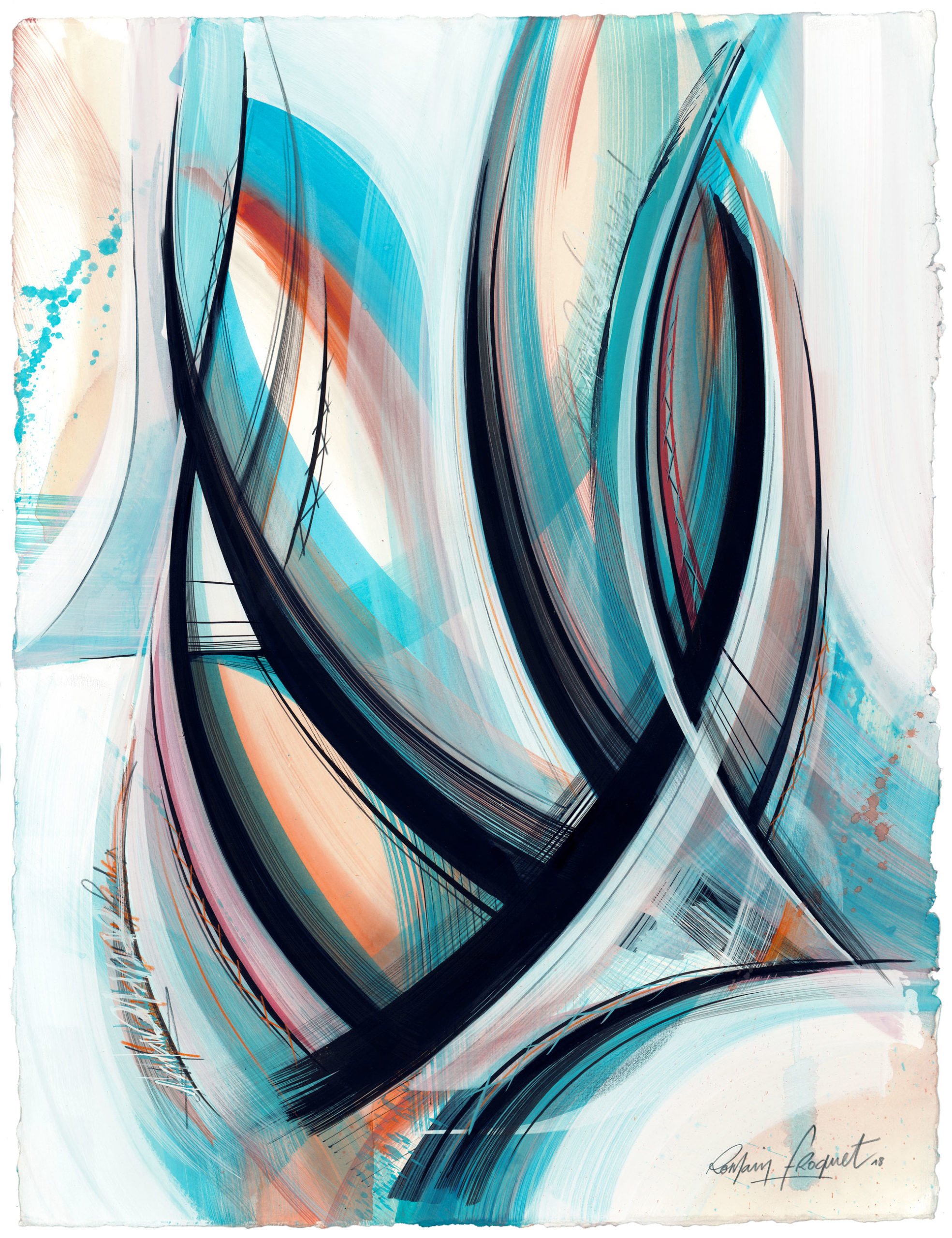
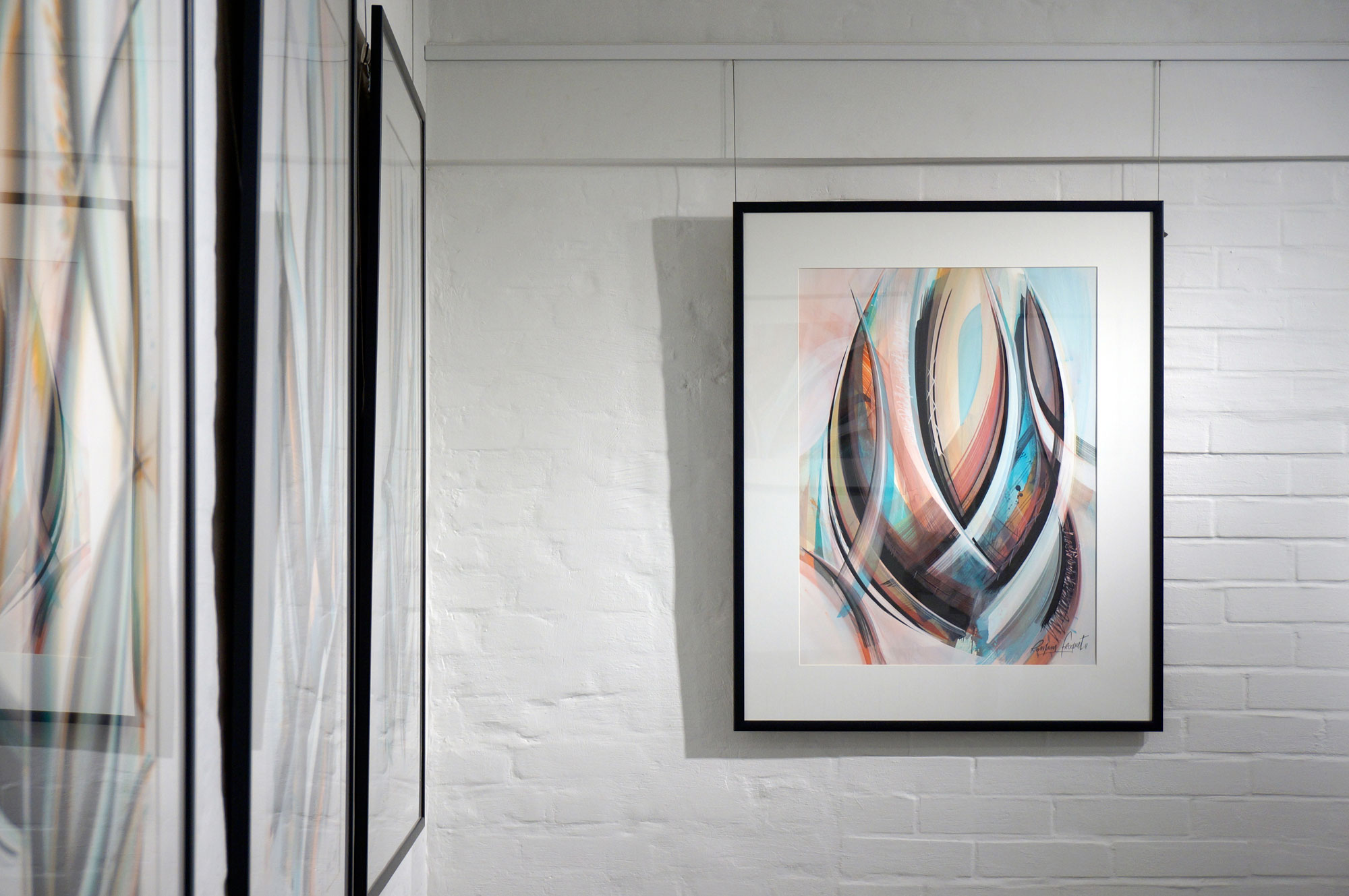
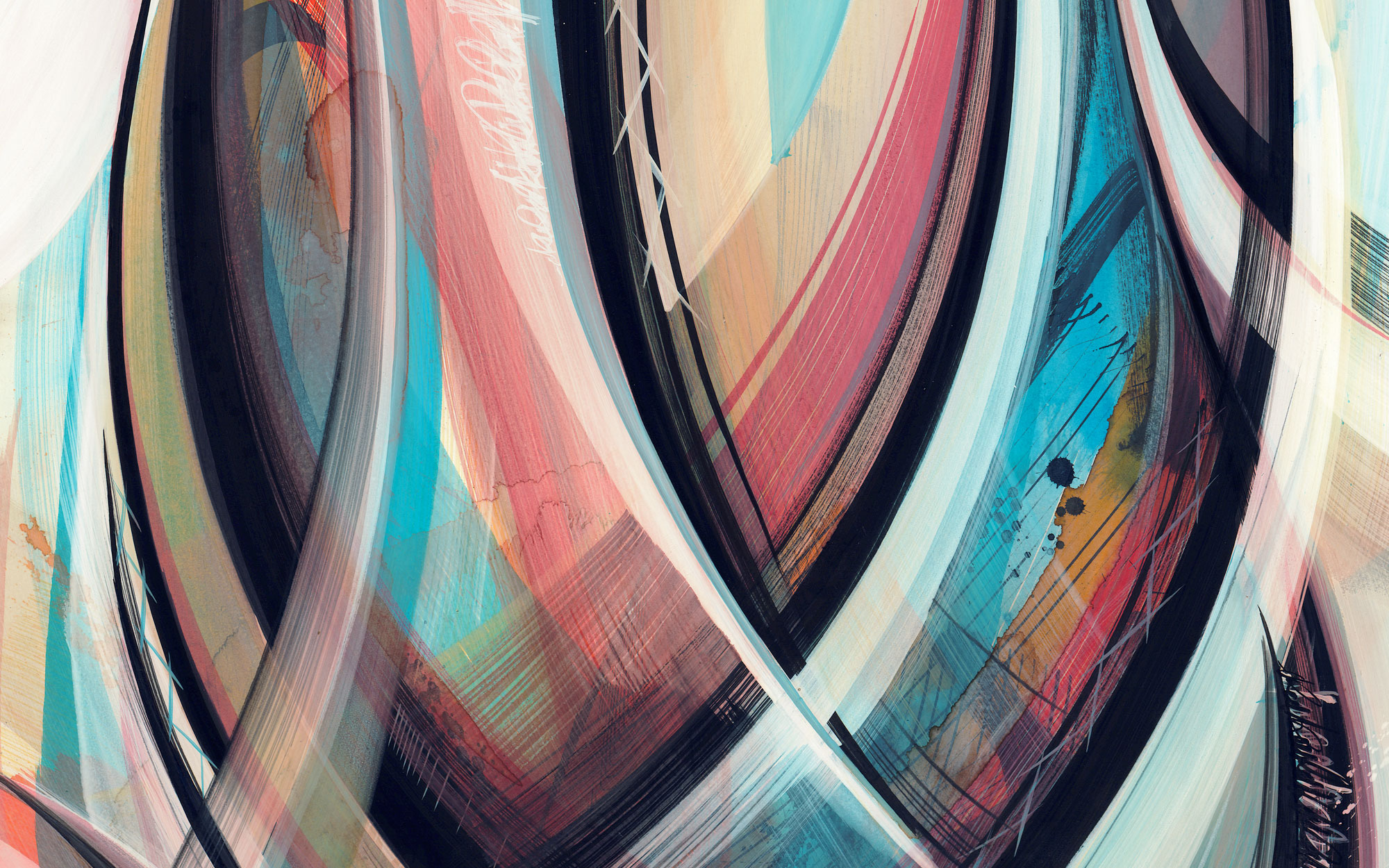
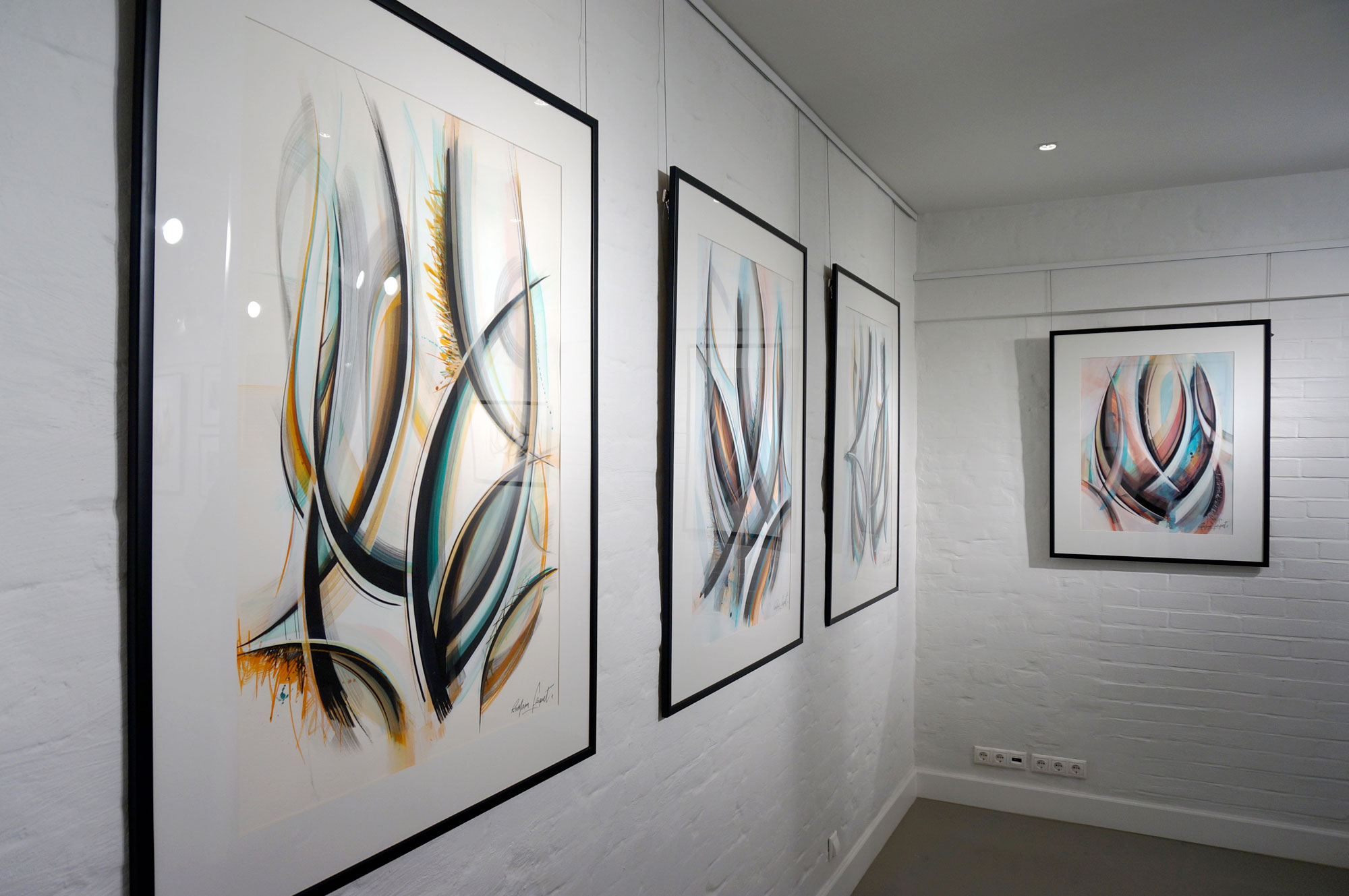
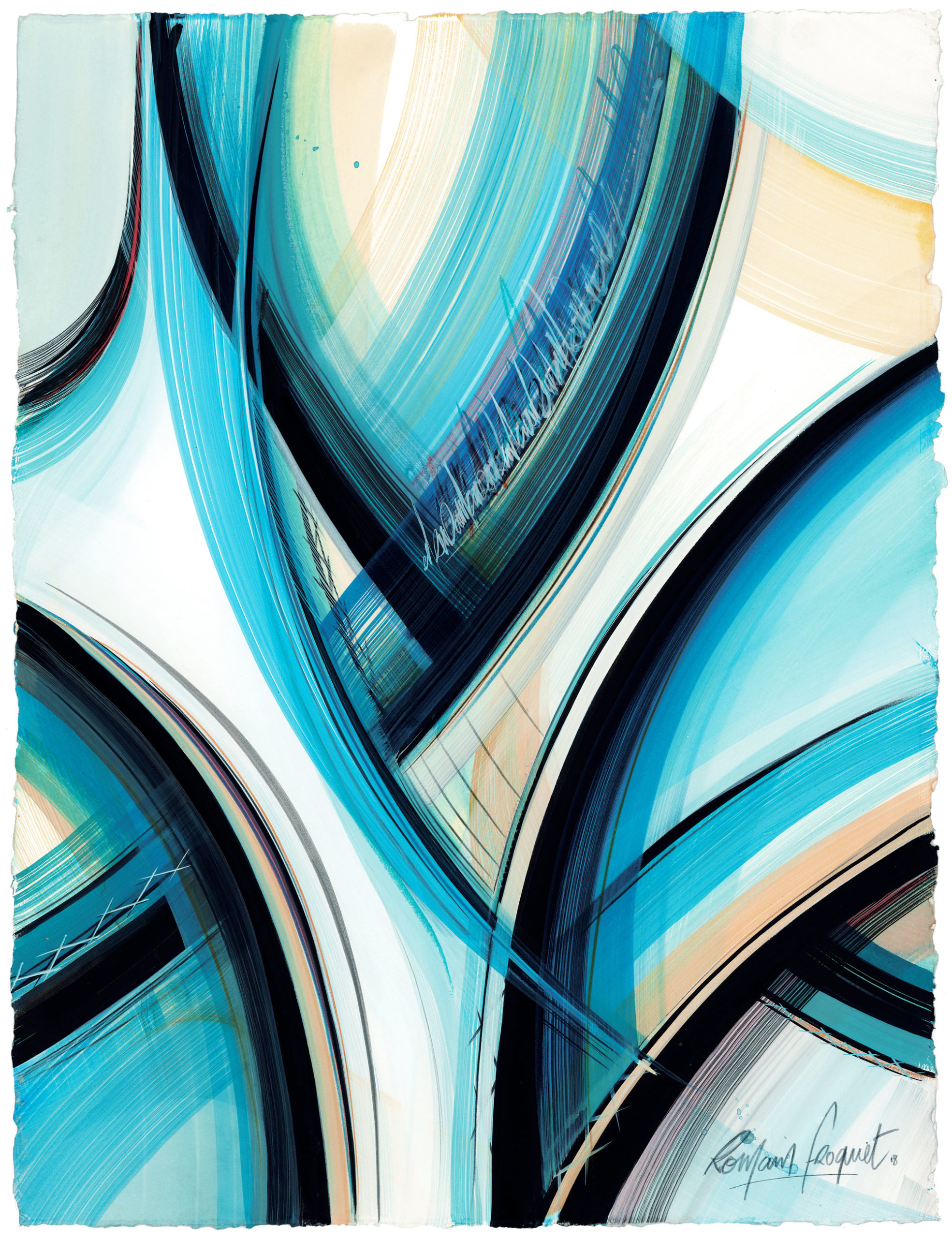
After the Atôme exhibition in 2016, the collaboration continues between Romain Froquet and Polina Askeri, who runs a contemporary art gallery in Moscow. The urban artist presents a series of paintings brought together under the name “Nature of Magnetism”. The Russian audience, already familiar with his work, could notice a difference in style at this new exhibition. It has clearly evolved over the past two years. The colors are now softer and conform to the black lines in a vaporous way.



Above the line
2018 I Galerie Joël Knafo, Paris
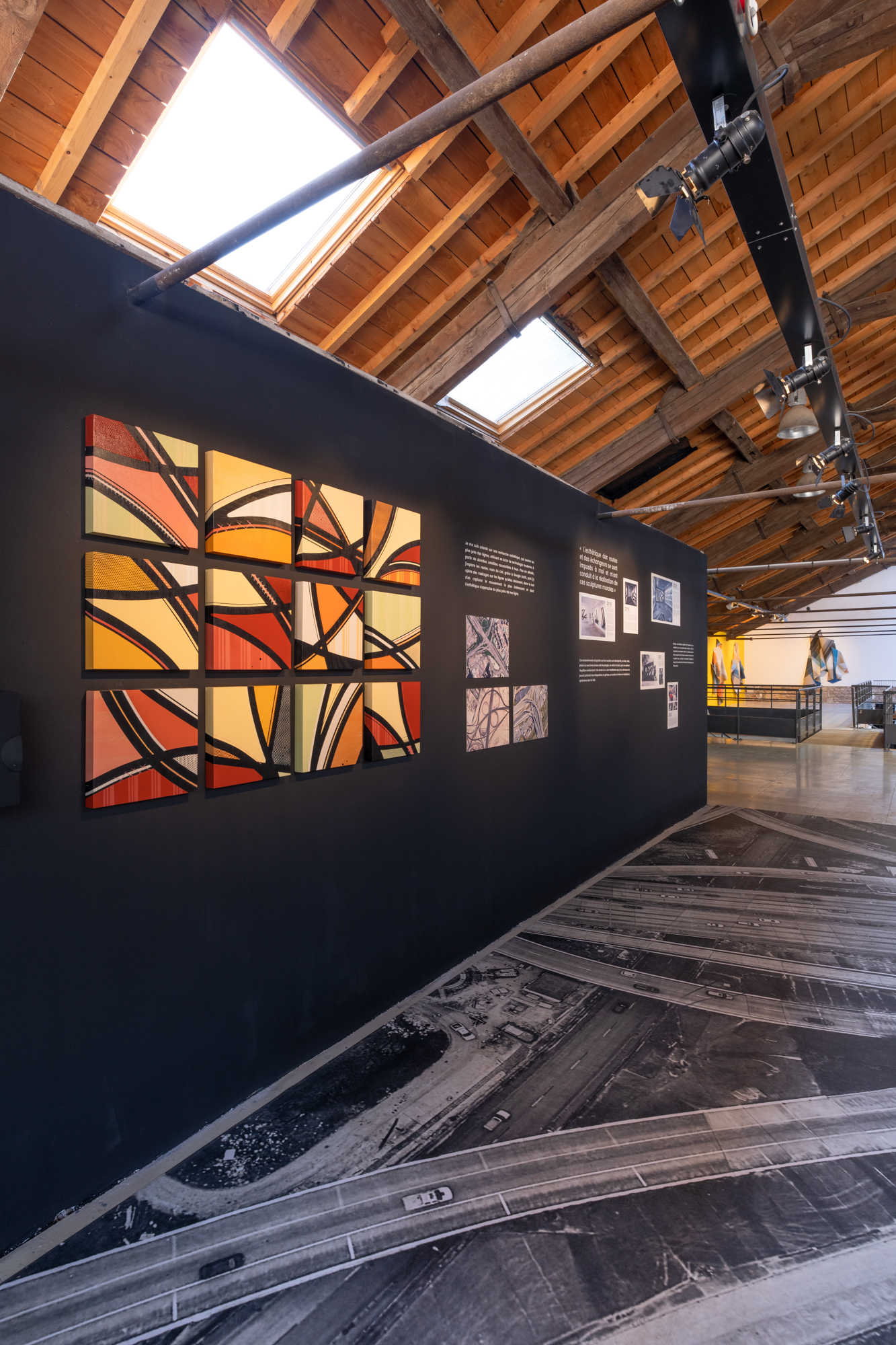
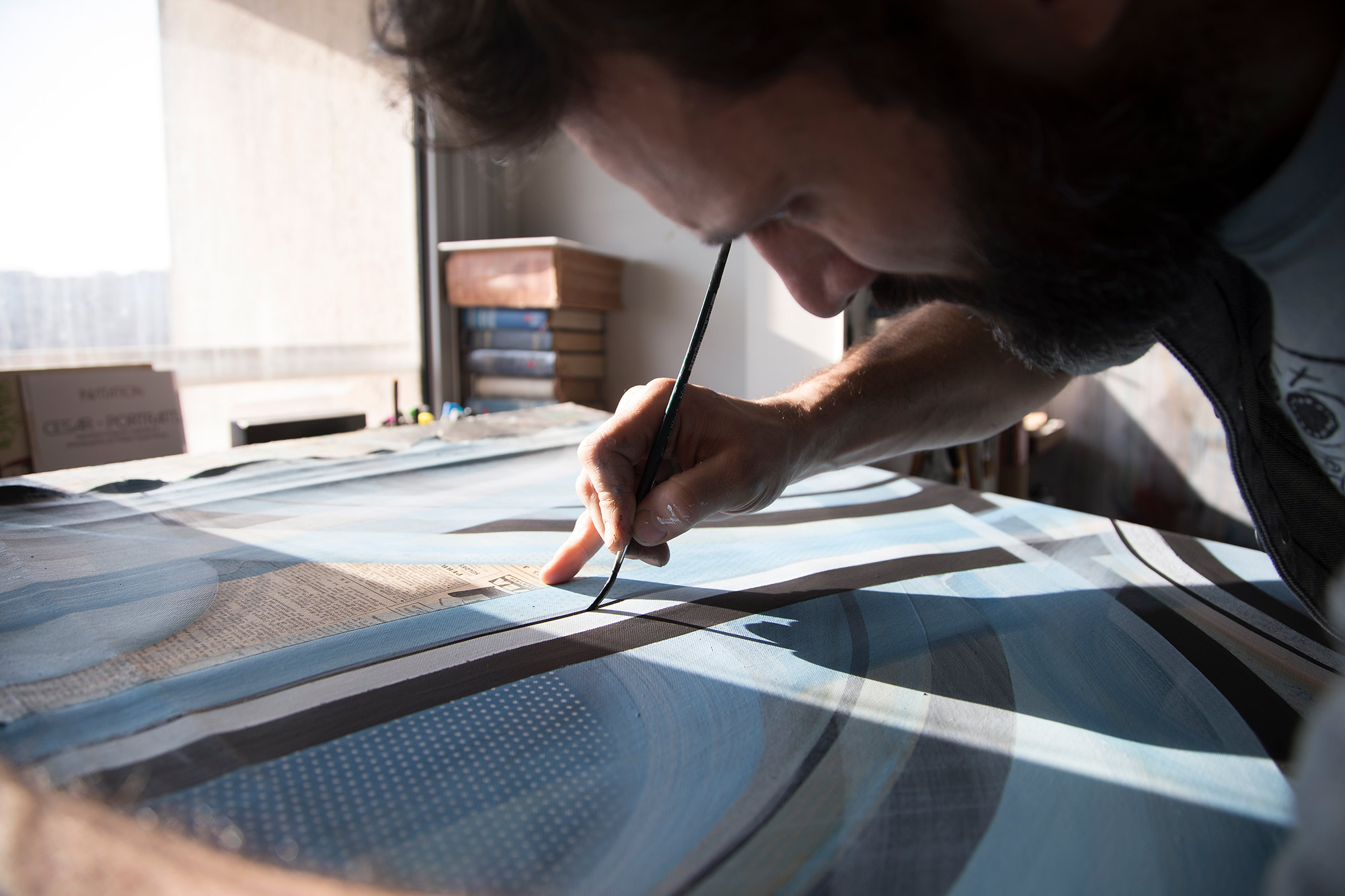
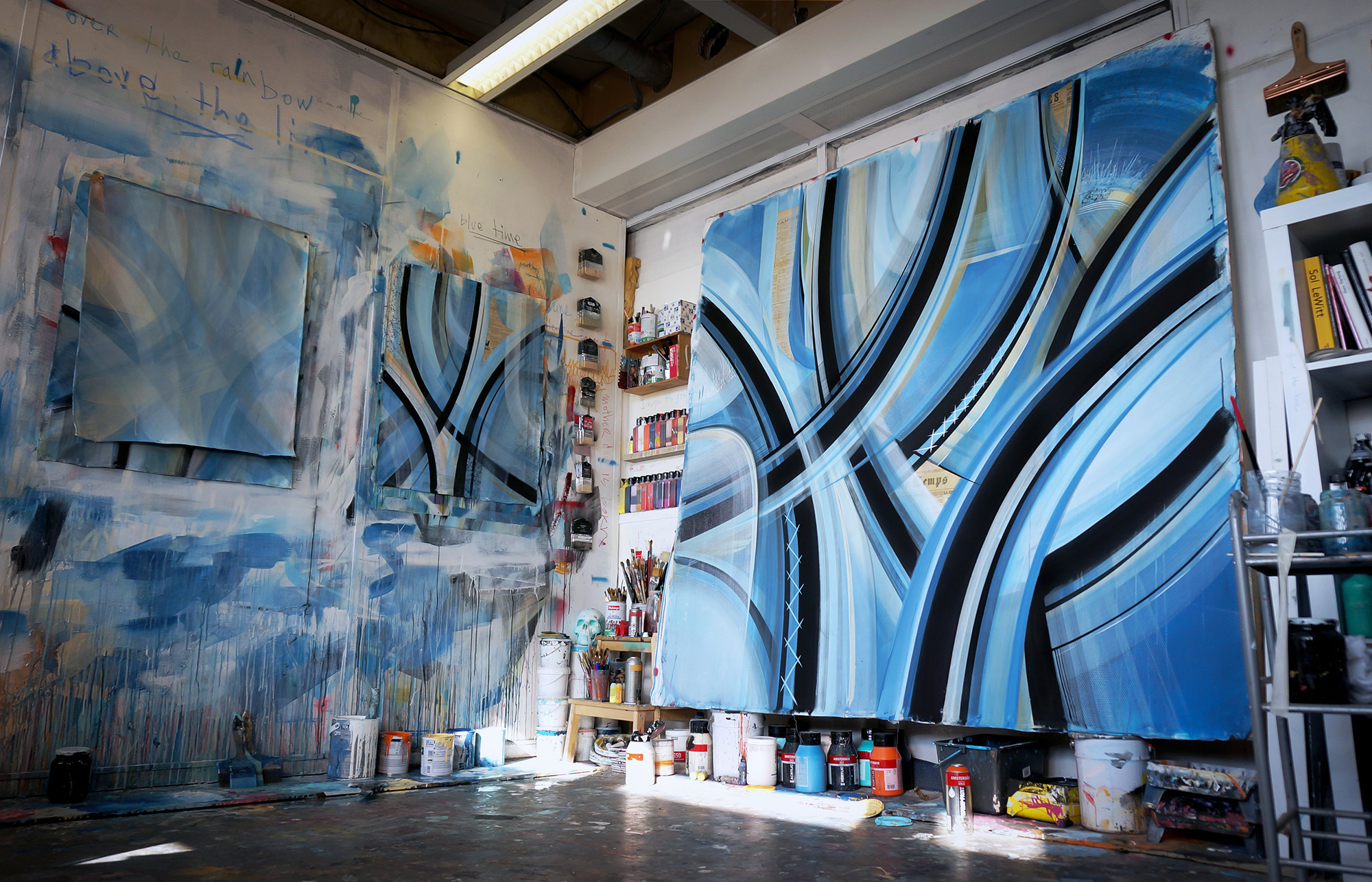
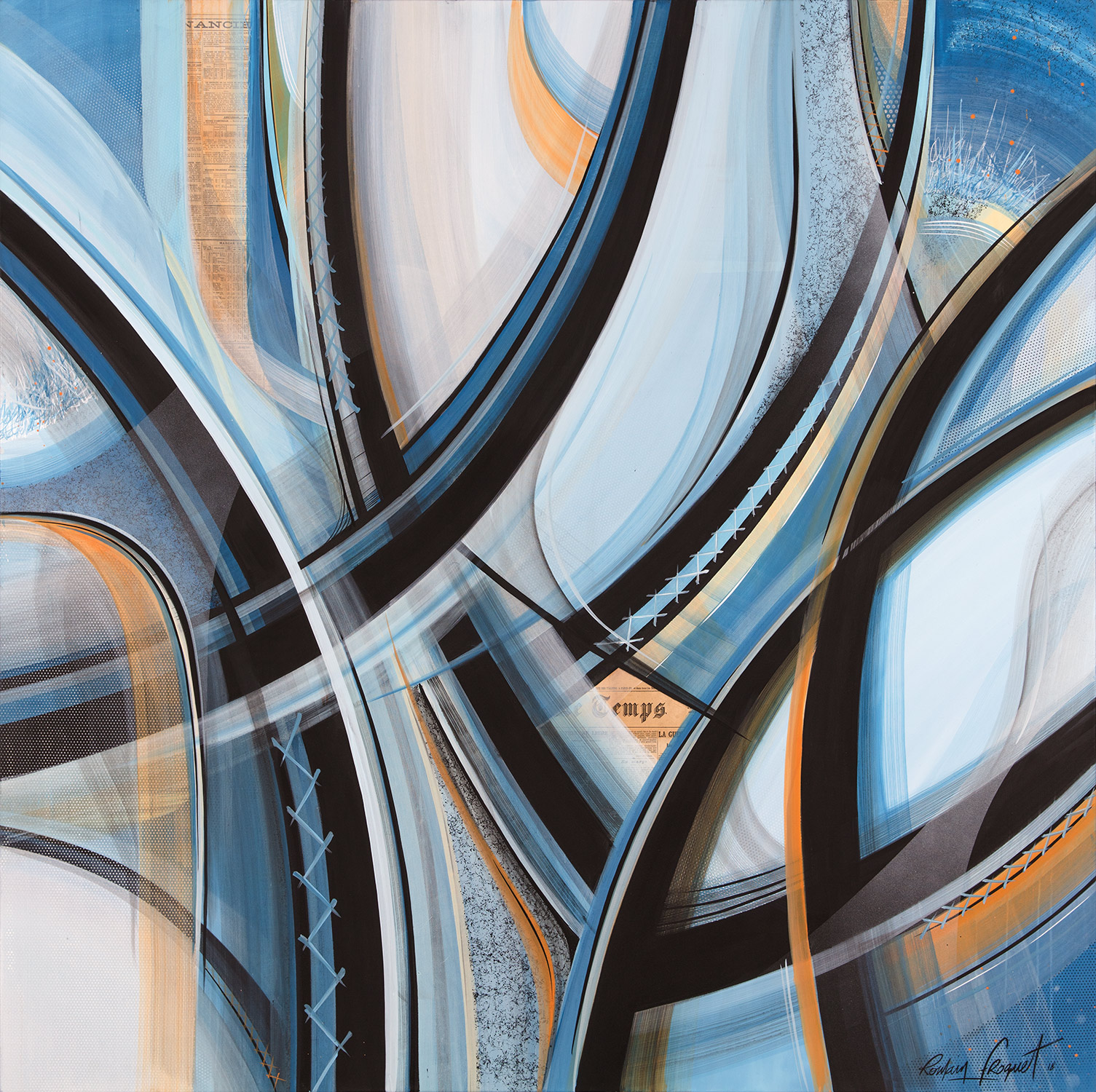
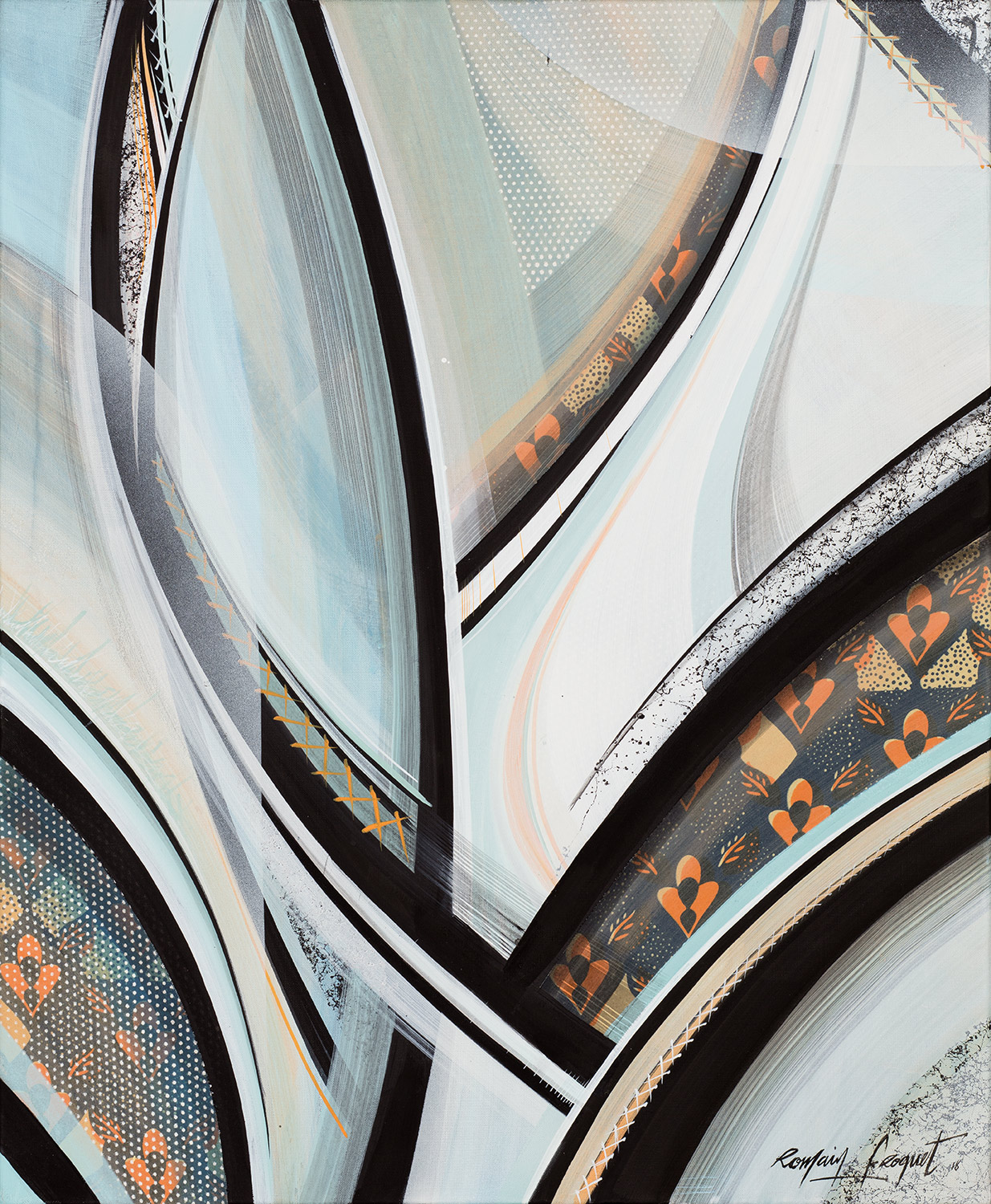
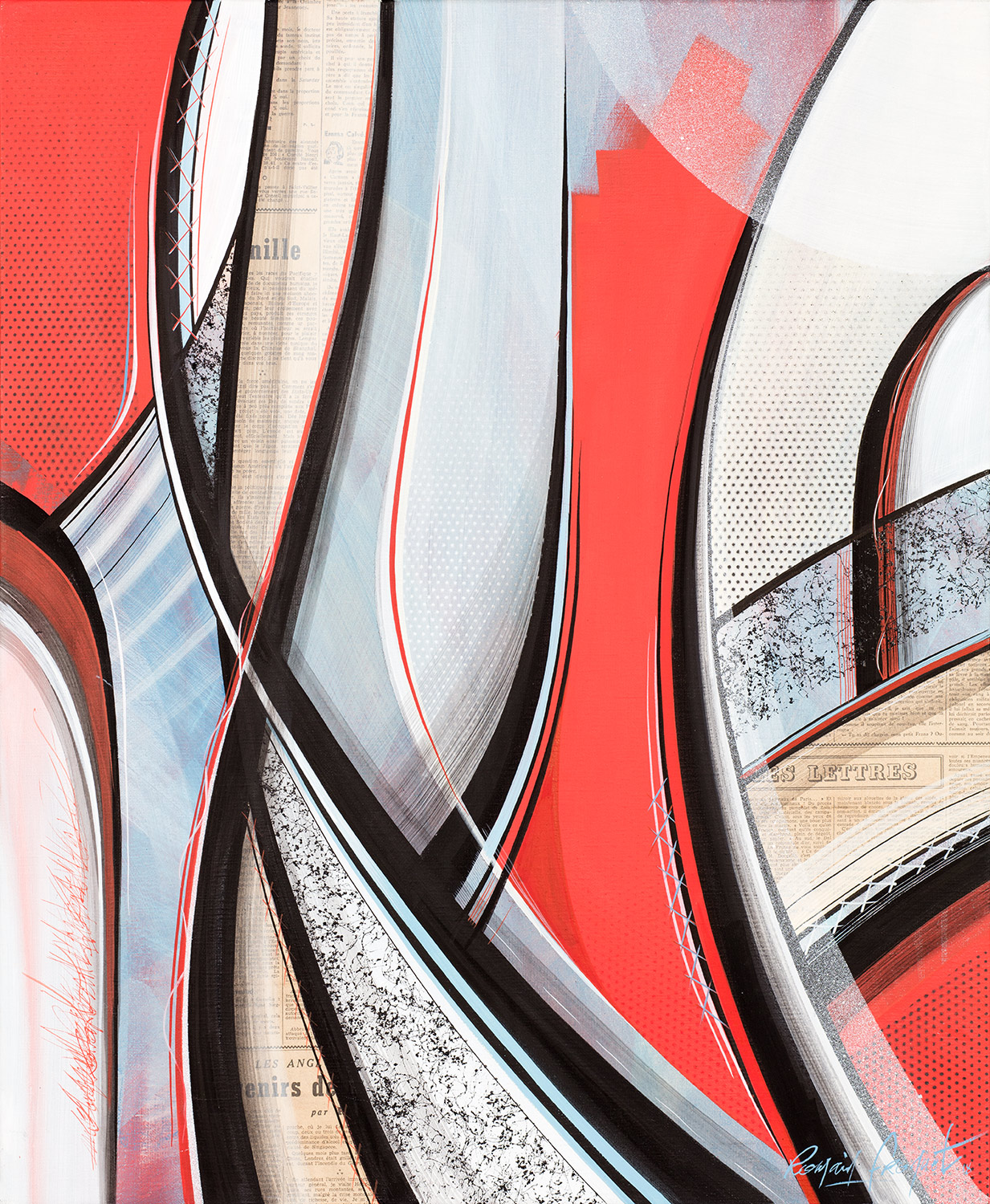
Romain Froquet’s first solo exhibition at the Joël Knafo Art gallery, “Above the Line” explores the limits of balance through an interweaving of lines and curved movements. Drawing inspiration from a variety of influences, including the works of Hans Hartung, Romain Froquet presents a collection of pieces where “personal achievement” could be the key word. The artist experiences each creation as a performance, a concentrated burst of energy, of life.
Each line is the culmination of years of experimentation, of meticulous, repeated strokes, and at times sheer persistence in pursuit of the perfect gesture. Firstly, for Romain Froquet, with his desire to step beyond the frame without breaking harmony, and the ambition to renew his sources of inspiration without altering his original style. The “Above the Line” exhibition resonates like a promise for the viewer. Immersed at the heart of the artwork, his gaze travels across every line, guided by its many variations. The mind escapes, connections are built, and the flows carry the energy that fuels us all to go further. The colors of the exhibition contribute to this journey, by directly reflecting the sunsets that Romain Froquet observes from his studio.
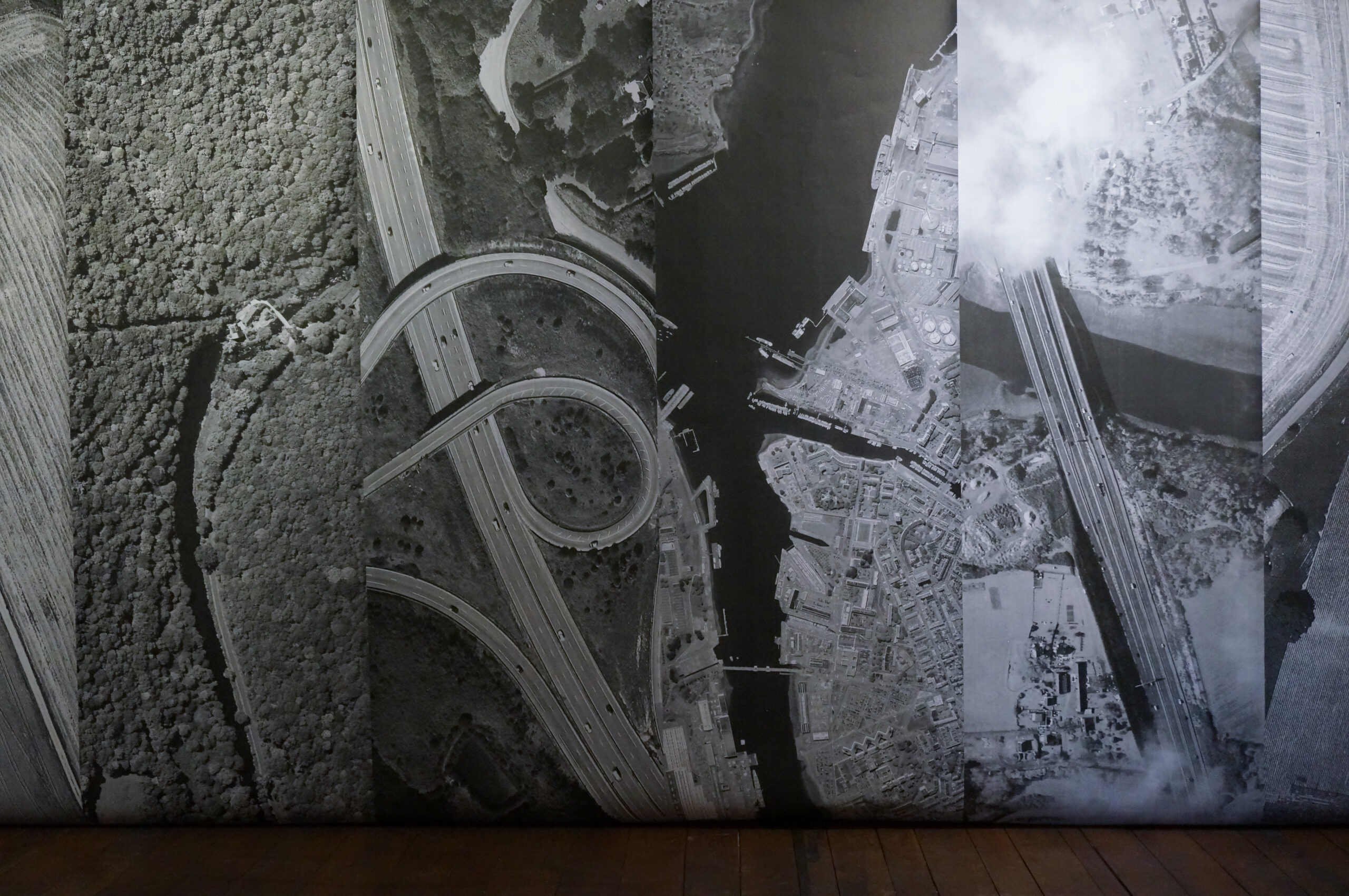
In front of these works, the viewer is challenged by their multiple interactions. Organic or plant-like writing, human or spiritual traces, the part of the visible and the invisible are clues converging toward the artist’s desire to create bonds through a set of signs to be read as a universal language. With “Above the Line,” Romain Froquet writes an ode to LIFE. The works created for this exhibition are inspired by satellite images of highway interchanges and presented on various materials.
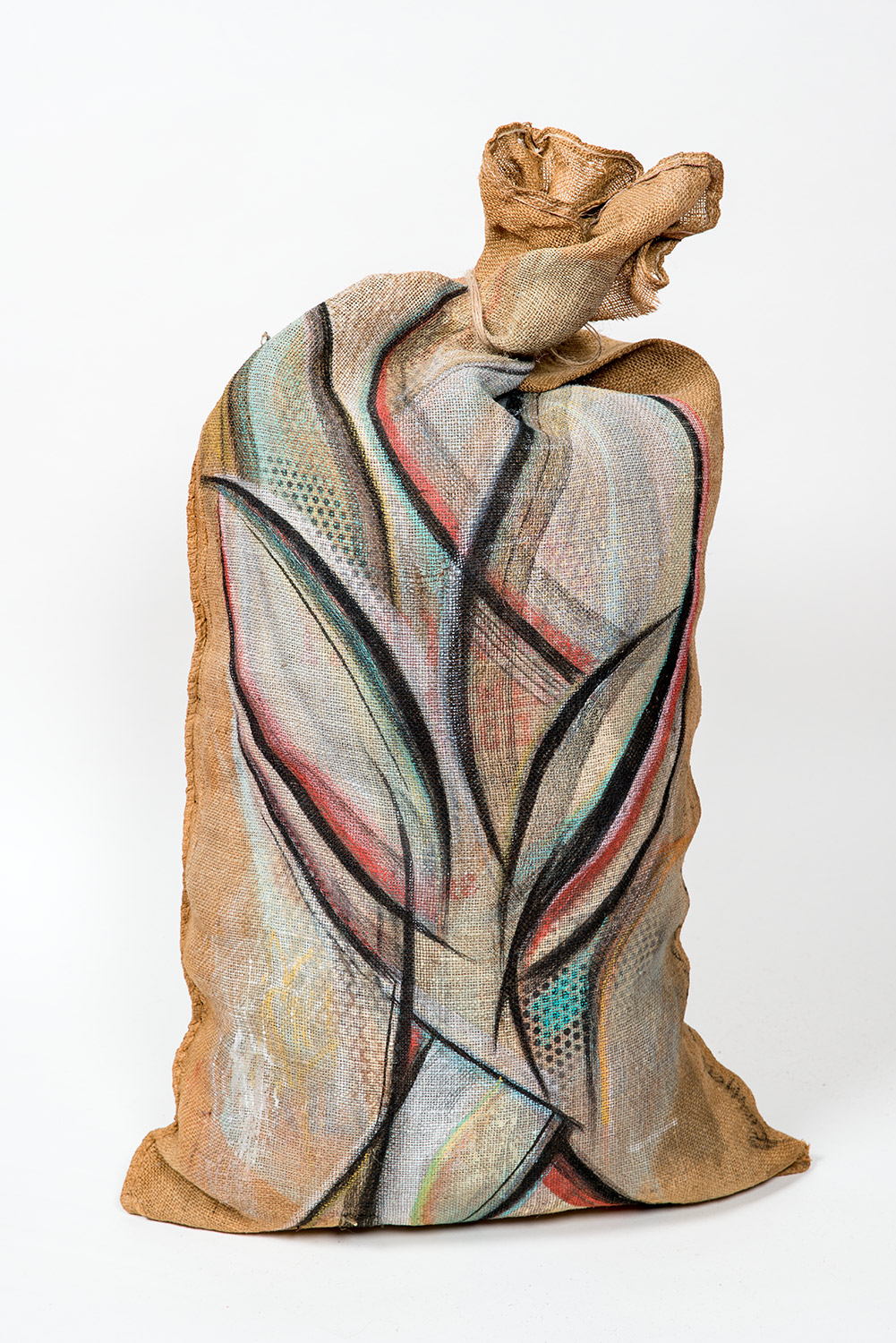
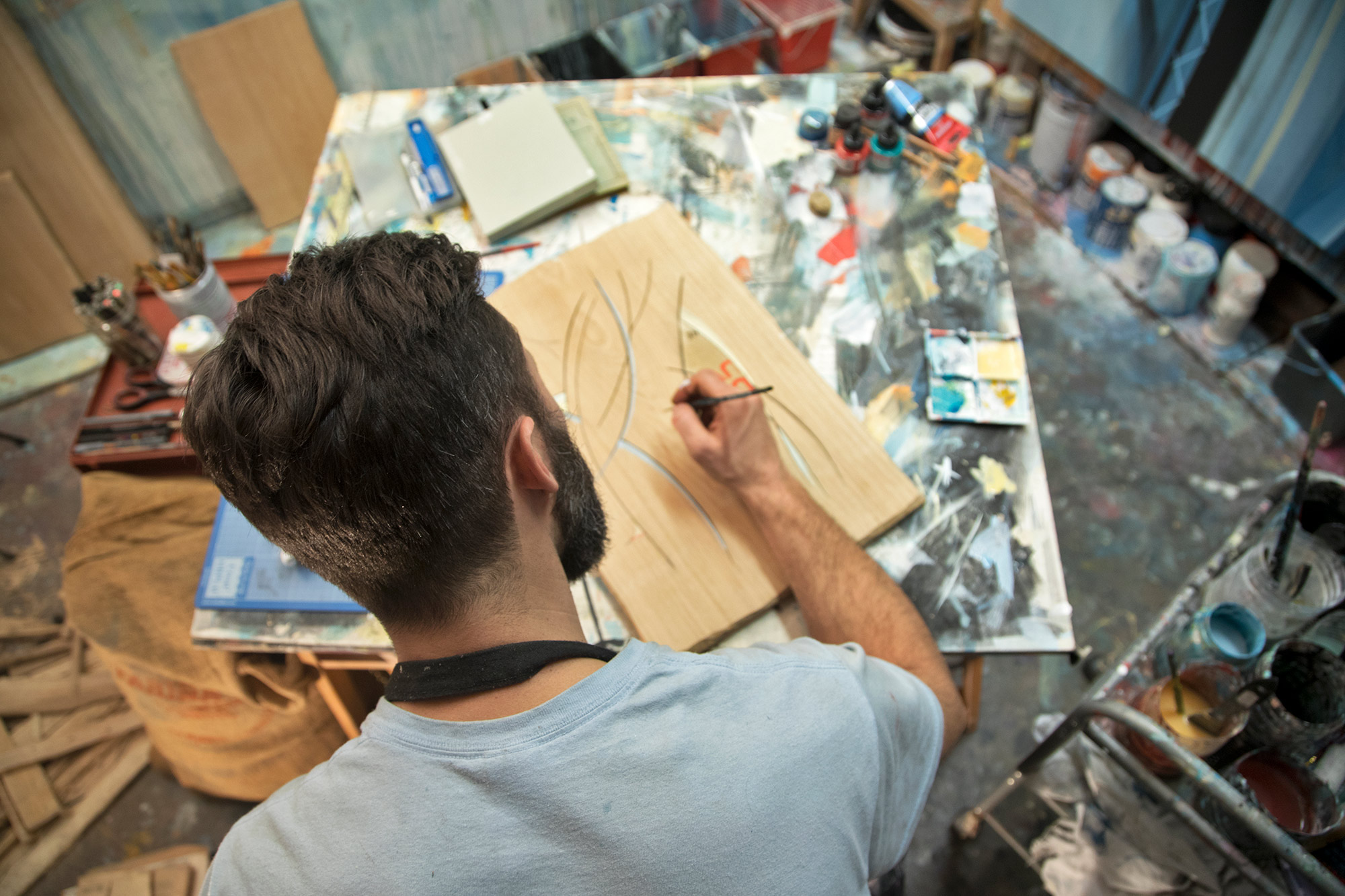
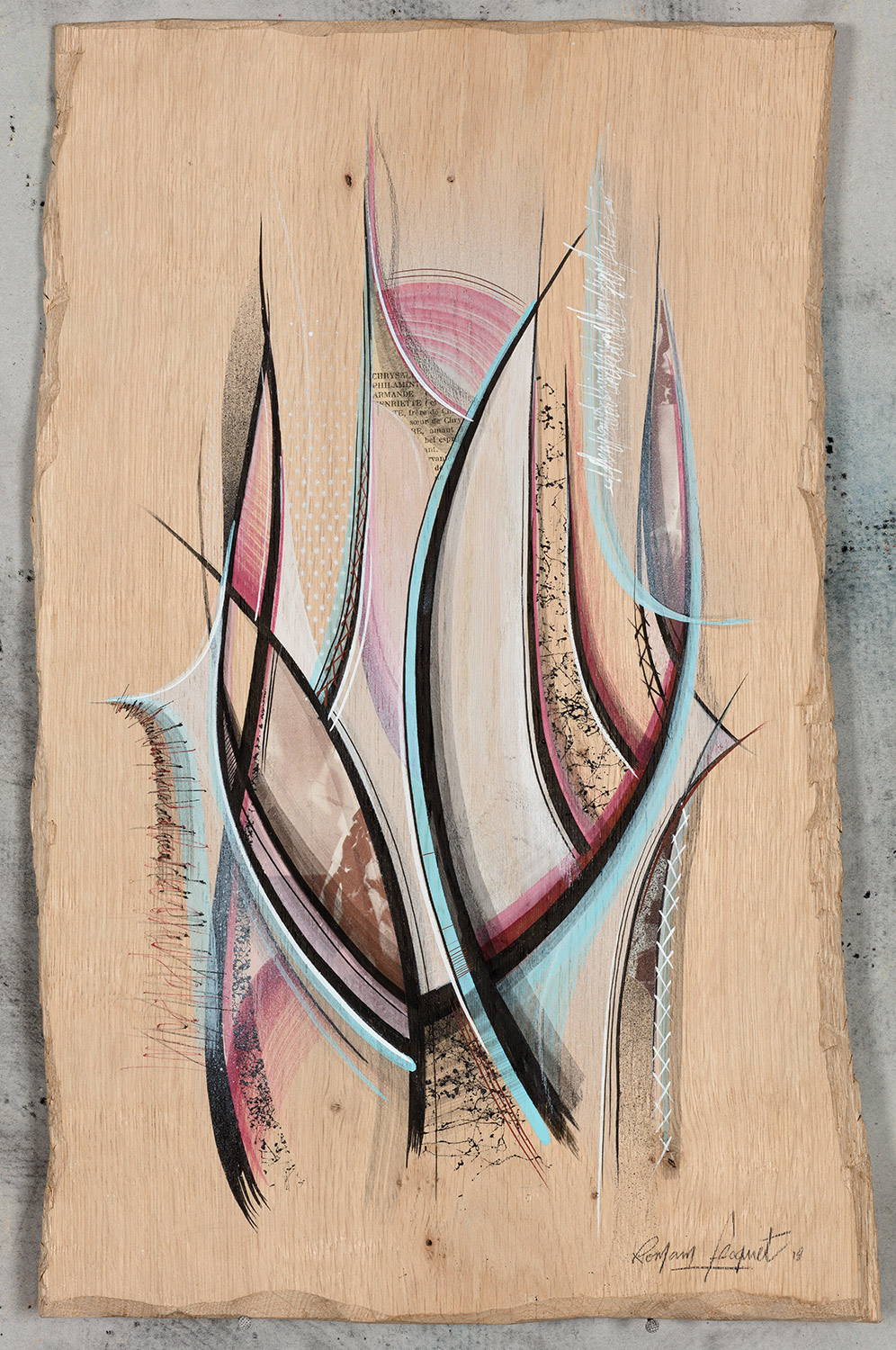
Canvas, of course, for the nobility of the medium, but also the delicacy of wood, whose reference to the earth, roots, and the tree of life is a constant in Romain Froquet’s work. And for the first time, the artist is exploring jute sacks used to transport foodstuffs—symbols of global connections and exchanges—and he will present an installation in the gallery, on view until April 28.
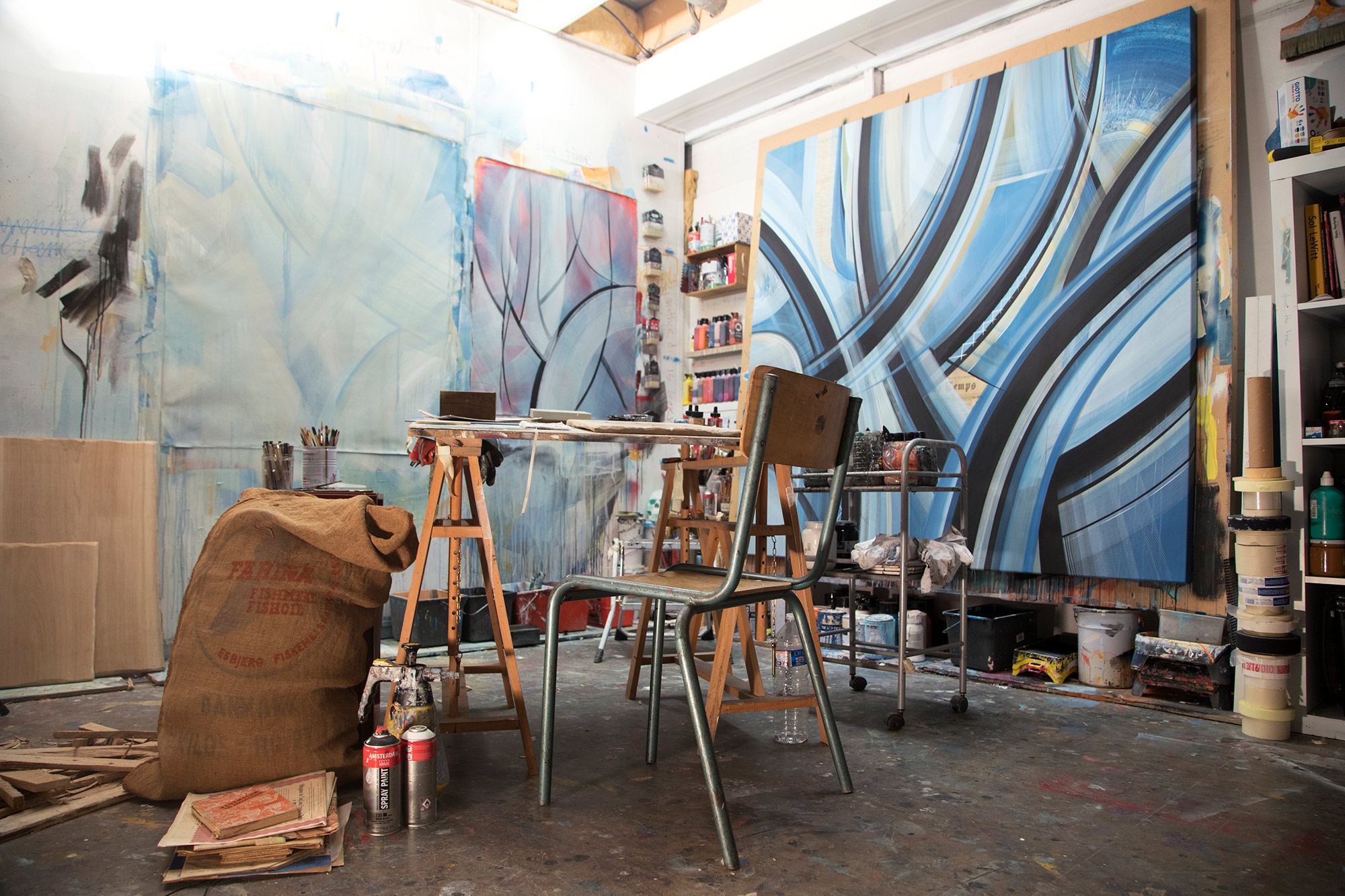
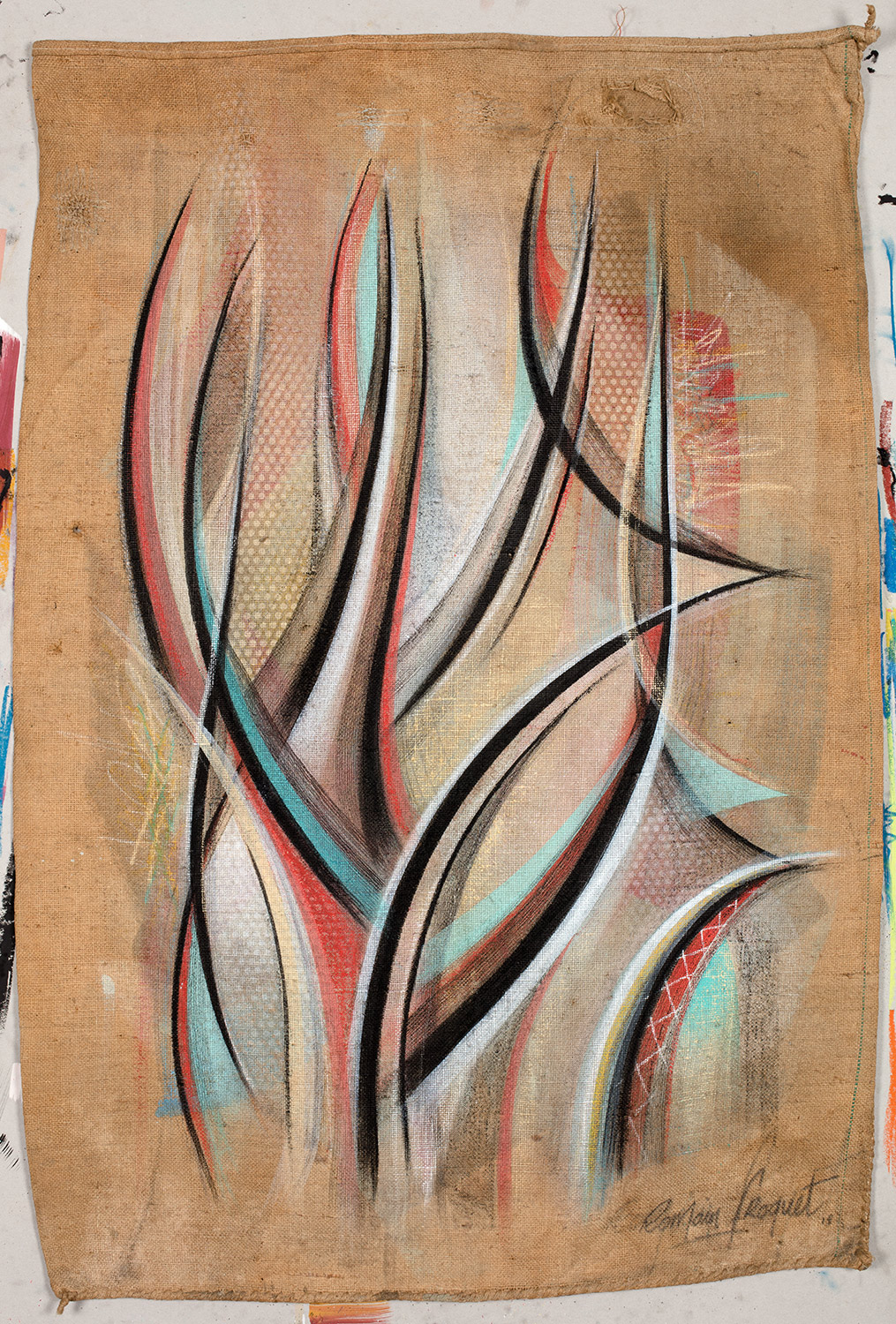

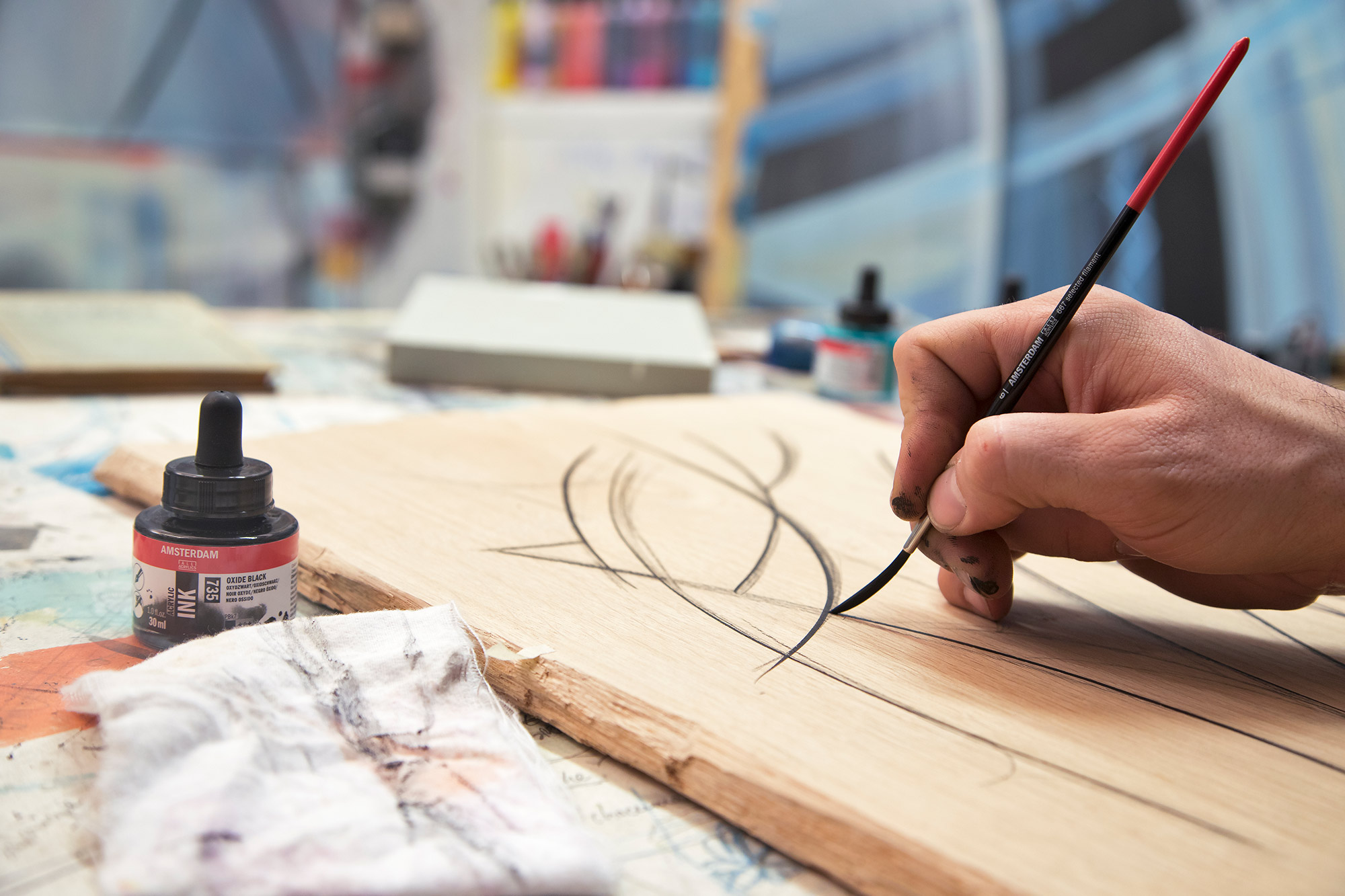
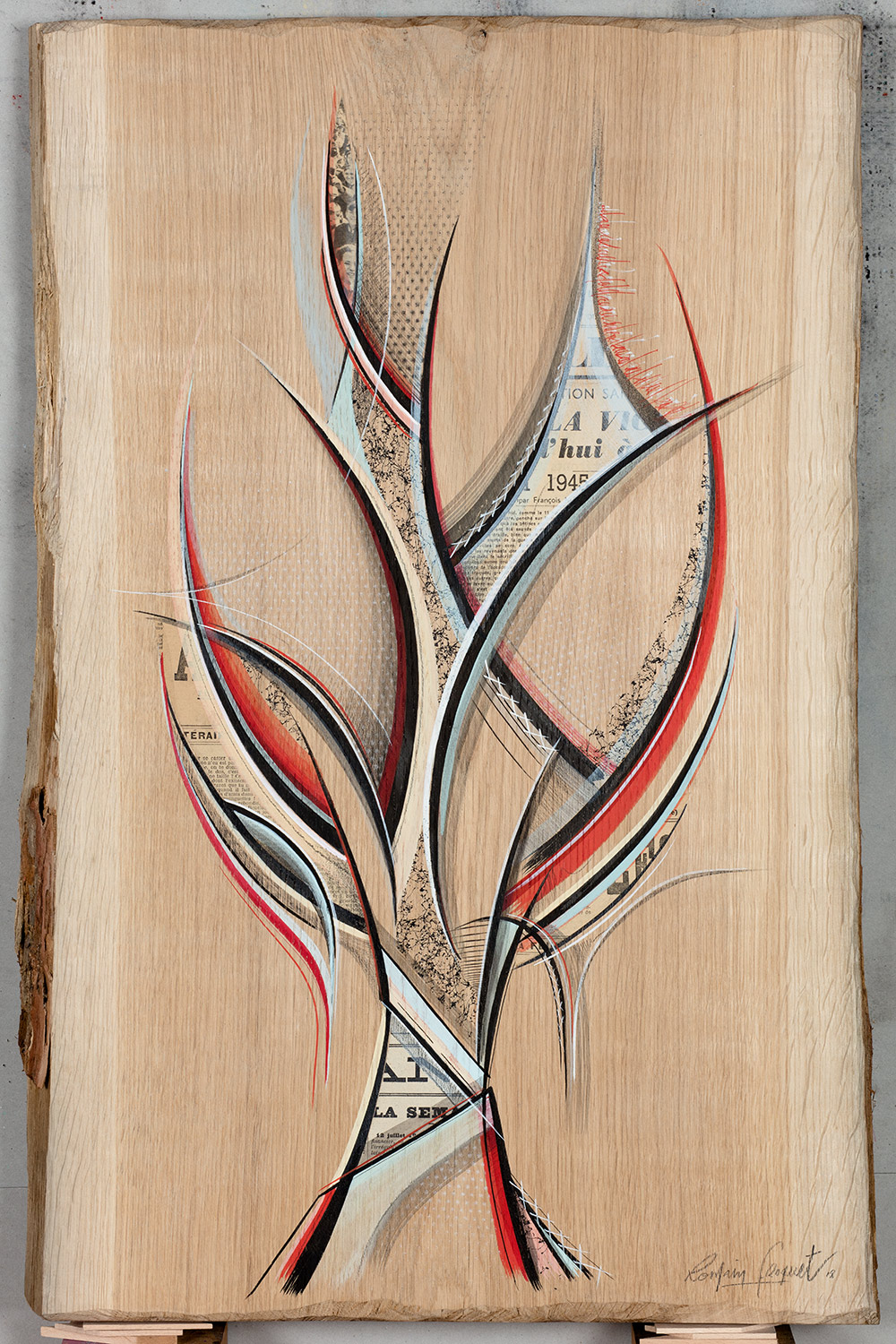
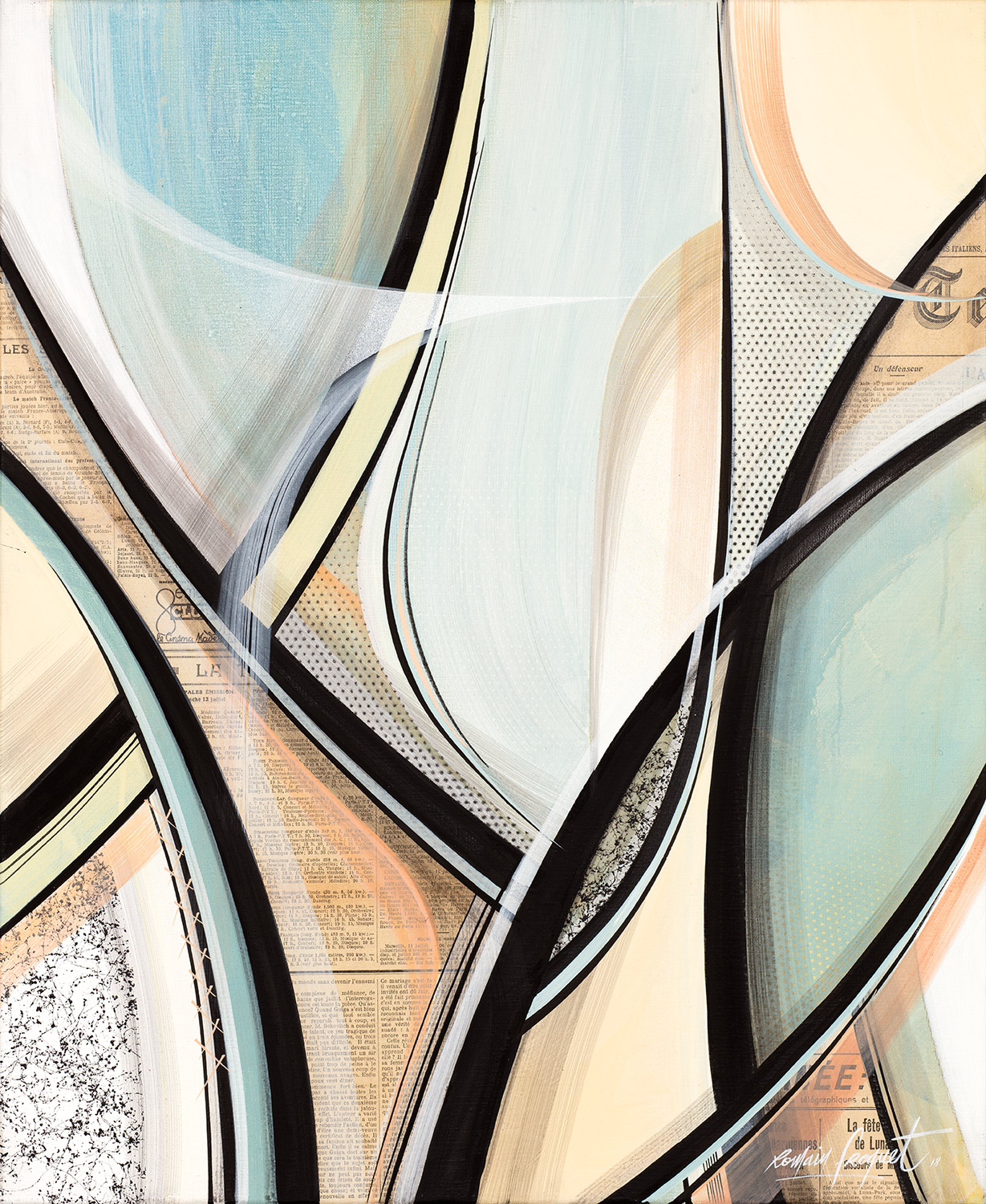
Films Thomas Granovsky
Légendes urbaines
2018 I Base sous-marine de Bordeaux
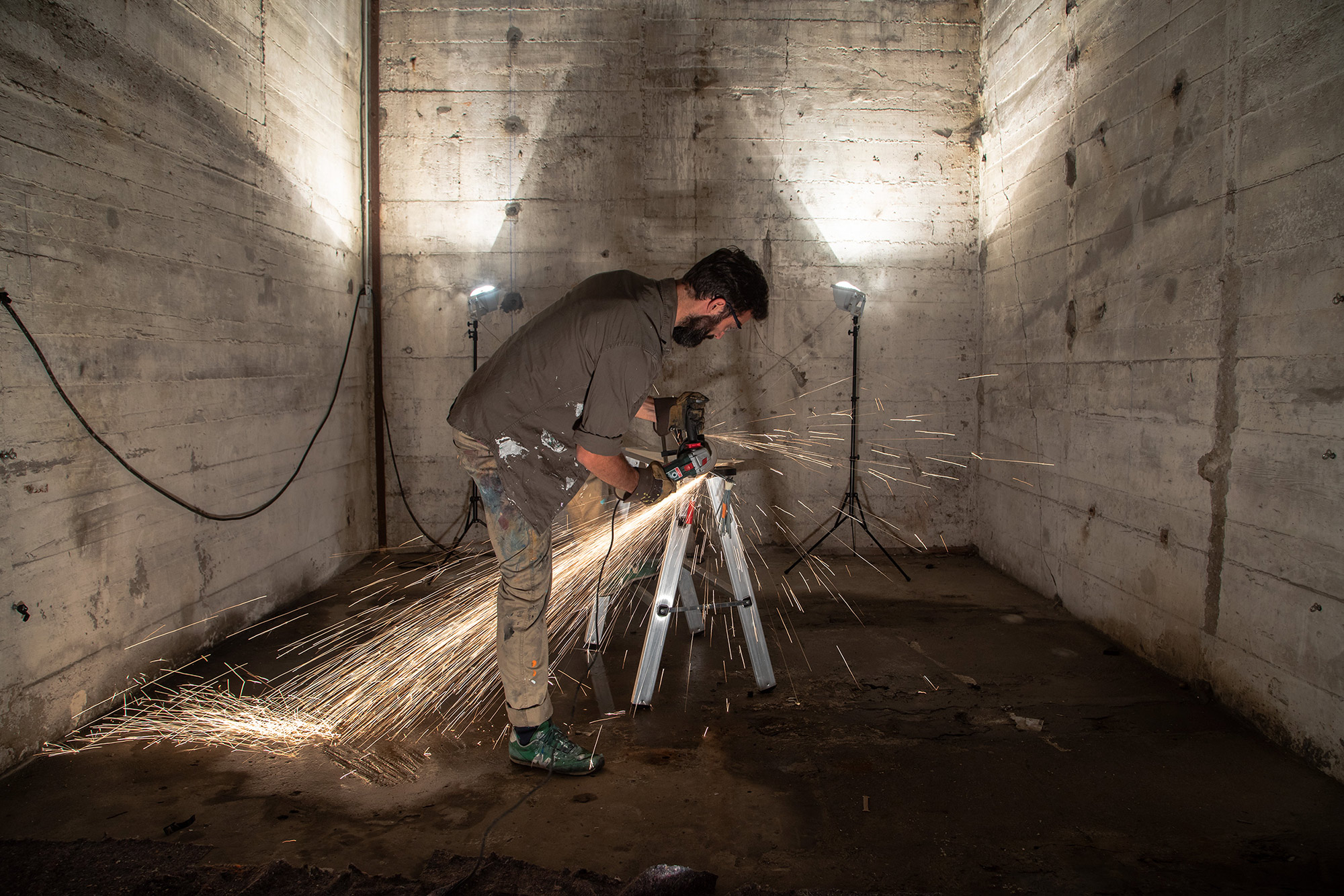
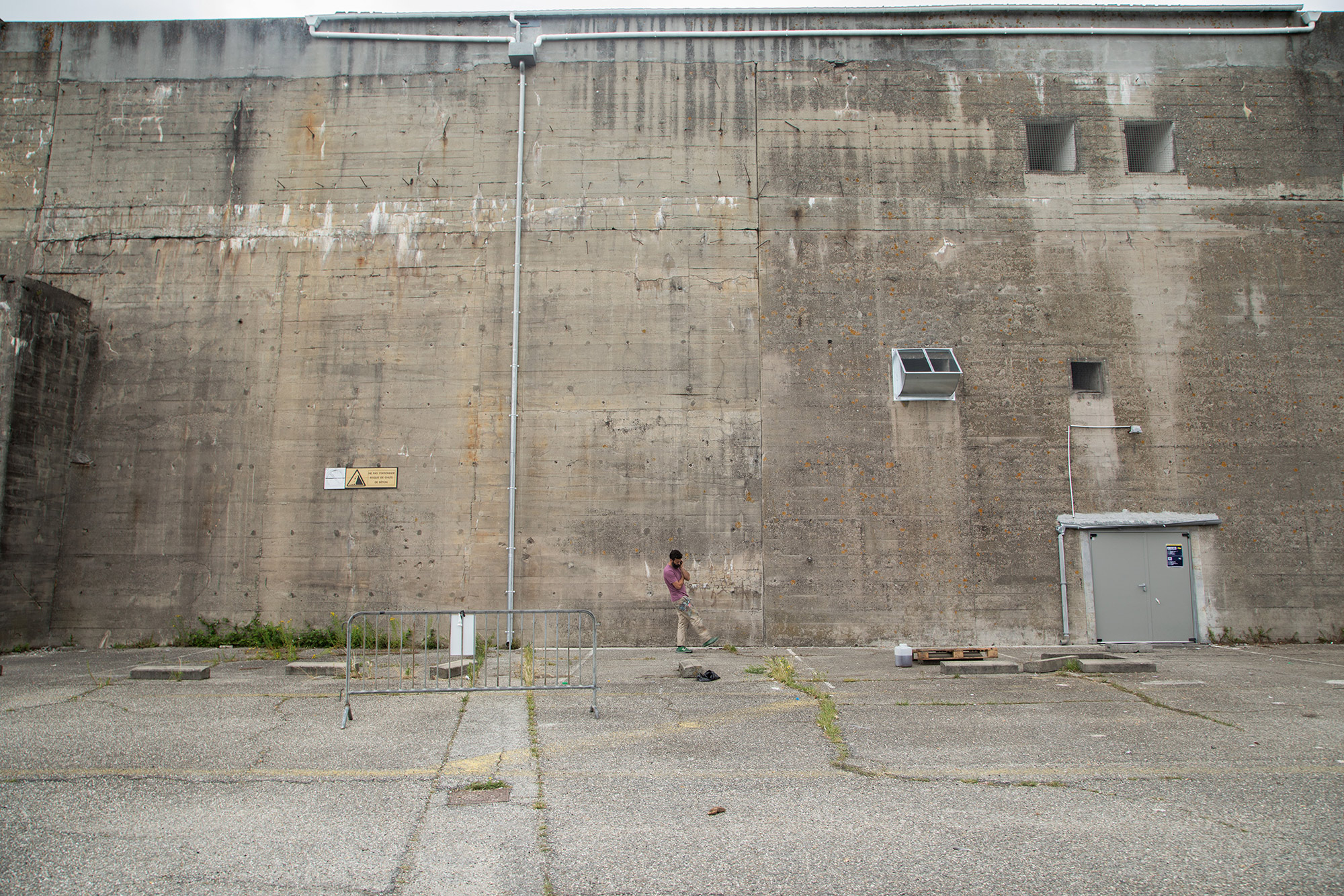
As part of the 3rd Street Art Season organized by the City of Bordeaux, the Bordeaux Submarine Base is hosting, from June 21 to September 16, 2018, the Légendes urbaines (Urban Legends) exhibition.
On this occasion, the curatorship was entrusted to Nicolas Laugero Lasserre, director of ICART and founding president of Artistik Rezo, and Pierre Lecaroz, founding president of the Pôle Magnetic association in Bordeaux. This exhibition is an invitation to discover a multifaceted urban universe from the 1980s to the present day.
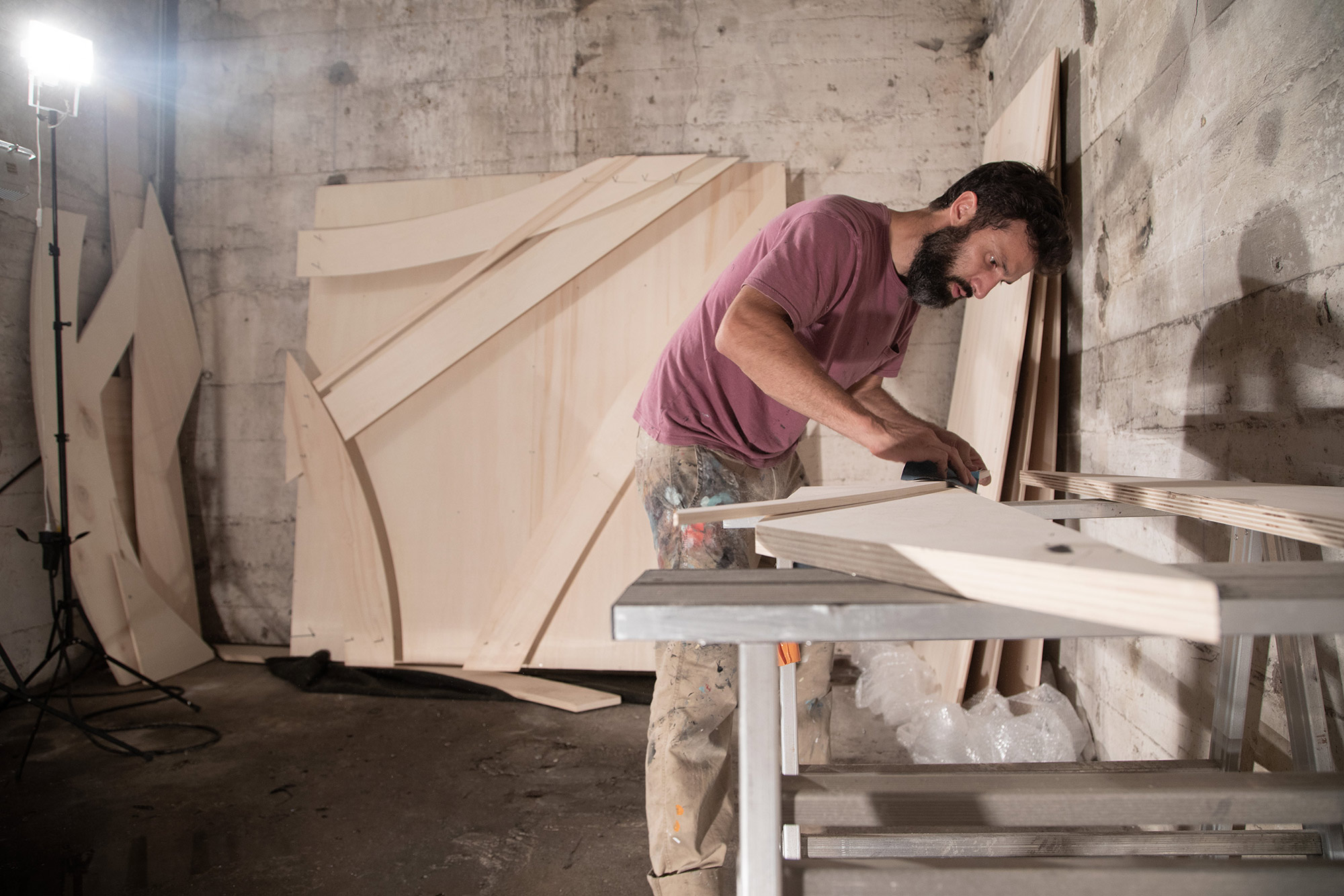
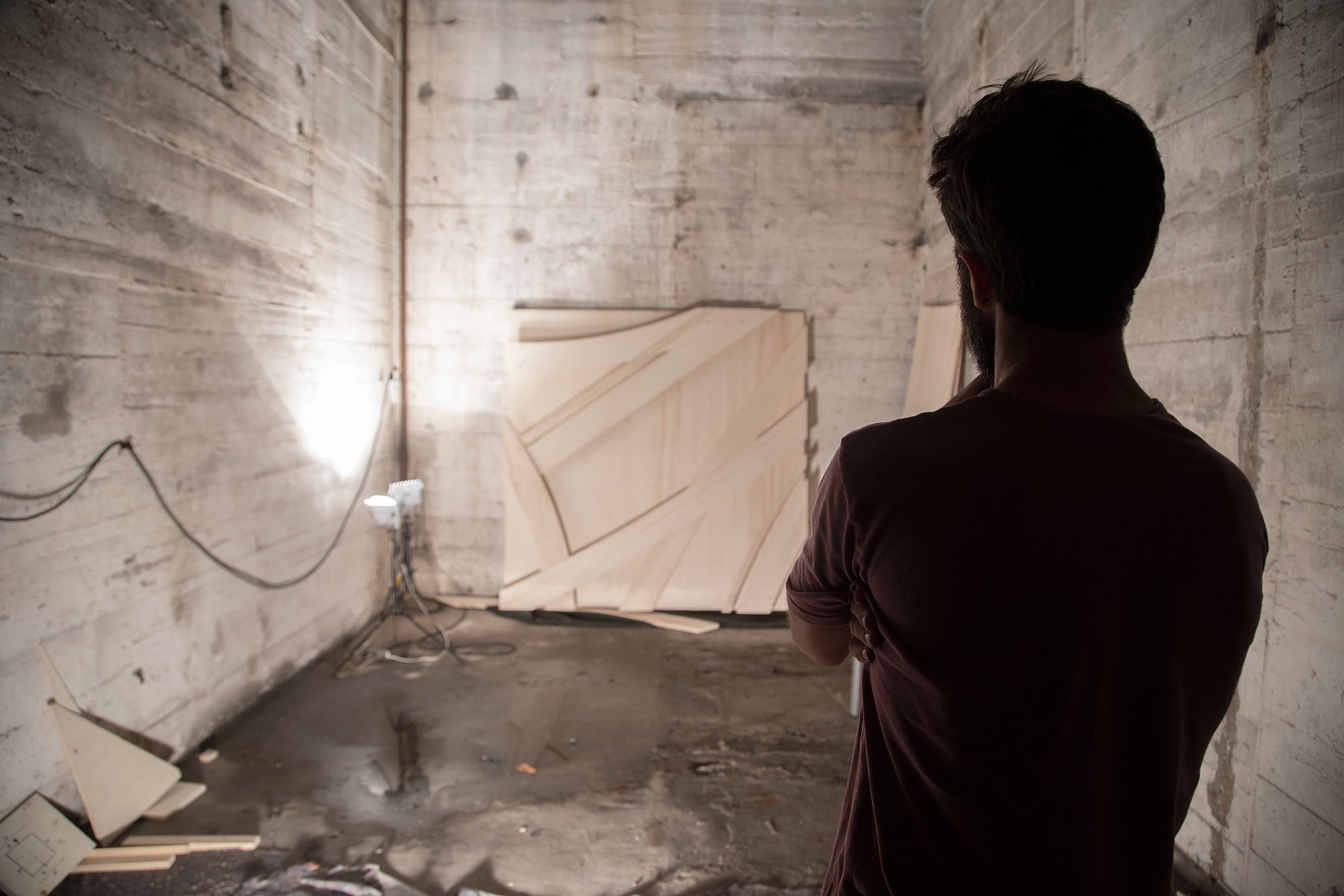
Building on works from renowned artists such as Ernest Pignon-Ernest, Jacques Villeglé, Invader, Jonone, Banksy, Shepard Fairey, JR, Roti and Pantonio, and site-specific installations by iconic and emerging artists such as Aerosept, ARDPG, Bault, Stéphane Carricondo, Erell, Charles Foussard, GrisOne, Madame, MonkeyBird, Nasti, Andrea Ravo Mattoni, Rouge and Romain Froquet, this collective exhibition explores the vitality and richness of the movement. A carte blanche given to the 9e Concept will enrich the exhibition with interactive and playful installations.
Exhibition curators: Nicolas Laugero Lasserre et Pierre Lescaroz

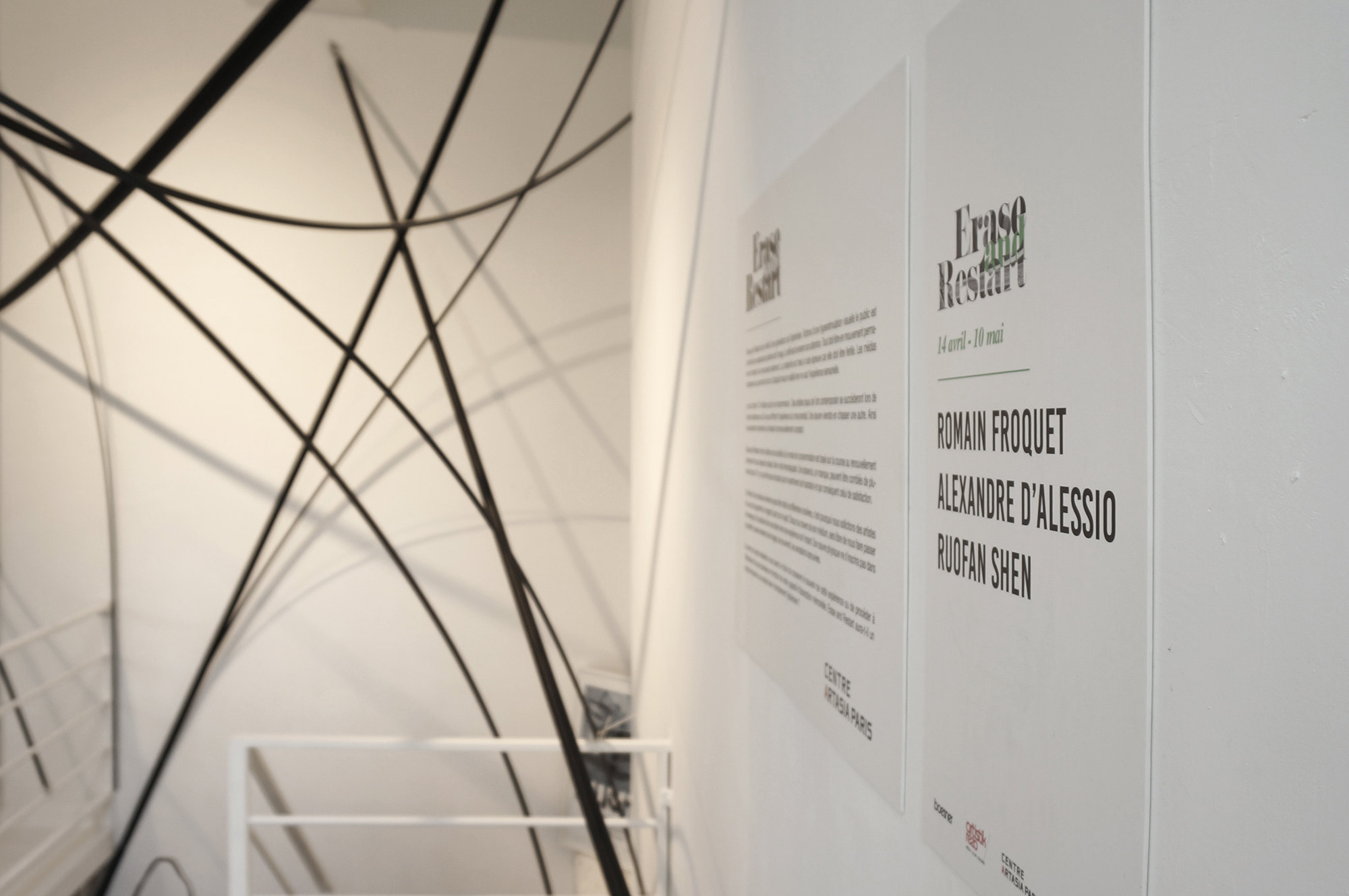
Erase & Restart
2016 I Centre ArtAsia, Paris
Highway interchanges at the base of an abstract artistic experimentation
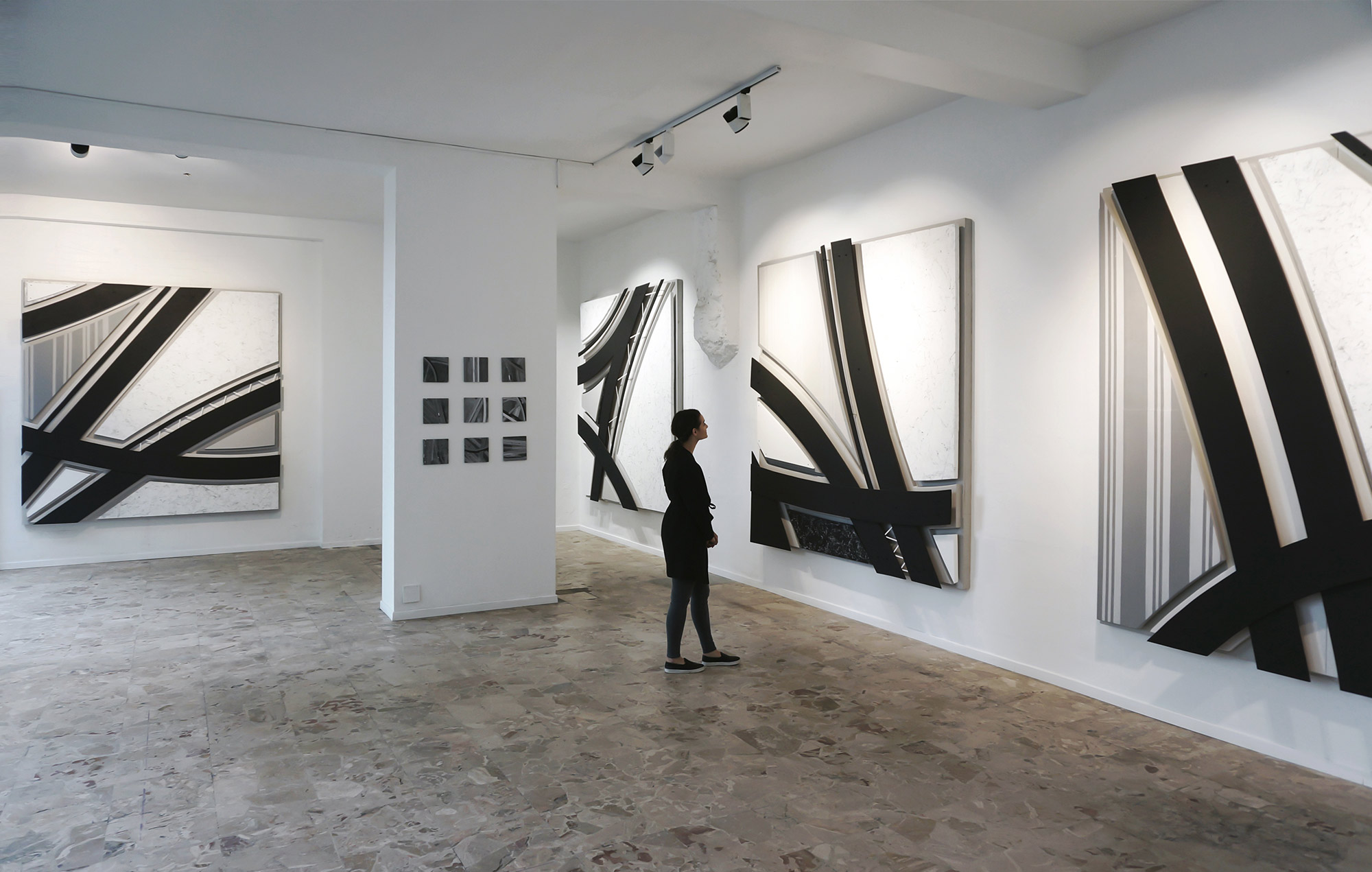
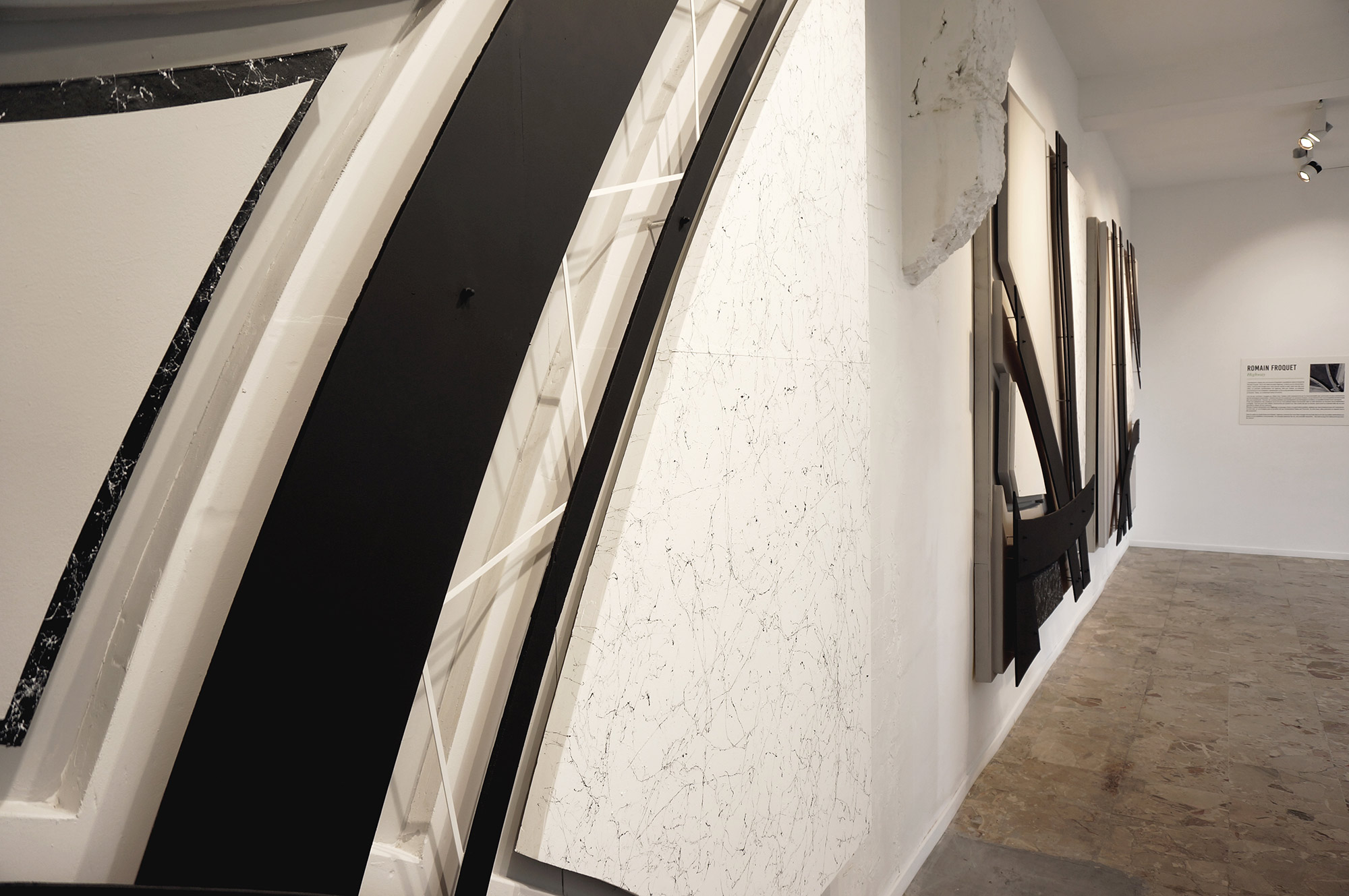
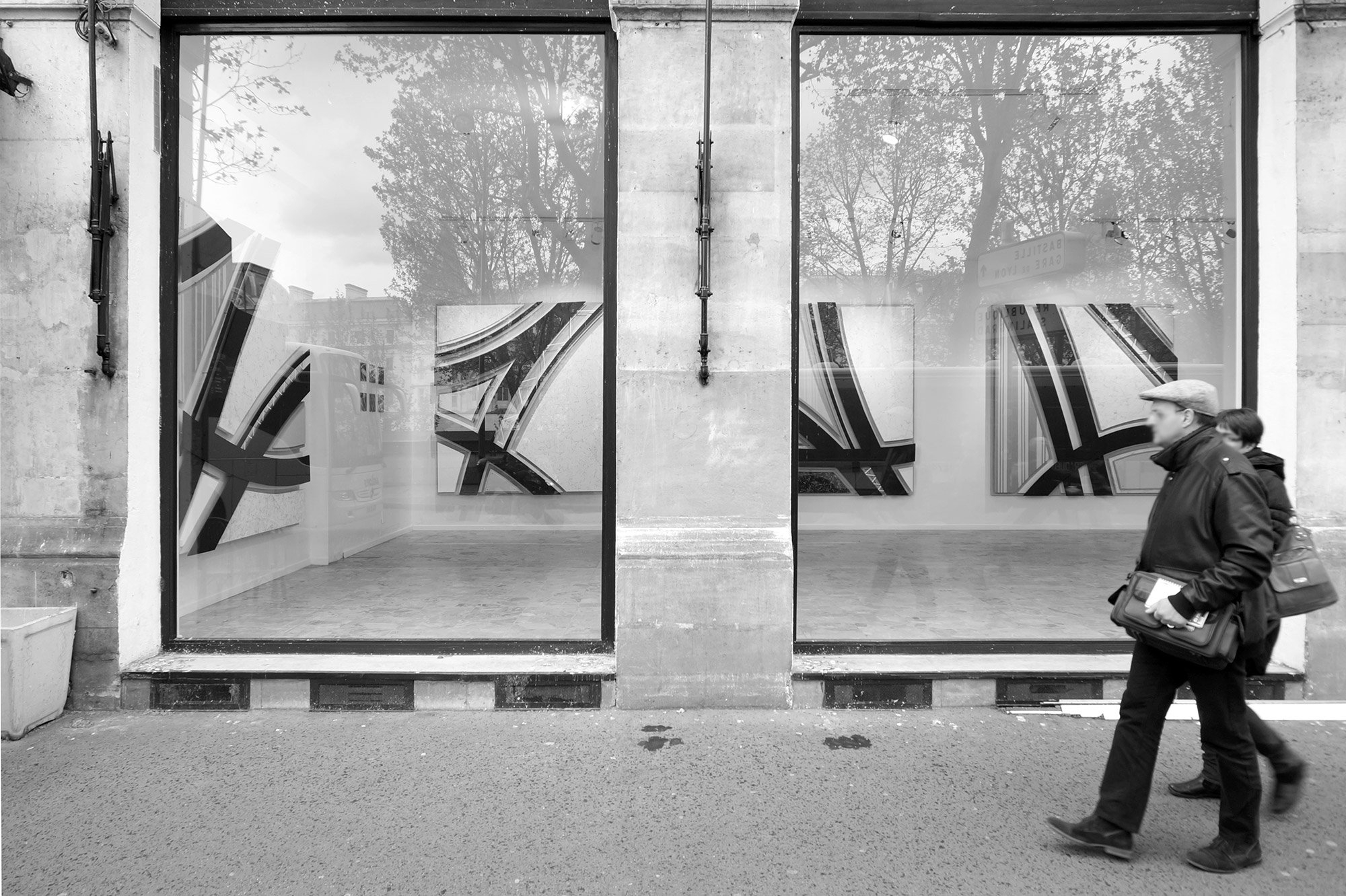
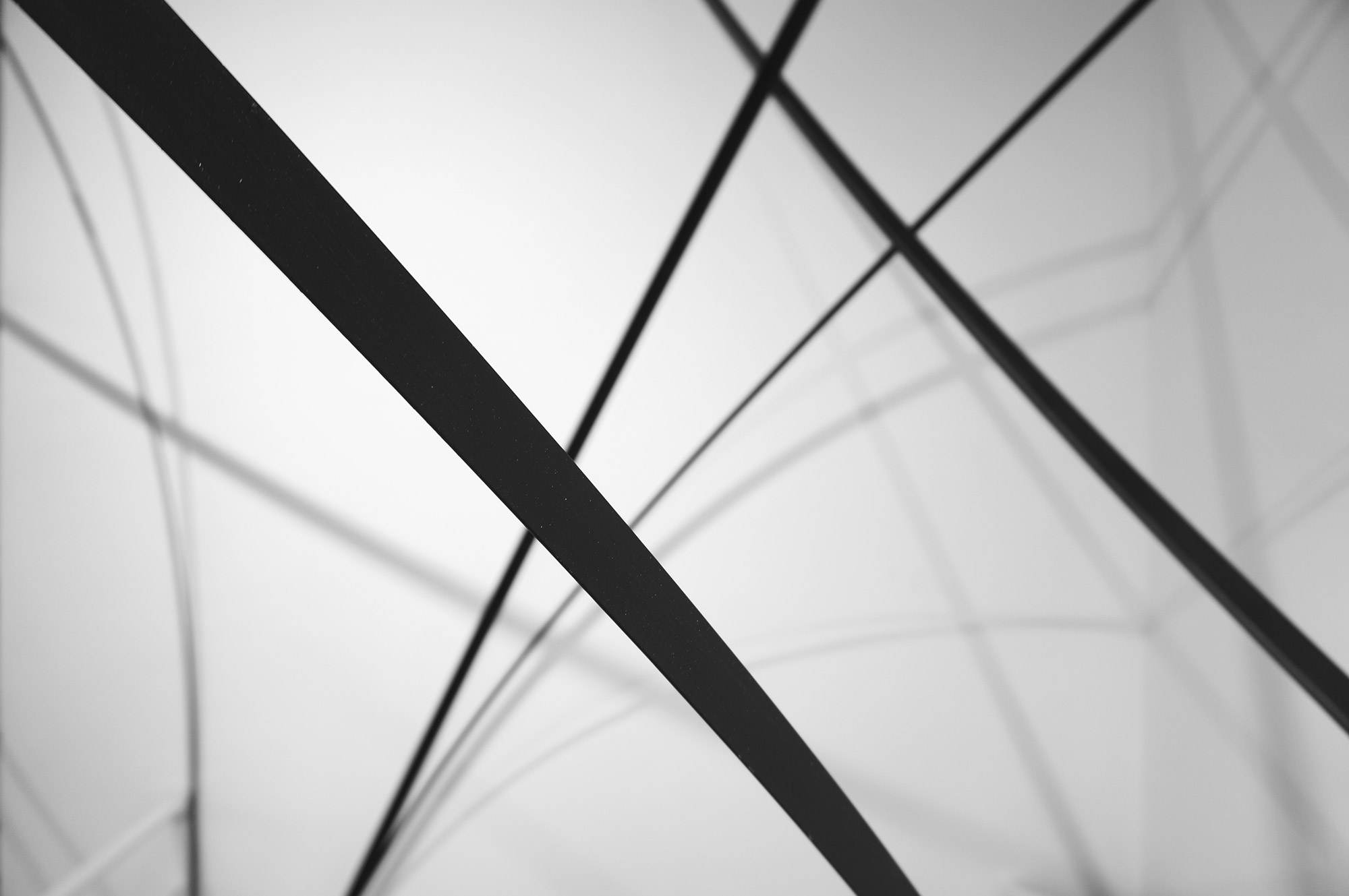
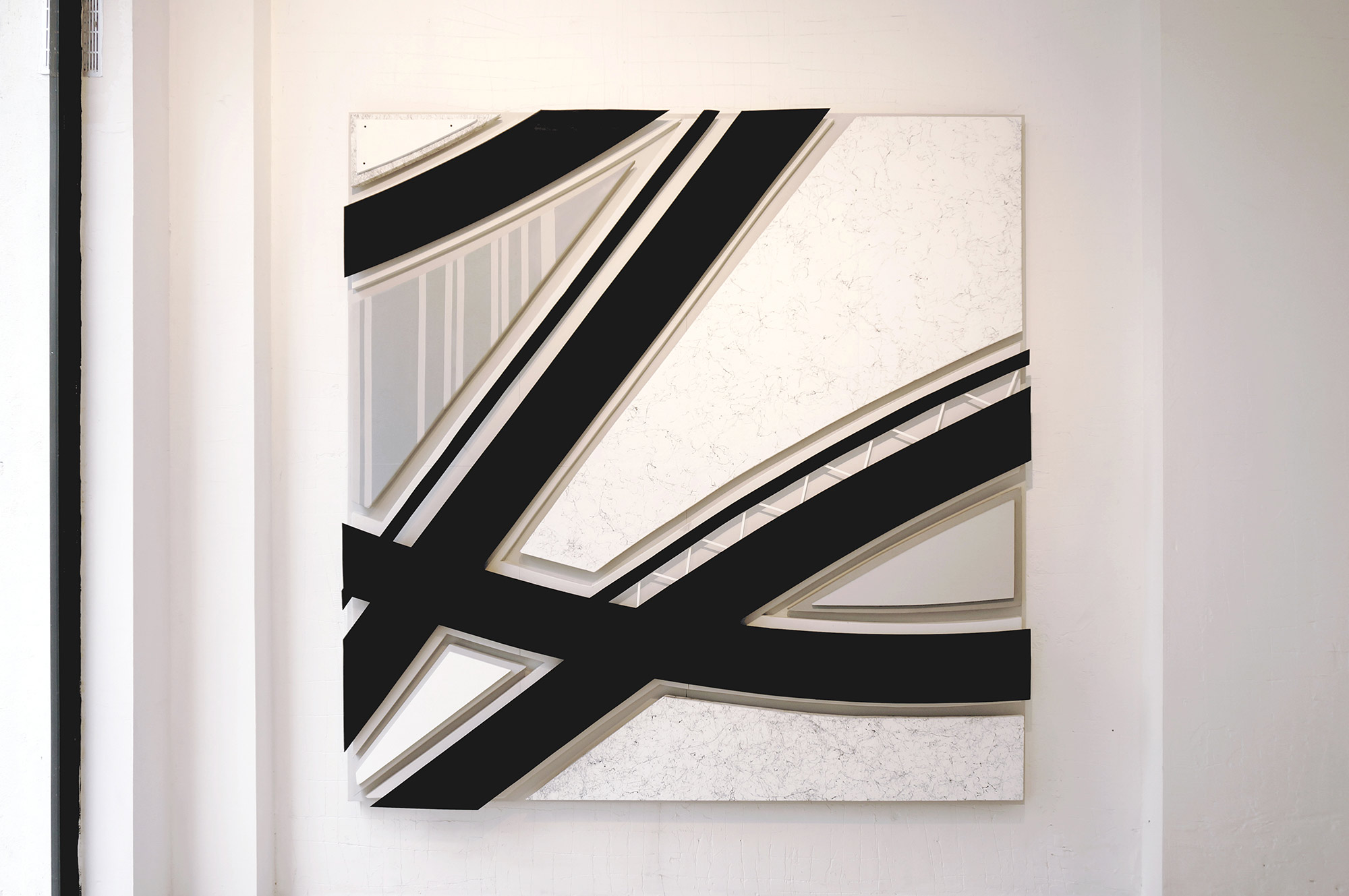
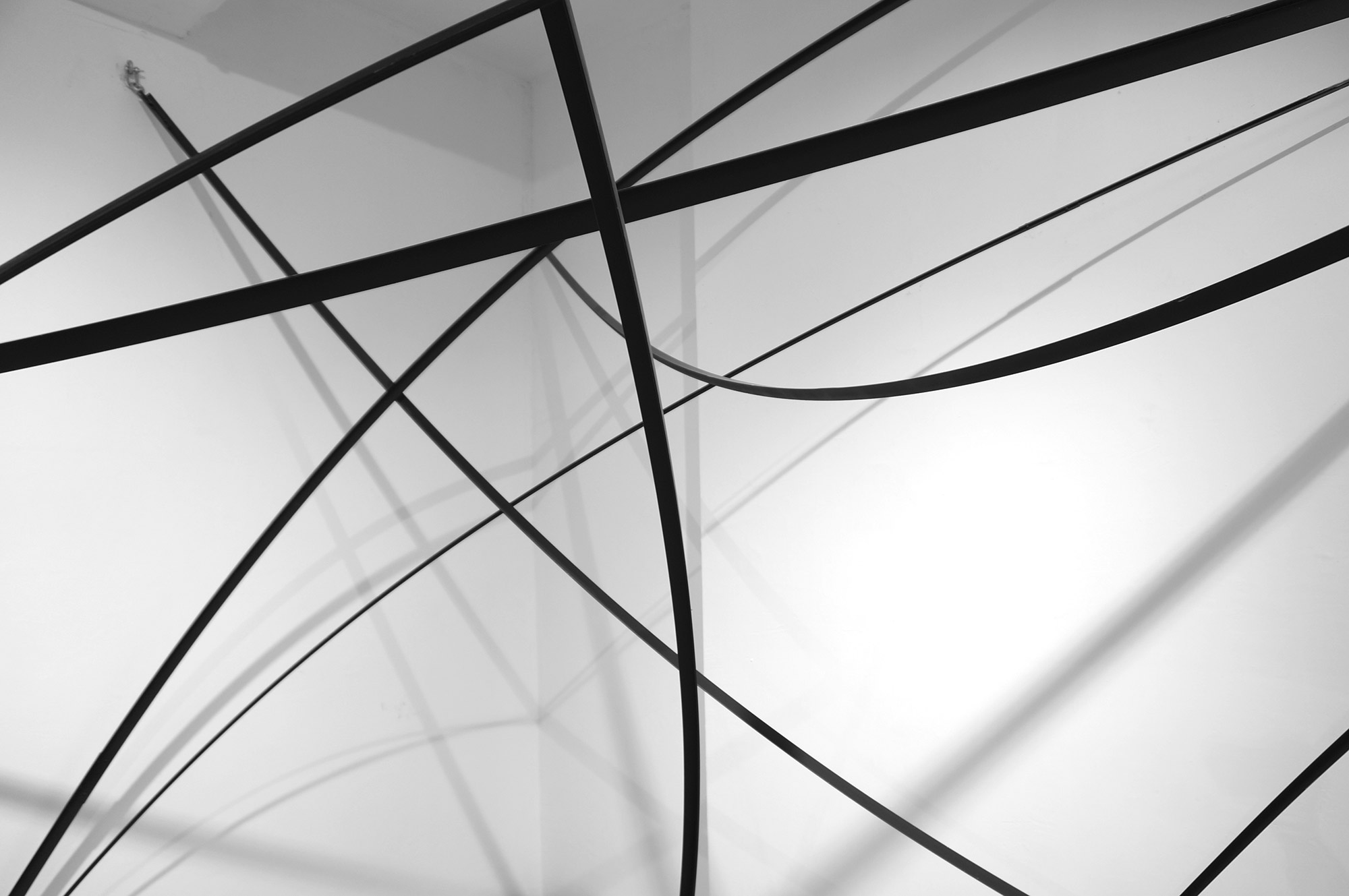
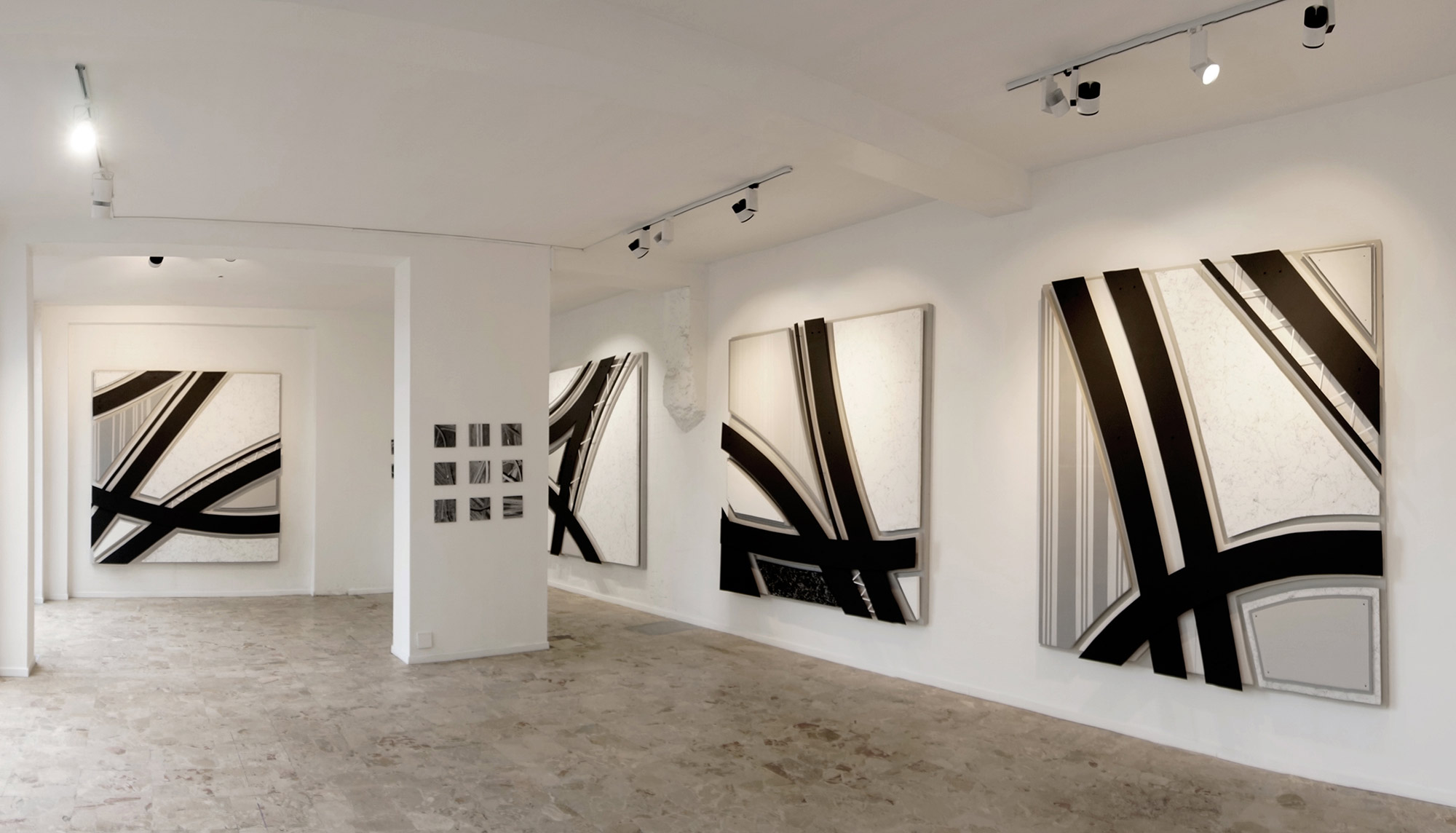
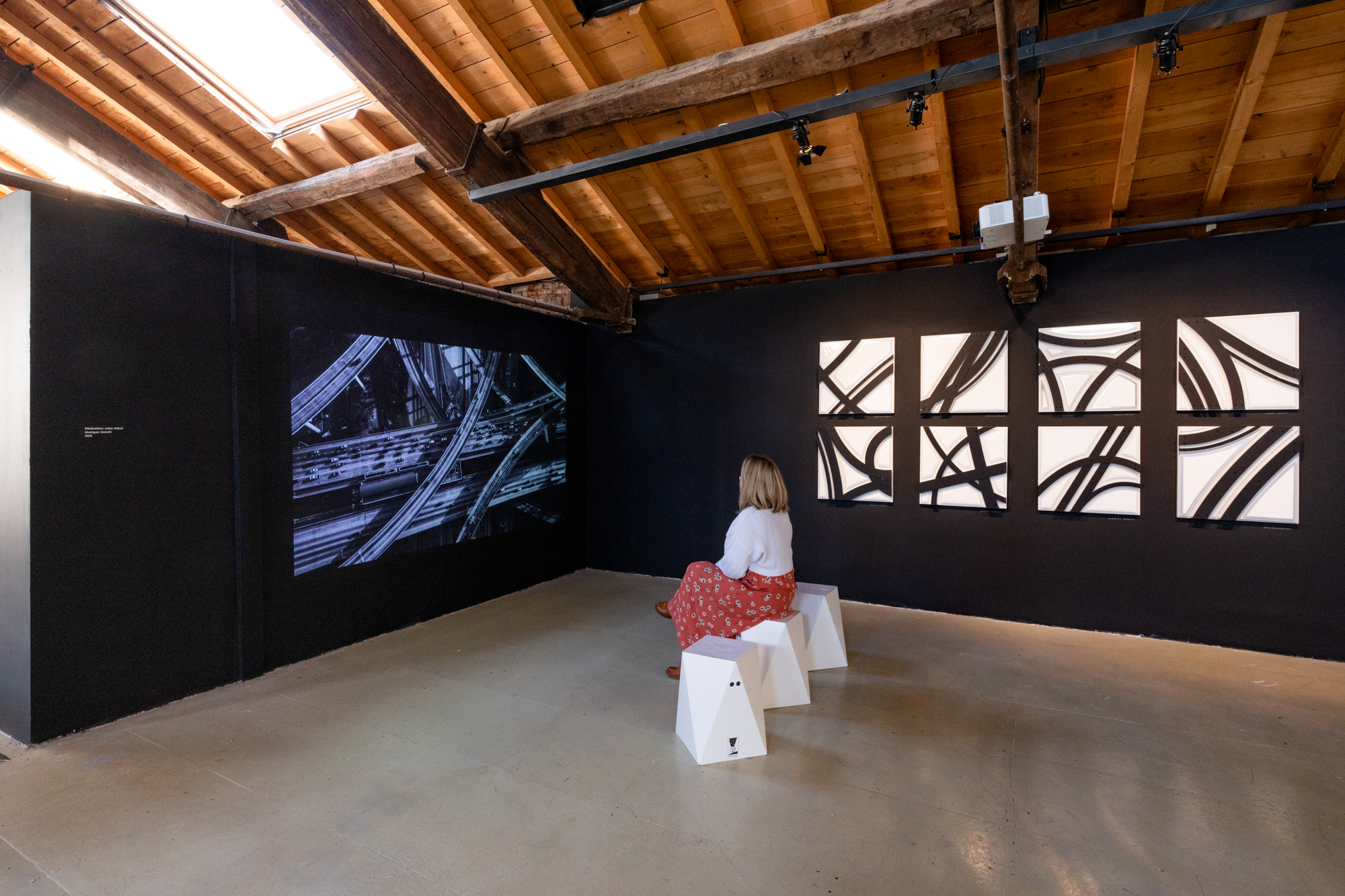
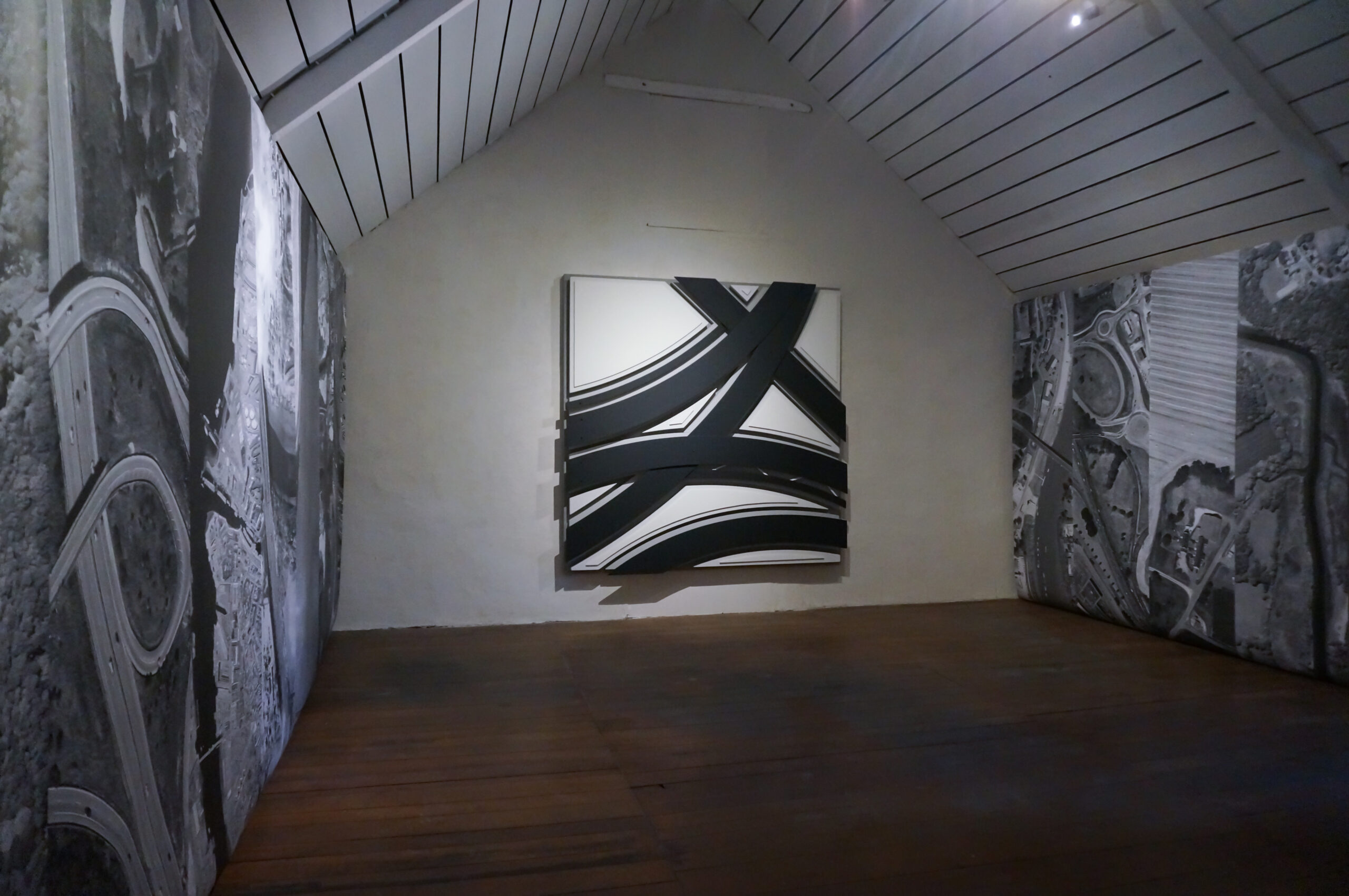
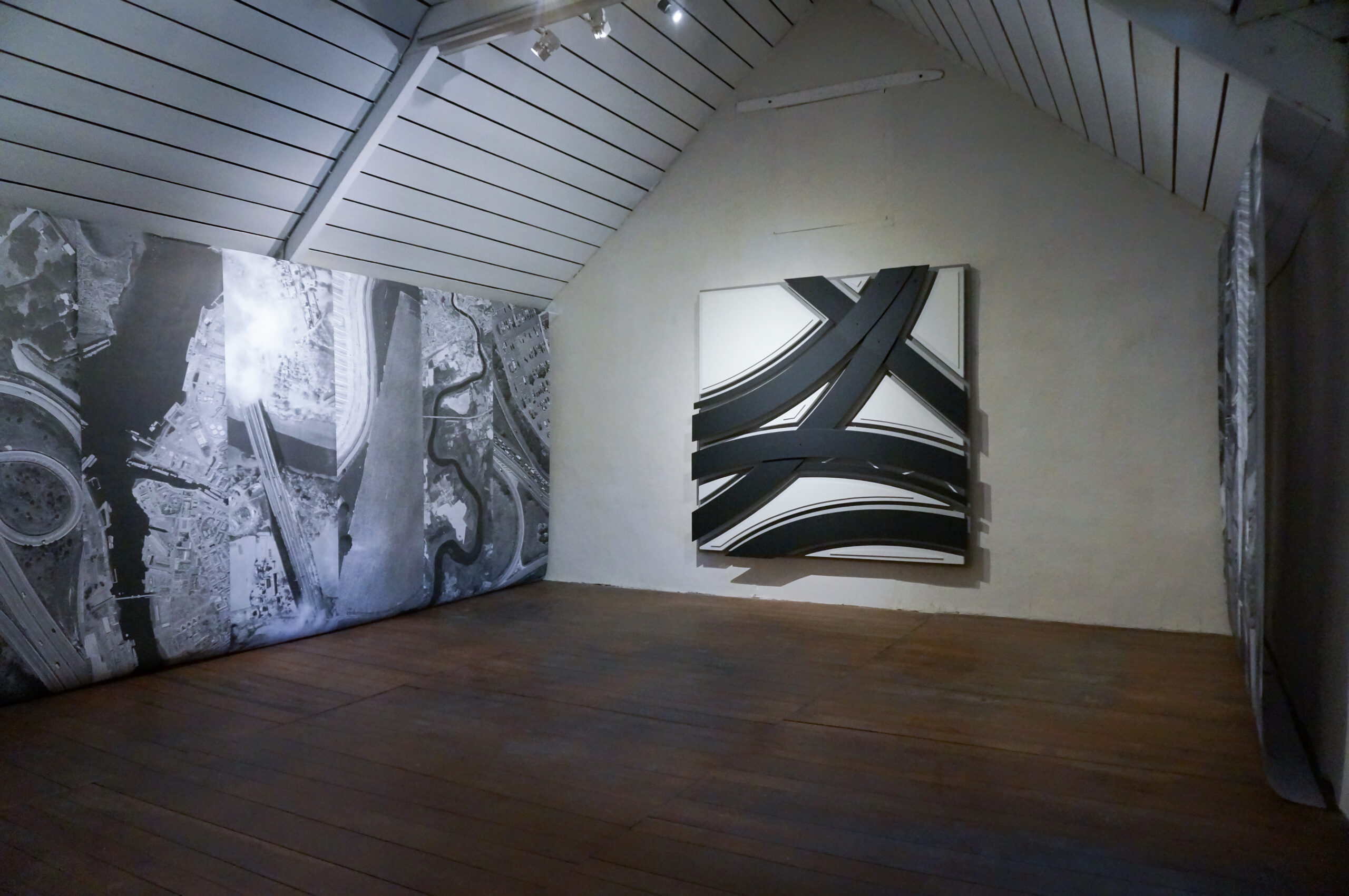
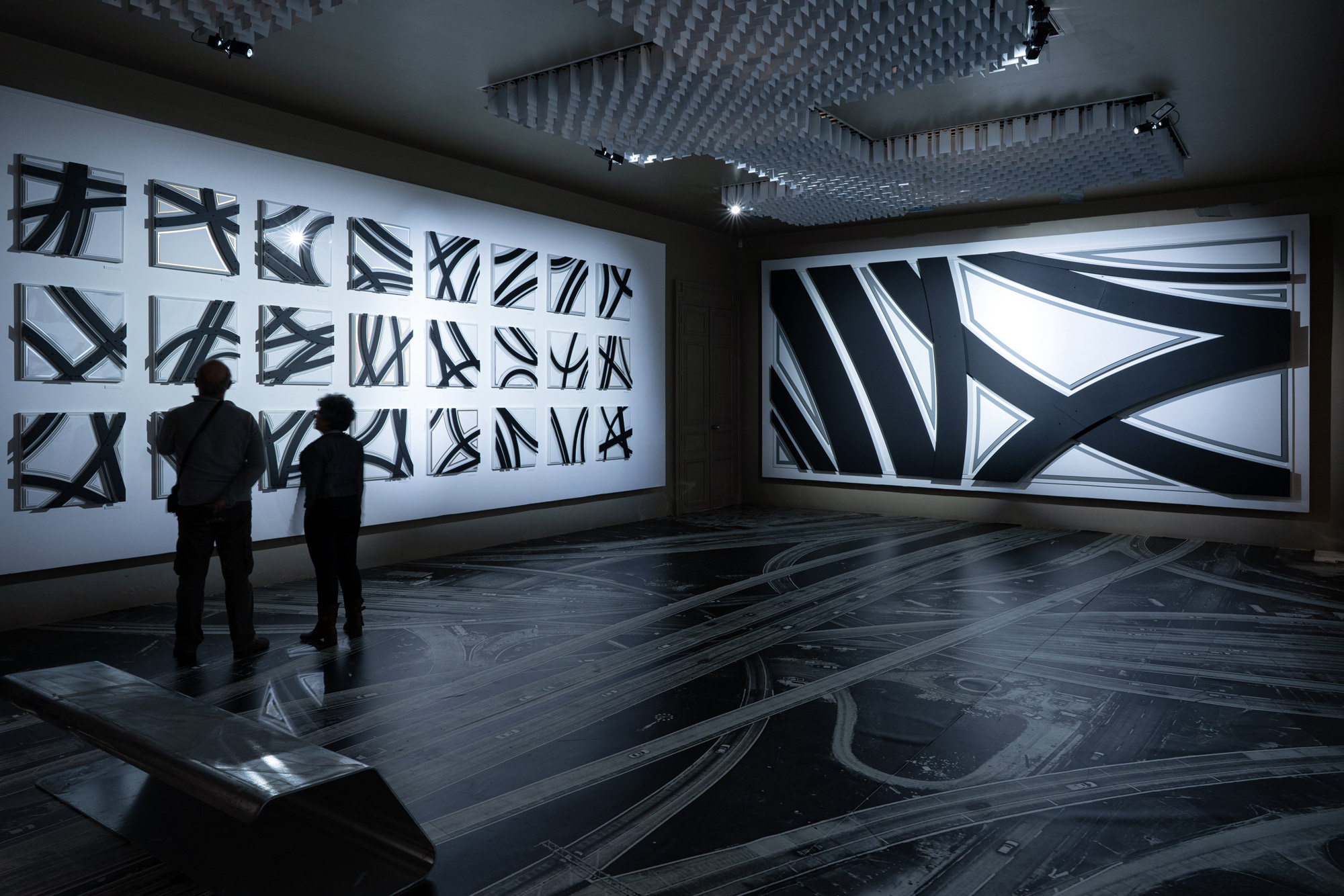
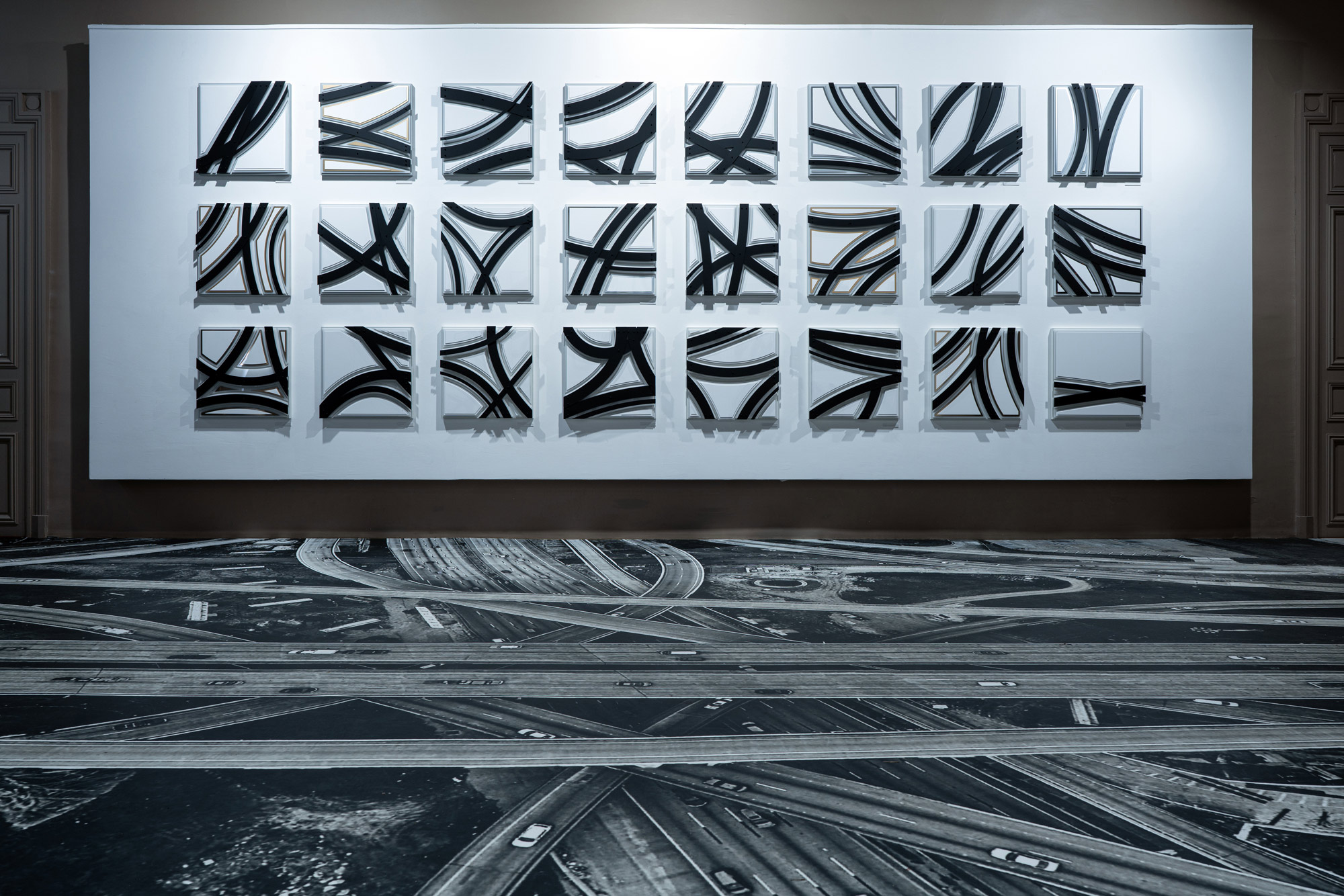
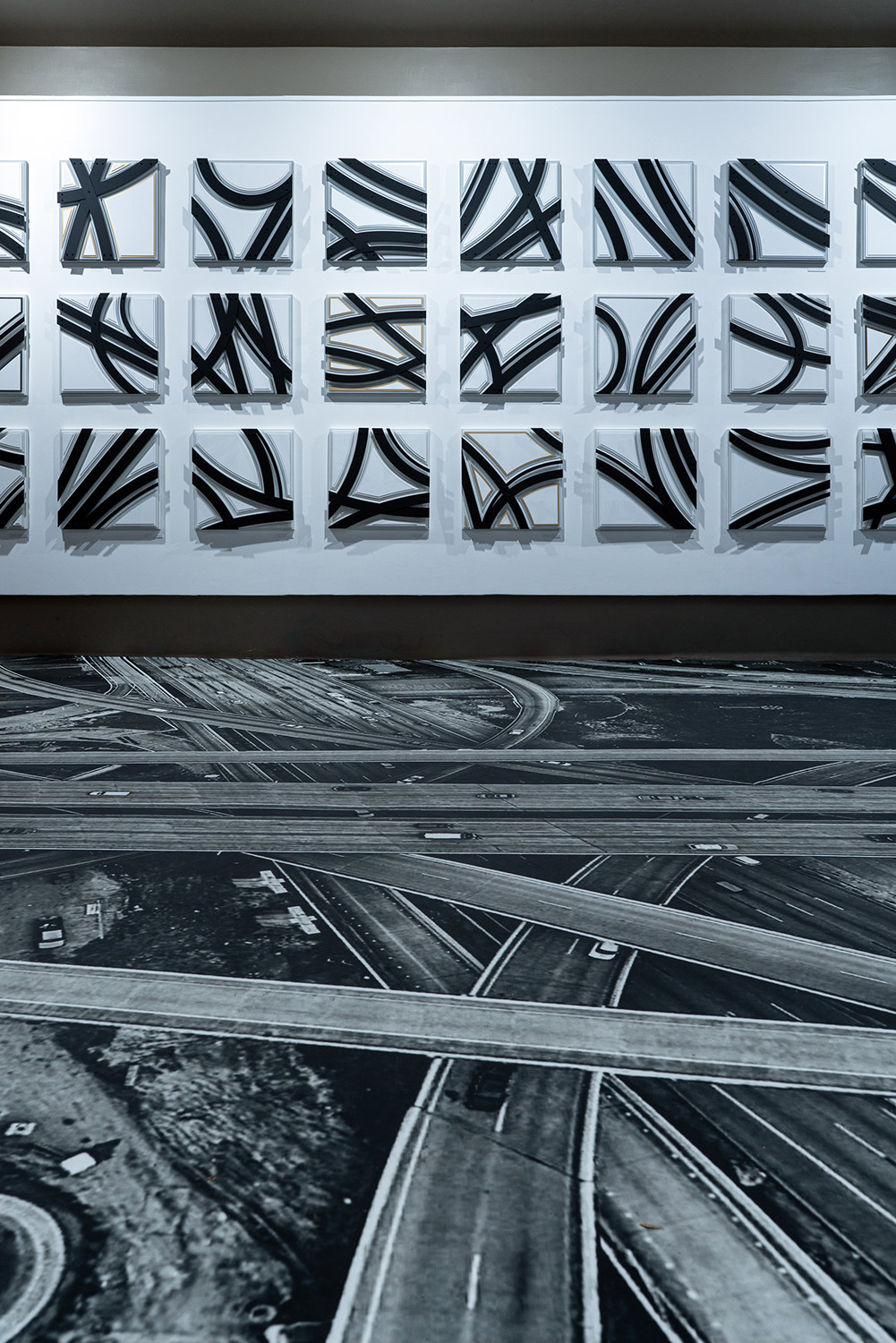
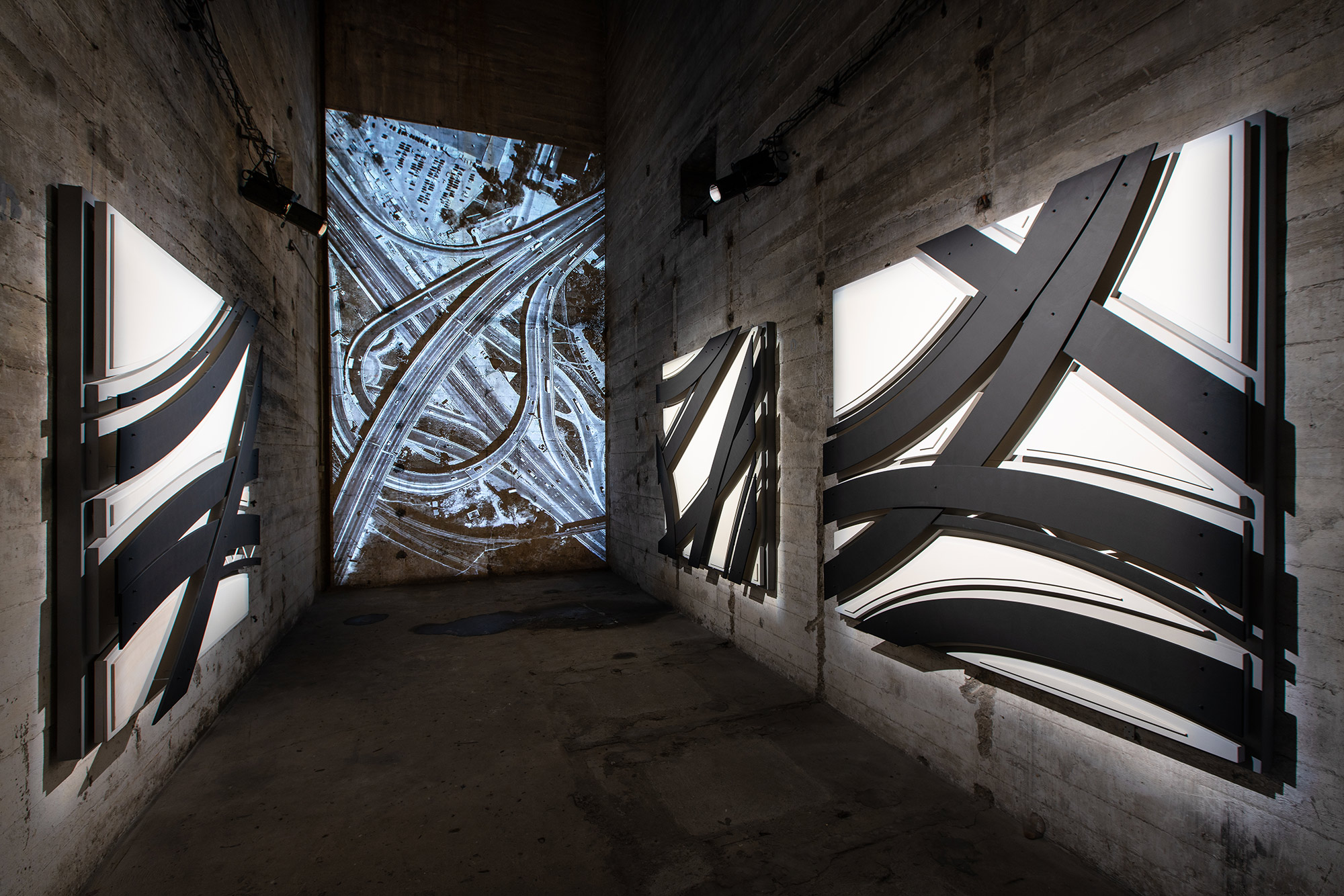
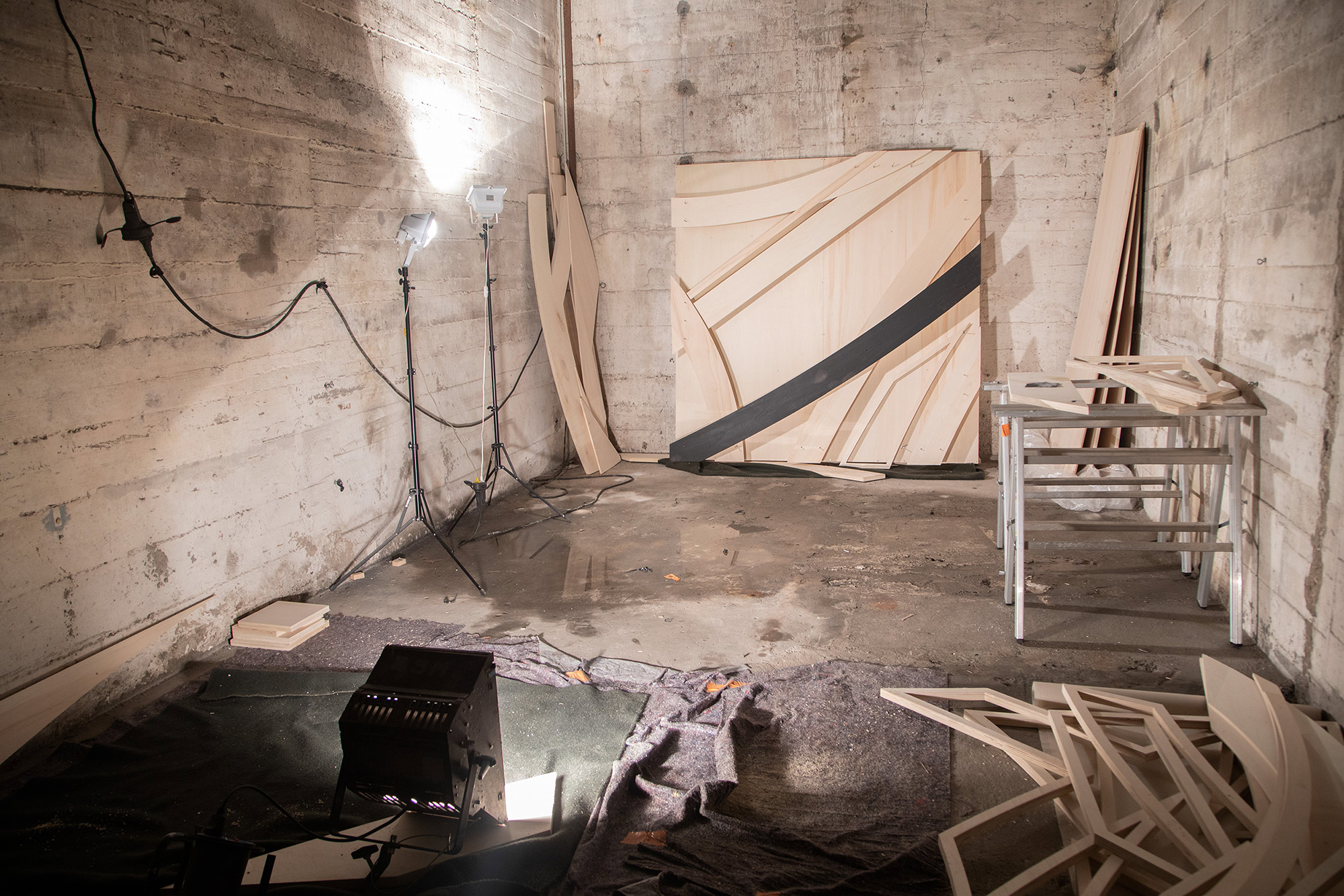
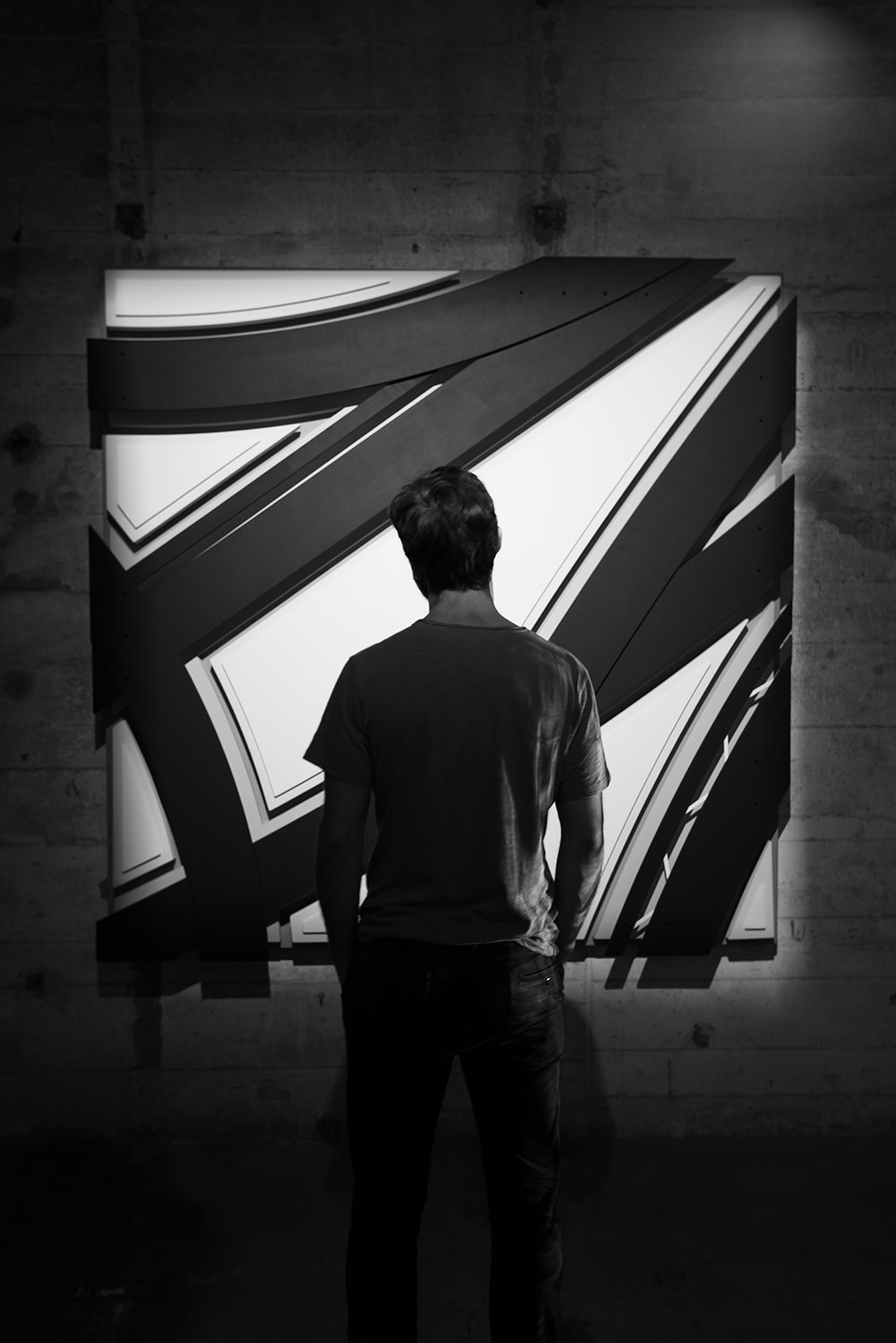
The Erase & Restart exhibition represented a major creative turning point for Romain Froquet. He was at the Artasia gallery, located in a beautiful stone building behind the Châtelet theatre in Paris. The space featured large walls and high ceilings, an ideal setting to display large-scale works. Romain Froquet had found his place for an experimental abstract art project that had been in his mind for several years. Large installations inspired by highway interchanges were thus unveiled to the public.
The idea for these installations took shape while Romain Froquet was on an artistic residency in Houston. He was struck by the sheer scale of American highway interchanges. Over the following years, he searched for a creative way to transpose them. Several attempts were made before he finally succeeded in creating artworks that matched his vision.
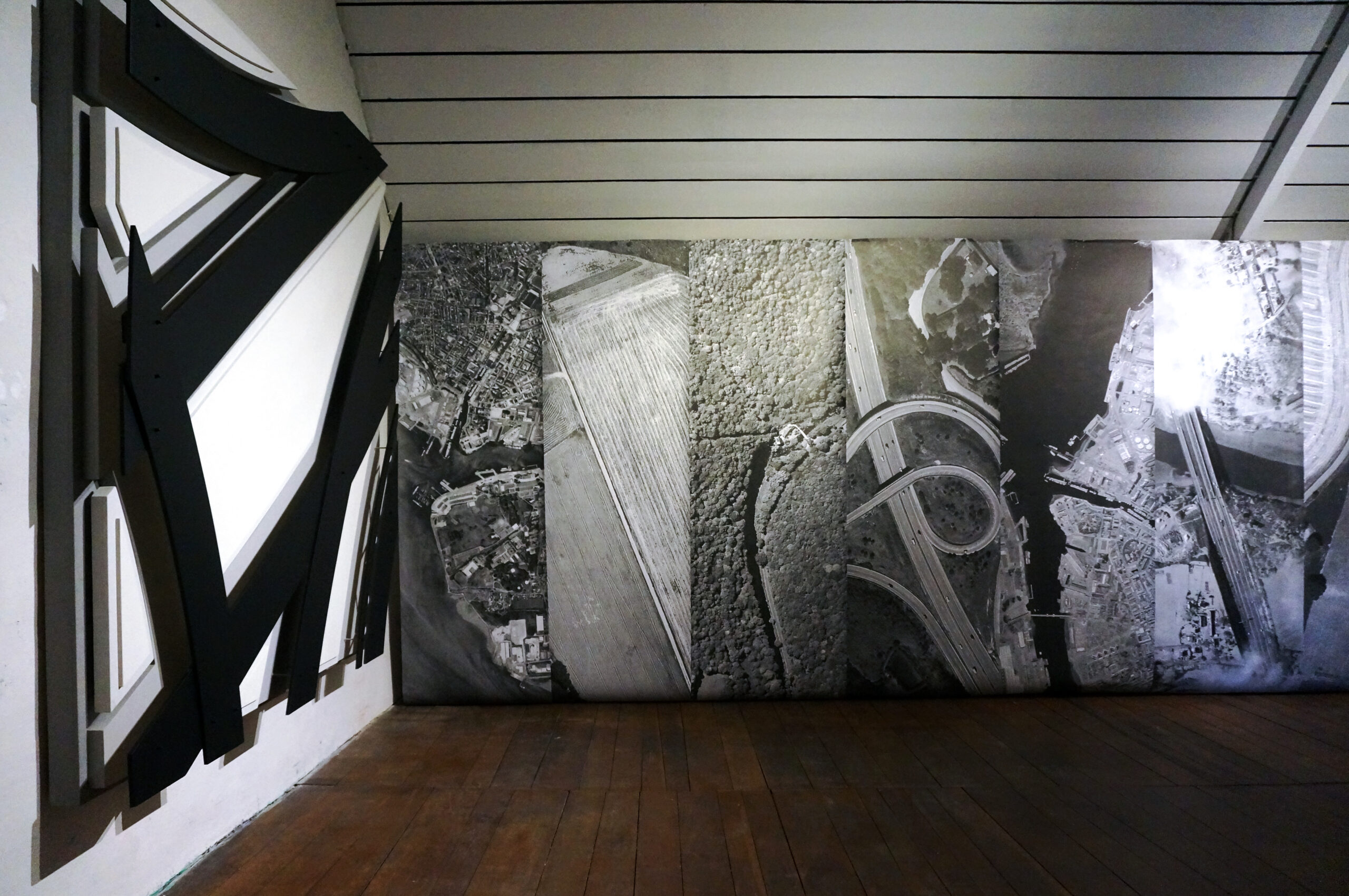
To create these installations, Romain Froquet focused on the work of the line. He had felt a true resonance with his own work when observing highway interchanges, which themselves form lines that intersect and connect. He therefore based his work on satellite photographs of highway interchanges in four cities: Houston, Paris, Dakar and Beijing. He materialized the lines using bas-relief screwed onto wooden panels. The set was monochrome. Color was set aside to better convey the connection to the city and concrete.
This abstract artistic experimentation was not a mere interlude. It continued with the Lignées exhibition and still influences his work to this day.
Collaboration: Ruofan Shen, Alexandre d’Alessio